

Type 1 diabetes is a long-term autoimmune condition in which the body’s immune system mistakenly attacks and destroys the insulin-producing cells in the pancreas. Insulin is a hormone that helps move glucose (blood sugar) from your bloodstream into your body’s cells, where it is used for energy. Without enough insulin, glucose builds up in the blood instead of being used by the body.
Type 1 diabetes can develop at any age but is most commonly diagnosed in children, teenagers, and young adults. Unlike type 2 diabetes, type 1 diabetes is not caused by lifestyle choices and cannot be prevented. People with type 1 diabetes need lifelong insulin therapy to manage their blood sugar and stay healthy. With proper treatment and regular medical care, many people with type 1 diabetes live healthy, active lives.
Type 1 Diabetes – NIH MedlinePlus
https://medlineplus.gov/type1diabetes.html
Provides patient-friendly information about type 1 diabetes, including symptoms, diagnosis, treatment, and preventing complications.
Type 1 Diabetes – National Institute of Diabetes and Digestive and Kidney Diseases (NIDDK)
https://www.niddk.nih.gov/health-information/diabetes/overview/what-is-diabetes/type-1-diabetes
Explains what type 1 diabetes is, how it develops, treatment options, and living with the condition.
Type 1 diabetes affects approximately 2 million people in the United States, including many children and adolescents. It accounts for about 5–10% of all diabetes cases. Although it is commonly diagnosed during childhood, it can develop at any age.
Type 1 Diabetes Statistics – Centers for Disease Control and Prevention (CDC)
https://www.cdc.gov/diabetes/
Provides current information about diabetes in the United States, including type 1 diabetes.
Symptoms of type 1 diabetes often develop quickly over several days or weeks. Without treatment, blood sugar can rise rapidly and become dangerous.
Common symptoms may include:
Your healthcare provider will review your symptoms, medical history, and perform blood tests to diagnose type 1 diabetes. Because symptoms often develop quickly, prompt diagnosis is important.
Tests commonly used include:
Diabetes Tests – CDC
https://www.cdc.gov/diabetes/diabetes-testing/index.html
Explains the different laboratory tests used to diagnose diabetes.
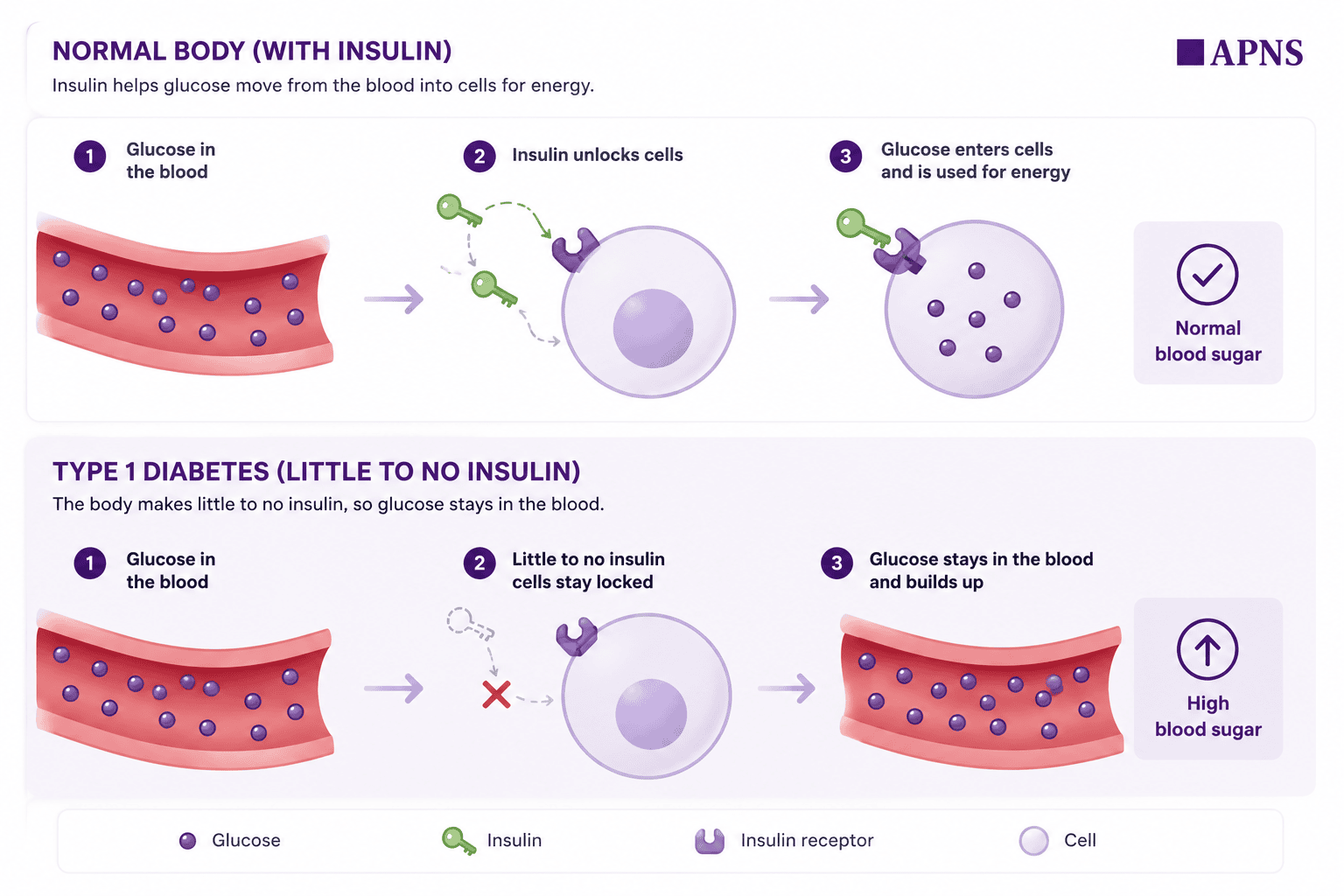
Type 1 diabetes is an autoimmune disease. The immune system mistakenly attacks the insulin-producing beta cells in the pancreas, eventually preventing the body from making enough insulin.
Although the exact cause is unknown, several factors may contribute, including:
Unlike type 2 diabetes, type 1 diabetes is not caused by eating too much sugar, being overweight, or lack of exercise.
Type 1 Diabetes – NIDDK
https://www.niddk.nih.gov/health-information/diabetes/overview/what-is-diabetes/type-1-diabetes
Learn about the causes, risk factors, and autoimmune process involved in type 1 diabetes.
Several factors can make blood sugar more difficult to manage. Learning to recognize these situations can help you adjust your diabetes management plan.
Common factors include:
Managing Blood Sugar – CDC
https://www.cdc.gov/diabetes/managing/index.html
Provides practical tips for managing blood sugar during illness, stress, and everyday life.
Although type 1 diabetes cannot currently be prevented, healthy habits can help prevent complications and improve your overall health.
Helpful prevention strategies include:
Managing Diabetes – National Institute of Diabetes and Digestive and Kidney Diseases (NIDDK)
https://www.niddk.nih.gov/health-information/diabetes/overview/managing-diabetes
Provides practical guidance for preventing diabetes-related complications through regular medical care and healthy lifestyle habits.
The following video content is provided to help you better understand this condition. These resources are intended for educational purposes and should not replace personalized medical advice from your healthcare provider.
Several laboratory tests help diagnose type 1 diabetes and monitor blood sugar control.
Common laboratory tests include:
A1C Test – CDC
https://www.cdc.gov/diabetes/diabetes-testing/prediabetes-a1c-test.html
Explains what the A1C test measures and how it is used to monitor diabetes.
Glucose Test – NIH MedlinePlus
https://medlineplus.gov/lab-tests/glucose-test/
Provides information about blood glucose testing and understanding the results.
In addition to blood tests, your healthcare provider will monitor your overall health and screen for diabetes-related complications.
These evaluations may include:
Managing Diabetes – National Institute of Diabetes and Digestive and Kidney Diseases (NIDDK)
https://www.niddk.nih.gov/health-information/diabetes/overview/managing-diabetes
Learn how regular monitoring and preventive care help reduce diabetes complications.
People with type 1 diabetes require insulin every day because their bodies no longer make enough insulin. Treatment also includes healthy eating, regular physical activity, blood sugar monitoring, and diabetes education.
Treatment options may include:
Type 1 Diabetes – American Diabetes Association (ADA)
https://diabetes.org/about-diabetes/type-1
Provides information about insulin therapy, diabetes technology, and daily diabetes management.
People with type 1 diabetes require insulin every day because their bodies no longer make enough insulin. Treatment also includes healthy eating, regular physical activity, blood sugar monitoring, and diabetes education.
Treatment options may include:
Type 1 Diabetes – American Diabetes Association (ADA)
https://diabetes.org/about-diabetes/type-1
Provides information about insulin therapy, diabetes technology, and daily diabetes management.
Insulin is the primary treatment for type 1 diabetes and is required for survival. Different types of insulin work at different speeds to help keep blood sugar within your target range.
Common medications include:
Insulin – NIH MedlinePlus
https://medlineplus.gov/insulin.html
Learn about the different types of insulin, how they work, and how to use them safely.
Type 1 Diabetes – American Diabetes Association (ADA)
https://diabetes.org/about-diabetes/type-1
Provides additional information about insulin therapy, diabetes technology, and ongoing diabetes care.
Most people with type 1 diabetes do not need surgery to treat their diabetes. However, certain medical devices and procedures can make blood sugar management easier and help reduce the risk of complications.
Common procedures and diabetes technologies include:
Diabetes Technology – American Diabetes Association (ADA)
https://diabetes.org/health-wellness/devices-technology
Learn about continuous glucose monitors, insulin pumps, and other diabetes technologies that can help improve blood sugar management.
Type 1 diabetes is a lifelong condition that requires ongoing management. Although there is currently no cure, advances in insulin therapy, diabetes technology, and regular medical care allow many people to live long, healthy, and active lives.
Keeping your blood sugar, blood pressure, and cholesterol within your target ranges can greatly reduce your risk of complications affecting your heart, kidneys, eyes, and nerves.
Managing type 1 diabetes every day is one of the best ways to stay healthy and reduce your risk of complications.
Helpful tips include:
Living With Diabetes – Centers for Disease Control and Prevention (CDC)
https://www.cdc.gov/diabetes/living-with/index.html
Provides practical information about managing diabetes, preventing complications, and staying healthy.
No. Type 1 diabetes is an autoimmune disease and cannot currently be prevented.
Yes. Regular physical activity is encouraged, but you may need to adjust your insulin or carbohydrate intake before and after exercise. Your healthcare provider can help you develop a safe exercise plan.
Yes. People with type 1 diabetes can enjoy a variety of foods, including occasional sweets, by balancing carbohydrate intake with insulin and following their diabetes management plan.
Low blood sugar (hypoglycemia) occurs when your blood sugar drops below your target range. Symptoms may include shakiness, sweating, confusion, dizziness, hunger, or irritability. Treat low blood sugar right away using the treatment plan provided by your healthcare provider.
Yes. People with type 1 diabetes need insulin every day because the pancreas no longer produces enough insulin.

Consider asking your healthcare provider:
People with type 1 diabetes often benefit from a team approach to care. Your healthcare provider may recommend additional specialists to help manage your diabetes and prevent complications.
You may be referred to:
Find a Diabetes Education Program – Association of Diabetes Care & Education Specialists (ADCES)
https://www.diabeteseducator.org/living-with-diabetes/find-an-education-program
Locate certified diabetes care and education specialists and diabetes education programs near you.
There is currently no cure for type 1 diabetes. Because the body no longer produces enough insulin, lifelong insulin therapy is required. Researchers continue to study new treatments, including immune therapies, islet cell transplantation, and advances in diabetes technology.
With proper treatment and regular medical care, most people with type 1 diabetes can successfully manage their condition and enjoy an active lifestyle.
Call 911 or seek emergency medical care immediately if you experience:
Seek medical attention promptly if you notice:
Diabetic Ketoacidosis (DKA) – Centers for Disease Control and Prevention (CDC)
https://www.cdc.gov/diabetes/about/about-diabetic-ketoacidosis.html
Learn to recognize the warning signs of diabetic ketoacidosis and when emergency medical care is needed.
CALL 911
APNS does not provide emergency medical services. If you believe you are experiencing a medical emergency, including (but not limited to) chest pain, difficulty breathing, stroke symptoms, severe allergic reactions, anaphylaxis, uncontrolled bleeding, seizures, loss of consciousness, or any other potentially life-threatening condition, you are instructed to call 911 immediately or go immediately to the nearest emergency department.
Type 1 Diabetes – NIH MedlinePlus
https://medlineplus.gov/type1diabetes.html
Easy-to-understand information about type 1 diabetes, including symptoms, diagnosis, treatment, medications, and living with diabetes.
Type 1 Diabetes – National Institute of Diabetes and Digestive and Kidney Diseases (NIDDK)
https://www.niddk.nih.gov/health-information/diabetes/overview/what-is-diabetes/type-1-diabetes
Comprehensive patient education about type 1 diabetes, treatment options, and long-term management.
American Diabetes Association (ADA)
https://diabetes.org/about-diabetes/type-1
Evidence-based information about insulin therapy, diabetes technology, nutrition, and healthy living.
Centers for Disease Control and Prevention (CDC) – Diabetes
https://www.cdc.gov/diabetes/
Reliable information about diabetes management, education, and preventing complications.
This guide is intended for educational purposes only and should not replace medical advice, diagnosis, or treatment from your healthcare provider. Always follow the recommendations of your healthcare team regarding your individual health needs. Contact your healthcare provider if your blood sugar is consistently above or below your target range or if you develop new or worsening symptoms. Call 911 or seek emergency medical care immediately if you experience signs of diabetic ketoacidosis, severe hypoglycemia, or another medical emergency.
At APNS, our providers take the time to understand your condition and your goals. We offer comprehensive telehealth visits at a fixed rate — no membership fees, no insurance required, and no unexpected charges. Whether you’re newly diagnosed or looking for a provider who actually listens, we’re here to help.