
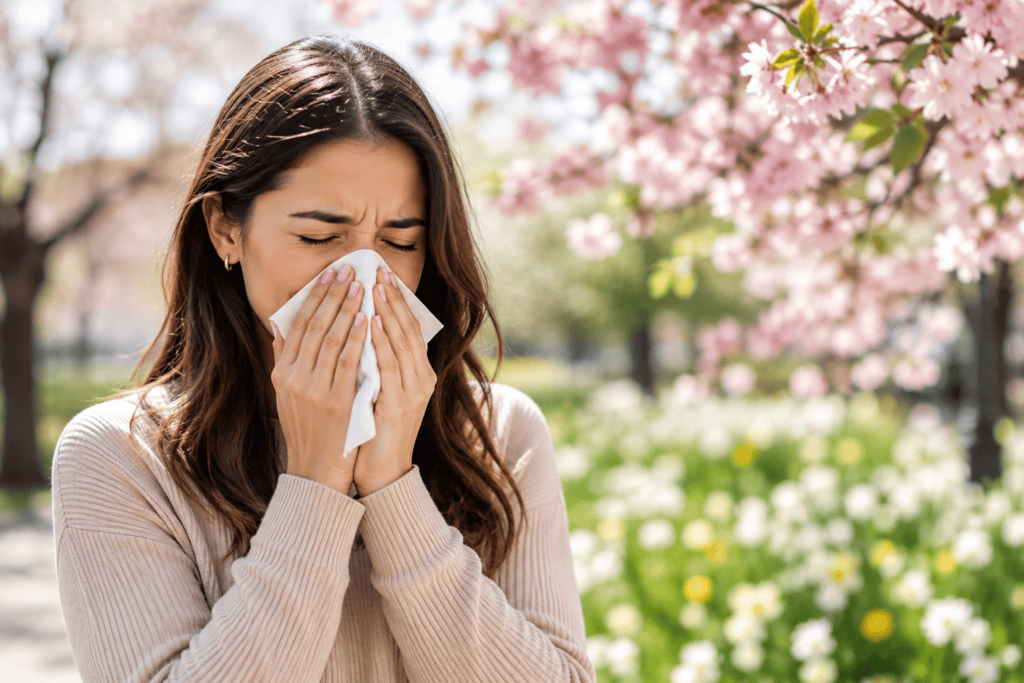
Allergies occur when your immune system overreacts to a substance that is usually harmless. These substances, called allergens, can include pollen, dust mites, pet dander, certain foods, insect stings, medications, mold, or latex. When you are exposed to an allergen, your immune system releases chemicals such as histamine, which can cause allergy symptoms.
Allergies can range from mild to severe and may affect your nose, eyes, skin, lungs, or digestive system. While many allergies can be managed with avoiding triggers and medications, some allergic reactions can become life-threatening. Knowing your allergy triggers and recognizing the signs of a severe allergic reaction can help you stay safe and healthy.
Allergies – NIH MedlinePlus
https://medlineplus.gov/allergy.html
Provides patient-friendly information about different types of allergies, symptoms, diagnosis, treatment, and prevention.
Allergies – American Academy of Allergy, Asthma & Immunology (AAAAI)
https://www.aaaai.org/tools-for-the-public
Offers reliable patient education about allergies, allergy testing, medications, and avoiding allergy triggers.
Allergies are very common and affect millions of children and adults each year. Seasonal allergies are among the most common, but food allergies, medication allergies, insect sting allergies, and environmental allergies are also frequently diagnosed.
Allergy symptoms depend on the type of allergen and how your body reacts. Symptoms can affect one part of the body or several areas at the same time.
Common symptoms may include:
Your healthcare provider will ask about your symptoms, medical history, family history, and possible allergy triggers. They may recommend allergy testing to identify which substances are causing your symptoms.
Common diagnostic methods include a physical examination, skin testing, blood testing, and, in some cases, supervised food or medication challenges performed by an allergy specialist.
Allergy Testing – American College of Allergy, Asthma & Immunology (ACAAI)
https://acaai.org/allergies/testing-diagnosis/
Explains the different types of allergy testing and how healthcare providers diagnose allergies.
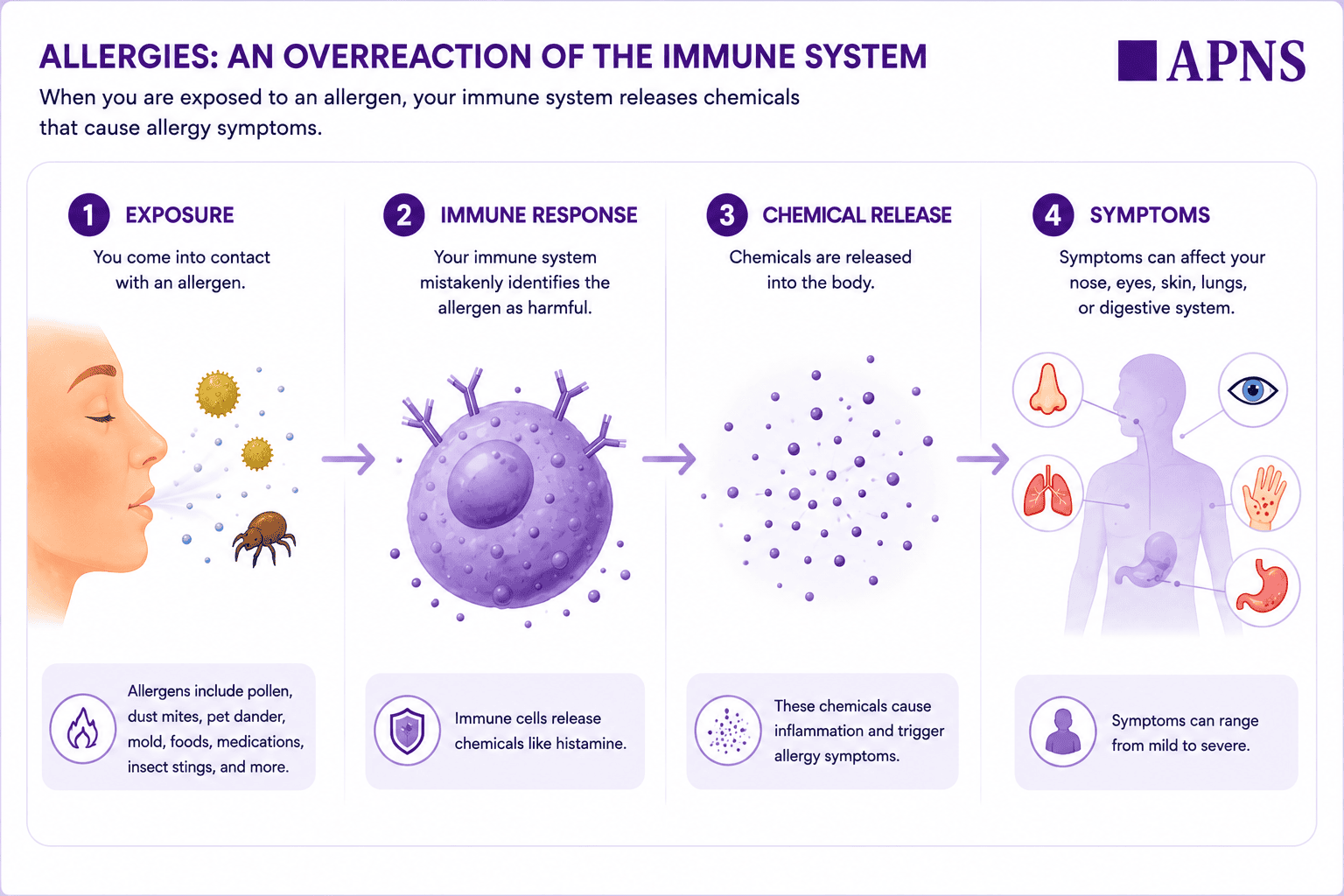
Allergies develop when your immune system mistakenly identifies a harmless substance as dangerous. When you are exposed to that allergen again, your immune system reacts by releasing chemicals that cause allergy symptoms.
Common allergy triggers include:
Allergy – NIH MedlinePlus
https://medlineplus.gov/allergy.html
Learn about common allergy triggers and how the immune system causes allergic reactions.
Certain factors can increase your exposure to allergens or make allergy symptoms more noticeable.
Common triggers include:
Pollen – American Academy of Allergy, Asthma & Immunology (AAAAI)
https://www.aaaai.org/tools-for-the-public
Provides information about seasonal allergies and reducing exposure to environmental allergens.
Although allergies cannot always be prevented, reducing exposure to known allergens can help decrease symptoms and lower the risk of allergic reactions.
Helpful prevention tips include:
Allergy Prevention – American Academy of Allergy, Asthma & Immunology (AAAAI)
https://www.aaaai.org/tools-for-the-public
Provides practical recommendations for preventing allergy symptoms and reducing allergen exposure.
The following video content is provided to help you better understand this condition. These resources are intended for educational purposes and should not replace personalized medical advice from your healthcare provider.
Blood tests may help identify certain allergies or evaluate your immune response. Not everyone with allergies needs laboratory testing.
Common laboratory tests include:
Allergy Blood Test – American College of Allergy, Asthma & Immunology (ACAAI)
https://acaai.org/allergies/testing-diagnosis/
Provides information about allergy blood testing and when it may be recommended.
Several tests can help identify allergy triggers and confirm a diagnosis. Your healthcare provider will recommend the most appropriate test based on your symptoms and medical history.
Common diagnostic tests include:
Allergy Testing – American College of Allergy, Asthma & Immunology (ACAAI)
https://acaai.org/allergies/testing-diagnosis/
Learn about skin testing, blood testing, and other diagnostic procedures used to identify allergies.
Treatment depends on the type of allergy, how severe your symptoms are, and which allergens trigger your reactions. The goal is to reduce symptoms, prevent allergic reactions, and improve your quality of life.
Treatment options may include:
Allergy Treatment – American Academy of Allergy, Asthma & Immunology (AAAAI)
https://www.aaaai.org/tools-for-the-public
Provides information about medications, allergy shots, and other treatment options.
Avoiding known allergy triggers is one of the most effective ways to reduce symptoms. Small changes at home, school, or work can often make a noticeable difference.
Helpful lifestyle changes include:
Allergy Prevention – American Academy of Allergy, Asthma & Immunology (AAAAI)
https://www.aaaai.org/tools-for-the-public
Provides practical tips for reducing allergen exposure and preventing allergic reactions.
Several medications can help reduce allergy symptoms or prevent allergic reactions. Your healthcare provider can help determine which medications are most appropriate based on your symptoms and medical history.
Common medications include:
Antihistamines – NIH MedlinePlus
https://medlineplus.gov/antihistamines.html
Explains how antihistamines work, common side effects, and safe use.
Epinephrine Injection – NIH MedlinePlus
https://medlineplus.gov/druginfo/meds/a603002.html
Provides important information about using epinephrine to treat severe allergic reactions.
Most people with allergies do not need surgery or an invasive procedure. However, certain treatments may be recommended if symptoms are severe, difficult to control, or significantly affect your quality of life.
Common procedures and treatments include:
Allergy Shots (Immunotherapy) – American Academy of Allergy, Asthma & Immunology (AAAAI)
https://www.aaaai.org/tools-for-the-public/conditions-library/allergies/allergy-shots-(immunotherapy)
Learn how allergy shots work, who may benefit, and what to expect during treatment.
Many people successfully manage their allergies by avoiding triggers, taking medications when needed, and working closely with their healthcare provider. Some allergies improve over time, while others may last throughout life.
Regular follow-up is important, especially if your symptoms change or you have experienced a severe allergic reaction in the past.
Managing your allergies at home can help reduce symptoms and improve your quality of life. Identifying and avoiding your allergy triggers is one of the most effective ways to prevent reactions.
Helpful tips include:
Allergy Prevention – American Academy of Allergy, Asthma & Immunology (AAAAI)
https://www.aaaai.org/tools-for-the-public
Provides practical tips for reducing allergen exposure and preventing allergy symptoms.
Yes. Although many allergies begin during childhood, new allergies can develop at any age.
Some allergies improve over time, while others continue throughout life. This varies from person to person.
Colds are caused by viruses and usually improve within one to two weeks. Allergies are caused by your immune system reacting to allergens and often continue as long as you are exposed to the trigger.
Yes. Allergies, poor sleep due to congestion, and some allergy medications can all contribute to feeling tired.
If your healthcare provider has prescribed one because of a history of severe allergic reactions or anaphylaxis, you should carry it with you at all times.

Consider asking your healthcare provider:
Many allergies can be managed by your primary care provider. If your symptoms are severe, difficult to control, or you have experienced a serious allergic reaction, your provider may recommend seeing a specialist.
You may be referred to:
Find an Allergist – American College of Allergy, Asthma & Immunology (ACAAI)
https://acaai.org/find-an-allergist/
Locate a board-certified allergist near you and learn more about specialty allergy care.
Most allergies cannot be permanently cured, but they can often be managed successfully. Many people experience fewer symptoms by avoiding allergy triggers and using medications as directed.
For some people, allergy immunotherapy (allergy shots or tablets) can reduce symptoms over time and decrease the need for medications.
Call 911 or seek emergency medical care immediately if you experience:
If you have been prescribed an epinephrine auto-injector, use it immediately as directed and then call 911, even if you begin to feel better.
Anaphylaxis – NIH MedlinePlus
https://medlineplus.gov/anaphylaxis.html
Learn to recognize the signs of anaphylaxis and understand why immediate treatment is critical.
CALL 911
APNS does not provide emergency medical services. If you believe you are experiencing a medical emergency, including (but not limited to) chest pain, difficulty breathing, stroke symptoms, severe allergic reactions, anaphylaxis, uncontrolled bleeding, seizures, loss of consciousness, or any other potentially life-threatening condition, you are instructed to call 911 immediately or go immediately to the nearest emergency department.
Allergies – NIH MedlinePlus
https://medlineplus.gov/allergy.html
Easy-to-understand information about allergies, symptoms, diagnosis, treatment, and prevention.
American Academy of Allergy, Asthma & Immunology (AAAAI)
https://www.aaaai.org/tools-for-the-public
Evidence-based patient education on seasonal allergies, food allergies, medications, immunotherapy, and allergy prevention.
American College of Allergy, Asthma & Immunology (ACAAI)
https://acaai.org/patients/
Provides reliable patient education about allergy testing, treatment options, asthma, eczema, food allergies, and anaphylaxis.
Centers for Disease Control and Prevention (CDC) – Allergies
https://www.cdc.gov/
Provides general public health information related to allergies, asthma, and environmental health.
This guide is intended for educational purposes only and should not replace medical advice, diagnosis, or treatment from your healthcare provider. Always follow the recommendations of your healthcare team regarding your individual health needs. Contact your healthcare provider if your allergy symptoms worsen or are not controlled with treatment. Call 911 immediately if you experience signs of a severe allergic reaction or anaphylaxis.
At APNS, our providers take the time to understand your condition and your goals. We offer comprehensive telehealth visits at a fixed rate — no membership fees, no insurance required, and no unexpected charges. Whether you’re newly diagnosed or looking for a provider who actually listens, we’re here to help.