
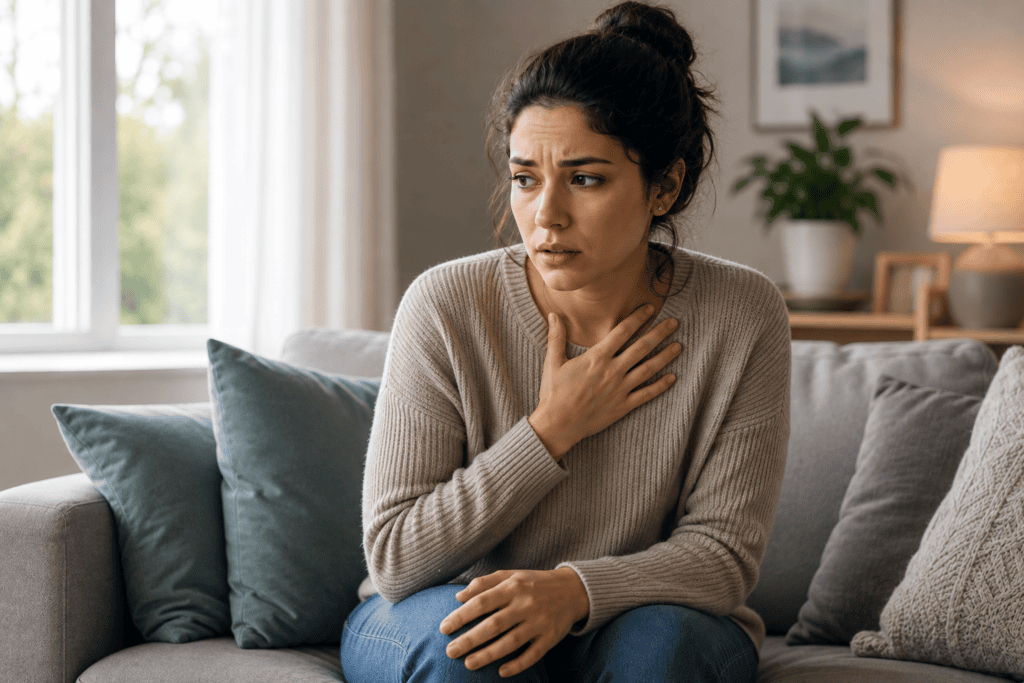
Anxiety is a feeling of fear, worry, uneasiness, or dread. It is a normal response to stress and may help a person prepare for danger or an important event. Anxiety becomes a health concern when it is difficult to control, happens often, continues after the stressful event has passed, or interferes with sleep, work, relationships, or daily activities.
An anxiety attack is a commonly used term for a period of intense anxiety. It is not a specific medical diagnosis and may build gradually in response to stress. A panic attack is a sudden episode of intense fear or discomfort that may cause a racing heart, shortness of breath, chest discomfort, dizziness, trembling, or a fear of losing control. Having one panic attack does not necessarily mean a person has panic disorder.
Anxiety Disorders – National Institute of Mental Health
Explains common anxiety disorders, symptoms, risk factors, diagnosis, and treatment.
Provides patient-friendly information about normal anxiety, anxiety disorders, and panic attacks.
Anxiety disorders are common mental health conditions. Approximately one-third of adults in the United States experience an anxiety disorder at some point in their lives. Anxiety may begin during childhood, adolescence, or adulthood.
The risk may be higher in people who:
Anxiety can affect anyone and is not a sign of weakness or poor character.
Anxiety may cause emotional, mental, behavioral, and physical symptoms.
Common symptoms include:
A panic attack may also cause:
Panic symptoms usually begin quickly and may feel similar to a heart attack or another medical emergency.
A healthcare or mental health professional may diagnose an anxiety disorder by discussing the symptoms, how long they have been present, and how they affect daily life.
The provider may ask:
Questionnaires may be used to measure symptom severity. Diagnosis may include generalized anxiety disorder, panic disorder, social anxiety disorder, a phobia-related disorder, or another condition. Generalized anxiety disorder generally involves difficult-to-control worry on most days for at least six months, along with symptoms such as restlessness, fatigue, poor concentration, irritability, muscle tension, or sleep difficulty.
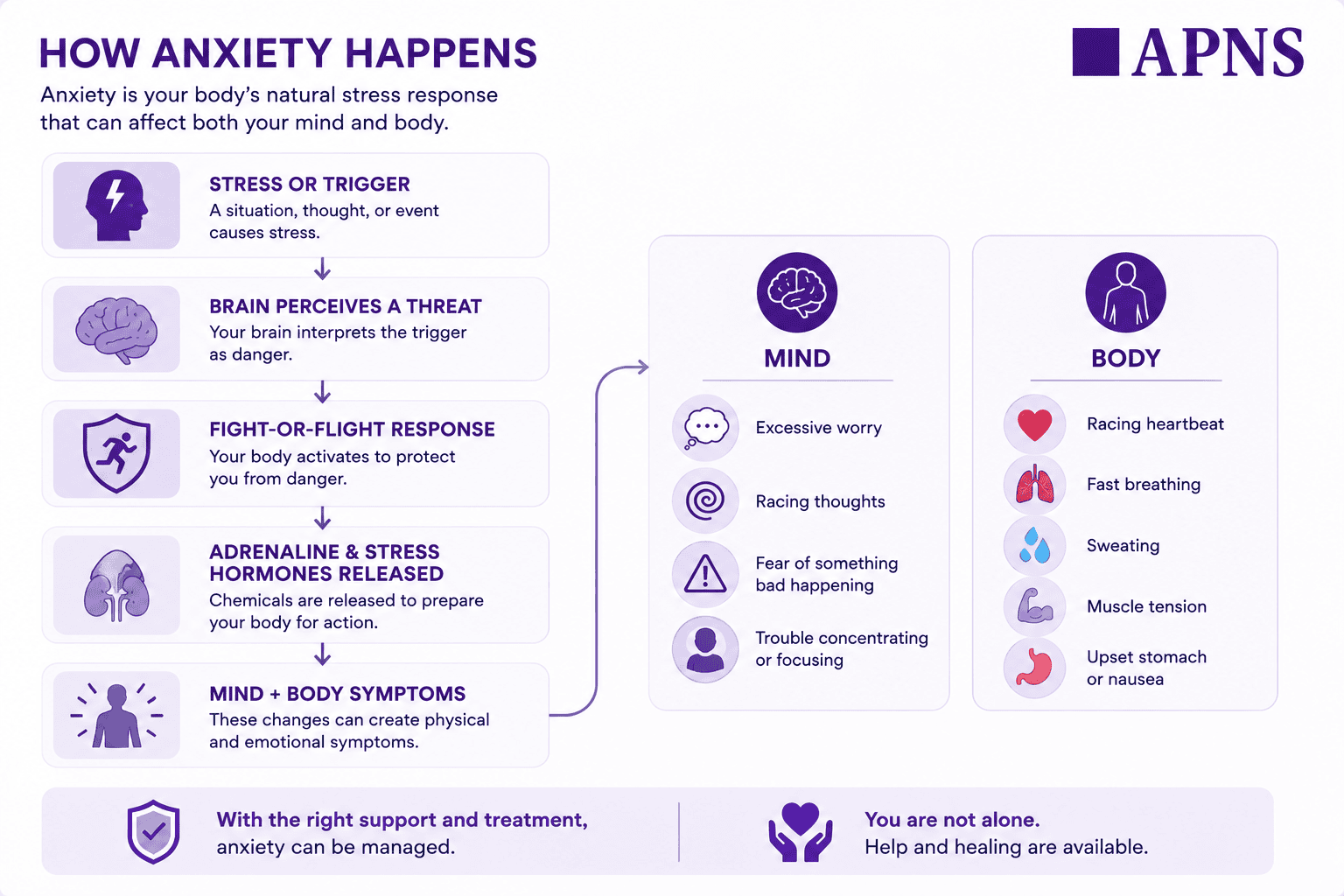
Anxiety usually develops from a combination of biological, psychological, medical, and environmental factors.
Possible causes and contributing factors include:
Sometimes anxiety develops without one clear cause. A healthcare provider may evaluate for medical or substance-related conditions when symptoms are new, severe, or unusual.
Factors that may increase anxiety or trigger attacks include:
Avoidance may bring temporary relief, but it can strengthen anxiety over time because the feared situation never has a chance to feel manageable.
Not every episode can be prevented, but early care and healthy routines may reduce the frequency and severity of symptoms.
Helpful prevention measures include:
Learning about anxiety and panic symptoms can reduce fear and make it easier to seek effective treatment.
The following video content is provided to help you better understand this condition. These resources are intended for educational purposes and should not replace personalized medical advice from your healthcare provider.
There is no blood test that directly diagnoses an anxiety disorder.
Laboratory tests may be ordered to look for medical conditions that can cause or worsen anxiety.
Possible tests include:
Testing depends on the person’s symptoms, medical history, medications, and examination.
Most anxiety disorders do not require imaging.
Tests may be recommended when symptoms could be caused by a heart, lung, neurological, or other medical condition.
Possible tests include:
A first episode of severe chest pain, shortness of breath, fainting, or an irregular heartbeat should not automatically be assumed to be anxiety.
Anxiety disorders are treatable. Treatment is based on the type and severity of anxiety, medical history, personal preferences, and how symptoms affect daily life.
Treatment options may include:
Cognitive behavioral therapy helps people identify unhelpful thought and behavior patterns and develop healthier responses. Therapy and medication are the main treatments for panic disorder, and treatment can reduce both the frequency and severity of panic attacks.
Panic Disorder: What You Need to Know – NIMH
Explains panic attacks, panic disorder, psychotherapy, medication, and finding professional help.
Healthy routines may reduce overall anxiety and support treatment.
Helpful changes include:
Lifestyle changes can support recovery but may not replace professional treatment when anxiety is persistent, severe, or disabling.
Medication may be used alone or together with psychotherapy.
Possible medications include:
Antidepressants generally take several weeks to provide their full benefit. Some people temporarily experience nausea, sleep changes, restlessness, sexual side effects, or increased anxiety when starting or changing a medication.
Benzodiazepines can cause sedation, memory problems, impaired driving, falls, tolerance, dependence, and withdrawal. Combining them with alcohol, opioids, sleep medication, or other sedatives can cause dangerous breathing suppression. Do not stop a regularly used benzodiazepine suddenly without medical guidance.
Contact a prescriber promptly for severe agitation, major mood changes, unusual behavior, or new or worsening thoughts of self-harm after starting or changing a psychiatric medication.
Anxiety is usually treated without invasive procedures.
Possible interventions include:
Treatment intensity should match symptom severity and safety needs.
Many people experience major improvement with appropriate treatment. Recovery may involve learning to manage symptoms rather than never feeling anxious again.
Long-term outcomes may depend on:
Symptoms may improve gradually and can return during stressful periods. Using previously learned coping skills and seeking help early can reduce the severity of future episodes.
During an anxiety or panic attack:
A simple grounding exercise is to identify:
Do not repeatedly breathe deeply or rapidly into the chest, as this may worsen lightheadedness and tingling. Breathing into a paper bag is not recommended because dangerous heart or lung symptoms could be mistaken for anxiety.
Seek medical evaluation when symptoms are new, unusually severe, different from previous attacks, or include concerning physical symptoms.
Not exactly. “Anxiety attack” is an informal term and may describe anxiety that gradually increases around a stressful situation. A panic attack is a sudden surge of intense fear or discomfort with h4 physical or emotional symptoms.
A panic attack itself does not usually cause a heart attack, but its symptoms can feel very similar. New or severe chest pain, fainting, breathing difficulty, or pain spreading to the arm, jaw, or back requires urgent medical evaluation.
Symptoms often reach their h4est point within several minutes. The main attack may pass relatively quickly, although exhaustion or lingering anxiety may continue afterward. Some episodes last longer.
Yes. Anxiety can affect the heart, breathing, digestion, muscles, sleep, concentration, and nervous system.
Yes. Caffeine can increase restlessness, shaking, rapid heartbeat, sleep problems, and panic symptoms, especially in sensitive individuals.
Alcohol may briefly reduce anxiety but often worsens sleep and next-day symptoms. Regular use may lead to dependence, withdrawal-related anxiety, and dangerous medication interactions.
Complete avoidance often makes anxiety h4er. Gradual exposure with appropriate support can help the brain learn that feared situations or sensations are manageable.
Yes. Rapid breathing and increased muscle tension can cause dizziness, tingling, numbness, or feelings of unreality. New neurological symptoms still require appropriate medical evaluation.
Temporary anxiety may improve when stress resolves. Persistent or disabling anxiety often benefits from professional treatment.
Panic attacks are frightening but are not usually physically dangerous. However, symptoms should not automatically be assumed to be panic, especially during a first episode or when symptoms differ from previous attacks.

Consider asking:
Anxiety may be treated by a primary care provider or mental health professional.
Possible referrals include:
SAMHSA’s National Helpline can provide treatment referral information at 1-800-662-HELP (4357).
Anxiety disorders are highly treatable, although the word “cure” may not apply in the same way for everyone.
Some people experience complete or long-lasting relief. Others may continue to have occasional symptoms but learn to manage them successfully through therapy, medication, lifestyle changes, and early treatment of flare-ups.
Treatment may help:
Anxiety should not be left untreated simply because it has been present for a long time.
Call 911 or seek emergency medical care immediately for:
Do not assume that a first episode of chest pain, breathing difficulty, fainting, or neurological symptoms is only anxiety.
For emotional distress, suicidal thoughts, or a mental health crisis in the United States, call or text 988 for the Suicide & Crisis Lifeline. The service provides 24-hour support for mental health, substance-use, and crisis concerns.
Seek urgent mental health or medical evaluation for:
Stay with a person who may be at immediate risk, remove access to dangerous items when it is safe to do so, and contact emergency or crisis services.
CALL 911
APNS does not provide emergency medical services. If you believe you are experiencing a medical emergency, including (but not limited to) chest pain, difficulty breathing, stroke symptoms, severe allergic reactions, anaphylaxis, uncontrolled bleeding, seizures, loss of consciousness, or any other potentially life-threatening condition, you are instructed to call 911 immediately or go immediately to the nearest emergency department.
Anxiety Disorders – National Institute of Mental Health
Explains types of anxiety disorders, symptoms, risk factors, diagnosis, and treatment.
Generalized Anxiety Disorder – NIMH
Provides detailed information about excessive worry, diagnosis, psychotherapy, and medication.
Panic Disorder: What You Need to Know – NIMH
Explains panic attacks, panic disorder, treatment options, and finding help.
Provides patient-friendly information about normal anxiety and anxiety disorders.
Panic Disorder – NIH MedlinePlus
Explains recurrent panic attacks, symptoms, diagnosis, and treatment.
Provides information about anxiety symptoms, professional support, and treatment resources.
988 Suicide & Crisis Lifeline – SAMHSA
Provides 24-hour crisis support by calling or texting 988.
Provides information about locating mental health and substance-use services.
This guide is intended for educational purposes only and should not replace medical or mental health advice, diagnosis, testing, or treatment from a qualified healthcare professional. Anxiety-like symptoms may also be caused by heart disease, abnormal heart rhythms, lung conditions, thyroid disease, low blood sugar, anemia, medication effects, alcohol or drug use, withdrawal, neurological conditions, or another medical problem. Do not begin, stop, increase, or combine psychiatric medications without guidance from the prescribing professional. Benzodiazepines can cause dependence, withdrawal, impaired driving, falls, and dangerous breathing problems when combined with alcohol, opioids, sleep medicines, or other sedatives. Seek prompt professional care when anxiety is persistent, worsening, causing repeated attacks, or interfering with daily functioning. Call 911 for severe chest pain, difficulty breathing, fainting, stroke symptoms, seizure, overdose, or immediate danger. In the United States, call or text 988 for suicidal thoughts, emotional crisis, or urgent mental health support.
At APNS, our providers take the time to understand your condition and your goals. We offer comprehensive telehealth visits at a fixed rate — no membership fees, no insurance required, and no unexpected charges. Whether you’re newly diagnosed or looking for a provider who actually listens, we’re here to help.