

Arthritis is a general term used to describe inflammation or damage affecting one or more joints. Joints are where two bones meet, allowing your body to move. Arthritis can cause pain, stiffness, swelling, and reduced movement. There are more than 100 different types of arthritis, with osteoarthritis and rheumatoid arthritis being the most common.
Arthritis can affect people of all ages, although it becomes more common as people get older. Symptoms may develop slowly over time or appear more suddenly, depending on the type of arthritis. While there is no cure for many forms of arthritis, treatments, healthy lifestyle habits, and regular medical care can help reduce symptoms, improve movement, and protect your joints.
Arthritis – NIH MedlinePlus
https://medlineplus.gov/arthritis.html
Provides easy-to-understand information about arthritis, including symptoms, diagnosis, treatment, and living with arthritis.
Arthritis – Centers for Disease Control and Prevention (CDC)
https://www.cdc.gov/arthritis/
Provides reliable information about arthritis, treatment options, physical activity, and self-management.
Arthritis is one of the most common chronic health conditions in the United States. More than 53 million adults have been diagnosed with some form of arthritis, and the condition becomes more common with increasing age. Arthritis can affect both men and women and may also occur in children.
Arthritis Data & Statistics – CDC
https://www.cdc.gov/arthritis/data_statistics/index.htm
Provides current information about how common arthritis is and who is most affected.
Arthritis symptoms can vary depending on the type of arthritis and which joints are affected. Symptoms may come and go or gradually worsen over time.
Common symptoms may include:
Your healthcare provider will ask about your symptoms, medical history, family history, and perform a physical examination. They will evaluate your joints for swelling, tenderness, warmth, and range of motion.
Depending on the type of arthritis that is suspected, your provider may recommend blood tests or imaging studies to help confirm the diagnosis and determine the best treatment plan.
Arthritis Diagnosis – Arthritis Foundation
https://www.arthritis.org/health-wellness/about-arthritis/understanding-arthritis
Explains how healthcare providers diagnose different types of arthritis.
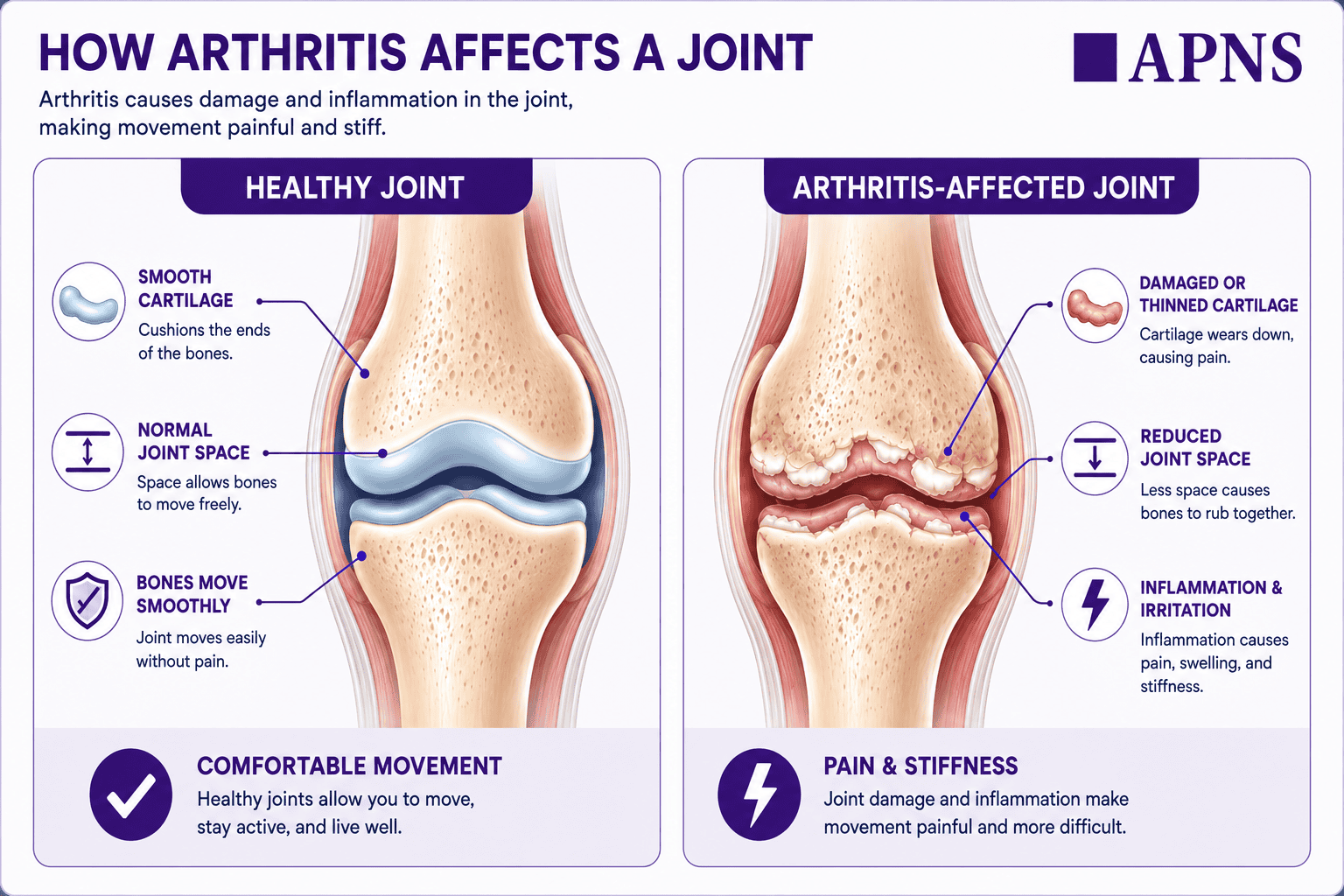
The cause of arthritis depends on the specific type. Some forms develop from normal wear and tear on the joints, while others occur because the immune system mistakenly attacks healthy joint tissue.
Common causes or risk factors include:
Arthritis Basics – CDC
https://www.cdc.gov/arthritis/basics/index.html
Explains the different types of arthritis, common causes, and risk factors.
Certain activities and lifestyle factors may increase joint pain or make arthritis symptoms more noticeable.
Common factors include:
Living With Arthritis – CDC
https://www.cdc.gov/arthritis/basics/management.html
Provides practical tips for managing arthritis symptoms and protecting your joints.
Although not every type of arthritis can be prevented, healthy lifestyle habits can reduce your risk of certain forms of arthritis and help protect your joints.
Helpful prevention tips include:
Healthy Living With Arthritis – Centers for Disease Control and Prevention (CDC)
https://www.cdc.gov/arthritis/basics/management.html
Provides practical guidance for protecting your joints and living well with arthritis.
The following video content is provided to help you better understand this condition. These resources are intended for educational purposes and should not replace personalized medical advice from your healthcare provider.
Laboratory tests may help diagnose certain types of arthritis, especially inflammatory or autoimmune arthritis. Not everyone with arthritis will need blood tests.
Common laboratory tests may include:
Arthritis Blood Tests – Arthritis Foundation
https://www.arthritis.org/
Provides information about laboratory testing used to diagnose different forms of arthritis.
Imaging tests help evaluate joint damage, inflammation, and other changes associated with arthritis.
Common diagnostic tests include:
Imaging for Arthritis – Arthritis Foundation
https://www.arthritis.org/
Learn how imaging studies help diagnose arthritis and monitor joint damage.
Treatment depends on the type of arthritis, the joints involved, and how severe your symptoms are. The goals of treatment are to reduce pain, improve movement, protect your joints, and maintain your quality of life.
Treatment options may include:
Arthritis Treatment – CDC
https://www.cdc.gov/arthritis/basics/management.html
Provides information about arthritis treatments, exercise, medications, and self-management strategies.
Healthy daily habits can help reduce arthritis symptoms, improve joint function, and protect your overall health. Even small lifestyle changes may make a noticeable difference over time.
Helpful lifestyle changes include:
Physical Activity for Arthritis – CDC
https://www.cdc.gov/arthritis/basics/physical-activity-overview.html
Provides exercise recommendations and practical tips for staying active with arthritis.
Several medications can help reduce pain, decrease inflammation, and improve joint function. Your healthcare provider will recommend the treatment that is most appropriate based on the type of arthritis you have.
Common medications include:
Ibuprofen – NIH MedlinePlus
https://medlineplus.gov/druginfo/meds/a682159.html
Explains how ibuprofen works, common side effects, and safe use.
Arthritis Medications – Arthritis Foundation
https://www.arthritis.org/
Provides information about common medications used to treat different types of arthritis.
Most people with arthritis do not need surgery. However, if arthritis causes severe pain, significant joint damage, or limits your ability to perform daily activities despite other treatments, your healthcare provider may recommend a procedure.
Common procedures may include:
Joint Replacement – American Academy of Orthopaedic Surgeons (AAOS)
https://orthoinfo.aaos.org/
Learn about joint replacement surgery, recovery, and other orthopedic procedures used to treat arthritis.
Arthritis is often a long-term condition, but many people successfully manage their symptoms and maintain an active lifestyle. Following your treatment plan, staying physically active, and protecting your joints can help reduce pain and slow the progression of some types of arthritis.
Regular follow-up with your healthcare provider allows your treatment plan to be adjusted if your symptoms change or your condition progresses.
Healthy daily habits can help reduce pain, improve joint function, and make everyday activities easier.
Helpful tips include:
Learn More
Managing Arthritis – Centers for Disease Control and Prevention (CDC)
https://www.cdc.gov/arthritis/basics/management.html
Provides practical tips for managing arthritis symptoms and protecting your joints.
No. Although arthritis becomes more common with age, it is not considered a normal part of aging.
Yes. Regular, low-impact exercise helps strengthen the muscles around your joints, improves flexibility, and may reduce pain.
Some people notice that weather changes seem to affect their symptoms, although research has shown mixed results.
Yes. Losing excess weight reduces stress on weight-bearing joints such as the knees and hips and may improve pain and mobility.
Yes. Arthritis may affect one joint or multiple joints depending on the type of arthritis you have.

Consider asking your healthcare provider:
Many people with arthritis receive care from their primary care provider. Depending on the type and severity of arthritis, your provider may recommend seeing a specialist.
You may be referred to:
Find a Rheumatologist – American College of Rheumatology
https://rheumatology.org/patient-blog
Provides patient education about rheumatic diseases and specialty care.
Most types of arthritis cannot be cured, but they can often be successfully managed. Early diagnosis, healthy lifestyle habits, medications, and regular medical care can reduce pain, improve joint function, and help slow disease progression.
Many people continue to work, exercise, travel, and enjoy their favorite activities while living with arthritis.
Seek immediate medical care if you experience:
These symptoms may indicate an infection, serious injury, or another medical emergency requiring prompt evaluation.
Septic Arthritis – NIH MedlinePlus
https://medlineplus.gov/ency/article/000430.htm
Learn about septic arthritis, a serious joint infection that requires immediate medical treatment.
CALL 911
APNS does not provide emergency medical services. If you believe you are experiencing a medical emergency, including (but not limited to) chest pain, difficulty breathing, stroke symptoms, severe allergic reactions, anaphylaxis, uncontrolled bleeding, seizures, loss of consciousness, or any other potentially life-threatening condition, you are instructed to call 911 immediately or go immediately to the nearest emergency department.
Arthritis – NIH MedlinePlus
https://medlineplus.gov/arthritis.html
Easy-to-understand information about arthritis, including symptoms, diagnosis, treatment, and living with arthritis.
Centers for Disease Control and Prevention (CDC) – Arthritis
https://www.cdc.gov/arthritis/
Evidence-based information about arthritis, exercise, self-management, and healthy living.
Arthritis Foundation
https://www.arthritis.org/
Provides patient education, self-management resources, exercise information, and support for people living with arthritis.
American Academy of Orthopaedic Surgeons (AAOS) – OrthoInfo
https://orthoinfo.aaos.org/
Reliable information about arthritis, joint replacement surgery, and orthopedic conditions.
This guide is intended for educational purposes only and should not replace medical advice, diagnosis, or treatment from your healthcare provider. Always follow the recommendations of your healthcare team regarding your individual health needs. Contact your healthcare provider if your symptoms worsen, new joints become painful or swollen, or your treatment is no longer helping. Seek immediate medical care if you develop signs of a serious joint infection or another medical emergency.
At APNS, our providers take the time to understand your condition and your goals. We offer comprehensive telehealth visits at a fixed rate — no membership fees, no insurance required, and no unexpected charges. Whether you’re newly diagnosed or looking for a provider who actually listens, we’re here to help.