

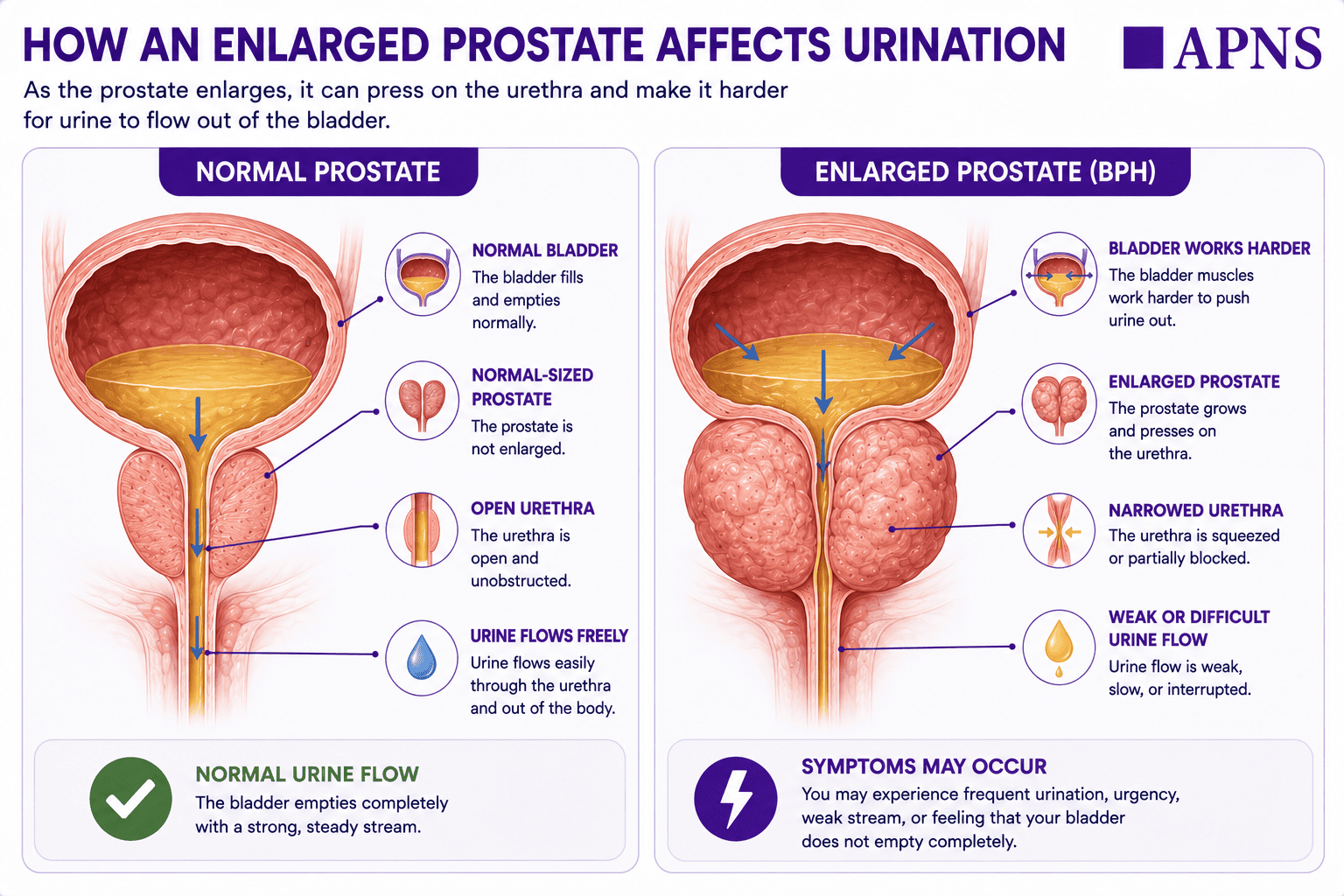
Benign prostatic hyperplasia (BPH) is noncancerous growth of the prostate gland. It is also called an enlarged prostate, benign prostatic hypertrophy, or benign prostatic obstruction. The prostate sits below the bladder and surrounds part of the urethra, the tube that carries urine out of the body.
As the prostate grows, it can press on the urethra and make the bladder work harder. This may cause a weak stream, urgency, frequent urination, nighttime urination, or trouble emptying the bladder. BPH is not prostate cancer and does not appear to increase prostate-cancer risk, but the two conditions can occur at the same time and may cause similar symptoms.
Enlarged Prostate (Benign Prostatic Hyperplasia) – NIDDK
https://www.niddk.nih.gov/health-information/urologic-diseases/prostate-problems/enlarged-prostate-benign-prostatic-hyperplasia
Provides comprehensive patient information about BPH symptoms, diagnosis, treatment, complications, and self-care.
Understanding Prostate Changes – National Cancer Institute
https://www.cancer.gov/types/prostate/understanding-prostate-changes
Explains age-related prostate changes, BPH, prostatitis, prostate cancer, testing, and questions to ask.
BPH becomes more common with age and is the most common prostate problem in people older than 50. NIDDK estimates that it affects about 5% to 6% of men ages 40 to 64 and about 29% to 33% of those age 65 and older.
An enlarged prostate does not always cause symptoms. Prostate size and symptom severity do not always match; a mildly enlarged gland can cause major symptoms, while a larger gland may cause little trouble.
Enlarged Prostate (Benign Prostatic Hyperplasia) – NIDDK
https://www.niddk.nih.gov/health-information/urologic-diseases/prostate-problems/enlarged-prostate-benign-prostatic-hyperplasia
Provides comprehensive patient information about BPH symptoms, diagnosis, treatment, complications, and self-care.
BPH can cause lower urinary tract symptoms, including:
Burning, fever, visible blood, new pelvic pain, or sudden inability to urinate is not something to assume is routine BPH. These symptoms need prompt evaluation for infection, stones, retention, cancer, or another cause.
Your provider will ask about the pattern, severity, and effect of your urinary symptoms. They may use a questionnaire such as the International Prostate Symptom Score, review a bladder diary, and ask about medicines, fluid intake, infections, neurologic symptoms, sexual function, and family history.
The examination may include the abdomen, genitals, and a digital rectal exam to estimate prostate size and feel for unusual areas. Because BPH symptoms overlap with infection, overactive bladder, urethral narrowing, bladder disease, neurologic conditions, and prostate cancer, testing is used to rule out other causes.
Enlarged Prostate (Benign Prostatic Hyperplasia) – NIDDK
https://www.niddk.nih.gov/health-information/urologic-diseases/prostate-problems/enlarged-prostate-benign-prostatic-hyperplasia
Provides comprehensive patient information about BPH symptoms, diagnosis, treatment, complications, and self-care.
Understanding Prostate Changes – National Cancer Institute
https://www.cancer.gov/types/prostate/understanding-prostate-changes
Explains age-related prostate changes, BPH, prostatitis, prostate cancer, testing, and questions to ask.
The exact cause is not fully understood. BPH develops as prostate cells increase in number during aging, and lifelong changes in hormones—especially testosterone and dihydrotestosterone—likely contribute.
Factors linked with a greater chance of BPH or urinary symptoms include:
BPH is not caused by sexual activity, masturbation, a sexually transmitted infection, or poor hygiene.
Enlarged Prostate (Benign Prostatic Hyperplasia) – NIDDK
https://www.niddk.nih.gov/health-information/urologic-diseases/prostate-problems/enlarged-prostate-benign-prostatic-hyperplasia
Provides comprehensive patient information about BPH symptoms, diagnosis, treatment, complications, and self-care.
Symptoms may worsen when the bladder is very full, urine production increases, or a medicine tightens the bladder outlet or weakens bladder contraction.
Do not stop a prescribed medicine on your own. Ask a pharmacist or provider to review all prescription drugs, over-the-counter products, and supplements for effects on urination.
Enlarged Prostate (Benign Prostatic Hyperplasia) – NIDDK
https://www.niddk.nih.gov/health-information/urologic-diseases/prostate-problems/enlarged-prostate-benign-prostatic-hyperplasia
Provides comprehensive patient information about BPH symptoms, diagnosis, treatment, complications, and self-care.
BPH cannot always be prevented because prostate growth is strongly linked with aging. Healthy habits may reduce symptom burden or lower risks associated with obesity, diabetes, and inactivity.
Lifestyle habits do not guarantee that the prostate will stay small, but they can improve overall urinary and general health.
Enlarged Prostate (Benign Prostatic Hyperplasia) – NIDDK
https://www.niddk.nih.gov/health-information/urologic-diseases/prostate-problems/enlarged-prostate-benign-prostatic-hyperplasia
Provides comprehensive patient information about BPH symptoms, diagnosis, treatment, complications, and self-care.
The following video content is provided to help you better understand this condition. These resources are intended for educational purposes and should not replace personalized medical advice from your healthcare provider.
Laboratory tests help check for other causes and complications. Testing may include:
A PSA result does not diagnose or exclude cancer by itself. Discuss the possible benefits, limitations, timing, and next steps before testing.
Urinalysis – NIH MedlinePlus
https://medlineplus.gov/lab-tests/urinalysis/
Explains how urine testing is performed and what abnormal results may mean.
Prostate-Specific Antigen (PSA) Test – National Cancer Institute
https://www.cancer.gov/types/prostate/psa-fact-sheet
Explains what PSA testing can and cannot show and how results may be interpreted.
Not everyone needs every test. Your provider may use:
Ask what each test is expected to clarify and whether results will change treatment.
Enlarged Prostate (Benign Prostatic Hyperplasia) – NIDDK
https://www.niddk.nih.gov/health-information/urologic-diseases/prostate-problems/enlarged-prostate-benign-prostatic-hyperplasia
Provides comprehensive patient information about BPH symptoms, diagnosis, treatment, complications, and self-care.
Cystoscopy – NIH MedlinePlus
https://medlineplus.gov/ency/article/003903.htm
Explains why cystoscopy is performed, preparation, what to expect, and possible risks.
Treatment depends on how much symptoms bother you, prostate size, urine retention, complications, other health conditions, sexual priorities, and personal preferences.
Untreated mild BPH does not always progress quickly. However, repeated retention, infections, bladder stones, blood in the urine, or kidney effects may make a procedure more appropriate.
Enlarged Prostate (Benign Prostatic Hyperplasia) – NIDDK
https://www.niddk.nih.gov/health-information/urologic-diseases/prostate-problems/enlarged-prostate-benign-prostatic-hyperplasia
Provides comprehensive patient information about BPH symptoms, diagnosis, treatment, complications, and self-care.
Enlarged Prostate – NIH MedlinePlus
https://medlineplus.gov/enlargedprostatebph.html
Offers plain-language information and reliable links about BPH, urinary symptoms, medicines, and procedures.
Daily habits may reduce symptoms, especially when BPH is mild.
Avoid severe fluid restriction. Concentrated urine can irritate the bladder, and dehydration can cause other health problems.
Enlarged Prostate (Benign Prostatic Hyperplasia) – NIDDK
https://www.niddk.nih.gov/health-information/urologic-diseases/prostate-problems/enlarged-prostate-benign-prostatic-hyperplasia
Provides comprehensive patient information about BPH symptoms, diagnosis, treatment, complications, and self-care.
BPH medicines work in different ways. Benefits and side effects should be reviewed against your symptoms, blood pressure, prostate size, sexual goals, and other medicines.
Tell an eye surgeon if you take or previously took tamsulosin or another alpha blocker because it can affect cataract surgery. Ask before using herbal products; saw palmetto and other supplements have inconsistent evidence and can interact with medicines.
Enlarged Prostate (Benign Prostatic Hyperplasia) – NIDDK
https://www.niddk.nih.gov/health-information/urologic-diseases/prostate-problems/enlarged-prostate-benign-prostatic-hyperplasia
Provides comprehensive patient information about BPH symptoms, diagnosis, treatment, complications, and self-care.
Finding and Learning About Side Effects – FDA
https://www.fda.gov/consumers/consumer-updates/finding-and-learning-about-side-effects-adverse-reactions
Helps patients find reliable medicine safety information and report possible side effects.
A urologist may recommend a procedure when medicines do not help enough, side effects are unacceptable, or complications develop.
Options differ in symptom relief, durability, catheter time, anesthesia, recovery, bleeding risk, retreatment rates, and effects on erection, ejaculation, fertility, and continence. Ask the urologist to compare the choices that fit your anatomy and goals.
Enlarged Prostate (Benign Prostatic Hyperplasia) – NIDDK
https://www.niddk.nih.gov/health-information/urologic-diseases/prostate-problems/enlarged-prostate-benign-prostatic-hyperplasia
Provides comprehensive patient information about BPH symptoms, diagnosis, treatment, complications, and self-care.
BPH often changes slowly. Mild symptoms may remain stable, improve, or worsen over time. Medicines may control symptoms for years, but some must be continued to maintain benefit.
Possible complications include acute or chronic urinary retention, repeated urinary infections, bladder stones, blood in the urine, bladder damage, and kidney problems. Regular follow-up helps track symptoms, bladder emptying, medicine effects, and whether treatment should change.
Enlarged Prostate (Benign Prostatic Hyperplasia) – NIDDK
https://www.niddk.nih.gov/health-information/urologic-diseases/prostate-problems/enlarged-prostate-benign-prostatic-hyperplasia
Provides comprehensive patient information about BPH symptoms, diagnosis, treatment, complications, and self-care.
Helpful home steps include:
Do not attempt to insert a catheter or other object unless a clinician has trained you and provided the correct supplies.
Enlarged Prostate (Benign Prostatic Hyperplasia) – NIDDK
https://www.niddk.nih.gov/health-information/urologic-diseases/prostate-problems/enlarged-prostate-benign-prostatic-hyperplasia
Provides comprehensive patient information about BPH symptoms, diagnosis, treatment, complications, and self-care.
Is BPH prostate cancer?
No. BPH is noncancerous growth. It does not appear to cause prostate cancer, but both can occur at the same time and may cause similar symptoms.
Does a larger prostate always cause worse symptoms?
No. Symptoms depend on where the prostate presses, bladder function, and other factors—not size alone.
Can BPH affect erections or ejaculation?
BPH, aging, other health conditions, medicines, and procedures can affect sexual function. Ask about these effects before choosing treatment.
Why do I urinate more at night?
BPH may contribute, but evening fluids, sleep apnea, leg swelling, diabetes, heart conditions, and certain medicines can also cause nocturia.
Can I take cold medicine with BPH?
Some decongestants and antihistamines can make urination harder. Check with a pharmacist or provider before using them.
Does saw palmetto shrink the prostate?
Research has not shown consistent meaningful benefit. Supplements can cause side effects or interactions, so discuss them before use.
Will I need surgery?
Many people do not. Surgery or a minimally invasive procedure is considered when symptoms remain bothersome, complications occur, or medicines are not appropriate.

Consider asking:
A primary care provider may diagnose and manage uncomplicated BPH. Referral may be made to:
Seek earlier urology evaluation if you cannot empty the bladder, have recurrent retention, or develop complications.
Enlarged Prostate (Benign Prostatic Hyperplasia) – NIDDK
https://www.niddk.nih.gov/health-information/urologic-diseases/prostate-problems/enlarged-prostate-benign-prostatic-hyperplasia
Provides comprehensive patient information about BPH symptoms, diagnosis, treatment, complications, and self-care.
BPH is a chronic age-related condition, so medicines control it rather than permanently cure it. Symptoms may improve greatly with lifestyle changes and medication, but the prostate can continue to grow.
Procedures and surgery can provide long-lasting relief by opening the urine channel or removing blocking tissue. Some patients later need repeat treatment, and urinary symptoms may persist if the bladder or another condition also contributes.
Enlarged Prostate (Benign Prostatic Hyperplasia) – NIDDK
https://www.niddk.nih.gov/health-information/urologic-diseases/prostate-problems/enlarged-prostate-benign-prostatic-hyperplasia
Provides comprehensive patient information about BPH symptoms, diagnosis, treatment, complications, and self-care.
Seek emergency or same-day care for:
Acute urinary retention is an emergency because the bladder and kidneys can be harmed. A clinician may need to place a catheter to drain the bladder promptly.
Enlarged Prostate (Benign Prostatic Hyperplasia) – NIDDK
https://www.niddk.nih.gov/health-information/urologic-diseases/prostate-problems/enlarged-prostate-benign-prostatic-hyperplasia
Provides comprehensive patient information about BPH symptoms, diagnosis, treatment, complications, and self-care.
CALL 911
APNS does not provide emergency medical services. If you believe you are experiencing a medical emergency, including (but not limited to) chest pain, difficulty breathing, stroke symptoms, severe allergic reactions, anaphylaxis, uncontrolled bleeding, seizures, loss of consciousness, or any other potentially life-threatening condition, you are instructed to call 911 immediately or go immediately to the nearest emergency department.
Enlarged Prostate (Benign Prostatic Hyperplasia) – NIDDK
https://www.niddk.nih.gov/health-information/urologic-diseases/prostate-problems/enlarged-prostate-benign-prostatic-hyperplasia
Provides comprehensive patient information about BPH symptoms, diagnosis, treatment, complications, and self-care.
Enlarged Prostate – NIH MedlinePlus
https://medlineplus.gov/enlargedprostatebph.html
Offers plain-language information and reliable links about BPH, urinary symptoms, medicines, and procedures.
Understanding Prostate Changes – National Cancer Institute
https://www.cancer.gov/types/prostate/understanding-prostate-changes
Explains age-related prostate changes, BPH, prostatitis, prostate cancer, testing, and questions to ask.
Prostate-Specific Antigen (PSA) Test – National Cancer Institute
https://www.cancer.gov/types/prostate/psa-fact-sheet
Explains what PSA testing can and cannot show and how results may be interpreted.
This guide is intended for educational purposes only and should not replace medical advice, diagnosis, or treatment from your healthcare provider or urologist. Urinary symptoms may be caused by BPH, infection, medication effects, bladder or neurologic conditions, prostate cancer, or other problems. Seek urgent care if you cannot urinate, have fever with urinary symptoms, pass significant blood or clots, develop severe pain, or experience signs of kidney problems or a serious medication reaction.
At APNS, our providers take the time to understand your condition and your goals. We offer comprehensive telehealth visits at a fixed rate — no membership fees, no insurance required, and no unexpected charges. Whether you’re newly diagnosed or looking for a provider who actually listens, we’re here to help.