
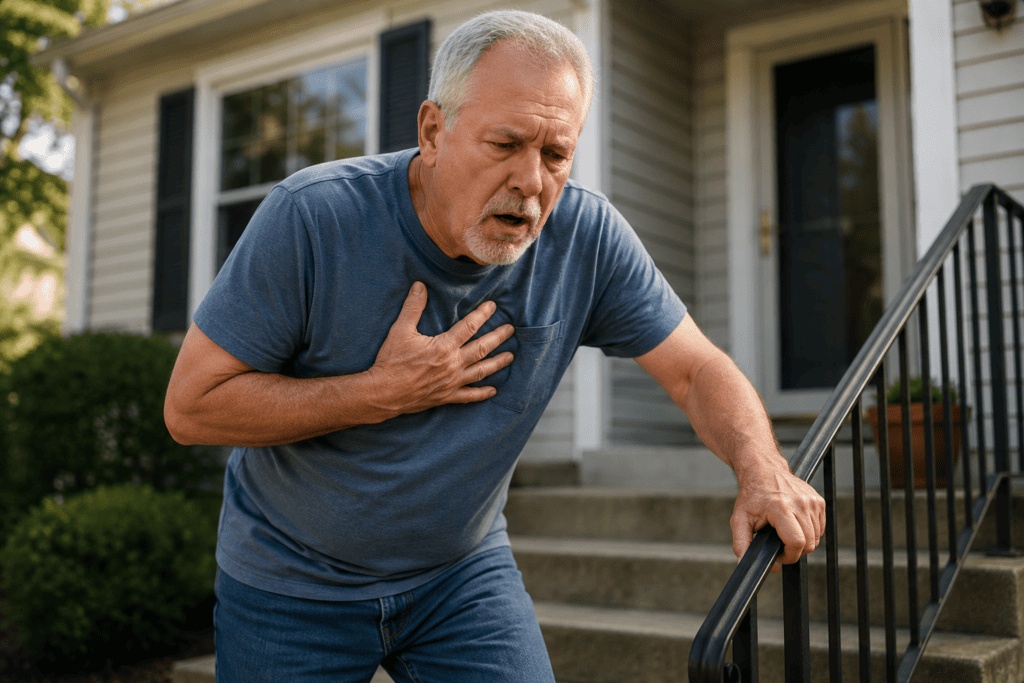
Chronic Obstructive Pulmonary Disease (COPD) is a long-term lung disease that makes it difficult to breathe. COPD usually develops over many years and most commonly includes emphysema (damage to the air sacs in the lungs) and chronic bronchitis (long-term inflammation of the airways). As the disease progresses, airflow becomes limited, making it harder to get enough air in and out of your lungs.
COPD cannot be cured, but it can be successfully managed with medications, pulmonary rehabilitation, healthy lifestyle changes, and avoiding lung irritants such as cigarette smoke. Early diagnosis and treatment can help reduce symptoms, improve quality of life, and slow the progression of the disease.
COPD – NIH MedlinePlus
https://medlineplus.gov/copd.html
Provides easy-to-understand information about COPD, including symptoms, diagnosis, treatment, medications, and prevention.
COPD – National Heart, Lung, and Blood Institute (NHLBI)
https://www.nhlbi.nih.gov/health/copd
Explains what COPD is, its causes, symptoms, diagnosis, and treatment options.
Chronic Obstructive Pulmonary Disease (COPD) is a long-term lung disease that makes it difficult to breathe. COPD usually develops over many years and most commonly includes emphysema (damage to the air sacs in the lungs) and chronic bronchitis (long-term inflammation of the airways). As the disease progresses, airflow becomes limited, making it harder to get enough air in and out of your lungs.
COPD cannot be cured, but it can be successfully managed with medications, pulmonary rehabilitation, healthy lifestyle changes, and avoiding lung irritants such as cigarette smoke. Early diagnosis and treatment can help reduce symptoms, improve quality of life, and slow the progression of the disease.
COPD – NIH MedlinePlus
https://medlineplus.gov/copd.html
Provides easy-to-understand information about COPD, including symptoms, diagnosis, treatment, medications, and prevention.
COPD – National Heart, Lung, and Blood Institute (NHLBI)
https://www.nhlbi.nih.gov/health/copd
Explains what COPD is, its causes, symptoms, diagnosis, and treatment options.
COPD symptoms usually develop gradually and often worsen over time.
Common symptoms may include:
Your healthcare provider will review your symptoms, smoking history, medical history, and perform a physical examination. Breathing tests are the most important way to diagnose COPD and determine how severe it is.
Additional testing may be recommended to rule out other lung conditions or evaluate complications.
COPD Diagnosis – National Heart, Lung, and Blood Institute (NHLBI)
https://www.nhlbi.nih.gov/health/copd
Explains how COPD is diagnosed and what tests may be recommended.
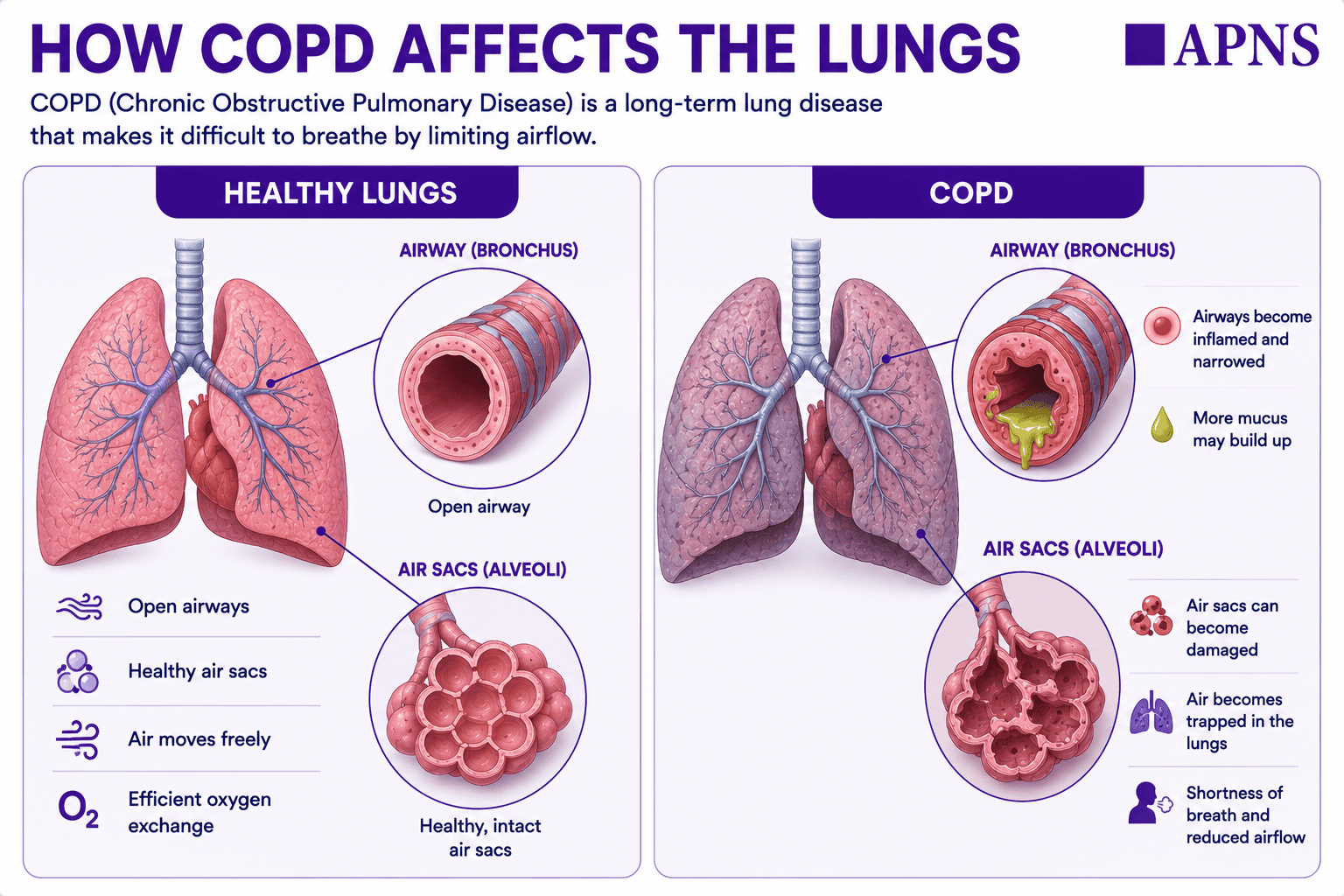
COPD most commonly develops after years of damage to the lungs and airways. Cigarette smoking is the leading cause, but long-term exposure to other lung irritants can also contribute.
Common causes and risk factors include:
COPD Causes and Risk Factors – NHLBI
https://www.nhlbi.nih.gov/health/copd
Learn about the causes of COPD and factors that increase your risk.
Certain triggers and illnesses can worsen COPD symptoms or lead to a flare-up (also called an exacerbation).
Common triggers include:
Living With COPD – American Lung Association
https://www.lung.org/lung-health-diseases/lung-disease-lookup/copd/living-with-copd
Provides practical tips for avoiding COPD triggers and managing symptoms.
Call 911 or seek emergency medical care immediately if you experience:
Contact your healthcare provider promptly if you notice:
COPD Flare-Ups – American Lung Association
https://www.lung.org/lung-health-diseases/lung-disease-lookup/copd/living-with-copd
Learn how to recognize COPD flare-ups and when emergency medical care is needed.
The following video content is provided to help you better understand this condition. These resources are intended for educational purposes and should not replace personalized medical advice from your healthcare provider.
Blood tests are not usually used to diagnose COPD, but they may help evaluate complications or identify other medical conditions.
Common laboratory tests may include:
COPD – NIH MedlinePlus
https://medlineplus.gov/copd.html
Provides information about laboratory testing and monitoring for people with COPD.
Several tests help diagnose COPD, determine its severity, and monitor lung function.
Common diagnostic tests include:
Pulmonary Function Tests – American Lung Association
https://www.lung.org/lung-health-diseases/lung-procedures-and-tests/lung-function-tests
Explains breathing tests used to diagnose COPD and other lung diseases.
Treatment focuses on improving breathing, reducing symptoms, preventing flare-ups, and maintaining your quality of life. Your treatment plan depends on the severity of your COPD and your overall health.
Treatment options may include:
COPD Treatment – National Heart, Lung, and Blood Institute (NHLBI)
https://www.nhlbi.nih.gov/health/copd
Provides information about medications, pulmonary rehabilitation, oxygen therapy, and other COPD treatments.
Healthy lifestyle habits are one of the most important parts of managing COPD. These changes can improve breathing, reduce flare-ups, and help you stay active.
Helpful lifestyle changes include:
Living With COPD – American Lung Association
https://www.lung.org/lung-health-diseases/lung-disease-lookup/copd/living-with-copd
Provides practical guidance for living well with COPD and reducing flare-ups.
Several medications can help improve breathing, reduce symptoms, and prevent COPD flare-ups. Your healthcare provider will recommend medications based on the severity of your symptoms.
Common medications include:
COPD Medicines – American Lung Association
https://www.lung.org/lung-health-diseases/lung-disease-lookup/copd/treatment
Provides information about inhalers, bronchodilators, corticosteroids, and other COPD medications.
Most people with COPD do not need surgery. However, if COPD becomes severe despite medications and pulmonary rehabilitation, your healthcare provider may recommend additional procedures to improve breathing or manage complications.
Common procedures may include:
COPD Treatment – National Heart, Lung, and Blood Institute (NHLBI)
https://www.nhlbi.nih.gov/health/copd
Learn about advanced COPD treatments, oxygen therapy, and procedures that may be recommended for severe disease.
COPD is a lifelong lung disease, but many people successfully manage their symptoms and continue to enjoy active, fulfilling lives. Following your treatment plan, avoiding smoking, staying active, and preventing respiratory infections can help slow disease progression and improve your quality of life.
Regular follow-up appointments allow your healthcare provider to monitor your lung function, adjust medications, and reduce the risk of COPD flare-ups.
Daily self-care is one of the most important parts of managing COPD and preventing flare-ups.
Helpful tips include:
Living With COPD – American Lung Association
https://www.lung.org/lung-health-diseases/lung-disease-lookup/copd/living-with-copd
Provides practical advice for managing COPD symptoms and improving daily quality of life.
Many cases of COPD can be prevented by avoiding smoking and limiting exposure to lung irritants.
No. COPD cannot be spread from one person to another.
Yes. Regular physical activity and pulmonary rehabilitation can improve breathing, increase endurance, and improve quality of life.
Respiratory infections can trigger serious COPD flare-ups. Staying current on recommended vaccines helps reduce your risk of severe illness.
Many people with COPD can safely travel. Talk with your healthcare provider before traveling, especially if you use supplemental oxygen.
Consider asking your healthcare provider:
Many people with COPD receive care from their primary care provider. Depending on your symptoms and lung function, your provider may recommend seeing a specialist.
You may be referred to:
American Lung Association – COPD
https://www.lung.org/lung-health-diseases/lung-disease-lookup/copd
Provides patient education about COPD, pulmonary rehabilitation, and specialty care.
There is currently no cure for COPD. However, treatment can help improve breathing, reduce symptoms, prevent flare-ups, and slow the progression of the disease.
Stopping smoking is the most important step you can take to protect your lungs and improve your long-term health.
Call 911 or seek emergency medical care immediately if you experience:
Contact your healthcare provider promptly if you notice:
COPD Flare-Ups – American Lung Association
https://www.lung.org/lung-health-diseases/lung-disease-lookup/copd/living-with-copd
Learn how to recognize COPD flare-ups and when emergency medical care is needed.
CALL 911
APNS does not provide emergency medical services. If you believe you are experiencing a medical emergency, including (but not limited to) chest pain, difficulty breathing, stroke symptoms, severe allergic reactions, anaphylaxis, uncontrolled bleeding, seizures, loss of consciousness, or any other potentially life-threatening condition, you are instructed to call 911 immediately or go immediately to the nearest emergency department.
COPD – NIH MedlinePlus
https://medlineplus.gov/copd.html
Easy-to-understand information about COPD, including symptoms, diagnosis, treatment, and prevention.
National Heart, Lung, and Blood Institute (NHLBI) – COPD
https://www.nhlbi.nih.gov/health/copd
Comprehensive information about COPD, medications, oxygen therapy, pulmonary rehabilitation, and healthy living.
Centers for Disease Control and Prevention (CDC) – COPD
https://www.cdc.gov/copd/
Evidence-based information about COPD, prevention, and public health recommendations.
American Lung Association – COPD
https://www.lung.org/lung-health-diseases/lung-disease-lookup/copd
Reliable patient education about COPD, breathing exercises, pulmonary rehabilitation, and living with chronic lung disease.
This guide is intended for educational purposes only and should not replace medical advice, diagnosis, or treatment from your healthcare provider. Always follow the recommendations of your healthcare team regarding your individual health needs. Contact your healthcare provider if your breathing becomes worse, your medications are no longer working as expected, or you develop signs of a respiratory infection. Call 911 immediately if you experience severe difficulty breathing, chest pain, blue lips or fingernails, confusion, or another medical emergency.
At APNS, our providers take the time to understand your condition and your goals. We offer comprehensive telehealth visits at a fixed rate — no membership fees, no insurance required, and no unexpected charges. Whether you’re newly diagnosed or looking for a provider who actually listens, we’re here to help.