

Launching January 2027

Depression

Depression At A Glance

  • Depression is more than a temporary bad mood and can cause persistent sadness, emptiness, hopelessness, irritability, or loss of interest in activities that were once enjoyable.
  • Symptoms can affect both emotional and physical health, including sleep, appetite, energy, concentration, motivation, and the ability to manage everyday responsibilities.
  • Depression usually develops from a combination of biological, psychological, environmental, and social factors rather than one single cause.
  • Major depressive disorder is generally diagnosed when symptoms are present most of the day, nearly every day, for at least two weeks and interfere with daily life.
  • Treatment may include psychotherapy, antidepressant medication, lifestyle and social-support interventions, or a combination of approaches.
  • Depression is treatable, and many people recover fully or experience major improvement with appropriate care, although treatment may need to be adjusted over time.

Table of Contents

Table of Contents

What Is Depression?

Depression is a common but serious mental health condition that affects how a person feels, thinks, sleeps, eats, and manages daily life. It can cause ongoing sadness, emptiness, hopelessness, irritability, or loss of interest in activities that were once enjoyable. Depression is more than a temporary bad mood or a normal response to a difficult day.

Major depressive disorder is generally diagnosed when symptoms are present most of the day, nearly every day, for at least two weeks and interfere with work, school, relationships, self-care, or other responsibilities. Depression can be mild, moderate, or severe, and some people experience repeated episodes. Effective treatment may include psychotherapy, medication, or both.

Learn More

Depression – National Institute of Mental Health

Explains depression symptoms, types, risk factors, diagnosis, and treatment.

Depression – NIH MedlinePlus

Provides patient-friendly information about depression and available treatments.

How Common Is Depression?

adults of any age, background, sex, gender, income level, or education level. Severe depression can significantly interfere with a person’s ability to work, maintain relationships, care for themselves, or complete normal daily activities.

The risk may be higher in people who have:

  • A personal or family history of depression
  • Experienced trauma, abuse, loss, or prolonged stress
  • A chronic medical condition
  • Chronic pain
  • Another mental health condition
  • Alcohol or substance-use problems
  • Major hormonal changes
  • Recently given birth
  • Limited social support
  • Significant financial, relationship, housing, or work stress
  • Certain medication side effects

Depression can also occur without an obvious cause.

What Symptoms Might You Notice?

Depression affects people differently. Not everyone experiences every symptom.

Common symptoms include:

  • Persistent sadness or emptiness
  • Feeling hopeless, helpless, or worthless
  • Loss of interest or pleasure
  • Irritability, frustration, or anger
  • Frequent crying
  • Low motivation
  • Fatigue or low energy
  • Sleeping too little
  • Sleeping too much
  • Difficulty falling or staying asleep
  • Changes in appetite
  • Unplanned weight gain or loss
  • Difficulty concentrating
  • Difficulty making decisions
  • Slowed thinking, speech, or movement
  • Restlessness or agitation
  • Social withdrawal
  • Reduced interest in sex
  • Unexplained headaches or body pain
  • Neglecting hygiene or responsibilities
  • Excessive guilt or self-blame
  • Thoughts about death
  • Thoughts of suicide or self-harm

Some people experience depression mainly as irritability, fatigue, physical discomfort, poor concentration, or loss of motivation rather than obvious sadness.

How Is Depression Diagnosed?

Depression is diagnosed through a clinical evaluation rather than one blood test or scan.

A healthcare provider may ask about:

  • Current mood
  • Loss of interest or enjoyment
  • Sleep
  • Appetite and weight
  • Energy level
  • Concentration
  • Feelings of guilt or worthlessness
  • Work and relationship functioning
  • Alcohol or substance use
  • Medical conditions
  • Current medications
  • Previous depressive episodes
  • Family mental health history
  • Trauma or major stressors
  • Thoughts of death, suicide, or self-harm
  • Periods of unusually high energy or reduced need for sleep

The provider may use a questionnaire such as the Patient Health Questionnaire-9, commonly called the PHQ-9, to measure symptom severity and monitor treatment response. A screening score can identify possible depression but does not replace a complete clinical assessment.

Before prescribing an antidepressant, the provider may ask about symptoms of bipolar disorder. Antidepressants used without appropriate mood-stabilizing treatment may worsen mania or mood instability in some people with bipolar disorder.

The U.S. Preventive Services Task Force recommends depression screening for adults, including older adults and pregnant and postpartum people, when systems are available for diagnosis, treatment, and follow-up.
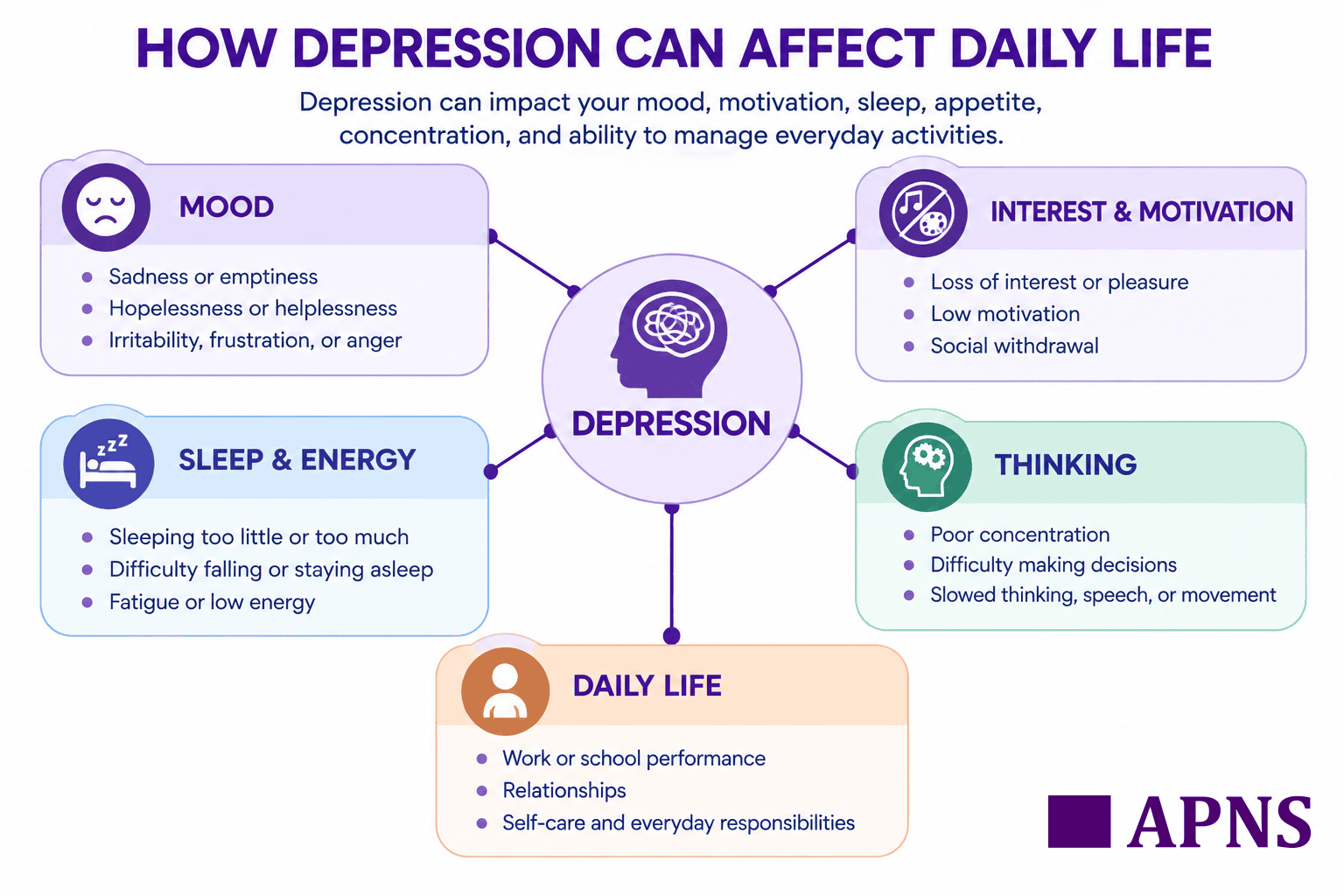
Depression infographic – click to enlarge

What Causes Depression?

Depression usually develops from a combination of biological, psychological, environmental, and social factors rather than one single cause.

Possible contributing factors include:

  • Genetic or family history
  • Differences in brain function
  • Hormonal changes
  • Trauma
  • Grief or major loss
  • Ongoing stress
  • Social isolation
  • Relationship conflict
  • Financial or housing problems
  • Workplace or academic stress
  • Chronic pain
  • Serious or long-term medical illness
  • Alcohol or substance use
  • Sleep disorders
  • Pregnancy or childbirth
  • Certain medications
  • Seasonal changes
  • Another mental health condition

Medical conditions that may contribute to depressive symptoms include thyroid disease, anemia, vitamin deficiencies, neurological conditions, autoimmune disorders, cancer, heart disease, and chronic pain conditions.

What Can Make Depression Worse?

Factors that may worsen depression or delay recovery include:

  • Avoiding treatment
  • Stopping medication suddenly
  • Missing therapy or medical appointments
  • Alcohol or recreational drug use
  • Social isolation
  • Poor sleep
  • Skipping meals
  • Limited physical activity
  • Ongoing conflict or abuse
  • Unmanaged chronic pain
  • Work, financial, or housing instability
  • Keeping suicidal thoughts secret
  • Taking medication inconsistently
  • Expecting immediate improvement
  • Untreated anxiety, trauma, or substance-use problems

Depression may also worsen during major life changes, after childbirth, during certain seasons, or when a medical illness becomes more severe.

Prevention

Depression cannot always be prevented, but early recognition and treatment may reduce severity and complications.

Helpful measures include:

  • Seek help when symptoms first appear.
  • Attend routine medical visits.
  • Participate in recommended depression screening.
  • Maintain regular sleep.
  • Stay physically active.
  • Maintain supportive relationships.
  • Limit alcohol.
  • Avoid recreational drugs.
  • Treat chronic pain and medical conditions.
  • Address trauma or ongoing stress.
  • Take medication as prescribed.
  • Continue treatment for the recommended duration.
  • Learn personal warning signs.
  • Create a relapse-prevention plan.
  • Keep crisis resources available.
  • Ask for support during pregnancy and after childbirth.
  • Contact a provider promptly if symptoms return.

A relapse plan may include early symptoms, preferred providers, effective treatments, supportive contacts, crisis numbers, and steps to reduce access to lethal means.

Labs

Laboratory testing cannot directly confirm major depressive disorder, but it may help identify medical conditions that cause or worsen similar symptoms.

Possible tests include:

  • Complete Blood Count: Checks for anemia or infection.
  • Thyroid-Stimulating Hormone: Evaluates thyroid function.
  • Comprehensive Metabolic Panel: Checks liver, kidney, electrolyte, and blood-glucose levels.
  • Vitamin B12: Evaluates a deficiency that may affect mood or cognition.
  • Folate: Checks for folate deficiency.
  • Vitamin D: May be considered based on symptoms and risk factors.
  • Iron Studies: May identify iron deficiency.
  • Pregnancy Test: May influence medication and treatment choices.
  • Testosterone or Other Hormone Tests: May be ordered when symptoms suggest a hormone disorder.
  • Toxicology Testing: May be used when substance exposure is a concern.
  • Medication Levels: May be needed for selected psychiatric medications.

Testing should be based on the person’s symptoms, physical examination, medical history, and medications.

Learn More

Medical Tests – NIH MedlinePlus

Provides patient-friendly explanations of commonly ordered laboratory tests.

Diagnostics

Brain imaging is not routinely needed to diagnose depression.

Possible assessments include:

  • Depression screening questionnaires
  • Suicide-risk assessment
  • Mental status examination
  • Medical and neurological examination
  • Substance-use screening
  • Bipolar-disorder screening
  • Anxiety or trauma screening
  • Sleep evaluation
  • Cognitive testing in selected older adults
  • Medication review
  • Brain imaging when neurological symptoms or another medical condition is suspected

A provider may order a CT scan, MRI, sleep study, or other testing when symptoms suggest a neurological disorder, sleep disorder, head injury, seizure condition, or another medical cause.

Treatment & Management

Treatment Options

Depression is treatable, including severe depression. Treatment is individualized based on symptoms, severity, medical history, preferences, past treatment response, pregnancy status, and safety concerns.

Treatment options may include:

  • Psychotherapy
  • Antidepressant medication
  • Combined medication and psychotherapy
  • Support groups
  • Peer-support services
  • Treatment of sleep problems
  • Treatment of alcohol or substance use
  • Treatment of contributing medical conditions
  • Lifestyle and social-support interventions
  • Intensive outpatient treatment
  • Partial hospitalization
  • Inpatient psychiatric care
  • Transcranial magnetic stimulation
  • Electroconvulsive therapy
  • Esketamine or other specialized treatments in selected cases

Psychotherapy, medication, or a combination of both are standard treatments. Finding the most effective approach may require adjustments over time. Brain-stimulation treatment may be considered when symptoms are severe or have not adequately improved with other treatments.

Common Therapy Approaches

  • Cognitive Behavioral Therapy: Helps identify and change unhelpful thinking and behavior patterns.
  • Interpersonal Therapy: Focuses on relationships, grief, conflict, and life changes.
  • Behavioral Activation: Encourages gradual re-engagement in meaningful activities.
  • Problem-Solving Therapy: Builds practical strategies for managing current difficulties.
  • Supportive Therapy: Provides emotional support and coping assistance.
  • Trauma-Focused Therapy: May be appropriate when trauma contributes to depression.
  • Group Therapy: Provides treatment and support with others experiencing similar problems.

Lifestyle Changes

Lifestyle changes can support treatment but should not be presented as a substitute for professional care.

Helpful changes may include:

  • Maintain a regular sleep schedule.
  • Get out of bed at a consistent time.
  • Eat regular, balanced meals.
  • Participate in physical activity as tolerated.
  • Spend time outdoors.
  • Break large tasks into smaller steps.
  • Schedule one manageable activity each day.
  • Stay connected with supportive people.
  • Reduce alcohol use.
  • Avoid recreational drugs.
  • Limit excessive caffeine.
  • Use relaxation or mindfulness strategies.
  • Set realistic expectations during recovery.
  • Keep medical and therapy appointments.
  • Ask for help with work, school, caregiving, or household responsibilities.

When motivation is very low, begin with small goals such as showering, eating a meal, walking briefly, opening curtains, or contacting one supportive person.

Medications

Antidepressants may reduce symptoms of depression. Medication selection depends on symptoms, side effects, other medical conditions, medication interactions, pregnancy status, cost, and previous response.

Common medication groups include:

  • Selective Serotonin Reuptake Inhibitors: Examples include sertraline, escitalopram, fluoxetine, citalopram, and paroxetine.
  • Serotonin-Norepinephrine Reuptake Inhibitors: Examples include venlafaxine, desvenlafaxine, and duloxetine.
  • Atypical Antidepressants: Examples include bupropion, mirtazapine, vortioxetine, and vilazodone.
  • Tricyclic Antidepressants: Older medications that may be effective but can have more side effects.
  • Monoamine Oxidase Inhibitors: Usually reserved for selected cases because of food and medication interactions.
  • Mood-Stabilizing or Antipsychotic Medication: May be added in selected severe, psychotic, bipolar, or treatment-resistant cases.
  • Esketamine: May be used under close supervision for selected treatment-resistant depression.

Antidepressants often require time to provide their full benefit, and more than one medication may need to be tried. Do not stop an antidepressant suddenly without medical guidance because withdrawal-like symptoms or worsening depression may occur.

Possible side effects include:

  • Nausea
  • Headache
  • Sleep changes
  • Fatigue
  • Restlessness
  • Dry mouth
  • Sweating
  • Sexual side effects
  • Appetite or weight changes
  • Dizziness
  • Increased anxiety when first starting
  • Blood-pressure changes with selected medications

Contact the prescriber promptly for:

  • New or worsening suicidal thoughts
  • Severe agitation
  • Extreme restlessness
  • Unusual impulsivity
  • Very little need for sleep
  • Rapid speech or racing thoughts
  • Severe rash
  • Fainting
  • Seizure
  • Symptoms of serotonin syndrome, such as fever, confusion, muscle rigidity, shaking, or severe agitation

All medication and supplement use should be discussed with a healthcare professional because interactions may occur.

Learn More

Antidepressants – NIH MedlinePlus

Explains how antidepressants are used, potential side effects, and medication safety.

Procedures

Most people with depression do not require a procedure. Specialized treatments may be considered for severe, psychotic, suicidal, catatonic, or treatment-resistant depression.

Possible procedures include:

  • Transcranial Magnetic Stimulation: Uses magnetic pulses to stimulate selected brain areas.
  • Electroconvulsive Therapy: Uses controlled electrical stimulation under anesthesia and can be highly effective for severe depression.
  • Esketamine Treatment: Administered in a certified healthcare setting with observation afterward.
  • Vagus Nerve Stimulation: May be considered in selected long-term treatment-resistant cases.
  • Other Brain-Stimulation Treatments: May be available through specialty programs or research studies.

Electroconvulsive therapy may be considered when rapid improvement is necessary, such as severe suicidal depression, psychotic depression, catatonia, inability to eat or drink, or failure of other treatments.

What Should You Expect Long-Term?

Many people recover from a depressive episode with appropriate treatment. Improvement may occur gradually rather than all at once. Sleep, appetite, concentration, and energy may improve before mood fully improves.

Long-term outcomes depend on:

  • Symptom severity
  • Length of time before treatment
  • Previous depressive episodes
  • Co-occurring anxiety or trauma
  • Alcohol or substance use
  • Medical conditions
  • Medication adherence
  • Access to therapy
  • Social support
  • Ongoing stress
  • Suicide risk

Some people experience one episode, while others have recurring or chronic depression. Continued treatment after symptoms improve may reduce the risk of relapse. People with repeated episodes may benefit from longer-term therapy or medication.

Do not assume treatment has failed because improvement is not immediate. Medication, therapy, diagnosis, sleep, medical conditions, and life stressors may need to be reassessed.

What Can You Do At Home?

Home strategies can support professional treatment.

Helpful steps include:

  • Take medication exactly as prescribed.
  • Attend therapy and follow-up appointments.
  • Tell someone when symptoms worsen.
  • Keep emergency and crisis numbers available.
  • Maintain a regular sleep and wake time.
  • Eat something regularly, even when appetite is low.
  • Avoid alcohol and recreational drugs.
  • Get gentle physical activity.
  • Spend time around supportive people.
  • Break tasks into very small steps.
  • Track mood, sleep, and medication effects.
  • Remove or secure items that could be used for self-harm when risk is present.
  • Create a written safety plan with a clinician.
  • Ask a trusted person to help monitor symptoms.
  • Delay major life decisions during a severe episode when possible.

Self-care practices such as regular sleep, healthy eating, physical activity, medication adherence, and watching for early warning signs can support recovery.

Do not try to manage severe depression alone.

Frequently Asked Questions

Is depression the same as being sad?

No. Sadness is a normal emotion that usually changes with time and circumstances. Depression causes persistent symptoms that affect thinking, physical health, motivation, and daily functioning.

Is depression a weakness?

No. Depression is a medical and mental health condition, not a personal failure or lack of willpower.

Can depression cause physical symptoms?

Yes. Depression may cause fatigue, sleep problems, appetite changes, headaches, digestive discomfort, slowed movement, and other physical symptoms.

Can someone be depressed without appearing sad?

Yes. A person may continue working, smiling, or caring for others while experiencing significant depression internally.

Can depression cause anger or irritability?

Yes. Irritability, frustration, agitation, and anger can be symptoms of depression.

How long does depression last?

The length of an episode varies. Without treatment, symptoms may continue for months or longer. Treatment can reduce symptoms and shorten the episode.

How long do antidepressants take to work?

Some symptoms may begin improving earlier, but full benefits often take time. The prescriber should explain when to follow up and when a medication adjustment may be appropriate.

Will antidepressants change my personality?

The goal is to reduce symptoms and help the person function more like themselves. Emotional numbness can occur as a side effect and should be discussed with the prescriber.

Are antidepressants addictive?

Antidepressants do not usually cause addiction or intoxication. However, stopping suddenly may cause uncomfortable discontinuation symptoms.

Can depression return?

Yes. Some people experience repeated episodes. Recognizing early warning signs and continuing recommended treatment may reduce relapse risk.

Can exercise cure depression?

Exercise may support mood and overall health, but moderate or severe depression often requires professional treatment.

Can alcohol help me relax when depressed?

Alcohol may briefly reduce distress but often worsens sleep, mood, impulsivity, medication side effects, and suicide risk.

Can depression occur after childbirth?

Yes. Perinatal or postpartum depression can occur during pregnancy or during the year after birth and should be treated promptly.

What is psychotic depression?

Severe depression may occasionally occur with hallucinations or strongly held false beliefs. This requires urgent professional assessment.

Questions To Ask Your Provider

Consider asking:

  • Do my symptoms meet the criteria for depression?
  • Could a medical condition or medication be contributing?
  • Should I be screened for bipolar disorder?
  • Do I need laboratory testing?
  • Which therapy approach may help me?
  • Should I consider medication?
  • What side effects should I watch for?
  • When should the medication begin helping?
  • What should I do if symptoms worsen?
  • How long might I need treatment?
  • How should I stop medication safely?
  • Could alcohol or cannabis affect my treatment?
  • What should I do if I have suicidal thoughts?
  • Should I create a safety plan?
  • Are virtual therapy or group programs available?
  • When should I see a psychiatrist?
  • What options exist if the first treatment does not work?

Specialist Referrals

Depression may be treated by a primary care provider or mental health professional.

Possible referrals include:

  • Psychiatrist: Diagnoses mental health conditions and manages medication or specialized treatment.
  • Psychiatric Mental Health Nurse Practitioner: Provides assessment, diagnosis, psychotherapy, and medication management within their scope of practice.
  • Psychologist: Provides psychological evaluation and psychotherapy.
  • Licensed Therapist or Counselor: Provides individual, couples, family, or group therapy.
  • Clinical Social Worker: Provides therapy and assistance with social or community resources.
  • Substance-Use Treatment Specialist: Treats alcohol or drug use occurring with depression.
  • Sleep Specialist: Evaluates possible sleep apnea, insomnia, or another sleep disorder.
  • Neurologist: Evaluates neurological symptoms or possible neurological causes.
  • Endocrinologist: Treats selected hormonal or thyroid conditions.
  • Perinatal Mental Health Specialist: Treats depression during pregnancy or after childbirth.
  • Emergency or Crisis Mental Health Team: Evaluates immediate safety concerns.

Is Depression Curable?

Depression is treatable, and many people recover fully from an episode. Some people experience recurring depression and require ongoing management.

Treatment can:

  • Reduce sadness and hopelessness
  • Restore interest and motivation
  • Improve sleep and appetite
  • Improve concentration
  • Support relationships
  • Improve work and daily functioning
  • Reduce suicide risk
  • Help prevent future episodes

Even severe depression can respond to treatment. The treatment plan may need to be adjusted until the most effective approach is found.

Emergency Symptoms / When To Seek Immediate Help

Call 911 or go to the nearest emergency department if a person:

  • Is attempting suicide
  • Has taken an overdose
  • Has seriously injured themselves
  • Has a weapon and intends to use it
  • Cannot remain safe
  • Is threatening to kill someone
  • Is severely confused or unable to care for basic needs
  • Is experiencing dangerous hallucinations or paranoia
  • Is not eating or drinking and is becoming medically unstable
  • Is experiencing severe medication reactions

For suicidal thoughts, emotional crisis, or concern about someone’s safety in the United States, call or text 988 to reach the 988 Suicide & Crisis Lifeline. Support is available for suicidal crises, mental health distress, and substance-use concerns.

Seek urgent same-day mental health or medical care for:

  • New thoughts of suicide or self-harm
  • Developing a suicide plan
  • Searching for methods of suicide
  • Giving away important belongings
  • Saying goodbye unexpectedly
  • Feeling trapped or like a burden
  • Sudden calmness after severe suicidal distress
  • Increasing alcohol or drug use
  • Severe agitation or impulsivity
  • Going several nights with little or no sleep
  • Hallucinations or paranoid beliefs
  • Inability to work, eat, sleep, or complete basic self-care
  • Rapid worsening after starting or changing medication
  • Symptoms of mania, such as extreme energy, risky behavior, racing thoughts, or very little need for sleep

Take all suicide-related statements seriously. Do not leave a person alone when there is immediate danger. Remove weapons, excess medication, and other lethal means when this can be done safely, and contact emergency services.

CALL 911

APNS does not provide emergency medical services. If you believe you are experiencing a medical emergency, including (but not limited to) chest pain, difficulty breathing, stroke symptoms, severe allergic reactions, anaphylaxis, uncontrolled bleeding, seizures, loss of consciousness, or any other potentially life-threatening condition, you are instructed to call 911 immediately or go immediately to the nearest emergency department.

Official Resources / External Links

Depression – National Institute of Mental Health

Provides information about depression symptoms, types, risk factors, treatment, and research.

Depression – NIMH Patient Guide

Explains diagnosis, psychotherapy, medication, brain-stimulation treatment, and how to find help.

Depression – NIH MedlinePlus

Provides patient-friendly information about symptoms, diagnosis, treatment, and living with depression.

Antidepressants – NIH MedlinePlus

Explains antidepressant medications, side effects, and safe medication use.

Depression Screening – NIH MedlinePlus

Explains how depression screening tools are used and what results may mean.

988 Suicide & Crisis Lifeline – SAMHSA

Provides information about free crisis support available by calling or texting 988.

This guide is intended for educational purposes only and should not replace evaluation, diagnosis, psychotherapy, medication management, or emergency care from a qualified healthcare professional. Depression may occur with bipolar disorder, trauma-related conditions, anxiety, grief, substance use, medication side effects, hormonal conditions, neurological illness, or other medical problems requiring different treatment. Do not begin, stop, or change an antidepressant or other psychiatric medication without speaking with the prescriber. Contact a healthcare professional promptly for worsening depression, severe medication side effects, agitation, hallucinations, symptoms of mania, inability to perform basic self-care, or thoughts of self-harm. In the United States, call or text 988 for suicidal thoughts or a mental health crisis. Call 911 or go to the nearest emergency department when there is an active suicide attempt, immediate danger, serious overdose, severe self-injury, or inability to remain safe.

Get personalized care for Depression

At APNS, our providers take the time to understand your condition and your goals. We offer comprehensive telehealth visits at a fixed rate — no membership fees, no insurance required, and no unexpected charges. Whether you’re newly diagnosed or looking for a provider who actually listens, we’re here to help.