

Diarrhea is the passage of loose, watery, or more frequent stools than normal. It is a common symptom rather than a disease itself and can range from mild and short-lived to severe or chronic. Most episodes of diarrhea last only a few days and improve without complications, but prolonged diarrhea can lead to dehydration and electrolyte imbalances.
Diarrhea may be classified as:
Most cases of acute diarrhea improve with hydration, rest, and supportive care.
Diarrhea – NIH MedlinePlus
https://medlineplus.gov/diarrhea.html
Provides easy-to-understand information about diarrhea, common causes, diagnosis, treatment, and prevention.
Diarrheal Diseases – Centers for Disease Control and Prevention (CDC)
https://www.cdc.gov/healthywater/hygiene/disease/diarrhea.html
Provides information about diarrheal illnesses, dehydration, prevention, and food and water safety.
Diarrhea is one of the most common gastrointestinal symptoms worldwide. Adults typically experience at least one episode of acute diarrhea each year, while young children may experience several episodes annually.
Although most cases are mild and self-limited, diarrhea remains a leading cause of dehydration, especially among young children, older adults, and individuals with weakened immune systems.
Diarrhea – NIH MedlinePlus
https://medlineplus.gov/diarrhea.html
Provides information about the frequency, causes, and treatment of diarrhea.
Symptoms vary depending on the underlying cause.
Common symptoms may include:
Signs of dehydration may include:
Your healthcare provider will review your symptoms, travel history, recent food intake, medications, medical history, and perform a physical examination.
Most cases of acute diarrhea do not require extensive testing. However, persistent, severe, or bloody diarrhea may require additional evaluation.
Diarrhea – NIH MedlinePlus
https://medlineplus.gov/diarrhea.html
Explains how diarrhea is evaluated and when additional testing is recommended.
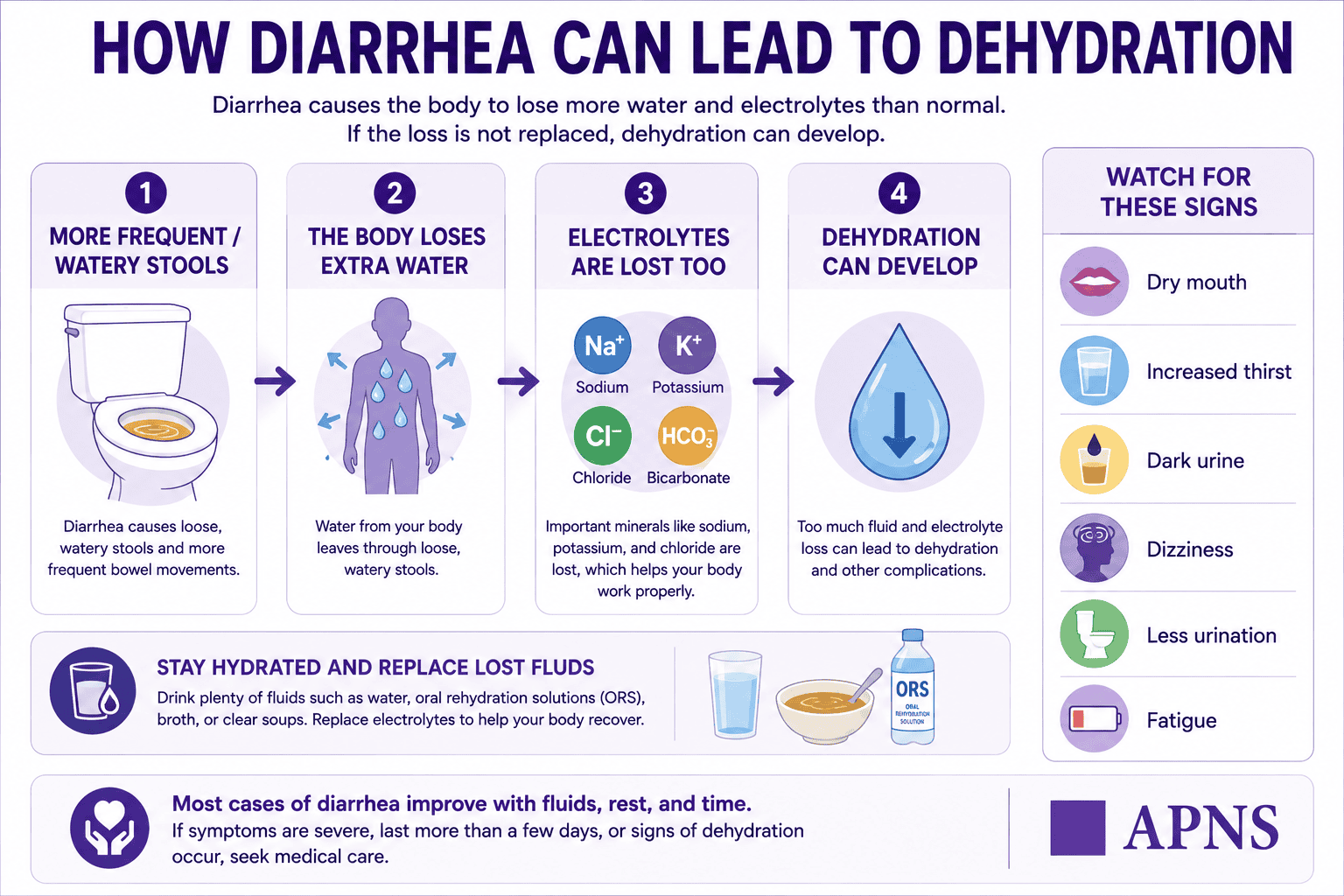
Diarrhea has many possible causes.
Common causes include:
Diarrhea – NIH MedlinePlus
https://medlineplus.gov/diarrhea.html
Learn about the many causes of diarrhea and when medical evaluation is needed.
Several factors may worsen diarrhea or delay recovery.
Common factors include:
Diarrhea – NIH MedlinePlus
https://medlineplus.gov/diarrhea.html
Provides information about common triggers and factors that worsen diarrhea.
Many cases of diarrhea can be prevented by practicing good hygiene and food safety.
Helpful prevention tips include:
Centers for Disease Control and Prevention (CDC)
https://www.cdc.gov/healthywater/hygiene/disease/diarrhea.html
Provides practical recommendations for preventing diarrheal illnesses and reducing dehydration.
The following video content is provided to help you better understand this condition. These resources are intended for educational purposes and should not replace personalized medical advice from your healthcare provider.
Laboratory testing depends on your symptoms and the suspected cause.
Common laboratory tests may include:
Laboratory Tests – NIH MedlinePlus
https://medlineplus.gov/lab-tests/
Provides information about laboratory testing commonly used to evaluate diarrhea.
Additional testing depends on the duration, severity, and suspected cause of diarrhea.
Common diagnostic tests may include:
American College of Gastroenterology (ACG)
https://gi.org/
Provides patient education about gastrointestinal testing and digestive disorders.
Treatment depends on the underlying cause of your diarrhea.
Treatment options may include:
Diarrhea – NIH MedlinePlus
https://medlineplus.gov/diarrhea.html
Provides information about treatment options for acute and chronic diarrhea.
Healthy habits can reduce your risk of diarrhea and help support recovery.
Helpful lifestyle changes include:
Centers for Disease Control and Prevention (CDC)
https://www.cdc.gov/healthywater/hygiene/disease/diarrhea.html
Provides recommendations for preventing diarrheal illnesses and dehydration.
Treatment depends on the cause of your diarrhea.
Common medications may include:
Diarrhea – NIH MedlinePlus
https://medlineplus.gov/diarrhea.html
Provides information about medications commonly used to treat diarrhea.
Most people with diarrhea do not require surgery or invasive procedures. Treatment depends on the underlying cause of the diarrhea. However, certain procedures may be recommended to diagnose persistent symptoms or treat serious complications.
Common procedures may include:
Diarrhea – NIH MedlinePlus
https://medlineplus.gov/diarrhea.html
Learn about diarrhea, diagnostic testing, dehydration, and treatment options.
Most cases of acute diarrhea improve within 2 to 7 days without long-term complications.
Some people may develop persistent or chronic diarrhea due to conditions such as irritable bowel syndrome (IBS), inflammatory bowel disease (Crohn’s disease or ulcerative colitis), celiac disease, food intolerances, or other digestive disorders.
Severe or prolonged diarrhea can lead to dehydration, electrolyte imbalances, malnutrition, and unintended weight loss if left untreated.
Early diagnosis and treatment often improve long-term outcomes.
Home care plays an important role in recovery.
Helpful tips include:
Diarrhea – NIH MedlinePlus
https://medlineplus.gov/diarrhea.html
Provides practical recommendations for managing diarrhea and preventing dehydration.
Acute diarrhea usually lasts 2–7 days, although recovery depends on the underlying cause.
Yes. Diarrhea can quickly lead to dehydration, especially in young children, older adults, and people with chronic illnesses.
Not always. Anti-diarrheal medications may not be recommended for certain bacterial infections or diarrhea accompanied by high fever or bloody stools. Ask your healthcare provider before taking these medications.
Seek medical evaluation if your diarrhea lasts more than 2 days in adults without improvement, more than 24 hours in young children, if you become dehydrated, or if you have severe pain, fever, or blood in your stool.
Yes. Antibiotics can disrupt the normal bacteria in your intestines and may cause diarrhea, including Clostridioides difficile (C. difficile) infection.

Consider asking your healthcare provider:
Most cases of diarrhea are treated by a primary care provider. Depending on your symptoms or diagnosis, your provider may recommend seeing a specialist.
You may be referred to:
American College of Gastroenterology (ACG)
https://gi.org/
Provides patient education about digestive diseases, chronic diarrhea, and specialty care.
Many causes of diarrhea are temporary and completely treatable, especially viral gastroenteritis, food poisoning, or medication-related diarrhea.
Some chronic conditions, such as Crohn’s disease, ulcerative colitis, celiac disease, or irritable bowel syndrome (IBS), cannot always be cured but can often be successfully managed with medications, dietary changes, and ongoing medical care.
Call 911 or seek emergency medical care immediately if you experience:
Seek prompt medical evaluation if you notice:
Diarrhea – NIH MedlinePlus
https://medlineplus.gov/diarrhea.html
Learn about complications of diarrhea and when emergency medical care is needed.
CALL 911
APNS does not provide emergency medical services. If you believe you are experiencing a medical emergency, including (but not limited to) chest pain, difficulty breathing, stroke symptoms, severe allergic reactions, anaphylaxis, uncontrolled bleeding, seizures, loss of consciousness, or any other potentially life-threatening condition, you are instructed to call 911 immediately or go immediately to the nearest emergency department.
Diarrhea – NIH MedlinePlus
https://medlineplus.gov/diarrhea.html
Easy-to-understand information about diarrhea, symptoms, diagnosis, treatment, and prevention.
Centers for Disease Control and Prevention (CDC) – Diarrheal Diseases
https://www.cdc.gov/healthywater/hygiene/disease/diarrhea.html
Comprehensive information about diarrheal illnesses, dehydration, food safety, and prevention.
National Institute of Diabetes and Digestive and Kidney Diseases (NIDDK)
https://www.niddk.nih.gov/
Reliable information about digestive diseases, diarrhea, gastrointestinal disorders, and digestive health.
American College of Gastroenterology (ACG)
https://gi.org/
Evidence-based patient education about chronic diarrhea, digestive disorders, and available treatments.
This guide is intended for educational purposes only and should not replace medical advice, diagnosis, or treatment from your healthcare provider. Always follow the recommendations of your healthcare team regarding your individual health needs. Contact your healthcare provider if your symptoms worsen, do not improve as expected, or new symptoms develop. Call 911 immediately if you experience severe dehydration, loss of consciousness, difficulty breathing, severe abdominal pain, or another medical emergency.
At APNS, our providers take the time to understand your condition and your goals. We offer comprehensive telehealth visits at a fixed rate — no membership fees, no insurance required, and no unexpected charges. Whether you’re newly diagnosed or looking for a provider who actually listens, we’re here to help.