
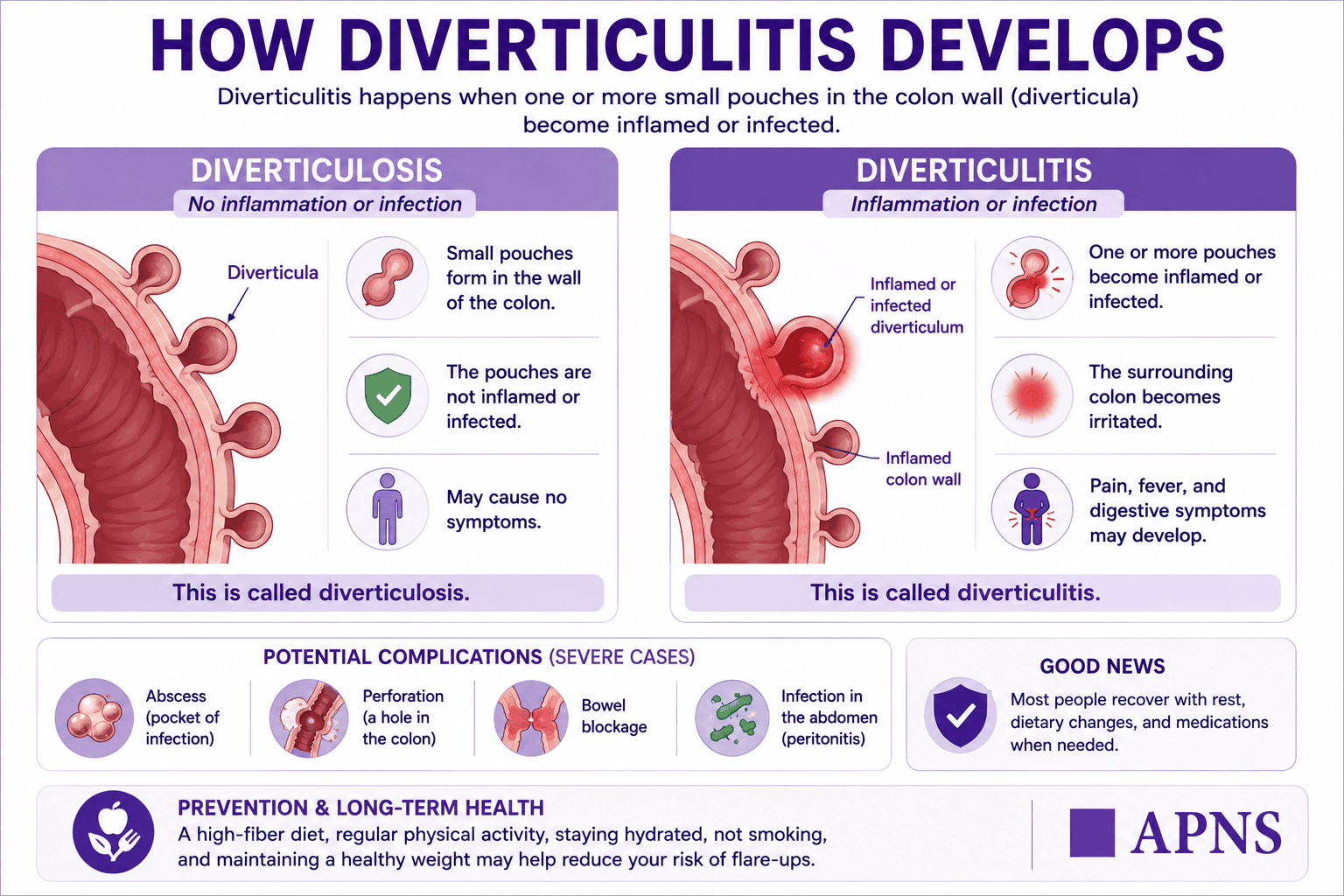
Diverticulitis is a condition that occurs when small pouches that develop in the wall of the colon (large intestine), called diverticula, become inflamed or infected. Many people have diverticula without any symptoms, a condition known as diverticulosis. Diverticulitis develops when one or more of these pouches become irritated, inflamed, or infected, causing symptoms that may range from mild to severe.
Most people recover with rest, dietary changes, and medications when needed. However, severe cases can lead to complications such as abscesses, perforation (a hole in the colon), bowel blockage, or infection within the abdomen. Early diagnosis and treatment can help reduce the risk of these complications.
Diverticulosis and Diverticulitis – NIH MedlinePlus
https://medlineplus.gov/diverticulosisanddiverticulitis.html
Provides easy-to-understand information about diverticulosis and diverticulitis, including symptoms, diagnosis, treatment, and prevention.
Diverticular Disease – National Institute of Diabetes and Digestive and Kidney Diseases (NIDDK)
https://www.niddk.nih.gov/health-information/digestive-diseases/diverticular-disease
Explains diverticulosis, diverticulitis, common symptoms, causes, and treatment options.
Diverticular disease becomes more common with age. Many adults over the age of 60 have diverticula, although most never develop symptoms. Only a portion of people with diverticulosis will develop diverticulitis during their lifetime.
Diverticular Disease – NIDDK
https://www.niddk.nih.gov/health-information/digestive-diseases/diverticular-disease
Provides information about how common diverticular disease is and who is most likely to develop it.
Symptoms of diverticulitis often begin suddenly and can range from mild to severe.
Common symptoms may include:
Your healthcare provider will ask about your symptoms, review your medical history, and perform a physical examination. Because other conditions can cause similar symptoms, additional testing is often needed to confirm the diagnosis.
A CT scan of the abdomen and pelvis is the most common imaging test used to diagnose diverticulitis and look for complications.
Diverticular Disease – NIDDK
https://www.niddk.nih.gov/health-information/digestive-diseases/diverticular-disease
Explains how diverticulitis is diagnosed and what tests your healthcare provider may recommend.
Healthcare providers do not know the exact cause of diverticulitis. It is believed to develop when one or more diverticula become inflamed or infected. Several factors may increase the risk of developing diverticulitis.
Common risk factors include:
Diverticular Disease – NIDDK
https://www.niddk.nih.gov/health-information/digestive-diseases/diverticular-disease
Learn about the causes and risk factors associated with diverticular disease.
Several factors may increase the risk of a diverticulitis flare-up or worsen symptoms.
Common factors include:
Diverticulitis – Cleveland Clinic
https://my.clevelandclinic.org/health/diseases/10352-diverticulitis
Provides practical information about diverticulitis, treatment, and reducing the risk of future flare-ups.
Although diverticulitis cannot always be prevented, healthy lifestyle habits may reduce your risk of future flare-ups.
Helpful prevention tips include:
Eating, Diet, & Nutrition for Diverticular Disease – National Institute of Diabetes and Digestive and Kidney Diseases (NIDDK)
https://www.niddk.nih.gov/health-information/digestive-diseases/diverticular-disease/eating-diet-nutrition
Provides practical recommendations for reducing the risk of future diverticulitis episodes.
The following video content is provided to help you better understand this condition. These resources are intended for educational purposes and should not replace personalized medical advice from your healthcare provider.
Laboratory tests help evaluate for infection, inflammation, and possible complications.
Common laboratory tests may include:
Complete Blood Count (CBC) – NIH MedlinePlus
https://medlineplus.gov/lab-tests/complete-blood-count-cbc/
Explains what a CBC measures and why it may be ordered.
Imaging studies help confirm diverticulitis and identify possible complications.
Common diagnostic tests include:
Diverticular Disease – NIDDK
https://www.niddk.nih.gov/health-information/digestive-diseases/diverticular-disease
Learn how imaging studies and colonoscopy are used to evaluate diverticular disease.
Treatment depends on how severe your diverticulitis is and whether complications are present. Mild cases may be treated at home, while more severe cases may require hospitalization.
Treatment options may include:
Diverticular Disease Treatment – NIDDK
https://www.niddk.nih.gov/health-information/digestive-diseases/diverticular-disease
Provides information about treatment options for diverticulitis and when surgery may be needed.
Healthy lifestyle habits may help lower your risk of future diverticulitis episodes and improve your digestive health.
Helpful lifestyle changes include:
Eating, Diet, & Nutrition for Diverticular Disease – NIDDK
https://www.niddk.nih.gov/health-information/digestive-diseases/diverticular-disease/eating-diet-nutrition
Provides nutrition recommendations for diverticular disease, including healthy eating after recovery.
Medications may be recommended depending on the severity of your symptoms and whether an infection is present.
Common medications may include:
Diverticulitis – Cleveland Clinic
https://my.clevelandclinic.org/health/diseases/10352-diverticulitis
Provides patient-friendly information about medications and treatment options for diverticulitis.
Most people with diverticulitis recover without surgery. However, if symptoms are severe or complications develop, your healthcare provider may recommend a procedure or surgery.
Common procedures may include:
Diverticular Disease – National Institute of Diabetes and Digestive and Kidney Diseases (NIDDK)
https://www.niddk.nih.gov/health-information/digestive-diseases/diverticular-disease
Learn about procedures and surgical treatment options for diverticulitis.
Many people recover completely from diverticulitis, especially when it is treated early. Some people experience only one episode, while others may have recurrent flare-ups.
Following your treatment plan, eating a healthy diet, staying active, and attending regular healthcare appointments can help reduce your risk of future episodes and complications.
Following your healthcare provider’s recommendations at home can help you recover and reduce your risk of future flare-ups.
Helpful tips include:
Eating, Diet, & Nutrition for Diverticular Disease – National Institute of Diabetes and Digestive and Kidney Diseases (NIDDK)
https://www.niddk.nih.gov/health-information/digestive-diseases/diverticular-disease/eating-diet-nutrition
Provides practical nutrition recommendations to help reduce future diverticulitis flare-ups.
Diverticulosis means you have small pouches (diverticula) in your colon that usually do not cause symptoms. Diverticulitis occurs when one or more of those pouches become inflamed or infected.
Yes. Some people experience recurrent episodes, while others never have another flare-up.
Current research suggests that most people with diverticulosis or diverticulitis
nuts, seeds, or popcorn. Your healthcare provider can recommend the best diet for your individual situation.
Most people do not need surgery. Surgery is usually reserved for severe, recurrent, or complicated cases.
Eating a high-fiber diet, drinking plenty of water, staying physically active, maintaining a healthy weight, and avoiding smoking may help reduce your risk.

Consider asking your healthcare provider:
When should I schedule a follow-up appointment?
Many people with diverticulitis receive care from their primary care provider. Depending on the severity of your condition, your provider may recommend seeing a specialist.
You may be referred to:
American College of Gastroenterology – Patient Resources
https://gi.org/patients/
Provides reliable patient education about diverticular disease and other digestive conditions.
Many episodes of diverticulitis resolve completely with treatment. However, diverticulosis (the small pouches in the colon) usually remains, which means diverticulitis can occur again in the future.
Healthy lifestyle habits, including eating enough fiber, staying physically active, maintaining a healthy weight, and avoiding smoking, may help lower the risk of future flare-ups.
Call 911 or seek emergency medical care immediately if you experience:
Seek prompt medical care if you notice:
Diverticulitis – NIH MedlinePlus
https://medlineplus.gov/diverticulosisanddiverticulitis.html
Learn the warning signs of diverticulitis complications and when emergency medical care is needed.
CALL 911
APNS does not provide emergency medical services. If you believe you are experiencing a medical emergency, including (but not limited to) chest pain, difficulty breathing, stroke symptoms, severe allergic reactions, anaphylaxis, uncontrolled bleeding, seizures, loss of consciousness, or any other potentially life-threatening condition, you are instructed to call 911 immediately or go immediately to the nearest emergency department.
Diverticulosis and Diverticulitis – NIH MedlinePlus
https://medlineplus.gov/diverticulosisanddiverticulitis.html
Easy-to-understand information about diverticular disease, including symptoms, diagnosis, treatment, and prevention.
National Institute of Diabetes and Digestive and Kidney Diseases (NIDDK) – Diverticular Disease
https://www.niddk.nih.gov/health-information/digestive-diseases/diverticular-disease
Comprehensive information about diverticulosis, diverticulitis, treatment options, nutrition, and long-term management.
American College of Gastroenterology – Patient Resources
https://gi.org/patients/
Evidence-based patient education about diverticular disease and other digestive conditions.
Cleveland Clinic – Diverticulitis
https://my.clevelandclinic.org/health/diseases/10352-diverticulitis
Reliable patient education about symptoms, treatment, recovery, and prevention.
This guide is intended for educational purposes only and should not replace medical advice, diagnosis, or treatment from your healthcare provider. Always follow the recommendations of your healthcare team regarding your individual health needs. Contact your healthcare provider if your symptoms worsen, return after treatment, or you have concerns about your recovery. Call 911 immediately if you experience severe abdominal pain, persistent vomiting, bloody stools, signs of severe infection, or another medical emergency.
At APNS, our providers take the time to understand your condition and your goals. We offer comprehensive telehealth visits at a fixed rate — no membership fees, no insurance required, and no unexpected charges. Whether you’re newly diagnosed or looking for a provider who actually listens, we’re here to help.