

A fever is a temporary rise in body temperature, usually because the immune system is responding to an infection or another illness. Normal temperature varies by person, time of day, activity, and measurement method. In adults, a measured temperature of 100.4°F (38°C) or higher is commonly considered a fever.
Fever is a symptom, not a diagnosis. The temperature number alone does not show how serious an illness is; breathing, alertness, hydration, pain, rash, immune status, pregnancy, recent procedures, and other symptoms matter. Heatstroke is different from fever and is an emergency caused by the body overheating rather than resetting its internal temperature in response to illness.
Fever – NIH MedlinePlus
https://medlineplus.gov/fever.html
Provides an easy-to-understand overview of fever, common causes, diagnosis, and treatment.
Fever – NIH MedlinePlus Medical Encyclopedia
https://medlineplus.gov/ency/article/003090.htm
Explains fever symptoms, home care, medicines, and reasons to contact a healthcare provider.
Fever is one of the most common signs of infection and can occur at any adult age. Most short-lived fevers are related to viral illnesses and improve as the illness resolves.
Some adults may have a serious infection without a high fever, especially older adults, people with weakened immune systems, and those taking fever-reducing medicines. A new fever in these groups deserves earlier medical guidance.
Symptoms may include:
A high temperature may be absent even with serious illness. Pay attention to how you feel and whether symptoms are worsening.
Fever – NIH MedlinePlus Medical Encyclopedia
https://medlineplus.gov/ency/article/003090.htm
Explains fever symptoms, home care, medicines, and reasons to contact a healthcare provider.
A provider will confirm the temperature and ask when it began, how it was measured, what medicines you took, and which symptoms or exposures occurred. They may ask about travel, sick contacts, sexual history, animal or insect exposure, immune conditions, recent surgery, devices, and medications.
The examination may include the ears, throat, lungs, heart, abdomen, skin, joints, nervous system, and urinary or genital areas when relevant. Testing is based on the suspected cause rather than the fever alone.
Fever – NIH MedlinePlus
https://medlineplus.gov/fever.html
Provides an easy-to-understand overview of fever, common causes, diagnosis, and treatment.
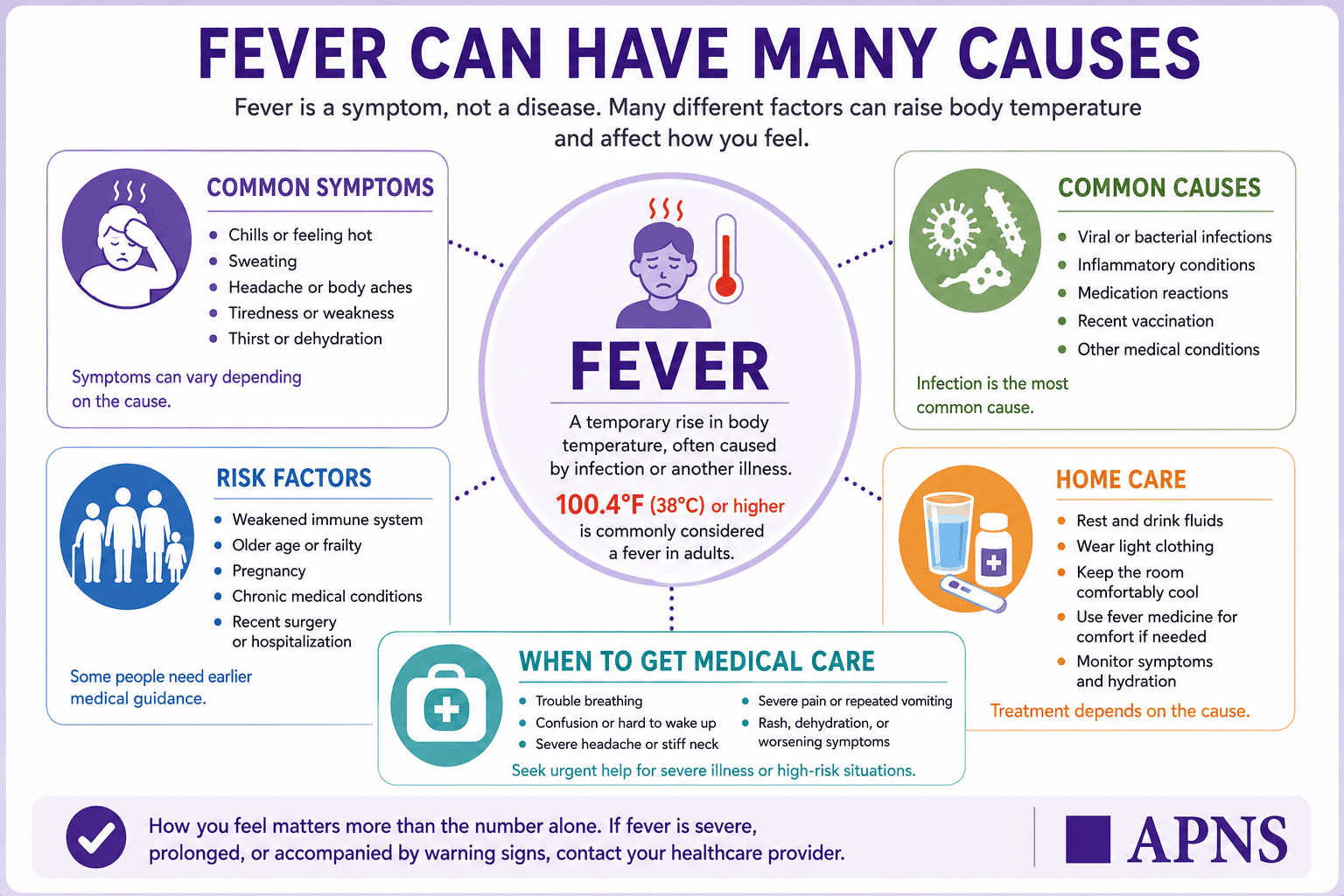
Infection is the most common cause, but fever has many possible explanations.
Causes may include:
Overheating from hot weather, strenuous activity, or certain drugs is hyperthermia rather than a true fever and requires urgent cooling and medical evaluation when severe.
Dehydration, heavy blankets, strenuous activity, and a hot environment can increase discomfort and strain on the body.
Risk of complications is higher with:
Not every fever can be prevented, but many infections and heat-related illnesses can be reduced.
Vaccines and Immunizations – Centers for Disease Control and Prevention
https://www.cdc.gov/vaccines-adults/index.html
Provides adult vaccination recommendations that help prevent several fever-causing infections.
Preventing Respiratory Illnesses – Centers for Disease Control and Prevention
https://www.cdc.gov/respiratory-viruses/prevention/index.html
Reviews practical steps that reduce the spread of respiratory infections.
The following video content is provided to help you better understand this condition. These resources are intended for educational purposes and should not replace personalized medical advice from your healthcare provider.
Many mild, short-lived fevers do not require laboratory testing. Tests are selected according to symptoms, duration, risk factors, and examination findings.
Possible tests include:
Imaging and procedures are used only when symptoms or examination suggest a specific source.
Treatment depends on the cause, severity, and your health risks. A mild fever does not always need to be lowered if you are comfortable and able to drink fluids.
Treatment may include:
Antibiotics do not treat viral infections and should not be saved, shared, or taken without a prescription.
Lifestyle Changes
While recovering, reduce physical activity and prioritize rest. Drink fluids regularly unless a clinician has placed you on fluid restriction.
Fever-reducing medicine is mainly used for comfort. Read every label and ask a pharmacist when you have medical conditions, take blood thinners, are pregnant, or use multiple cold and flu products.
Do not alternate medicines or exceed label doses unless a healthcare professional gives you a clear schedule. FDA recommends avoiding NSAIDs at 20 weeks of pregnancy or later unless specifically advised.
Acetaminophen Safety – U.S. Food and Drug Administration
https://www.fda.gov/drugs/safe-use-over-counter-pain-relievers-and-fever-reducers/acetaminophen
Explains how to avoid accidental overdose and use acetaminophen-containing products safely.
Safe Use of Over-the-Counter Pain Relievers and Fever Reducers – FDA
Provides safety information for acetaminophen and nonsteroidal anti-inflammatory drugs.
Fever itself usually does not require a procedure. A procedure may be needed to diagnose or treat the cause.
Severe infection may require hospital monitoring, intravenous medicine, oxygen, or intensive care.
Most fevers caused by routine viral infections improve within several days. The temperature may rise and fall, and tiredness or cough may continue after the fever resolves.
Fever that persists, repeatedly returns, or has no clear cause needs medical evaluation. Long-term expectations depend on the underlying infection, inflammatory disease, medication reaction, or other diagnosis.
Use a digital thermometer and record the number, time, measurement location, symptoms, and medicines taken. Oral, ear, forehead, and underarm methods can give different readings, so use the same method when tracking trends when possible.
Body Temperature Norms – NIH MedlinePlus
https://medlineplus.gov/ency/article/001982.htm
Explains normal temperature variation and common measurement methods.
Yes. In adults, 100.4°F (38°C) or higher is commonly used as a fever threshold, though the measurement method and your baseline temperature matter.
No. Fever medicine is mainly for comfort. The underlying symptoms, risks, hydration, and cause are more important than making the temperature perfectly normal.
No. Some mild illnesses cause high fever, and serious infections may cause only a small temperature rise or none at all.
Only when a clinician diagnoses or strongly suspects a bacterial infection. Antibiotics do not treat viruses.
Check the active ingredients first. Many cold and flu products already contain acetaminophen, and combining them can cause an overdose.
No. Heatstroke is dangerous overheating, often with confusion or collapse, and requires emergency cooling and medical care.
Heat Emergencies – NIH MedlinePlus
https://medlineplus.gov/ency/article/000056.htm
Explains heat exhaustion and heatstroke, which require different care from infection-related fever.

Consider asking:
Most short-term fevers are managed by primary or urgent care. Referral depends on the suspected cause.
Fever is a symptom rather than a disease, so whether it resolves depends on the cause. Most infection-related fevers stop when the immune system clears the illness or the underlying infection is treated.
Reducing the temperature does not cure the cause. Recurrent or prolonged fever may require targeted treatment for an infection, inflammatory condition, medicine reaction, or another illness.
Call 911 or seek emergency care for fever with signs of severe illness, even if the temperature is not extremely high.
Contact a provider promptly for fever lasting more than several days, repeated fever, new fever after surgery, fever with painful urination or worsening localized pain, or any fever when your clinician has given you a lower threshold for seeking care.
Sepsis – NIH MedlinePlus
https://medlineplus.gov/sepsis.html
Reviews warning signs of a life-threatening response to infection and the need for rapid treatment.
CALL 911
APNS does not provide emergency medical services. If you believe you are experiencing a medical emergency, including (but not limited to) chest pain, difficulty breathing, stroke symptoms, severe allergic reactions, anaphylaxis, uncontrolled bleeding, seizures, loss of consciousness, or any other potentially life-threatening condition, you are instructed to call 911 immediately or go immediately to the nearest emergency department.
Fever – NIH MedlinePlus
https://medlineplus.gov/fever.html
Provides an easy-to-understand overview of fever, common causes, diagnosis, and treatment.
Fever – NIH MedlinePlus Medical Encyclopedia
https://medlineplus.gov/ency/article/003090.htm
Explains fever symptoms, home care, medicines, and reasons to contact a healthcare provider.
Acetaminophen Safety – U.S. Food and Drug Administration
https://www.fda.gov/drugs/safe-use-over-counter-pain-relievers-and-fever-reducers/acetaminophen
Explains how to avoid accidental overdose and use acetaminophen-containing products safely.
Safe Use of Over-the-Counter Pain Relievers and Fever Reducers – FDA
Provides safety information for acetaminophen and nonsteroidal anti-inflammatory drugs.
NSAID Use During Pregnancy – U.S. Food and Drug Administration
Explains why NSAIDs should generally be avoided at 20 weeks of pregnancy or later unless specifically advised.
Sepsis – NIH MedlinePlus
https://medlineplus.gov/sepsis.html
Reviews warning signs of a life-threatening response to infection and the need for rapid treatment.
Body Temperature Norms – NIH MedlinePlus
https://medlineplus.gov/ency/article/001982.htm
Explains normal temperature variation and common measurement methods.
Heat Emergencies – NIH MedlinePlus
https://medlineplus.gov/ency/article/000056.htm
Explains heat exhaustion and heatstroke, which require different care from infection-related fever.
Vaccines and Immunizations – Centers for Disease Control and Prevention
https://www.cdc.gov/vaccines-adults/index.html
Provides adult vaccination recommendations that help prevent several fever-causing infections.
Preventing Respiratory Illnesses – Centers for Disease Control and Prevention
https://www.cdc.gov/respiratory-viruses/prevention/index.html
Reviews practical steps that reduce the spread of respiratory infections.
This guide is intended for educational purposes only and should not replace medical advice, diagnosis, or treatment from your healthcare provider. Fever can result from infection, inflammation, a medicine reaction, cancer, heat illness, or another condition requiring different treatment. Temperature alone does not determine severity. Use over-the-counter fever medicines only as directed, avoid combining acetaminophen-containing products, and ask before using NSAIDs if you have kidney disease, ulcers, bleeding risk, heart disease, dehydration, or pregnancy. Seek emergency care for breathing difficulty, confusion, seizure, stiff neck with severe headache, a concerning rash, signs of sepsis, severe dehydration, heatstroke symptoms, or other rapidly worsening illness.
At APNS, our providers take the time to understand your condition and your goals. We offer comprehensive telehealth visits at a fixed rate — no membership fees, no insurance required, and no unexpected charges. Whether you’re newly diagnosed or looking for a provider who actually listens, we’re here to help.