

Influenza, commonly called the flu, is a contagious respiratory illness caused by influenza viruses. It affects the nose, throat, and lungs and can range from a mild illness to a serious infection requiring hospitalization.
The flu spreads easily from person to person through respiratory droplets released when someone coughs, sneezes, talks, or breathes. Unlike the common cold, the flu often comes on suddenly and commonly causes fever, chills, muscle aches, fatigue, and cough.
Most healthy people recover within one to two weeks, but influenza can lead to serious complications such as pneumonia, worsening of chronic medical conditions, hospitalization, or even death, particularly in older adults, young children, pregnant individuals, and people with weakened immune systems.
Annual influenza vaccination is the best way to reduce your risk of getting the flu and developing serious complications.
Influenza (Flu) – NIH MedlinePlus
https://medlineplus.gov/flu.html
Provides easy-to-understand information about influenza, symptoms, diagnosis, treatment, and prevention.
Influenza (Flu) – Centers for Disease Control and Prevention (CDC)
https://www.cdc.gov/flu/
Provides comprehensive information about seasonal influenza, vaccination, treatment, and prevention.
Influenza affects millions of people each year in the United States. Flu activity usually increases during the fall and winter months, with peak activity often occurring between December and February, although cases can occur throughout the year.
Each flu season varies in severity depending on the circulating influenza viruses and vaccination rates.
CDC Flu Season Information
https://www.cdc.gov/flu/
Provides current information about seasonal influenza activity and prevention.
Flu symptoms usually begin suddenly and are often more severe than those of the common cold.
Common symptoms include:
Some people, especially children, may also experience:
Your healthcare provider will review your symptoms, recent exposures, and perform a physical examination.
During flu season, influenza may be diagnosed based on symptoms alone. Laboratory testing may be recommended if the diagnosis is uncertain or if antiviral treatment is being considered.
Influenza (Flu) – NIH MedlinePlus
https://medlineplus.gov/flu.html
Explains how influenza is diagnosed and when testing may be recommended.
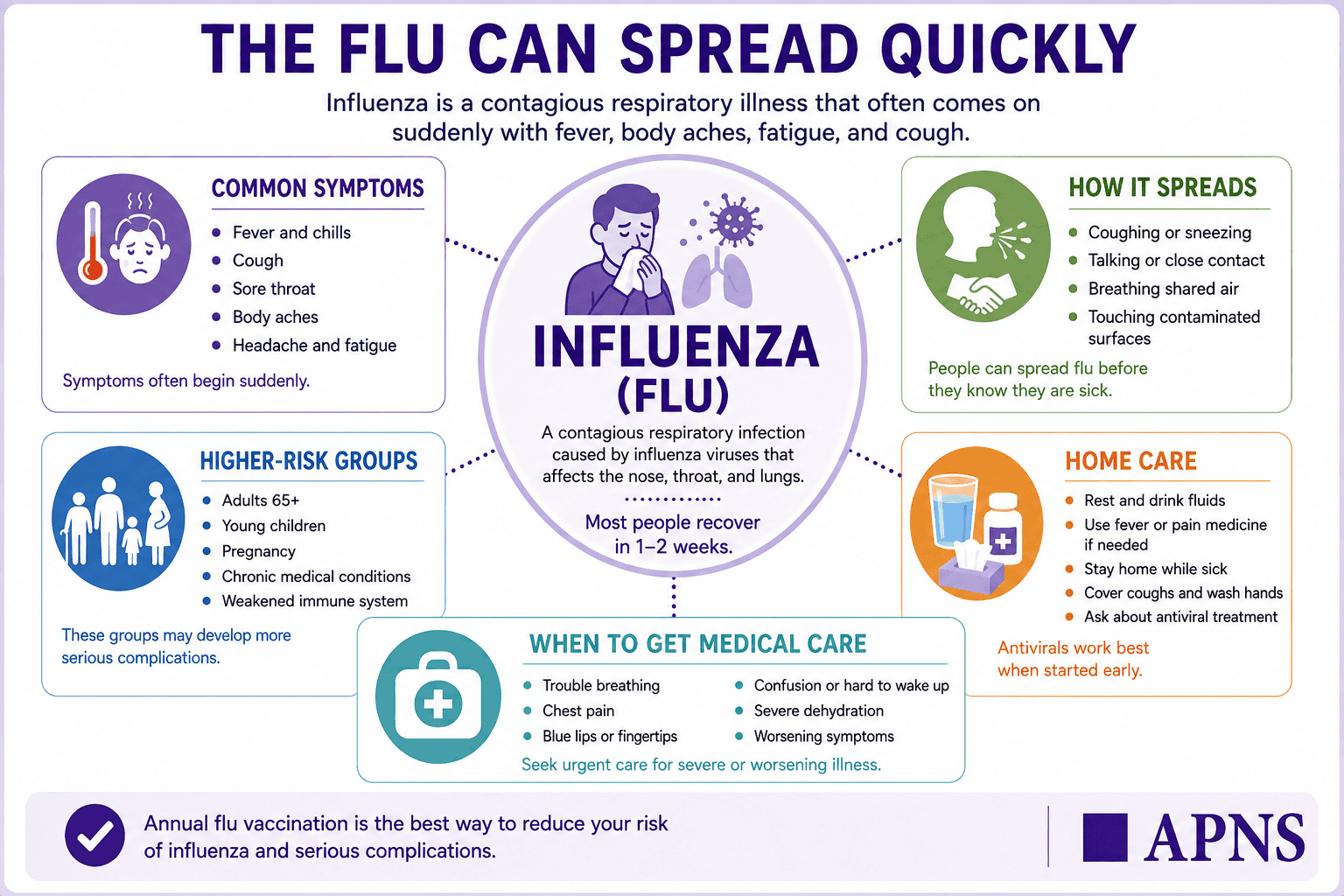
Influenza is caused by influenza viruses, most commonly Influenza A and Influenza B.
The virus spreads through:
People may spread influenza beginning about one day before symptoms develop and for several days after becoming sick.
Influenza (Flu) – CDC
https://www.cdc.gov/flu/
Learn how influenza spreads and ways to reduce your risk.
Certain individuals are at higher risk for severe illness and complications.
Risk factors include:
People at Higher Risk for Flu Complications – CDC
https://www.cdc.gov/flu/highrisk/
Provides information about people at increased risk for severe influenza illness.
The best way to prevent influenza is through annual vaccination and healthy infection-prevention practices.
Helpful prevention tips include:
Preventing Seasonal Flu – CDC
https://www.cdc.gov/flu/prevention/
Provides practical recommendations for preventing influenza and reducing transmission.
The following video content is provided to help you better understand this condition. These resources are intended for educational purposes and should not replace personalized medical advice from your healthcare provider.
Laboratory testing depends on your symptoms and overall health.
Common laboratory tests may include:
Laboratory Testing – CDC
https://www.cdc.gov/flu/
Provides information about influenza testing and diagnosis.
Additional testing depends on the severity of illness and whether complications are suspected.
Common diagnostic tests may include:
Influenza (Flu) – CDC
https://www.cdc.gov/flu/
Provides information about influenza testing and evaluation.
Treatment depends on the severity of illness, your overall health, and how long you have been sick.
Treatment options may include:
Antiviral medications work best when started within 48 hours after symptoms begin, although they may still benefit certain high-risk individuals even if started later.
Treating Flu with Antiviral Drugs – CDC
https://www.cdc.gov/flu/treatment/
Provides information about antiviral medications and supportive care.
Healthy habits help support recovery and reduce the spread of influenza.
Helpful lifestyle changes include:
Influenza (Flu) – CDC
https://www.cdc.gov/flu/
Provides recommendations for recovering safely and preventing the spread of influenza.
Treatment depends on your symptoms, risk factors, and how early treatment begins.
Common medications may include:
Antibiotics do not treat influenza unless a bacterial infection develops in addition to the flu.
Treating Flu with Antiviral Drugs – CDC
https://www.cdc.gov/flu/treatment/
Provides information about antiviral medications and influenza treatment.
Most people with influenza do not require surgery or invasive procedures. Treatment usually focuses on relieving symptoms while the immune system clears the infection. However, supportive treatments or hospital-based procedures may be necessary if severe illness or complications develop.
Common procedures may include:
Influenza (Flu) – Centers for Disease Control and Prevention (CDC)
https://www.cdc.gov/flu/
Learn about influenza treatment, supportive care, and hospitalization.
Most healthy people recover from influenza within 1 to 2 weeks, although fatigue and a lingering cough may continue for several weeks.
Some individuals, especially older adults, young children, pregnant individuals, and people with chronic medical conditions, are at greater risk of complications such as:
Follow up with your healthcare provider if symptoms persist or worsen.
Home care is one of the most important parts of recovering from influenza.
Helpful tips include:
Treating Flu – CDC
https://www.cdc.gov/flu/treatment/
Provides practical recommendations for recovering safely from influenza.
Yes. Influenza usually begins suddenly and often causes higher fever, more severe body aches, greater fatigue, and a more intense cough than the common cold.
No. Antibiotics only treat bacterial infections. They do not work against influenza viruses unless you also develop a bacterial infection.
Most adults can spread influenza beginning about
and for
. Children and people with weakened immune systems may remain contagious longer.
Yes. Annual influenza vaccination is recommended for nearly everyone
, unless there is a medical reason not to receive it.
Antiviral medications work best when started within
of symptom onset, although they may still benefit some people at higher risk for complications if started later.

Consider asking your healthcare provider:
Most cases of influenza are managed by a primary care provider. Depending on the severity of your illness or underlying medical conditions, your provider may recommend seeing a specialist.
You may be referred to:
Influenza (Flu) – CDC
https://www.cdc.gov/flu/
Provides information about influenza complications and specialty care.
Yes. Influenza is usually a self-limited illness, meaning your immune system clears the virus over time. Most people recover completely with rest, fluids, supportive care, and, when appropriate, antiviral medication.
Receiving the annual influenza vaccine is the best way to reduce your risk of becoming infected and developing serious complications.
Call 911 or seek emergency medical care immediately if you experience:
Seek prompt medical evaluation if you notice:
Emergency Warning Signs of Flu – CDC
https://www.cdc.gov/flu/
Learn how to recognize serious influenza complications and when emergency medical care is needed.
CALL 911
APNS does not provide emergency medical services. If you believe you are experiencing a medical emergency, including (but not limited to) chest pain, difficulty breathing, stroke symptoms, severe allergic reactions, anaphylaxis, uncontrolled bleeding, seizures, loss of consciousness, or any other potentially life-threatening condition, you are instructed to call 911 immediately or go immediately to the nearest emergency department.
Influenza (Flu) – NIH MedlinePlus
https://medlineplus.gov/flu.html
Easy-to-understand information about influenza, symptoms, diagnosis, treatment, and prevention.
Influenza (Flu) – Centers for Disease Control and Prevention (CDC)
https://www.cdc.gov/flu/
Comprehensive information about seasonal influenza, vaccination, antiviral medications, and prevention.
Treating Flu with Antiviral Drugs – CDC
https://www.cdc.gov/flu/treatment/
Reliable information about influenza treatment, antiviral medications, and supportive care.
American Lung Association
https://www.lung.org/
Evidence-based information about influenza, pneumonia, respiratory health, and lung disease.
This guide is intended for educational purposes only and should not replace medical advice, diagnosis, or treatment from your healthcare provider. Always follow the recommendations of your healthcare team regarding your individual health needs. Contact your healthcare provider if your symptoms worsen, new symptoms develop, or do not improve as expected. Call 911 immediately if you experience difficulty breathing, chest pain, blue lips, confusion, loss of consciousness, seizures, severe dehydration, or another medical emergency.
At APNS, our providers take the time to understand your condition and your goals. We offer comprehensive telehealth visits at a fixed rate — no membership fees, no insurance required, and no unexpected charges. Whether you’re newly diagnosed or looking for a provider who actually listens, we’re here to help.