

Gastroenteritis is inflammation of the stomach and intestines. It commonly causes diarrhea, nausea, vomiting, stomach cramps, and loss of appetite. Gastroenteritis is often called the stomach flu, but it is not caused by the influenza virus that causes respiratory flu.
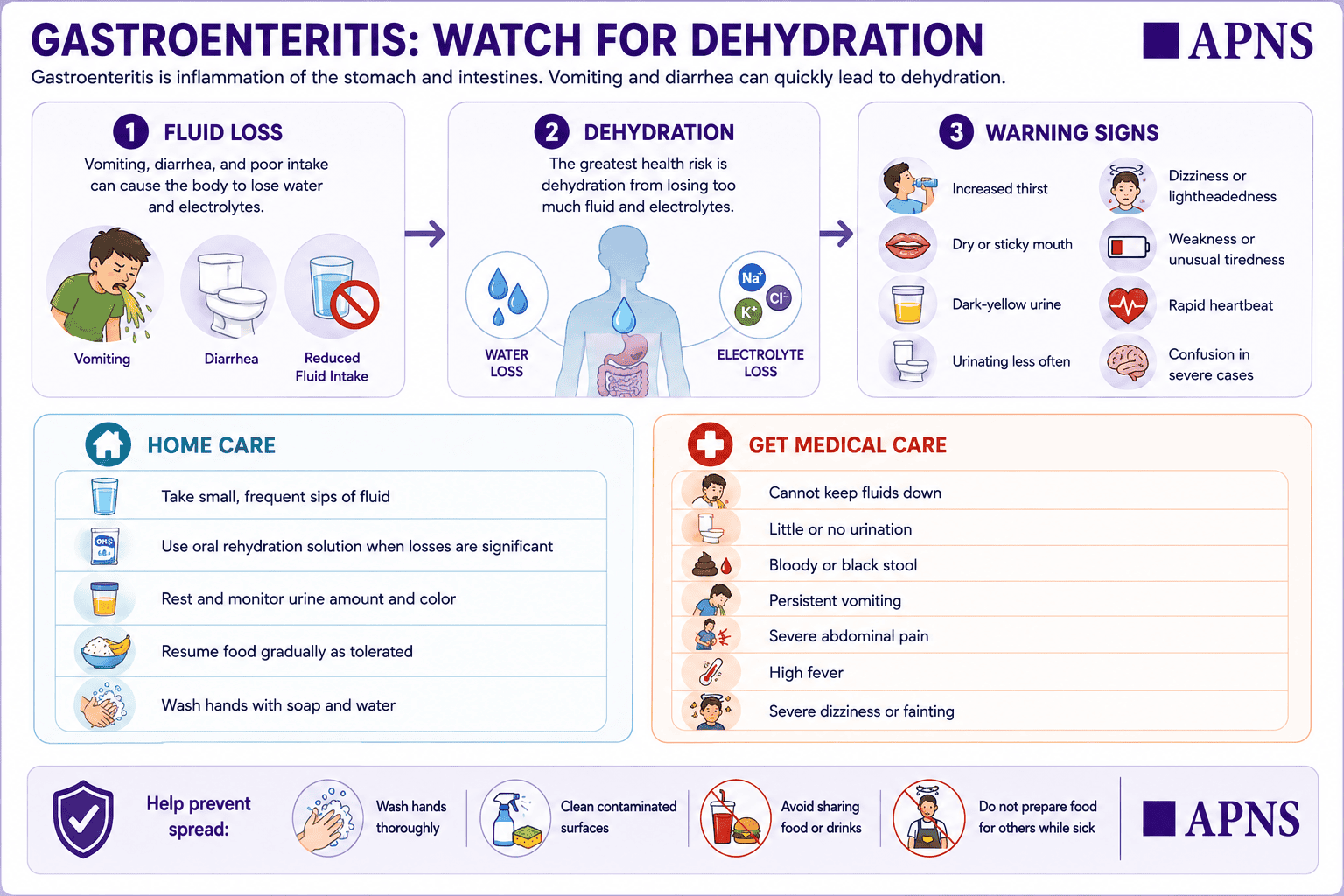
Viruses are a common cause, but gastroenteritis may also result from bacteria, parasites, contaminated food or water, certain medications, or exposure to toxins. Most uncomplicated viral cases improve with fluids, rest, and time. The most important concern is dehydration from losing too much fluid and electrolytes through vomiting or diarrhea.
Gastroenteritis – NIH MedlinePlus
Provides patient-friendly information about causes, symptoms, dehydration, diagnosis, and treatment.
Viral Gastroenteritis – National Institute of Diabetes and Digestive and Kidney Diseases
Explains viral gastroenteritis, home care, treatment, and prevention.
Gastroenteritis is very common and can affect adults of any age. Viral infections, especially norovirus, frequently cause outbreaks in homes, hospitals, nursing facilities, schools, restaurants, cruise ships, and other places where people are in close contact.
Some people are more likely to become seriously ill or dehydrated, including:
Norovirus is a common cause of sudden vomiting and diarrhea and can spread easily through contaminated hands, surfaces, food, water, and close contact.
Symptoms may begin suddenly and range from mild to severe.
Common symptoms include:
Signs of dehydration may include:
Norovirus symptoms often begin about 12–48 hours after exposure and commonly improve within one to three days. Other causes may have different onset times and durations.
Blood or pus in the stool, black stools, severe localized abdominal pain, or a high fever may suggest a more serious infection or another medical condition.
A healthcare provider may diagnose gastroenteritis based on the symptoms, exposure history, examination, and duration of illness.
The provider may ask:
The examination may include checking:
Most mild cases do not require extensive testing. Testing is more likely when diarrhea is severe, prolonged, bloody, associated with high fever, follows travel, occurs after antibiotic treatment, or affects a high-risk patient.
Infectious gastroenteritis can be caused by viruses, bacteria, or parasites.
Common viral causes include:
Common bacterial causes include:
Possible parasitic causes include:
Gastroenteritis may spread through:
Noninfectious causes may include medication reactions, excessive alcohol use, toxins, food intolerances, inflammatory bowel disease, or other digestive conditions.
Factors that may worsen symptoms or increase dehydration include:
Drink small, frequent amounts if nausea or vomiting makes it difficult to tolerate fluids. Oral rehydration solutions are generally better than plain water alone when substantial fluid and electrolyte losses have occurred.
Helpful prevention measures include:
Alcohol-based hand sanitizer may be useful when soap and water are unavailable, but careful handwashing with soap and water is especially important for infections such as norovirus.
About Norovirus – Centers for Disease Control and Prevention
Explains norovirus symptoms, spread, hydration, and prevention.
Food Poisoning Signs and Symptoms – CDC
Provides guidance about foodborne illness symptoms, higher-risk patients, and when to seek care.
The following video content is provided to help you better understand this condition. These resources are intended for educational purposes and should not replace personalized medical advice from your healthcare provider.
Possible laboratory tests include:
Not everyone needs stool testing. Test results are most useful when they may change treatment or help identify an outbreak.
Gastroenteritis usually does not require imaging.
Diagnostic testing may include:
Severe, constant, or highly localized pain is less typical of uncomplicated viral gastroenteritis and may require additional evaluation.
The main treatment is replacing lost fluids and electrolytes. Most uncomplicated viral infections do not require antibiotics.
Treatment options may include:
Antibiotics do not treat viral gastroenteritis, including norovirus. Unnecessary antibiotic use can cause side effects and may worsen some infections.
Treatment of Viral Gastroenteritis – NIDDK
Explains fluid replacement, nutrition, medication considerations, and treatment of dehydration.
Helpful habits during recovery include:
People with heart failure, kidney disease, or fluid restrictions should ask a healthcare provider how much and what type of fluid is appropriate.
Medication depends on the cause and severity.
Possible medications include:
Adults should avoid loperamide and similar medicines when they have:
Bismuth subsalicylate may not be appropriate for people with aspirin allergy, bleeding disorders, kidney problems, gout, or those taking blood thinners. It can temporarily darken the tongue or stool.
Avoid taking several acetaminophen-containing products together because excessive doses can cause severe liver injury. Anti-inflammatory drugs such as ibuprofen or naproxen may worsen kidney injury or stomach irritation during significant dehydration.
Antidiarrheal medicines may help selected adults, but they should be avoided when bloody diarrhea or fever suggests an invasive infection.
Most people do not need a procedure.
Possible medical interventions include:
Hospital treatment may be needed for severe dehydration, electrolyte abnormalities, kidney injury, confusion, low blood pressure, or inability to keep fluids down.
Most viral gastroenteritis improves without long-term problems. Norovirus illness commonly lasts one to three days, although weakness, reduced appetite, or changes in bowel habits may last somewhat longer.
Recovery time depends on:
Possible complications include:
Symptoms lasting longer than expected may indicate a persistent infection, medication side effect, irritable bowel syndrome, inflammatory bowel disease, malabsorption, or another condition requiring evaluation.
For mild illness without warning signs:
A restricted “BRAT” diet is not usually required. When appetite returns, most adults can gradually return to their normal diet even if mild diarrhea remains.
Oral rehydration solution is preferred for meaningful dehydration because it replaces electrolytes more effectively than water alone. Sports drinks may help with mild fluid loss but may contain too much sugar and insufficient electrolytes for more significant dehydration.
No. Gastroenteritis affects the stomach and intestines. Influenza primarily affects the respiratory system and commonly causes cough, sore throat, fever, and body aches.
Infectious gastroenteritis can be highly contagious. It may spread through direct contact, contaminated food or water, or touching contaminated surfaces and then touching the mouth.
Dehydration is the most common complication. Vomiting and diarrhea cause the body to lose water and important electrolytes.
Water may be sufficient for very mild illness. Oral rehydration solution is better when fluid losses are frequent or dehydration symptoms are developing.
Sports drinks may help with mild dehydration, but oral rehydration solutions provide a more appropriate balance of fluid and electrolytes for significant losses.
No. Do not force food while actively vomiting, but begin eating small amounts when appetite returns. Most people can gradually return to their normal diet.
Usually not. Antibiotics do not treat viral gastroenteritis and are only appropriate for selected bacterial infections.
Some adults with uncomplicated watery diarrhea may use it temporarily. Do not use it for bloody diarrhea, high fever, severe abdominal pain, or suspected invasive infection unless a provider directs you.
Many viral cases improve within several days. Norovirus symptoms often last one to three days. Bacterial or parasitic illness may last longer.
Contact a provider for dehydration, diarrhea lasting more than two days without improvement, severe abdominal or rectal pain, black or bloody stool, pus in the stool, frequent vomiting, or high fever.
Yes. Several different viruses and strains can cause gastroenteritis, and protection after infection may be incomplete or temporary.

Consider asking:
Most cases can be managed by a primary care or urgent care provider.
You may be referred to:
Most infectious gastroenteritis is curable or resolves on its own.
Viral gastroenteritis usually improves as the immune system clears the infection. There is no specific medication for common norovirus infection, so treatment focuses on preventing or treating dehydration.
Bacterial or parasitic gastroenteritis may require specific medication in selected cases. Some infections should not be treated with antibiotics unless testing and clinical findings support their use.
Ongoing or frequently recurring symptoms may mean that another digestive condition is present rather than repeated short-term gastroenteritis.
Call 911 or seek emergency medical care immediately for:
Seek urgent same-day medical evaluation for:
Severe dehydration can lead to low blood pressure, kidney injury, confusion, and the need for intravenous fluids.
CALL 911
APNS does not provide emergency medical services. If you believe you are experiencing a medical emergency, including (but not limited to) chest pain, difficulty breathing, stroke symptoms, severe allergic reactions, anaphylaxis, uncontrolled bleeding, seizures, loss of consciousness, or any other potentially life-threatening condition, you are instructed to call 911 immediately or go immediately to the nearest emergency department.
Gastroenteritis – NIH MedlinePlus
Provides an overview of causes, symptoms, dehydration, diagnosis, treatment, and prevention.
Explains viral gastroenteritis, symptoms, treatment, nutrition, and prevention.
Treatment of Viral Gastroenteritis – NIDDK
Provides guidance about fluid and electrolyte replacement and when medical treatment is needed.
Eating, Diet, and Nutrition for Viral Gastroenteritis – NIDDK
Explains hydration and how to return to normal eating.
Provides current patient information about norovirus symptoms, spread, treatment, and prevention.
Describes dehydration symptoms, causes, prevention, and treatment.
Explains causes of diarrhea, self-care, and warning signs requiring medical attention.
Food Poisoning Signs and Symptoms – CDC
Provides information about foodborne illness and signs of serious infection.
This guide is intended for educational purposes only and should not replace medical advice, diagnosis, testing, or treatment from your healthcare provider. Vomiting, diarrhea, or abdominal pain may be caused by viral gastroenteritis, food poisoning, a bacterial or parasitic infection, medication effects, pregnancy, appendicitis, bowel obstruction, inflammatory bowel disease, pancreatitis, gallbladder disease, kidney disease, or another condition requiring different treatment. Do not take antibiotics, antidiarrheal medication, or another person’s prescription medication unless directed by a healthcare professional. Ask a provider before increasing fluid intake if you have heart failure, kidney disease, or a prescribed fluid restriction. Seek prompt medical care for dehydration, inability to keep fluids down, bloody or black stool, persistent vomiting, high fever, severe abdominal pain, reduced urination, or symptoms lasting longer than expected. Call 911 immediately for loss of consciousness, severe confusion, difficulty breathing, vomiting blood, major rectal bleeding, a rigid abdomen, signs of shock, seizure, or another medical emergency.
At APNS, our providers take the time to understand your condition and your goals. We offer comprehensive telehealth visits at a fixed rate — no membership fees, no insurance required, and no unexpected charges. Whether you’re newly diagnosed or looking for a provider who actually listens, we’re here to help.