

Heartburn is a painful burning feeling in your chest or throat. It happens when stomach acid moves backward into your esophagus, which is the tube that carries food from your mouth to your stomach. Even though it is called “heartburn,” it is not caused by your heart. Many people notice heartburn after eating certain foods, eating large meals, bending over, or lying down soon after eating.
Occasional heartburn is common and can happen to almost anyone. However, frequent heartburn may be a sign of acid reflux or gastroesophageal reflux disease (GERD). If heartburn happens more than twice a week, wakes you from sleep, or interferes with your daily life, it is a good idea to talk with your healthcare provider.
Heartburn – NIH MedlinePlus
Provides patient-friendly information about what heartburn is, common causes, symptoms, treatment, and prevention.
Heartburn – MedlinePlus Medical Encyclopedia
Explains why heartburn happens and when frequent symptoms may be related to GERD.
Heartburn is very common. Many adults experience it from time to time, especially after certain foods, alcohol, pregnancy, or some medications. Frequent heartburn should be discussed with your healthcare provider because reflux can irritate or damage the esophagus over time.
Heartburn can feel different from person to person. Symptoms may happen after eating, at night, when bending over, or when lying flat.
Common symptoms may include:
Your healthcare provider may diagnose heartburn based on your symptoms and medical history. They may ask how often symptoms happen, what triggers them, whether symptoms occur at night, and whether over-the-counter medicines help.
Most people with occasional heartburn do not need special testing. Testing may be recommended if symptoms are frequent, severe, hard to control, or linked with warning signs such as trouble swallowing, vomiting blood, black stools, or unexplained weight loss.
Diagnosis of GERD – NIDDK
Explains how healthcare providers evaluate reflux symptoms and when additional testing may be needed.
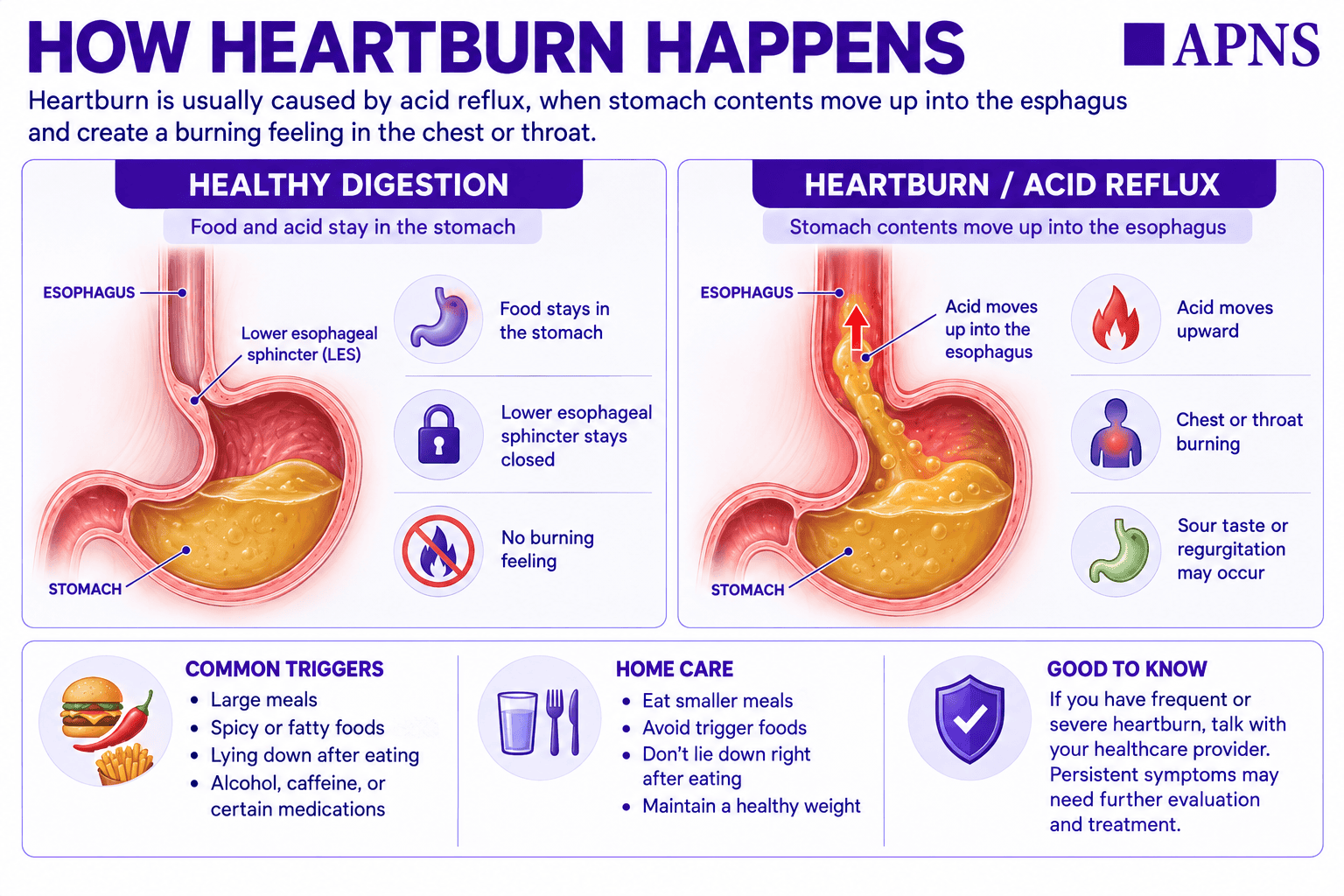
Heartburn usually happens when stomach acid backs up into the esophagus and irritates it. This can happen when the muscle between the stomach and esophagus does not close tightly enough.
Common causes or risk factors may include:
Acid Reflux, Heartburn, and GERD: What’s the Difference? – NIH MedlinePlus Magazine
Explains the difference between heartburn, acid reflux, and GERD in simple terms.
Symptoms & Causes of GERD – NIDDK
Reviews common causes of acid reflux and symptoms that may occur with GERD.
Certain foods, drinks, and habits can make heartburn more likely. Triggers are different for each person, so it can help to notice what you ate or did before symptoms started.
Common triggers may include:
Eating, Diet, & Nutrition for GERD – NIDDK
Provides practical tips on foods, eating habits, and lifestyle changes that may reduce reflux symptoms.
Although heartburn cannot always be prevented, healthy habits can reduce how often symptoms occur.
Helpful prevention tips include:
Eating, Diet, & Nutrition for GERD – National Institute of Diabetes and Digestive and Kidney Diseases (NIDDK)
Provides practical tips for reducing heartburn through healthy eating and lifestyle habits.
The following video content is provided to help you better understand this condition. These resources are intended for educational purposes and should not replace personalized medical advice from your healthcare provider.
Most people with heartburn do not need routine blood tests. Labs may be ordered if your provider is concerned about anemia, bleeding, medication safety, or another condition that could be causing your symptoms.
Common labs may include:
Complete Blood Count (CBC) – NIH MedlinePlus
Explains what a CBC measures and why it may be ordered.
Iron Tests – NIH MedlinePlus
Reviews what iron studies measure and when they may be helpful.
Most people with occasional heartburn do not need diagnostic testing. Tests may be used if symptoms happen often, do not improve with treatment, or if your provider is checking for complications.
Common tests may include:
Upper GI Endoscopy – NIDDK
Explains what happens during an upper endoscopy and why it may be recommended.
Diagnosis of GERD – NIDDK
Reviews common tests used when reflux symptoms need further evaluation.
Treatment depends on what is causing your heartburn and how often symptoms occur. Many people improve with lifestyle changes, while others may benefit from over-the-counter or prescription medications.
Treatment options may include:
Treatment for GERD – NIDDK
Explains lifestyle changes, medications, and procedures that may help manage frequent reflux symptoms.
Lifestyle changes are often the first step in reducing heartburn. Small changes can make a noticeable difference, especially if symptoms happen after meals or at night.
Helpful tips include:
Gastroesophageal Reflux – Discharge Instructions – NIH MedlinePlus
Provides practical home-care tips for managing reflux symptoms.
Eating, Diet, & Nutrition for GERD – NIDDK
Gives guidance on eating habits and lifestyle changes that may reduce symptoms.
Medications can help relieve heartburn by neutralizing stomach acid or reducing how much acid the stomach makes. Your provider can help you choose the safest option based on your symptoms, other medications, and health history.
Common medication options include:
Omeprazole – NIH MedlinePlus
Explains how omeprazole works, how to take it safely, and possible side effects.
Famotidine – NIH MedlinePlus
Provides patient-friendly information about famotidine, including uses, precautions, and side effects.
Most people with heartburn do not need a medical procedure. However, if symptoms are severe, occur frequently despite treatment, or are caused by GERD or another digestive condition, your healthcare provider may recommend additional treatment.
Common procedures may include:
Treatment for GERD – National Institute of Diabetes and Digestive and Kidney Diseases (NIDDK)
Learn about procedures and surgeries that may be recommended for persistent reflux symptoms.
Most people with heartburn can successfully manage their symptoms through healthy lifestyle habits and, when needed, medications. Learning your personal triggers and following your treatment plan can help reduce flare-ups and improve your quality of life.
If symptoms become more frequent, change over time, or stop responding to treatment, follow up with your healthcare provider to discuss additional evaluation or treatment options.
Simple changes at home can often reduce heartburn symptoms and help prevent future episodes.
Helpful tips include:
Gastroesophageal Reflux – Discharge Instructions – NIH MedlinePlus
Provides practical self-care tips to help reduce reflux symptoms at home.
Stress does not usually cause heartburn directly, but it may worsen symptoms or contribute to habits that trigger reflux.
No. Heartburn is a symptom caused by stomach acid irritating the esophagus. Acid reflux is the movement of stomach acid into the esophagus, while GERD is a chronic condition involving frequent reflux.
Some people tolerate coffee without problems, while others notice it triggers symptoms. Reducing caffeine or switching to decaffeinated coffee may help.
Occasional use is generally safe for many people, but frequent use should be discussed with your healthcare provider. Ongoing symptoms may require additional evaluation or different treatment.
Yes. Many episodes improve after avoiding trigger foods, changing eating habits, or taking over-the-counter medications. Frequent or severe symptoms should be evaluated by a healthcare provider.

Consider asking your healthcare provider:
Many people with heartburn are treated by their primary care provider. If symptoms are frequent, severe, difficult to control, or complications develop, your provider may recommend seeing a specialist.
You may be referred to:
American College of Gastroenterology – Patient Resources
Provides trusted patient education about digestive conditions and when specialist care may be helpful.
Occasional heartburn often improves with lifestyle changes or short-term medications. If heartburn is caused by an underlying condition such as GERD, treatment focuses on controlling symptoms, preventing complications, and improving quality of life.
Many people are able to keep heartburn well controlled by following their treatment plan and avoiding known triggers.
Seek emergency medical care or call 911 if you experience:
Important: Heartburn and a heart attack can sometimes feel very similar. If you are unsure whether your symptoms are related to your heart, call 911 or seek emergency medical care immediately.
Heart Attack – NIH MedlinePlus
Learn the warning signs of a heart attack and when to seek emergency medical care.
CALL 911
APNS does not provide emergency medical services. If you believe you are experiencing a medical emergency, including (but not limited to) chest pain, difficulty breathing, stroke symptoms, severe allergic reactions, anaphylaxis, uncontrolled bleeding, seizures, loss of consciousness, or any other potentially life-threatening condition, you are instructed to call 911 immediately or go immediately to the nearest emergency department.
Heartburn – NIH MedlinePlus
Provides patient-friendly information about heartburn, including symptoms, treatment, and prevention.
Heartburn – MedlinePlus Medical Encyclopedia
Explains common causes of heartburn, self-care tips, and when to seek medical attention.
Acid Reflux (GER & GERD) in Adults – National Institute of Diabetes and Digestive and Kidney Diseases (NIDDK)
Comprehensive patient education about acid reflux, GERD, diagnosis, treatment, nutrition, and prevention.
American College of Gastroenterology – Patient Resources
Trusted patient education about digestive diseases, acid reflux, and digestive health.
Mayo Clinic – GERD
Easy-to-read overview of reflux symptoms, causes, diagnosis, and treatment.
This guide is intended for educational purposes only and should not replace medical advice, diagnosis, or treatment from your healthcare provider. Always follow the recommendations of your healthcare team regarding your individual health needs. If your symptoms worsen, change suddenly, or you experience emergency warning signs, seek immediate medical care or call 911.
At APNS, our providers take the time to understand your condition and your goals. We offer comprehensive telehealth visits at a fixed rate — no membership fees, no insurance required, and no unexpected charges. Whether you’re newly diagnosed or looking for a provider who actually listens, we’re here to help.