

Triglycerides are a type of fat (lipid) found in your blood. Your body uses triglycerides for energy, especially between meals. After you eat, your body converts extra calories that are not immediately needed into triglycerides, which are stored in fat cells for later use. While triglycerides are an important source of energy, having too many in your bloodstream can increase your risk of heart disease and, at very high levels, pancreatitis (inflammation of the pancreas).
High triglycerides, also called hypertriglyceridemia, usually do not cause symptoms and are often discovered during routine blood work. Healthy lifestyle changes, treating underlying medical conditions, and medications when needed can help lower triglyceride levels and reduce your risk of complications.
Triglycerides – NIH MedlinePlus
https://medlineplus.gov/triglycerides.html
Provides easy-to-understand information about triglycerides, including what they are, why they matter, and how they are treated.
High Blood Triglycerides – National Heart, Lung, and Blood Institute (NHLBI)
https://www.nhlbi.nih.gov/health/blood-cholesterol
Provides information about triglycerides, cholesterol, and heart health.
High triglycerides are very common, especially among adults. Millions of Americans have elevated triglyceride levels, often along with high cholesterol, obesity, diabetes, or metabolic syndrome. Because high triglycerides usually cause no symptoms, regular cholesterol screening is important.
Cholesterol and Triglycerides – Centers for Disease Control and Prevention (CDC)
https://www.cdc.gov/cholesterol/
Provides information about cholesterol, triglycerides, and heart disease prevention.
Most people with high triglycerides have no symptoms. High triglycerides are usually found during routine blood tests.
If triglyceride levels become extremely high, symptoms may include:
High triglycerides are diagnosed with a fasting lipid panel, which measures triglycerides along with total cholesterol, LDL (“bad”) cholesterol, and HDL (“good”) cholesterol.
Your healthcare provider will review your triglyceride level, medical history, medications, and other cardiovascular risk factors to determine whether treatment is needed.
Cholesterol Levels – NIH MedlinePlus
https://medlineplus.gov/lab-tests/cholesterol-levels/
Explains what a lipid panel measures and how triglyceride results are interpreted.
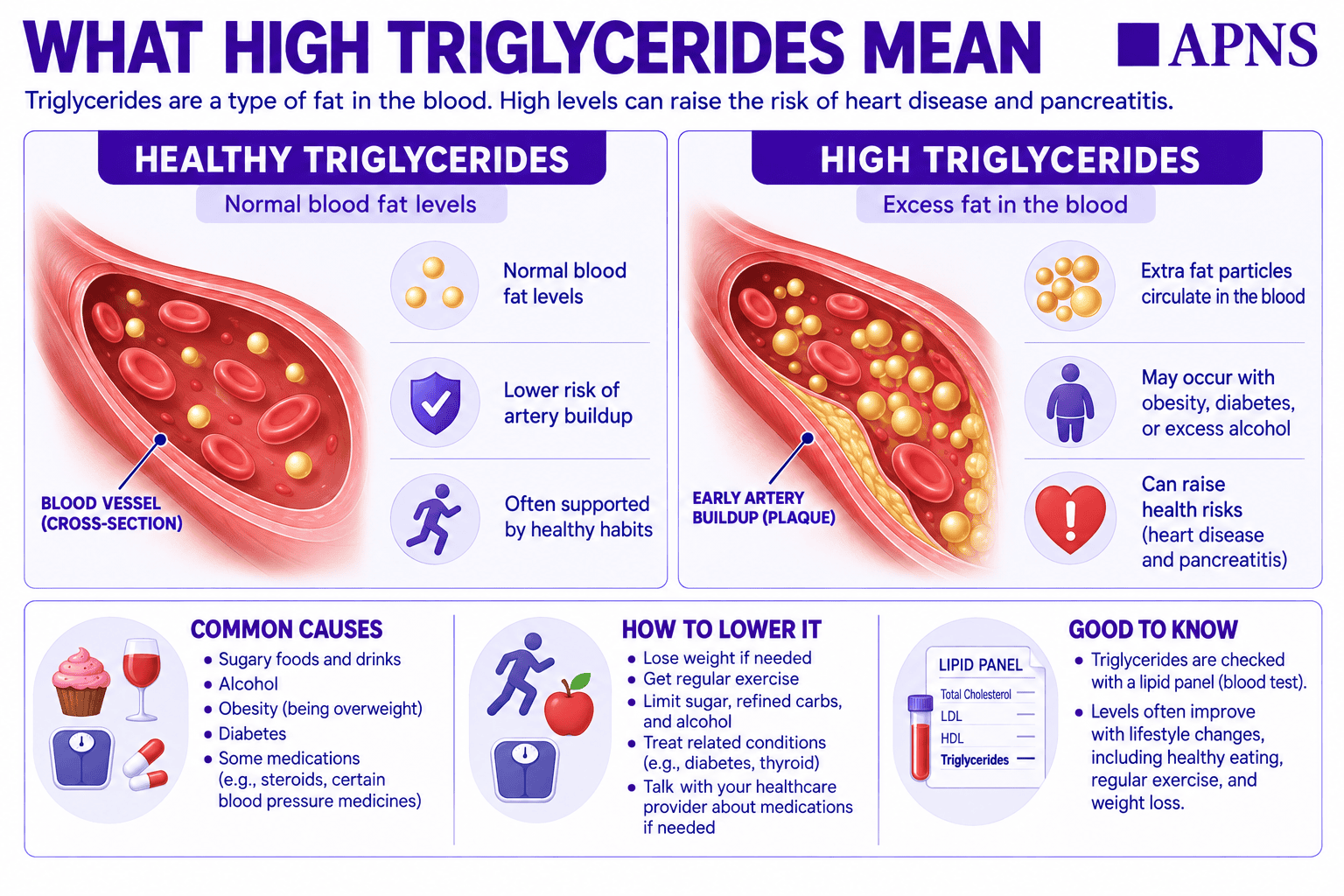
High triglycerides can develop from unhealthy lifestyle habits, certain medical conditions, medications, or inherited disorders. Often, more than one factor contributes.
Common causes and risk factors include:
Triglycerides – NIH MedlinePlus
https://medlineplus.gov/triglycerides.html
Learn about common causes, risk factors, and conditions associated with high triglycerides.
Several lifestyle habits and medical conditions can increase triglyceride levels or make them more difficult to control.
Common factors include:
Managing Cholesterol – American Heart Association
https://www.heart.org/en/health-topics/cholesterol
Provides healthy lifestyle recommendations for improving triglyceride and cholesterol levels.
Healthy lifestyle habits can help prevent high triglycerides and reduce your risk of heart disease and pancreatitis.
Helpful prevention tips include:
Healthy Living – American Heart Association
https://www.heart.org/en/healthy-living
Provides practical recommendations for lowering triglycerides and improving overall cardiovascular health.
The following video content is provided to help you better understand this condition. These resources are intended for educational purposes and should not replace personalized medical advice from your healthcare provider.
Several laboratory tests may be recommended to identify causes of high triglycerides and evaluate your overall health.
Common laboratory tests include:
Cholesterol Levels – NIH MedlinePlus
https://medlineplus.gov/lab-tests/cholesterol-levels/
Provides information about lipid testing and understanding cholesterol and triglyceride results.
Most people with high triglycerides do not need additional diagnostic testing beyond blood work. Depending on your health history, your healthcare provider may recommend testing to evaluate your heart or identify complications.
Possible tests include:
High Blood Cholesterol – NHLBI
https://www.nhlbi.nih.gov/health/high-blood-cholesterol
Learn how healthcare providers evaluate cardiovascular risk and determine if additional testing is needed.
Treatment focuses on lowering triglyceride levels and reducing your risk of heart disease and pancreatitis. Many people improve their triglyceride levels through healthy lifestyle changes, while others may also need medication.
Treatment options may include:
Triglycerides – American Heart Association
https://www.heart.org/en/health-topics/cholesterol/about-cholesterol/triglycerides
Provides information about triglycerides, treatment options, and reducing cardiovascular risk.
Healthy lifestyle habits are the most effective way to lower triglyceride levels. Even modest improvements in weight, nutrition, and physical activity can make a significant difference.
Helpful lifestyle changes include:
Healthy Living – American Heart Association
https://www.heart.org/en/healthy-living
Provides practical guidance on healthy eating, physical activity, and weight management to improve heart health.
If lifestyle changes alone are not enough, your healthcare provider may recommend medication to lower triglyceride levels and reduce your risk of complications.
Common medications include:
Triglycerides – American Heart Association
https://www.heart.org/en/health-topics/cholesterol/about-cholesterol/triglycerides
Learn about medications used to lower triglycerides and when they may be recommended.
Most people with high triglycerides do not need surgery or a medical procedure to treat their condition. Treatment usually focuses on healthy lifestyle changes, managing underlying medical conditions, and medications. However, procedures may be needed if high triglycerides lead to complications such as pancreatitis or contribute to cardiovascular disease.
Possible procedures may include:
Triglycerides – American Heart Association
https://www.heart.org/en/health-topics/cholesterol/about-cholesterol/triglycerides
Learn about triglycerides, cardiovascular risk, and treatment options.
Many people successfully lower their triglyceride levels through healthy eating, regular exercise, weight loss, and medications when needed. Lowering triglycerides can reduce your risk of heart disease and, when levels are very high, decrease your risk of pancreatitis.
Your healthcare provider will monitor your triglyceride levels over time and adjust your treatment plan as needed to help you reach your health goals.
Making healthy lifestyle changes is one of the most effective ways to lower triglyceride levels and improve your overall health.
Helpful tips include:
Healthy Living – American Heart Association
https://www.heart.org/en/healthy-living
Provides practical guidance for improving heart health through healthy eating, exercise, and weight management.
A normal fasting triglyceride level is generally less than 150 mg/dL. Your healthcare provider will explain what your results mean and whether treatment is recommended.
Yes. Foods and drinks high in added sugars and refined carbohydrates can increase triglyceride levels.
Yes. Alcohol can significantly raise triglyceride levels, especially if your levels are already elevated.
Yes. Regular physical activity helps lower triglycerides and improves overall heart health.
Your healthcare provider will recommend how often to repeat your lipid panel based on your triglyceride levels, overall health, and treatment plan.

Consider asking your healthcare provider:
Many people with high triglycerides receive care from their primary care provider. Depending on your triglyceride levels and other health conditions, your provider may recommend seeing a specialist.
You may be referred to:
American Heart Association – Cholesterol
https://www.heart.org/en/health-topics/cholesterol
Provides patient education about cholesterol, triglycerides, and cardiovascular health.
High triglycerides are usually not considered a permanent condition that is cured, but they are often very manageable. Many people are able to lower their triglyceride levels to a healthy range through healthy lifestyle changes, weight loss, and medications when needed.
Even after triglyceride levels improve, continuing healthy habits is important to help prevent them from increasing again.
Emergency Symptoms / When To Seek Immediate Help
High triglycerides usually do not cause emergency symptoms. However, very high triglyceride levels can cause acute pancreatitis, which is a medical emergency.
Call 911 or seek emergency medical care immediately if you experience:
Pancreatitis – NIH MedlinePlus
https://medlineplus.gov/pancreatitis.html
Learn about the warning signs of pancreatitis and when emergency medical care is needed.
CALL 911
APNS does not provide emergency medical services. If you believe you are experiencing a medical emergency, including (but not limited to) chest pain, difficulty breathing, stroke symptoms, severe allergic reactions, anaphylaxis, uncontrolled bleeding, seizures, loss of consciousness, or any other potentially life-threatening condition, you are instructed to call 911 immediately or go immediately to the nearest emergency department.
Triglycerides – NIH MedlinePlus
https://medlineplus.gov/triglycerides.html
Easy-to-understand information about triglycerides, including causes, diagnosis, treatment, and prevention.
National Heart, Lung, and Blood Institute (NHLBI) – High Blood Cholesterol
https://www.nhlbi.nih.gov/health/high-blood-cholesterol
Comprehensive information about cholesterol, triglycerides, cardiovascular risk, and healthy lifestyle changes.
Centers for Disease Control and Prevention (CDC) – Cholesterol
https://www.cdc.gov/cholesterol/
Evidence-based information about cholesterol, triglycerides, heart disease prevention, and healthy living.
American Heart Association – Triglycerides
https://www.heart.org/en/health-topics/cholesterol/about-cholesterol/triglycerides
Reliable patient education about triglycerides, treatment options, nutrition, and cardiovascular health.
This guide is intended for educational purposes only and should not replace medical advice, diagnosis, or treatment from your healthcare provider. Always follow the recommendations of your healthcare team regarding your individual health needs. Contact your healthcare provider if your triglyceride levels remain elevated or you have questions about your treatment plan. Call 911 immediately if you experience symptoms of pancreatitis, a heart attack, stroke, or another medical emergency.
At APNS, our providers take the time to understand your condition and your goals. We offer comprehensive telehealth visits at a fixed rate — no membership fees, no insurance required, and no unexpected charges. Whether you’re newly diagnosed or looking for a provider who actually listens, we’re here to help.