
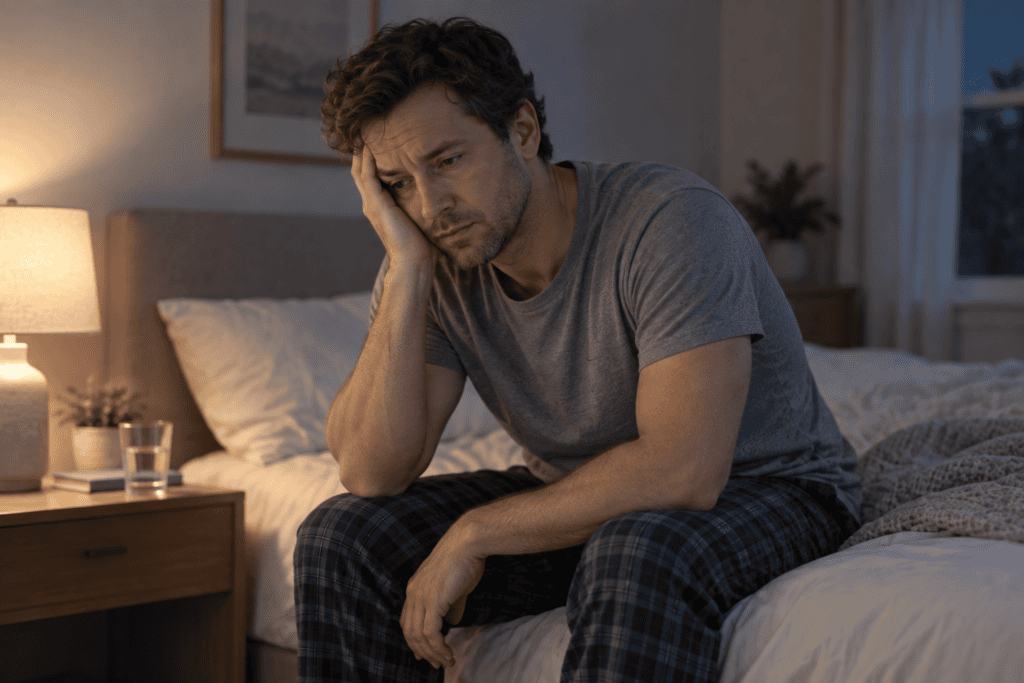
Insomnia is a sleep disorder that makes it difficult to fall asleep, stay asleep, wake up too early and not be able to fall back asleep, or feel rested after sleeping. It may occur for a short time (acute insomnia) or continue for months or longer (chronic insomnia). Poor sleep can affect mood, concentration, memory, work performance, relationships, physical health, and overall quality of life. (nhlbi.nih.gov)
Sleep disorders are a group of conditions that affect the quality, timing, or amount of sleep. In addition to insomnia, common sleep disorders include obstructive sleep apnea, restless legs syndrome, circadian rhythm disorders, narcolepsy, and parasomnias such as sleepwalking. A healthcare provider can determine whether insomnia is the primary problem or whether another sleep disorder is contributing to poor sleep. (medlineplus.gov)
Insomnia is one of the most common sleep disorders. Many adults experience occasional insomnia, while chronic insomnia affects approximately 10% of adults.
The risk may be higher in people who:
Sleep problems can occur at any age and are treatable. (nhlbi.nih.gov)
Symptoms of insomnia may include:
Symptoms of other sleep disorders may include:
Daytime symptoms are often as important as nighttime symptoms when diagnosing a sleep disorder.
A healthcare provider evaluates both nighttime sleep and daytime functioning.
The provider may ask:
Keeping a sleep diary for one to two weeks is often helpful.
Chronic insomnia generally involves difficulty sleeping at least three nights each week for three months or longer despite adequate opportunity for sleep. (aasm.org)
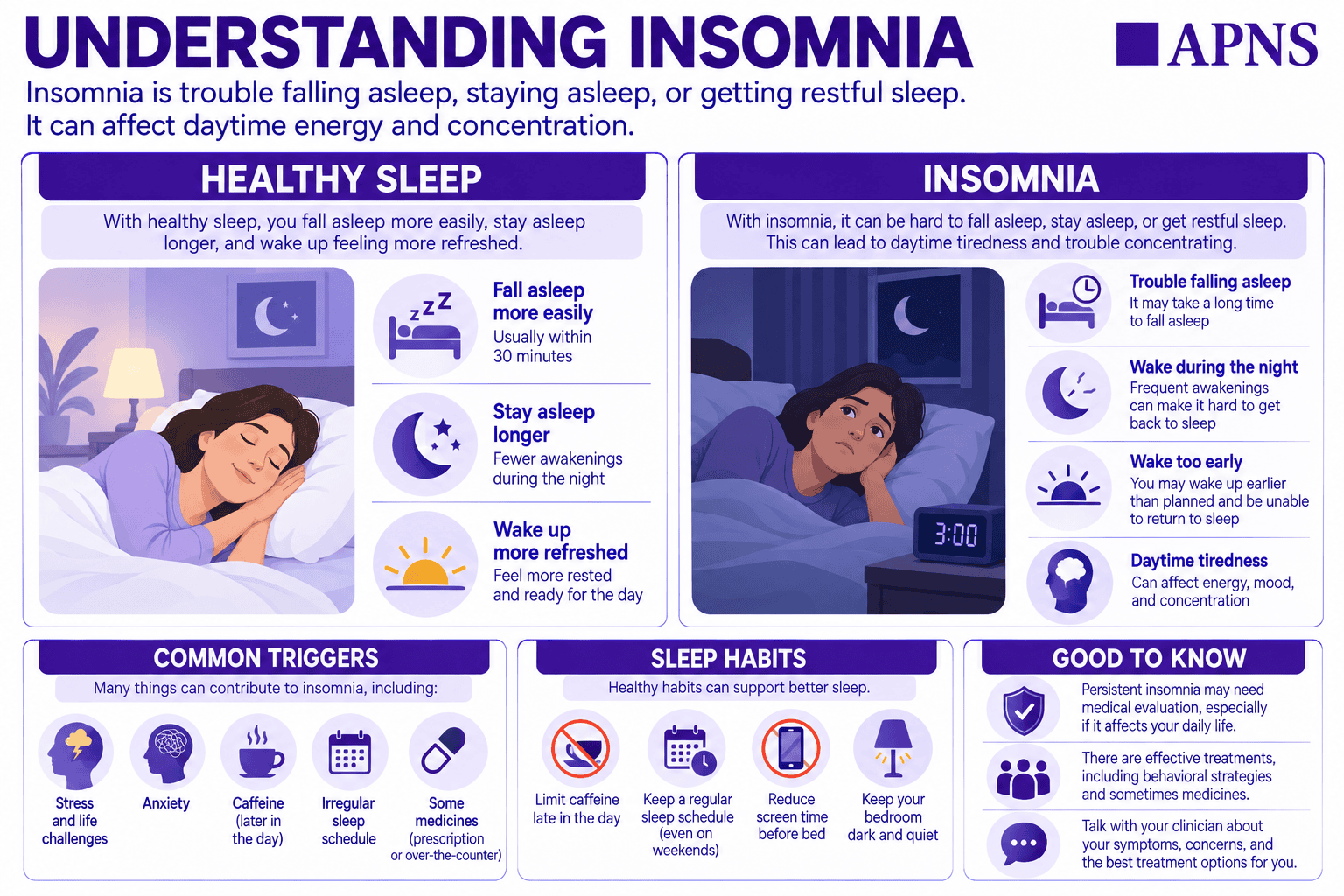
Insomnia may occur by itself or develop because of another medical, psychiatric, or sleep condition.
Possible causes include:
Sometimes several different causes contribute to insomnia at the same time.
Factors that commonly worsen insomnia include:
Alcohol may help someone fall asleep initially but often causes lighter, more disrupted sleep later in the night.
Healthy sleep habits may reduce the risk of chronic insomnia.
Helpful measures include:
The following video content is provided to help you better understand this condition. These resources are intended for educational purposes and should not replace personalized medical advice from your healthcare provider.
There is no blood test that diagnoses insomnia.
Laboratory testing may be recommended when another medical condition is suspected.
Possible tests include:
Testing depends on symptoms and medical history.
Additional testing depends on the suspected cause.
Possible studies include:
Not everyone with insomnia needs a sleep study. Testing is based on symptoms and risk factors.
Treatment depends on the cause of the sleep problem.
Treatment options may include:
CBT-I is considered the first-line treatment for chronic insomnia because it often provides long-lasting improvement without medication risks. (aasm.org)
Healthy sleep habits include:
Consistency is usually more important than trying to “catch up” on sleep after a poor night.
Medications may be appropriate for selected patients.
Possible medications include:
Possible side effects include:
Do not combine prescription sleep medications with alcohol, opioids, or other sedatives unless specifically directed by a healthcare professional.
Melatonin is available without a prescription but is still a medication and may interact with other drugs.
Most insomnia does not require procedures.
Treatment interventions may include:
Many people improve significantly once the underlying cause is identified and treated.
Long-term outlook depends on:
Improvement often occurs gradually over several weeks rather than overnight.
Helpful self-care includes:
Do not drive or operate heavy machinery if severe sleepiness makes it unsafe.
Most adults need 7–9 hours of sleep each night. Individual needs vary slightly. (cdc.gov)
Yes. Anxiety is one of the most common causes of difficulty falling asleep and staying asleep.
Yes. Poor sleep can worsen mood, increase anxiety, and contribute to depression.
Melatonin is generally well tolerated for many people but is not appropriate for everyone. Discuss its use with your healthcare provider.
Usually not. If you remain awake for an extended period, getting out of bed and doing a quiet relaxing activity until you become sleepy again is often recommended as part of CBT-I.
Although alcohol may help someone fall asleep initially, it commonly causes poorer quality sleep and more nighttime awakenings.
Yes. Many people with sleep apnea experience repeated awakenings and poor-quality sleep.
Long naps may make nighttime insomnia worse. Your healthcare provider or CBT-I therapist can help determine what is appropriate.

Consider asking:
You may be referred to:
Many cases of insomnia improve or completely resolve once contributing factors are treated.
Some people require ongoing management, especially if insomnia is related to chronic medical or mental health conditions.
Treatment can:
Even long-standing insomnia often improves with appropriate treatment.
Call 911 or seek emergency medical care immediately for:
Seek urgent medical evaluation for:
In the United States, call or text 988 for suicidal thoughts or a mental health crisis.
CALL 911
APNS does not provide emergency medical services. If you believe you are experiencing a medical emergency, including (but not limited to) chest pain, difficulty breathing, stroke symptoms, severe allergic reactions, anaphylaxis, uncontrolled bleeding, seizures, loss of consciousness, or any other potentially life-threatening condition, you are instructed to call 911 immediately or go immediately to the nearest emergency department.
National Heart, Lung, and Blood Institute – Insomnia
https://www.nhlbi.nih.gov/health/insomnia
Provides comprehensive information about insomnia, causes, diagnosis, and treatment.
American Academy of Sleep Medicine – Sleep Education
https://sleepeducation.org/sleep-disorders/insomnia/
Patient-friendly information about insomnia and sleep disorders.
American Academy of Sleep Medicine – CBT-I
https://sleepeducation.org/patients/cognitive-behavioral-therapy-for-insomnia/
Explains Cognitive Behavioral Therapy for Insomnia.
NIH MedlinePlus – Sleep Disorders
https://medlineplus.gov/sleepdisorders.html
Overview of common sleep disorders.
Centers for Disease Control and Prevention – Sleep
https://www.cdc.gov/sleep/
Information about healthy sleep habits and recommended sleep duration.
This guide is intended for educational purposes only and should not replace medical advice, diagnosis, testing, or treatment from your healthcare provider. Difficulty sleeping may be caused by insomnia, obstructive sleep apnea, restless legs syndrome, anxiety, depression, chronic pain, medication side effects, neurological conditions, or other medical disorders. Do not begin, stop, or combine sleep medications without guidance from a qualified healthcare professional. Many prescription sleep medications can impair driving, increase fall risk, and cause dangerous breathing problems when combined with alcohol, opioids, or other sedatives. Seek prompt medical evaluation for persistent insomnia, excessive daytime sleepiness, loud snoring with breathing pauses, dangerous nighttime behaviors, or symptoms that interfere with daily functioning. Call 911 immediately for difficulty breathing, seizure, stroke symptoms, severe chest pain, suspected overdose, or another medical emergency. In the United States, call or text 988 for suicidal thoughts or a mental health crisis.
At APNS, our providers take the time to understand your condition and your goals. We offer comprehensive telehealth visits at a fixed rate — no membership fees, no insurance required, and no unexpected charges. Whether you’re newly diagnosed or looking for a provider who actually listens, we’re here to help.