

Irritable Bowel Syndrome (IBS) is a common disorder that affects how the large intestine (colon) functions. IBS is considered a functional gastrointestinal disorder, meaning the digestive tract looks normal but does not function normally. It can cause recurring abdominal pain along with changes in bowel habits, such as diarrhea, constipation, or both.
Unlike inflammatory bowel diseases such as Crohn’s disease and ulcerative colitis, IBS does not cause inflammation, permanent damage to the intestines, or increase the risk of colorectal cancer. Although IBS is a chronic condition, many people successfully manage their symptoms with healthy lifestyle changes, stress management, dietary modifications, and medications when needed.
Irritable Bowel Syndrome – NIH MedlinePlus
https://medlineplus.gov/irritablebowelsyndrome.html
Provides easy-to-understand information about IBS, including symptoms, diagnosis, treatment, and living with the condition.
Irritable Bowel Syndrome – National Institute of Diabetes and Digestive and Kidney Diseases (NIDDK)
https://www.niddk.nih.gov/health-information/digestive-diseases/irritable-bowel-syndrome
Explains what IBS is, common symptoms, causes, diagnosis, and treatment options.
IBS is one of the most common digestive disorders worldwide. It affects an estimated 10% to 15% of adults, although many people never receive a formal diagnosis. IBS is more common in women than men and often develops before the age of 50.
Irritable Bowel Syndrome – NIDDK
https://www.niddk.nih.gov/health-information/digestive-diseases/irritable-bowel-syndrome
Provides information about how common IBS is and who is most likely to develop it.
IBS symptoms vary from person to person and often come and go over time.
Common symptoms may include:
Your healthcare provider will ask about your symptoms, review your medical history, and perform a physical examination. IBS is usually diagnosed using symptom-based criteria called the Rome IV criteria after other conditions have been ruled out when appropriate.
Additional testing may be recommended if you have warning signs such as unexplained weight loss, rectal bleeding, anemia, or symptoms that begin later in life.
Irritable Bowel Syndrome – NIDDK
https://www.niddk.nih.gov/health-information/digestive-diseases/irritable-bowel-syndrome
Explains how IBS is diagnosed and when additional testing may be recommended.
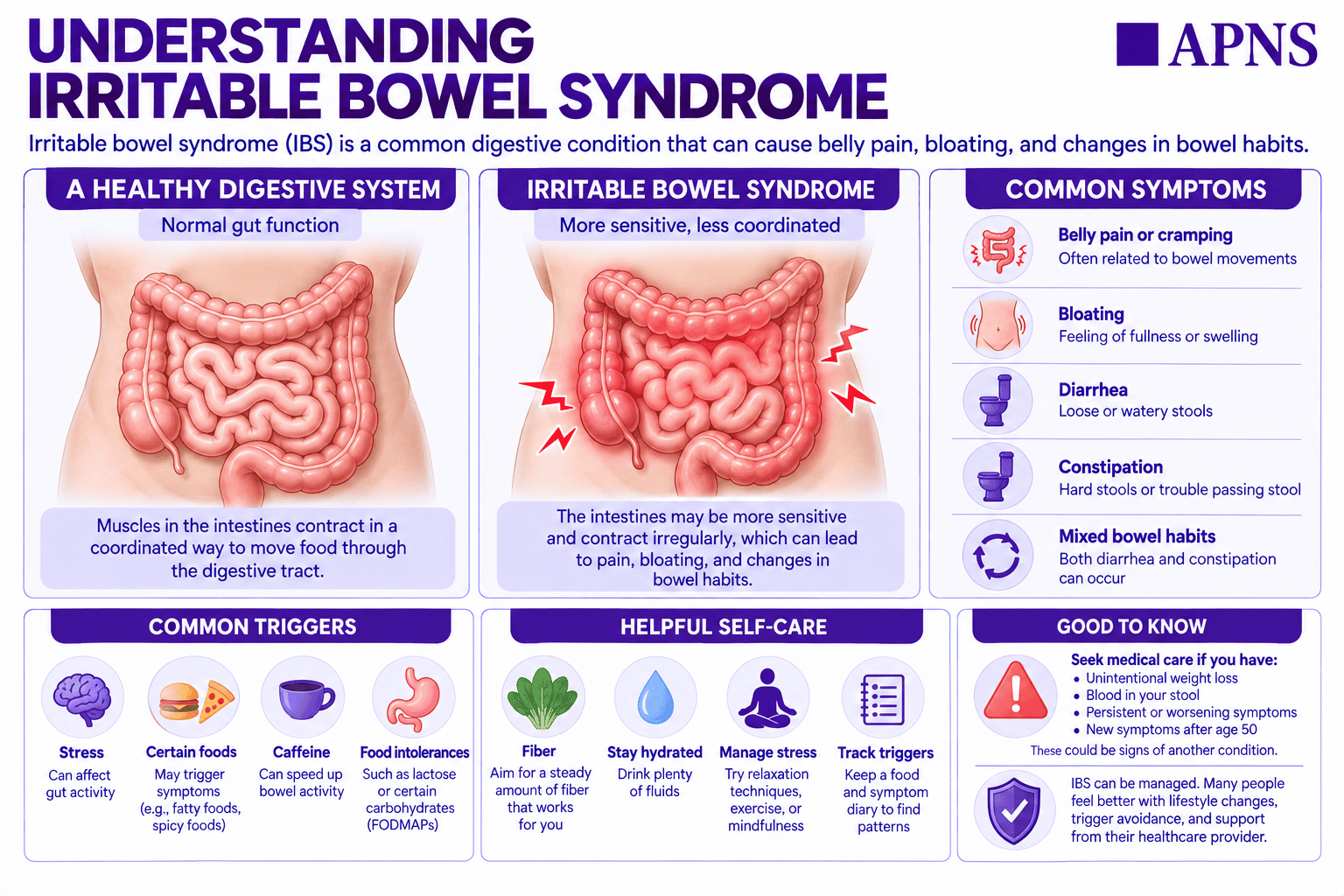
The exact cause of IBS is unknown. Researchers believe several factors work together to affect how the digestive system functions.
Possible causes and contributing factors include:
Irritable Bowel Syndrome – NIDDK
https://www.niddk.nih.gov/health-information/digestive-diseases/irritable-bowel-syndrome
Learn about the possible causes and risk factors associated with IBS.
Many people notice that certain foods or situations trigger their IBS symptoms.
Common triggers include:
IBS Diet – Monash University
https://www.monashfodmap.com/ibs-central/
Provides evidence-based information about the low-FODMAP diet and common IBS triggers.
Although IBS cannot always be prevented, healthy lifestyle habits may reduce symptoms and decrease the frequency of flare-ups.
Helpful prevention tips include:
Irritable Bowel Syndrome – National Institute of Diabetes and Digestive and Kidney Diseases (NIDDK)
https://www.niddk.nih.gov/health-information/digestive-diseases/irritable-bowel-syndrome
Provides practical recommendations for managing IBS and reducing symptom flare-ups.
There is no single laboratory test that diagnoses IBS. However, laboratory testing may be performed to rule out other medical conditions.
Common laboratory tests may include:
Irritable Bowel Syndrome – NIH MedlinePlus
https://medlineplus.gov/irritablebowelsyndrome.html
Provides information about testing commonly used when evaluating IBS.
Additional testing is usually performed only when symptoms suggest another digestive condition or if warning signs are present.
Common diagnostic tests may include:
Irritable Bowel Syndrome – NIDDK
https://www.niddk.nih.gov/health-information/digestive-diseases/irritable-bowel-syndrome
Learn about the tests that may be used to evaluate IBS and rule out other digestive disorders.
Treatment focuses on reducing symptoms, improving quality of life, and identifying individual triggers. Your treatment plan will depend on your symptoms and whether constipation, diarrhea, or both are present.
Treatment options may include:
Irritable Bowel Syndrome – American College of Gastroenterology (ACG)
https://gi.org/topics/irritable-bowel-syndrome/
Provides information about treatment options and long-term management of IBS.
Healthy lifestyle habits often play a major role in improving IBS symptoms.
Helpful lifestyle changes include:
Low-FODMAP Diet – Monash University
https://www.monashfodmap.com/
Provides evidence-based information about the low-FODMAP diet and managing IBS symptoms.
Several medications can help manage IBS symptoms. The best choice depends on whether your symptoms are primarily diarrhea, constipation, abdominal pain, or a combination of these.
Common medications include:
Irritable Bowel Syndrome – American College of Gastroenterology (ACG)
https://gi.org/topics/irritable-bowel-syndrome/
Provides information about medications commonly used to treat IBS.
Most people with IBS do not require surgery or invasive procedures. Treatment usually focuses on dietary changes, lifestyle modifications, stress management, and medications. However, certain procedures or tests may be recommended to rule out other digestive conditions or evaluate persistent symptoms.
Common procedures may include:
Irritable Bowel Syndrome – National Institute of Diabetes and Digestive and Kidney Diseases (NIDDK)
https://www.niddk.nih.gov/health-information/digestive-diseases/irritable-bowel-syndrome
Learn about the procedures and tests that may be used to evaluate IBS and rule out other digestive conditions.
IBS is a long-term condition, but it does not damage the intestines or increase your risk of colorectal cancer. Symptoms often come and go, with periods of improvement followed by flare-ups. Many people successfully manage IBS through healthy lifestyle changes, identifying personal triggers, stress reduction, and medications when needed.
Working closely with your healthcare provider can help you develop a treatment plan that improves your symptoms and quality of life.
Daily self-care can significantly improve IBS symptoms and reduce flare-ups.
Helpful tips include:
Low-FODMAP Diet – Monash University
https://www.monashfodmap.com/
Provides evidence-based guidance on using the low-FODMAP diet to help manage IBS symptoms.
IBS is a functional digestive disorder that does not cause inflammation or permanent damage to the intestines. Inflammatory bowel diseases, such as Crohn’s disease and ulcerative colitis, cause chronic inflammation and can damage the digestive tract.
Yes. Stress and anxiety commonly trigger or worsen IBS symptoms in many people.
Yes. Trigger foods vary from person to person. Common triggers include fatty foods, caffeine, alcohol, spicy foods, dairy products for some people, and certain high-FODMAP foods.
No. IBS does not increase the risk of colorectal cancer.
Yes. Regular physical activity may improve bowel function, reduce stress, and lessen IBS symptoms.

Consider asking your healthcare provider:
Many people with IBS receive care from their primary care provider. Depending on your symptoms and treatment response, your provider may recommend seeing a specialist.
You may be referred to:
American College of Gastroenterology – Irritable Bowel Syndrome
https://gi.org/topics/irritable-bowel-syndrome/
Provides patient education about IBS, treatment options, and specialty care.
There is currently no cure for IBS. However, many people successfully manage their symptoms with dietary changes, stress management, regular physical activity, and medications when needed.
Symptoms often improve over time, and many people are able to lead healthy, active lives with an individualized treatment plan.
IBS itself does not usually cause medical emergencies. However, certain symptoms may indicate a more serious condition.
Call 911 or seek emergency medical care immediately if you experience:
Seek prompt medical evaluation if you notice:
Irritable Bowel Syndrome – NIH MedlinePlus
https://medlineplus.gov/irritablebowelsyndrome.html
Learn when IBS symptoms require medical evaluation and when emergency medical care is needed.
CALL 911
APNS does not provide emergency medical services. If you believe you are experiencing a medical emergency, including (but not limited to) chest pain, difficulty breathing, stroke symptoms, severe allergic reactions, anaphylaxis, uncontrolled bleeding, seizures, loss of consciousness, or any other potentially life-threatening condition, you are instructed to call 911 immediately or go immediately to the nearest emergency department.
Irritable Bowel Syndrome – NIH MedlinePlus
https://medlineplus.gov/irritablebowelsyndrome.html
Easy-to-understand information about IBS, including symptoms, diagnosis, treatment, and living with the condition.
National Institute of Diabetes and Digestive and Kidney Diseases (NIDDK) – Irritable Bowel Syndrome
https://www.niddk.nih.gov/health-information/digestive-diseases/irritable-bowel-syndrome
Comprehensive information about IBS, treatment options, nutrition, and long-term management.
American College of Gastroenterology (ACG) – Irritable Bowel Syndrome
https://gi.org/topics/irritable-bowel-syndrome/
Evidence-based patient education about IBS, medications, dietary recommendations, and specialty care.
Monash University – Low-FODMAP Diet
https://www.monashfodmap.com/
Reliable information about the low-FODMAP diet and evidence-based nutrition strategies for managing IBS.
This guide is intended for educational purposes only and should not replace medical advice, diagnosis, or treatment from your healthcare provider. Always follow the recommendations of your healthcare team regarding your individual health needs. Contact your healthcare provider if your symptoms worsen, new symptoms develop, or your treatment plan is no longer controlling your IBS. Call 911 immediately if you experience severe abdominal pain, heavy rectal bleeding, black stools, persistent vomiting, confusion, or another medical emergency.
At APNS, our providers take the time to understand your condition and your goals. We offer comprehensive telehealth visits at a fixed rate — no membership fees, no insurance required, and no unexpected charges. Whether you’re newly diagnosed or looking for a provider who actually listens, we’re here to help.