

Joint pain, also called arthralgia, is discomfort, aching, soreness, or pain in one or more joints. Joints are areas where two or more bones meet, such as the knees, hips, shoulders, elbows, wrists, fingers, and ankles. Joint pain may begin suddenly after an injury or develop gradually because of inflammation, overuse, arthritis, infection, or another medical condition.
Joint pain is a symptom rather than a single disease. It may be mild and temporary or severe enough to affect walking, sleep, work, and everyday activities. Treatment depends on what is causing the pain.
Joint Disorders – NIH MedlinePlus
https://medlineplus.gov/jointdisorders.html
Provides patient-friendly information about joint injuries, arthritis, diagnosis, treatment, and when to seek medical care.
Joint Pain – NIH MedlinePlus
https://medlineplus.gov/ency/article/003261.htm
Explains common causes of joint pain and what to expect during a medical evaluation.
Joint pain is common and can affect adults of any age. The likelihood of developing persistent pain increases with age, previous injuries, repetitive joint use, excess body weight, and certain medical conditions.
Temporary joint pain may occur after exercise, overuse, illness, or a minor injury. Long-lasting pain is commonly related to osteoarthritis, inflammatory arthritis, previous joint damage, or conditions affecting the tissues surrounding a joint.
Arthritis – NIH MedlinePlus
https://medlineplus.gov/arthritis.html
Provides information about common forms of arthritis that can cause pain, stiffness, swelling, and reduced movement.
Joint pain may affect one joint or several joints. Symptoms may remain constant or come and go.
Common symptoms may include:
Joint pain accompanied by redness, warmth, significant swelling, or prolonged morning stiffness may suggest inflammation or infection and should be medically evaluated.
A healthcare provider will ask about the location, timing, severity, and pattern of the pain.
They may ask:
The provider may examine joint movement, swelling, warmth, tenderness, stability, strength, and the surrounding muscles and tendons. Diagnosis often requires combining the history, examination, laboratory testing, and imaging results.
Joint Disorders – NIH MedlinePlus
https://medlineplus.gov/jointdisorders.html
Provides information about the evaluation and diagnosis of injuries and diseases affecting the joints.
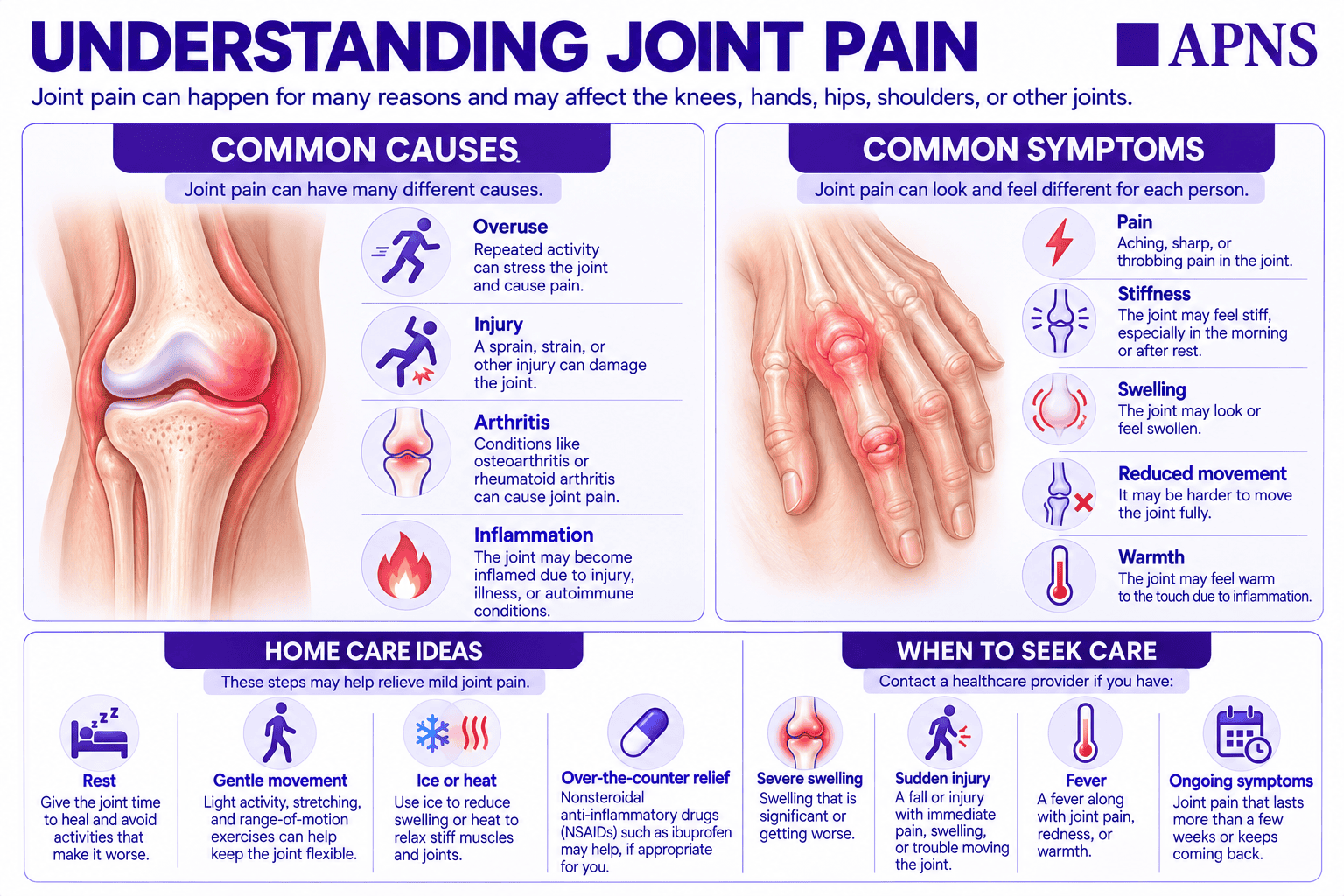
Joint pain may be caused by an injury, inflammation, infection, overuse, or an underlying medical condition.
Common causes include:
Pain that feels like it is coming from a joint may sometimes arise from nearby muscles, tendons, ligaments, nerves, or bursae.
Arthritis and Rheumatic Diseases – National Institute of Arthritis and Musculoskeletal and Skin Diseases
https://www.niams.nih.gov/health-topics/arthritis-and-rheumatic-diseases
Explains common inflammatory and degenerative conditions that affect the joints and surrounding tissues.
Factors that may worsen joint pain include:
Complete inactivity may increase stiffness and muscle weakness. However, exercising through severe pain or a new injury may cause additional damage. Activity should be adjusted to the cause and severity of symptoms.
Not all joint pain can be prevented, but healthy habits may reduce the risk of injuries and protect joint function.
Helpful prevention measures include:
The following video content is provided to help you better understand this condition. These resources are intended for educational purposes and should not replace personalized medical advice from your healthcare provider.
Laboratory testing depends on the symptoms and suspected cause. Many people with mild joint pain do not require blood tests.
Possible tests include:
A normal blood test does not always rule out arthritis or another joint condition.
Medical Tests – NIH MedlinePlus
https://medlineplus.gov/lab-tests/
Provides patient information about common blood, urine, and body-fluid tests.
Imaging and other diagnostic tests may be used when symptoms are severe, persistent, or associated with an injury.
Possible tests include:
Not every person with joint pain needs imaging. The type of test depends on the joint, symptoms, examination findings, and suspected diagnosis.
Treatment is based on the underlying cause, the affected joint, and how much the pain limits daily activities.
Options may include:
Exercise and physical therapy can improve strength, mobility, flexibility, and function for many joint conditions. Severe or persistent pain may require imaging or specialist evaluation.
Living With Arthritis – National Institute of Arthritis and Musculoskeletal and Skin Diseases
https://www.niams.nih.gov/community-outreach-initiative/understanding-joint-health/living-with-arthritis
Provides information about physical activity, weight management, medications, and protecting joint function.
Lifestyle changes may reduce pain and protect joint function.
Helpful changes include:
Low-impact activities may include walking, swimming, water exercise, stationary cycling, and gentle strength training. Weight reduction may decrease pressure on weight-bearing joints such as the knees and hips.
Medication choice depends on the cause of joint pain, medical history, and other medications being taken.
Possible medications include:
NSAIDs may increase the risk of stomach bleeding, kidney problems, elevated blood pressure, heart problems, and medication interactions. Acetaminophen can cause serious liver injury if too much is taken or if it is combined with other products containing acetaminophen.
Do not begin, combine, or increase pain medications without reviewing the labels and discussing safety with a healthcare professional.
Pain Relievers – NIH MedlinePlus
https://medlineplus.gov/painrelievers.html
Provides information about common prescription and over-the-counter pain medicines and their risks.
Procedures may be recommended when medication, therapy, and lifestyle changes do not provide enough relief or when a specific condition requires treatment.
Possible procedures include:
Benefits and risks depend on the diagnosis, joint involved, age, health conditions, and expected level of function.
The long-term outlook depends on the cause.
Joint pain from overuse or a mild injury may improve with rest, activity adjustment, and rehabilitation. Osteoarthritis and autoimmune arthritis are usually long-term conditions, but treatment can reduce symptoms and improve function.
Untreated inflammatory arthritis may gradually damage the joints and surrounding tissues. Early diagnosis and treatment can reduce inflammation and help prevent or slow permanent damage.
Long-term management may include:
Surgery when severe damage limits daily function
Helpful home-care measures may include:
Heat and cold may reduce joint pain and stiffness for some conditions. Cold can help numb pain and reduce swelling, while heat may improve comfort and flexibility.
Do not attempt to force a joint back into place after a suspected dislocation.
No. Joint pain may result from injuries, overuse, bursitis, tendinitis, infection, muscle problems, or other conditions.
Joint pain is a symptom. Arthritis refers to inflammation or disease affecting a joint. Arthritis often causes pain along with stiffness, swelling, warmth, or reduced movement.
Brief rest may be helpful after a new injury or during a severe flare. Too much inactivity may increase stiffness and weakness. A healthcare provider or physical therapist can recommend safe activity.
Ice is commonly used for swelling or a recent injury. Heat may help stiffness and muscle tightness. Avoid either treatment when it worsens symptoms or when reduced sensation increases the risk of a skin injury.
Some people report more pain or stiffness during changes in temperature or air pressure. Weather does not usually explain severe new pain, swelling, or redness.
Yes. Additional body weight can place more stress on weight-bearing joints such as the hips, knees, ankles, and feet. Weight management may improve pain and movement.
Brief stiffness may occur with osteoarthritis or inactivity. Stiffness that lasts a long time, especially with swelling, may suggest an inflammatory arthritis and should be evaluated.
Yes. Viruses may cause temporary pain in several joints. Bacteria can infect a joint and cause severe pain, swelling, warmth, and fever. A bacterial joint infection requires urgent treatment.
Stress can increase muscle tension, affect sleep, and make pain feel more intense. Stress management may support other treatments.
Seek evaluation when pain is severe, lasts more than several days, repeatedly returns, causes swelling or redness, limits movement, or interferes with daily activities.

Consider asking:
The type of specialist depends on the suspected cause.
You may be referred to:
Find a Rheumatologist – American College of Rheumatology
https://rheumatology.org/patient-blog/find-a-rheumatologist
Provides information about rheumatology care and locating a specialist.
Whether joint pain is curable depends on the cause.
Pain from a mild injury, temporary inflammation, or treatable infection may resolve completely. Chronic conditions such as osteoarthritis or rheumatoid arthritis generally do not have a permanent cure, but treatment can reduce pain, control inflammation, protect the joints, and improve quality of life.
Early treatment is especially important for infections, gout, inflammatory arthritis, fractures, and ligament injuries.
Call 911 or seek emergency medical care immediately if joint pain occurs with:
Seek urgent same-day medical evaluation if you have:
A hot, swollen joint with fever may indicate a bacterial joint infection. A dislocated joint is also a medical emergency and requires professional treatment.
CALL 911
APNS does not provide emergency medical services. If you believe you are experiencing a medical emergency, including (but not limited to) chest pain, difficulty breathing, stroke symptoms, severe allergic reactions, anaphylaxis, uncontrolled bleeding, seizures, loss of consciousness, or any other potentially life-threatening condition, you are instructed to call 911 immediately or go immediately to the nearest emergency department.
Joint Disorders – NIH MedlinePlus
https://medlineplus.gov/jointdisorders.html
Provides information about joint injuries, arthritis, symptoms, testing, treatment, and prevention.
Joint Pain – NIH MedlinePlus
https://medlineplus.gov/ency/article/003261.htm
Explains common causes of joint pain and when to contact a healthcare provider.
Arthritis – NIH MedlinePlus
https://medlineplus.gov/arthritis.html
Provides patient education about arthritis symptoms, diagnosis, treatment, and related conditions.
Arthritis – National Institute of Arthritis and Musculoskeletal and Skin Diseases
https://www.niams.nih.gov/health-topics/arthritis
Explains common forms of arthritis, joint inflammation, symptoms, and treatment.
Osteoarthritis – National Institute of Arthritis and Musculoskeletal and Skin Diseases
https://www.niams.nih.gov/health-topics/osteoarthritis
Provides information about osteoarthritis symptoms, causes, diagnosis, and management.
Joint Pain – NHS
https://www.nhs.uk/symptoms/joint-pain/
Provides guidance about common causes, self-care, medical treatment, and urgent warning signs.
This guide is intended for educational purposes only and should not replace medical advice, diagnosis, testing, or treatment from your healthcare provider. Joint pain may be caused by an injury, arthritis, infection, gout, autoimmune disease, medication side effect, or another condition requiring specific treatment. Do not attempt to force a deformed or dislocated joint back into place. Consult a healthcare professional before beginning a new exercise plan, taking pain medication regularly, or combining over-the-counter products. Seek urgent medical care for a hot, red, swollen joint; fever with joint pain; inability to move or bear weight; severe pain after an injury; loss of sensation; or a joint that appears deformed. Call 911 immediately for severe trauma, uncontrolled bleeding, bone protruding through the skin, breathing difficulty, loss of consciousness, or another medical emergency.
At APNS, our providers take the time to understand your condition and your goals. We offer comprehensive telehealth visits at a fixed rate — no membership fees, no insurance required, and no unexpected charges. Whether you’re newly diagnosed or looking for a provider who actually listens, we’re here to help.