

Low testosterone, also called testosterone deficiency or male hypogonadism, means the body is not making enough testosterone because of a medical problem involving the testicles, pituitary gland, or hypothalamus. Testosterone supports sex drive, erections, sperm production, red blood cells, muscle, bone, body hair, mood, and energy.
A diagnosis requires both consistent symptoms or signs and repeatedly low blood-test results. One low value—especially during illness, poor sleep, or later in the day—does not prove low T. Testosterone normally changes during the day and may decrease with age, obesity, illness, or certain medicines, so the underlying cause should be evaluated before treatment.
Could You Have Low Testosterone? – NIH MedlinePlus
https://medlineplus.gov/ency/patientinstructions/000722.htm
Provides patient-friendly information about low testosterone symptoms, causes, diagnosis, treatment, and monitoring.
Male Hypogonadism – NIH MedlinePlus
https://medlineplus.gov/ency/article/000395.htm
Explains causes, symptoms, tests, and treatment of male hypogonadism.
Low testosterone becomes more common with age, obesity, type 2 diabetes, chronic illness, and certain medicines or treatments. Estimates vary because studies use different symptoms, testing times, and cutoff values.
Many symptoms blamed on low T—such as fatigue, low mood, weight gain, poor sleep, or erectile difficulty—are common and can have other causes. Accurate diagnosis avoids unnecessary treatment and helps find conditions that need separate care.
Testosterone Deficiency Guideline – American Urological Association
https://www.auanet.org/guidelines-and-quality/guidelines/testosterone-deficiency-guideline
Provides evidence-based guidance about diagnosis, fertility, treatment decisions, and monitoring.
Testosterone Levels Test – NIH MedlinePlus
https://medlineplus.gov/lab-tests/testosterone-levels-test/
Explains why testosterone is tested, morning blood collection, preparation, and how results are interpreted.
Symptoms and signs may include:
Symptoms vary and are not specific to testosterone. Sleep apnea, depression, thyroid disease, medication effects, relationship stress, diabetes, vascular disease, and other conditions can cause similar concerns.
Your provider will review sexual symptoms, erections, fertility goals, energy, sleep, mood, muscle and bone health, medicines, substance use, past testicular or brain injury, and chronic illnesses. The examination may include body-hair pattern, breast tissue, testicle size, blood pressure, weight, and prostate assessment when appropriate.
Diagnosis generally requires symptoms plus low total testosterone on two separate early-morning blood tests. Results are interpreted using the laboratory range and your situation. If total testosterone is borderline or does not match symptoms, free testosterone and SHBG may help.
Testosterone Deficiency Guideline – American Urological Association
https://www.auanet.org/guidelines-and-quality/guidelines/testosterone-deficiency-guideline
Provides evidence-based guidance about diagnosis, fertility, treatment decisions, and monitoring.
Testosterone Levels Test – NIH MedlinePlus
https://medlineplus.gov/lab-tests/testosterone-levels-test/
Explains why testosterone is tested, morning blood collection, preparation, and how results are interpreted.
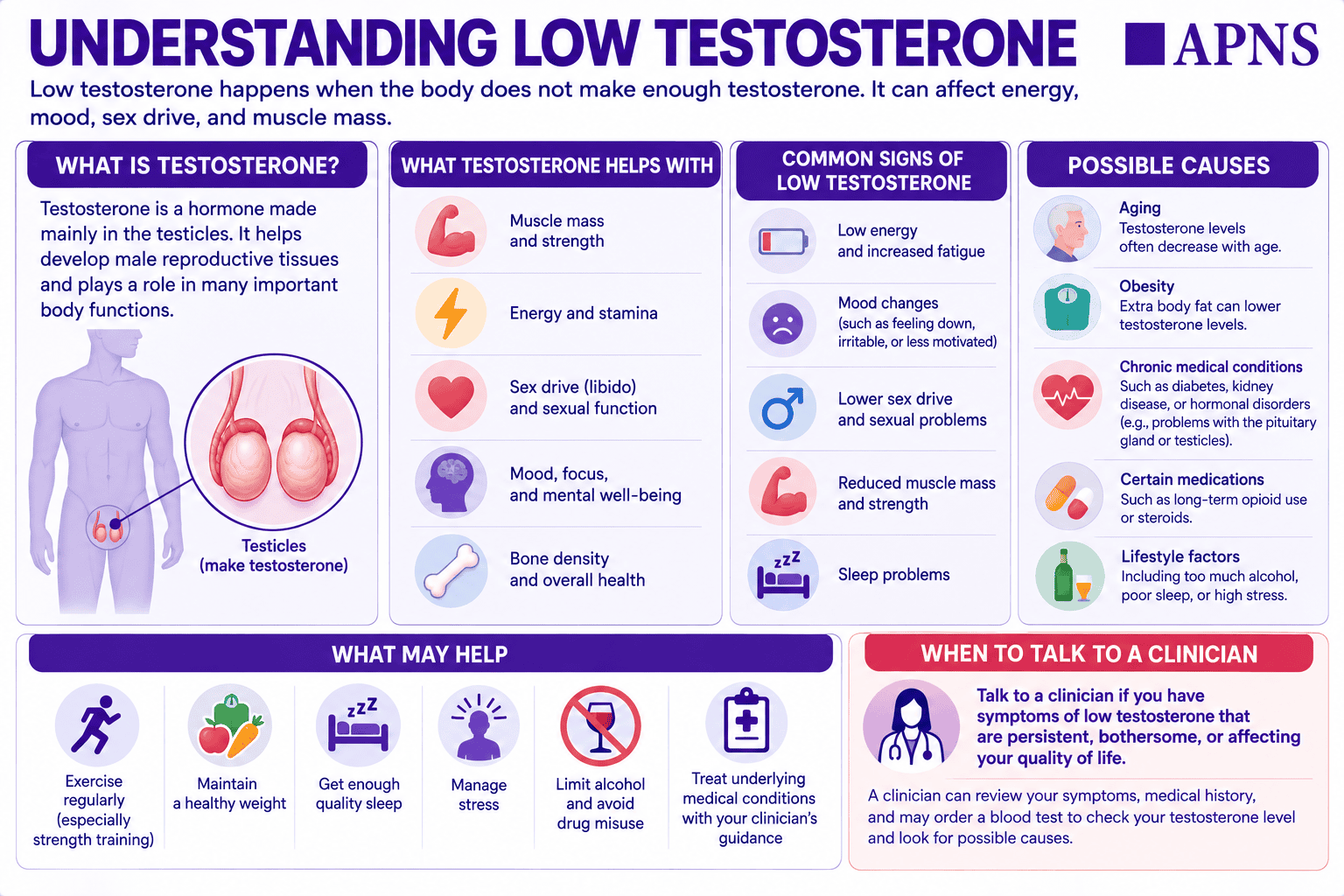
Low T may start in the testicles (primary hypogonadism) or in the brain signals that control them (secondary or central hypogonadism). Some causes are temporary or reversible.
Prior anabolic-steroid or nonprescribed testosterone use can shut down natural production for months or longer. Tell your provider honestly so testing and treatment are appropriate.
Male Hypogonadism – NIH MedlinePlus
https://medlineplus.gov/ency/article/000395.htm
Explains causes, symptoms, tests, and treatment of male hypogonadism.
Could You Have Low Testosterone? – NIH MedlinePlus
https://medlineplus.gov/ency/patientinstructions/000722.htm
Provides patient-friendly information about low testosterone symptoms, causes, diagnosis, treatment, and monitoring.
The measured level or symptoms may worsen with poor sleep, acute illness, weight gain, heavy alcohol use, severe stress, or medicines that suppress hormone production.
Do not stop prescription medicines abruptly. Ask the prescriber whether safer alternatives or dose changes are possible.
Could You Have Low Testosterone? – NIH MedlinePlus
https://medlineplus.gov/ency/patientinstructions/000722.htm
Provides patient-friendly information about low testosterone symptoms, causes, diagnosis, treatment, and monitoring.
Not every cause can be prevented, especially genetic conditions, necessary cancer treatment, or pituitary disease. You may reduce preventable or reversible contributors by:
Do not use testosterone as a preventive anti-aging treatment. Testing and treatment should be based on symptoms, repeated laboratory results, medical causes, risks, and informed goals.
Testosterone Information – U.S. Food and Drug Administration
https://www.fda.gov/drugs/postmarket-drug-safety-information-patients-and-providers/testosterone-information
Provides current FDA information about approved testosterone products, indications, labeling, and safety.
Testosterone Deficiency Guideline – American Urological Association
https://www.auanet.org/guidelines-and-quality/guidelines/testosterone-deficiency-guideline
Provides evidence-based guidance about diagnosis, fertility, treatment decisions, and monitoring.
Testing identifies whether testosterone is truly low, looks for the cause, and checks safety before treatment.
Tell the laboratory about testosterone, biotin, supplements, and other hormone products. Do not start testosterone before confirmatory tests unless a specialist identifies an urgent reason.
Testosterone Levels Test – NIH MedlinePlus
https://medlineplus.gov/lab-tests/testosterone-levels-test/
Explains why testosterone is tested, morning blood collection, preparation, and how results are interpreted.
Luteinizing Hormone (LH) Levels Test – NIH MedlinePlus
https://medlineplus.gov/lab-tests/luteinizing-hormone-lh-levels-test/
Explains how LH testing helps identify testicular, pituitary, or hypothalamic causes of low testosterone.
SHBG Blood Test – NIH MedlinePlus
https://medlineplus.gov/lab-tests/shbg-blood-test/
Explains sex hormone-binding globulin testing and why it may be used when total testosterone does not match symptoms.
Most diagnosis relies on history, examination, and blood testing. Other evaluations may include:
Imaging is not required for every low result. Tests should be chosen because they may explain the cause or change treatment.
Learn More
Male Infertility – NIH MedlinePlus
https://medlineplus.gov/maleinfertility.html
Provides information about fertility evaluation, semen testing, causes, and treatment options.
Testosterone Deficiency Guideline – American Urological Association
https://www.auanet.org/guidelines-and-quality/guidelines/testosterone-deficiency-guideline
Provides evidence-based guidance about diagnosis, fertility, treatment decisions, and monitoring.
Treatment focuses on the underlying cause, symptom burden, fertility plans, and overall health. A low number without compatible symptoms usually does not justify testosterone therapy.
Benefits are not guaranteed. The decision should include expected goals, safety monitoring, cost, convenience, fertility, and a plan to stop or change treatment if symptoms do not improve.
Testosterone Deficiency Guideline – American Urological Association
https://www.auanet.org/guidelines-and-quality/guidelines/testosterone-deficiency-guideline
Provides evidence-based guidance about diagnosis, fertility, treatment decisions, and monitoring.
Testosterone Information – U.S. Food and Drug Administration
https://www.fda.gov/drugs/postmarket-drug-safety-information-patients-and-providers/testosterone-information
Provides current FDA information about approved testosterone products, indications, labeling, and safety.
Lifestyle measures may improve testosterone levels, symptoms, and overall health, particularly when obesity, sleep, or metabolic disease contributes.
Lifestyle changes can help, but they do not replace medical evaluation when the testicles or pituitary gland cannot produce normal hormones.
Could You Have Low Testosterone? – NIH MedlinePlus
https://medlineplus.gov/ency/patientinstructions/000722.htm
Provides patient-friendly information about low testosterone symptoms, causes, diagnosis, treatment, and monitoring.
Testosterone is a controlled prescription medicine available in several forms. Each has different dosing, cost, monitoring, and exposure risks.
TRT can raise red blood cell concentration and blood pressure, worsen acne, cause fluid retention or breast symptoms, alter cholesterol, and reduce testicle size and sperm production. It requires ongoing laboratory and clinical monitoring.
Testosterone Information – U.S. Food and Drug Administration
https://www.fda.gov/drugs/postmarket-drug-safety-information-patients-and-providers/testosterone-information
Provides current FDA information about approved testosterone products, indications, labeling, and safety.
Testosterone Deficiency Guideline – American Urological Association
https://www.auanet.org/guidelines-and-quality/guidelines/testosterone-deficiency-guideline
Provides evidence-based guidance about diagnosis, fertility, treatment decisions, and monitoring.
Low testosterone usually does not require a procedure. Procedures may be needed for the cause or for a selected delivery method.
Ask why the procedure is recommended, alternatives, expected benefit, recovery, risks, and effects on fertility and lifelong hormone needs.
Male Infertility – NIH MedlinePlus
https://medlineplus.gov/maleinfertility.html
Provides information about fertility evaluation, semen testing, causes, and treatment options.
The outlook depends on the cause. Testosterone may recover after weight loss, resolution of illness, stopping suppressive medicines when medically safe, or recovery from anabolic-steroid use. Permanent testicular or pituitary damage may require long-term replacement.
When TRT is effective, sexual symptoms, anemia, muscle, or bone health may improve over months, but energy, mood, and erections may not improve if another condition is responsible. Regular follow-up checks symptoms, testosterone level, blood count, blood pressure, prostate-related concerns, adverse effects, and whether treatment remains worthwhile.
Testosterone Deficiency Guideline – American Urological Association
https://www.auanet.org/guidelines-and-quality/guidelines/testosterone-deficiency-guideline
Provides evidence-based guidance about diagnosis, fertility, treatment decisions, and monitoring.
Testosterone Information – U.S. Food and Drug Administration
https://www.fda.gov/drugs/postmarket-drug-safety-information-patients-and-providers/testosterone-information
Provides current FDA information about approved testosterone products, indications, labeling, and safety.
Helpful steps include:
Do not adjust the dose based only on how you feel or on a single home test. Too much testosterone can cause harm and suppress natural production.
Testosterone Information – U.S. Food and Drug Administration
https://www.fda.gov/drugs/postmarket-drug-safety-information-patients-and-providers/testosterone-information
Provides current FDA information about approved testosterone products, indications, labeling, and safety.
No. Diagnosis usually requires symptoms and two separate low early-morning results, with further testing when needed.
No. Fatigue has many causes, including poor sleep, anemia, depression, thyroid problems, medicines, and chronic illness.
It may help some people with confirmed deficiency, especially when sexual desire is low. Many erection problems also involve blood vessels, diabetes, medicines, or psychological factors.
External testosterone can sharply reduce or stop sperm production. Tell your provider about current or future fertility goals before starting.
It can, because external testosterone suppresses the signals that support natural testicular testosterone and sperm production.
Safety and effectiveness are uncertain, and some sexual-enhancement products contain hidden drugs. Review every supplement with a clinician or pharmacist.
That depends on the cause and response. Stopping may allow symptoms and low levels to return, while natural production can take time to recover after suppression.

Consider asking:
Evaluation may begin in primary care. Referral may be appropriate to:
Testosterone Deficiency Guideline – American Urological Association
https://www.auanet.org/guidelines-and-quality/guidelines/testosterone-deficiency-guideline
Provides evidence-based guidance about diagnosis, fertility, treatment decisions, and monitoring.
Male Infertility – NIH MedlinePlus
https://medlineplus.gov/maleinfertility.html
Provides information about fertility evaluation, semen testing, causes, and treatment options.
Some causes are reversible. Testosterone may improve after recovery from acute illness, meaningful weight loss, sleep-apnea treatment, improved nutrition, or adjustment of a suppressive medicine under medical guidance.
Other causes, such as permanent testicular damage, genetic conditions, or pituitary injury, may not be curable. TRT replaces the missing hormone but does not repair the cause, and ongoing treatment and monitoring may be needed.
Male Hypogonadism – NIH MedlinePlus
https://medlineplus.gov/ency/article/000395.htm
Explains causes, symptoms, tests, and treatment of male hypogonadism.
Call 911 or seek emergency care for:
Contact the prescriber promptly for severe headaches, very high blood pressure, major swelling, worsening sleep apnea, difficulty urinating, or exposure of a child or pregnant person to testosterone gel.
Testosterone Information – U.S. Food and Drug Administration
https://www.fda.gov/drugs/postmarket-drug-safety-information-patients-and-providers/testosterone-information
Provides current FDA information about approved testosterone products, indications, labeling, and safety.
CALL 911
APNS does not provide emergency medical services. If you believe you are experiencing a medical emergency, including (but not limited to) chest pain, difficulty breathing, stroke symptoms, severe allergic reactions, anaphylaxis, uncontrolled bleeding, seizures, loss of consciousness, or any other potentially life-threatening condition, you are instructed to call 911 immediately or go immediately to the nearest emergency department.
Could You Have Low Testosterone? – NIH MedlinePlus
https://medlineplus.gov/ency/patientinstructions/000722.htm
Provides patient-friendly information about low testosterone symptoms, causes, diagnosis, treatment, and monitoring.
Testosterone Levels Test – NIH MedlinePlus
https://medlineplus.gov/lab-tests/testosterone-levels-test/
Explains why testosterone is tested, morning blood collection, preparation, and how results are interpreted.
Male Hypogonadism – NIH MedlinePlus
https://medlineplus.gov/ency/article/000395.htm
Explains causes, symptoms, tests, and treatment of male hypogonadism.
Testosterone Deficiency Guideline – American Urological Association
https://www.auanet.org/guidelines-and-quality/guidelines/testosterone-deficiency-guideline
Provides evidence-based guidance about diagnosis, fertility, treatment decisions, and monitoring.
Testosterone Information – U.S. Food and Drug Administration
https://www.fda.gov/drugs/postmarket-drug-safety-information-patients-and-providers/testosterone-information
Provides current FDA information about approved testosterone products, indications, labeling, and safety.
Tainted Sexual Enhancement and Energy Products – FDA
https://www.fda.gov/drugs/medication-health-fraud/tainted-sexual-enhancement-and-energy-products
Lists warnings about supplements that may contain hidden or unsafe drug ingredients.
This guide is intended for educational purposes only and should not replace medical advice, diagnosis, laboratory confirmation, or treatment from your healthcare provider. Symptoms commonly linked to low testosterone can have many other causes. Testosterone therapy can suppress fertility and requires individualized safety screening and monitoring. Seek emergency care for chest pain, stroke symptoms, severe breathing difficulty, a painful swollen leg, a prolonged erection, sudden severe testicular pain, a serious allergic reaction, or an immediate mental-health safety concern.
At APNS, our providers take the time to understand your condition and your goals. We offer comprehensive telehealth visits at a fixed rate — no membership fees, no insurance required, and no unexpected charges. Whether you’re newly diagnosed or looking for a provider who actually listens, we’re here to help.