
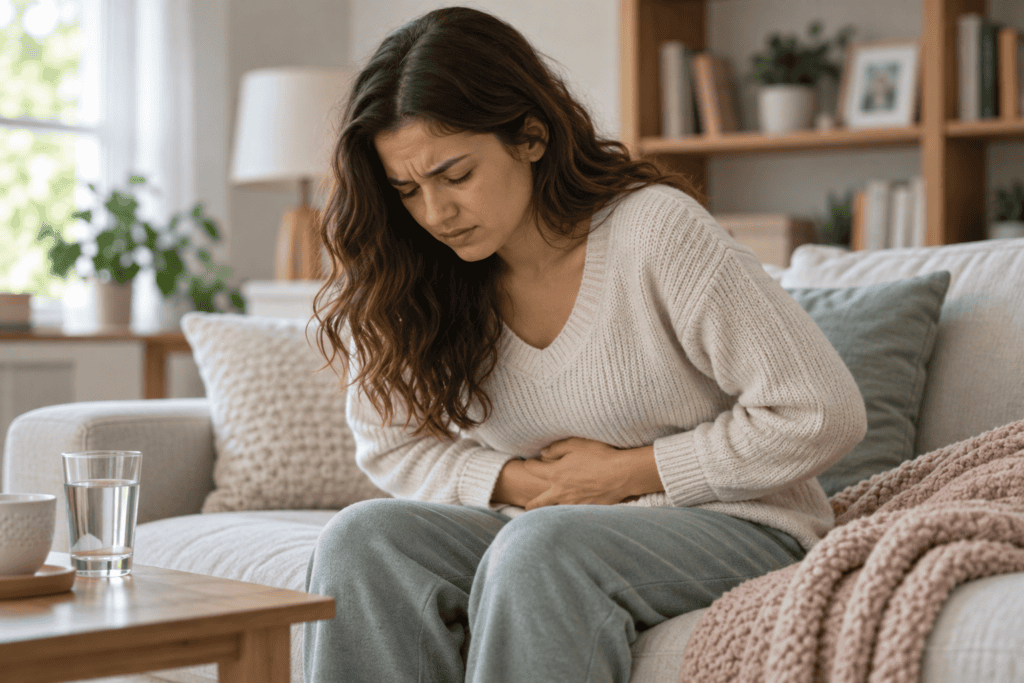
Menstrual cramps, called dysmenorrhea, are throbbing or cramping pain in the lower abdomen before or during a period. Mild cramps for one or two days are common and often result from prostaglandins, chemicals that make the uterus contract and shed its lining.
Menstrual issues also include very heavy or prolonged bleeding, spotting between periods, bleeding after sex, irregular or missed periods, and severe physical or mood symptoms before a period. These changes may be related to hormones, pregnancy, medicines, fibroids, endometriosis, adenomyosis, polycystic ovary syndrome (PCOS), thyroid disease, bleeding disorders, infection, or less commonly cancer.
Painful Periods – American College of Obstetricians and Gynecologists
https://www.acog.org/womens-health/faqs/painful-periods
Explains menstrual cramps, secondary causes, evaluation, and treatment options.
More than half of people who menstruate have some pain for one or two days each month. Heavy or irregular bleeding is also common, but bleeding that disrupts daily life or causes anemia should not simply be accepted as normal.
Cycles may change with stress, weight changes, illness, hormonal birth control, pregnancy, breastfeeding, and perimenopause. A new or major change deserves evaluation, especially after age 45 or after menopause.
A clinician reviews cycle timing, bleeding amount, pain pattern, pregnancy possibility, medicines, contraception, sexual history, family history, and how symptoms affect daily life. A pelvic examination may be recommended.
Track cycle dates, products used, flooding, clots, pain, medicines, and mood for at least two or three cycles when possible. This record helps separate cramps, abnormal uterine bleeding, PMS, PMDD, and other conditions.
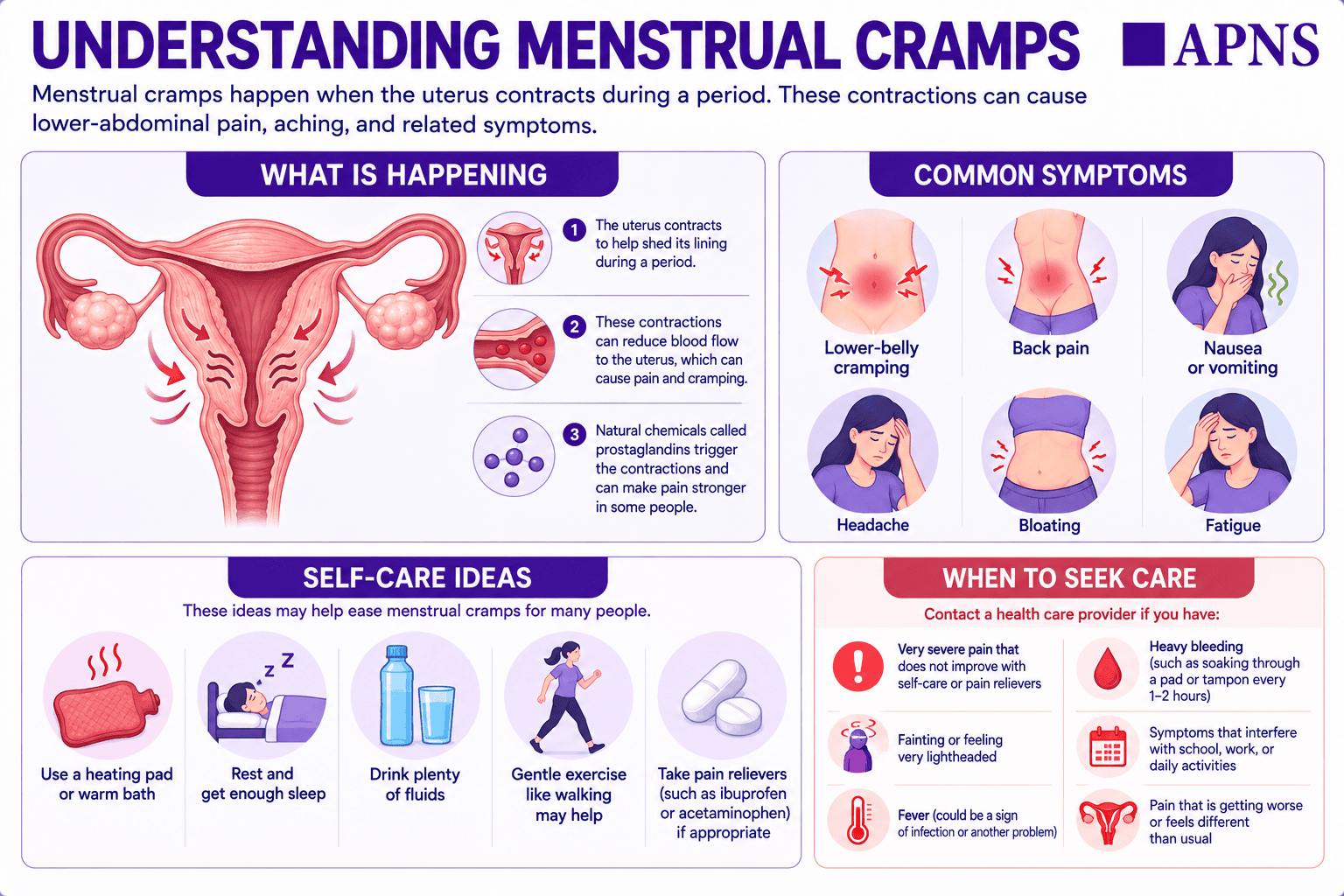
Primary cramps are caused by uterine contractions without another pelvic disease. Secondary cramps begin because of another condition and may worsen over time, occur outside the period, or cause pain during sex.
Possible causes include pregnancy, endometriosis, adenomyosis, fibroids, polyps, PCOS, thyroid disease, pelvic infection, an intrauterine device, medications, a bleeding disorder, perimenopause, and uterine or cervical precancer or cancer.
Abnormal Uterine Bleeding – American College of Obstetricians and Gynecologists
https://www.acog.org/womens-health/faqs/abnormal-uterine-bleeding
Reviews irregular bleeding, evaluation, medication, and procedural options.
Not every menstrual problem can be prevented, but early attention can reduce complications.
Period Problems – Office on Women’s Health
https://womenshealth.gov/menstrual-cycle/period-problems
Reviews cramps, heavy bleeding, irregular periods, and when to seek medical care.
The following video content is provided to help you better understand this condition. These resources are intended for educational purposes and should not replace personalized medical advice from your healthcare provider.
Pelvic ultrasound can evaluate the uterus, lining, ovaries, fibroids, cysts, and some signs of adenomyosis. It may be performed across the abdomen or with a vaginal probe.
Depending on symptoms and age, evaluation may include a Pap or HPV test, saline ultrasound, hysteroscopy, MRI, or endometrial biopsy. A biopsy is often considered for abnormal bleeding at age 45 or older, or earlier when risk factors are present.
Heavy Menstrual Bleeding – American College of Obstetricians and Gynecologists
https://www.acog.org/womens-health/faqs/heavy-menstrual-bleeding
Explains how to recognize heavy bleeding, possible causes, tests, and treatment.
Treatment depends on the cause, symptom severity, pregnancy goals, contraception needs, health conditions, and personal preference. Mild primary cramps may respond to heat and an NSAID started just before or at the beginning of bleeding.
Heavy or irregular bleeding may be treated with hormonal methods, tranexamic acid, NSAIDs, iron, or treatment of thyroid disease or infection. Fibroids, polyps, endometriosis, adenomyosis, and precancer may need specialized care or a procedure.
Avoid aspirin for heavy bleeding unless a clinician prescribed it for another condition. NSAIDs may be unsafe with pregnancy, ulcers, kidney disease, blood thinners, allergy, or some heart conditions.
Procedures may include hysteroscopic removal of a polyp or fibroid, endometrial ablation, uterine artery embolization, laparoscopy for endometriosis, myomectomy, or hysterectomy. Choice depends on the diagnosis and future pregnancy goals.
Endometrial ablation and hysterectomy are not options for someone who wants a future pregnancy. A clinician should explain benefits, alternatives, recovery, and effects on fertility.
Primary cramps may improve with age or hormonal treatment. Symptoms caused by endometriosis, adenomyosis, fibroids, PCOS, or perimenopause may continue or change and often require follow-up.
Heavy bleeding can lead to iron-deficiency anemia, fatigue, shortness of breath, and reduced quality of life. Treatment usually controls symptoms once the underlying cause is identified.
Mild cramps that improve with simple care can be common. Pain that causes missed work, wakes you, worsens over time, or does not respond to treatment needs evaluation.
Warning signs include flooding, changing protection every hour, bleeding longer than seven days, large clots, or symptoms of anemia.
Yes. Hormonal methods can reduce cramps, flow, irregular bleeding, and endometriosis symptoms even when contraception is not the main goal.
Yes, but pregnancy and medical causes should still be considered when a period is late or cycles repeatedly change.
No. Any bleeding after menopause should be evaluated promptly.
Yes. PMDD can cause severe depression, anxiety, irritability, or loss of function before periods and deserves treatment.

Many menstrual problems are temporary or can be fully corrected, such as pregnancy-related changes, medication effects, thyroid disease, some polyps, or iron deficiency. Primary cramps can often be controlled even when they are not permanently eliminated.
Chronic conditions such as endometriosis, adenomyosis, fibroids, PCOS, and PMDD may require long-term management. The goal is to reduce pain and bleeding, protect health, and support quality of life and fertility goals.
Seek prompt care for new severe cramps, bleeding after sex, repeated bleeding between periods, bleeding after menopause, periods lasting longer than seven days, or symptoms of anemia.
Seek urgent or emergency care for:
CALL 911
APNS does not provide emergency medical services. If you believe you are experiencing a medical emergency, including (but not limited to) chest pain, difficulty breathing, stroke symptoms, severe allergic reactions, anaphylaxis, uncontrolled bleeding, seizures, loss of consciousness, or any other potentially life-threatening condition, you are instructed to call 911 immediately or go immediately to the nearest emergency department.
Painful Periods – American College of Obstetricians and Gynecologists
https://www.acog.org/womens-health/faqs/painful-periods
Explains menstrual cramps, secondary causes, evaluation, and treatment options.
Heavy Menstrual Bleeding – American College of Obstetricians and Gynecologists
https://www.acog.org/womens-health/faqs/heavy-menstrual-bleeding
Explains how to recognize heavy bleeding, possible causes, tests, and treatment.
Abnormal Uterine Bleeding – American College of Obstetricians and Gynecologists
https://www.acog.org/womens-health/faqs/abnormal-uterine-bleeding
Reviews irregular bleeding, evaluation, medication, and procedural options.
Period Pain – NIH MedlinePlus
https://medlineplus.gov/periodpain.html
Provides patient-friendly information about cramps, primary and secondary dysmenorrhea, and self-care.
Menstruation – NIH MedlinePlus
https://medlineplus.gov/menstruation.html
Explains menstrual cycles and common problems such as painful, heavy, prolonged, irregular, or absent periods.
Period Problems – Office on Women’s Health
https://womenshealth.gov/menstrual-cycle/period-problems
Reviews cramps, heavy bleeding, irregular periods, and when to seek medical care.
Premenstrual Dysphoric Disorder – Office on Women’s Health
https://womenshealth.gov/menstrual-cycle/premenstrual-syndrome/premenstrual-dysphoric-disorder-pmdd
Explains severe mood symptoms related to the menstrual cycle and available treatment.
This guide is intended for educational purposes only and should not replace medical advice, pregnancy testing, diagnosis, or treatment from your healthcare provider. Menstrual pain and abnormal bleeding may be caused by pregnancy complications, endometriosis, fibroids, adenomyosis, PCOS, thyroid disease, bleeding disorders, infection, medication effects, or cancer. Medication safety depends on pregnancy, kidney and liver health, ulcers, blood-clot risk, other medicines, and individual history. Seek emergency care for possible ectopic pregnancy, uncontrolled bleeding, fainting, severe sudden pain, serious infection symptoms, breathing difficulty, or suicidal thoughts.
At APNS, our providers take the time to understand your condition and your goals. We offer comprehensive telehealth visits at a fixed rate — no membership fees, no insurance required, and no unexpected charges. Whether you’re newly diagnosed or looking for a provider who actually listens, we’re here to help.