

A migraine is a neurological condition that causes recurring headaches that are often moderate to severe in intensity. Unlike a typical headache, migraines may cause throbbing or pulsating pain, usually on one side of the head, and are often accompanied by symptoms such as nausea, vomiting, and increased sensitivity to light, sound, or smells.
Some people experience migraine with aura, which includes temporary neurological symptoms before or during the headache. These symptoms may include flashing lights, blind spots, tingling sensations, or difficulty speaking. Migraines can last from a few hours to several days and may interfere with work, school, and daily activities. Although there is no cure, medications and healthy lifestyle habits can help prevent migraines and reduce their severity.
Migraine – NIH MedlinePlus
https://medlineplus.gov/migraine.html
Provides easy-to-understand information about migraines, including symptoms, diagnosis, treatment, and prevention.
Migraine – National Institute of Neurological Disorders and Stroke (NINDS)
https://www.ninds.nih.gov/health-information/disorders/migraine
Explains what migraines are, common symptoms, causes, diagnosis, and treatment options.
Migraines are one of the most common neurological conditions worldwide. In the United States, migraines affect about 39 million people and are more common in women than men. Migraines often begin during adolescence or early adulthood but can occur at any age.
Migraine – American Migraine Foundation
https://americanmigrainefoundation.org/
Provides information about migraine prevalence, risk factors, and patient education.
Migraine symptoms vary from person to person and may occur in several stages.
Common symptoms may include:
Some people may also experience an aura, which can include:
Your healthcare provider will ask about your symptoms, headache pattern, medical history, family history, and perform a neurological examination. Most migraines are diagnosed based on your symptoms and physical examination.
Additional testing may be recommended if your headaches are new, unusually severe, or associated with neurological symptoms that require further evaluation.
Migraine – NIH MedlinePlus
https://medlineplus.gov/migraine.html
Explains how migraines are diagnosed and when additional testing may be recommended.
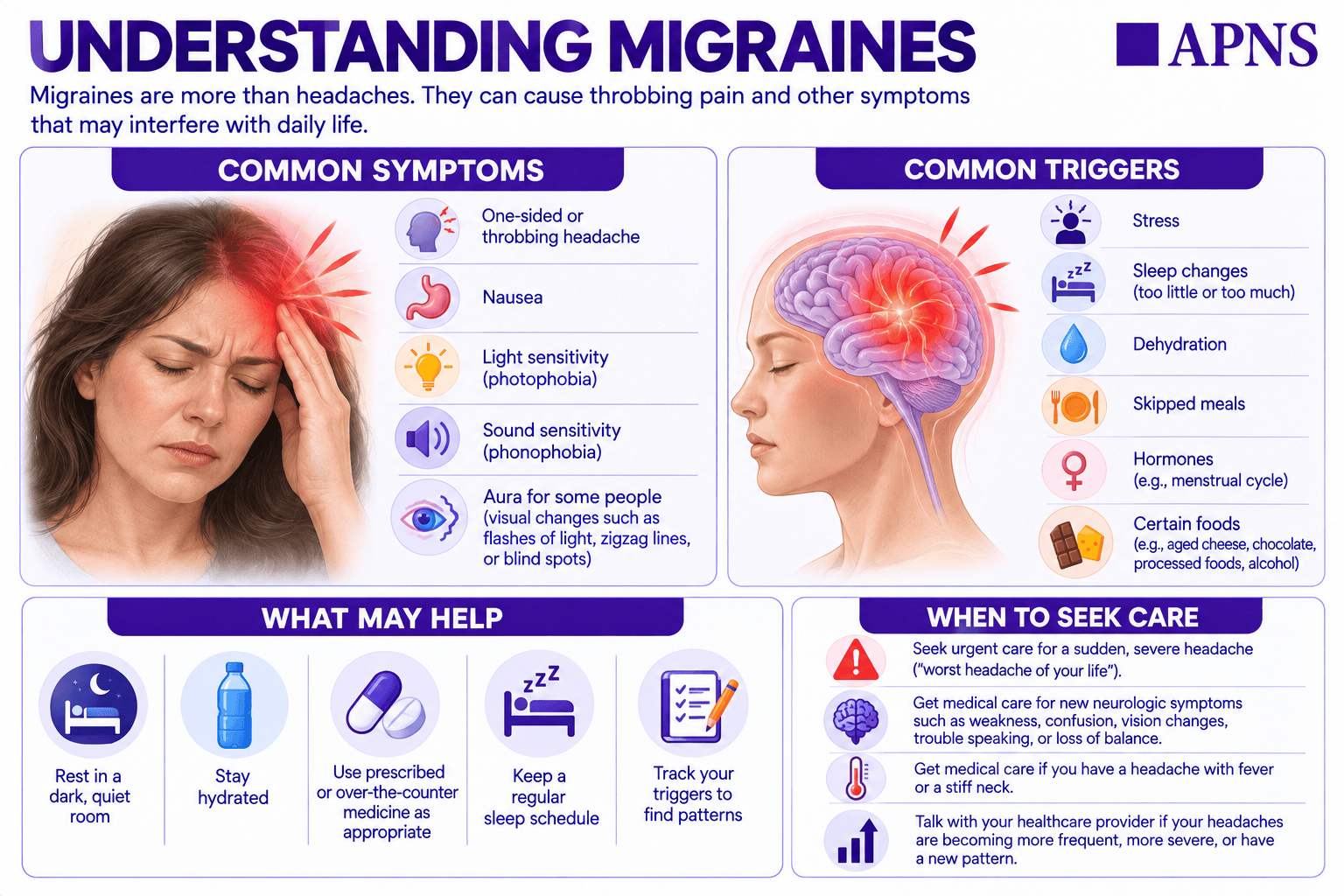
The exact cause of migraines is not fully understood. Researchers believe migraines result from changes in brain activity that affect nerves, blood vessels, and certain brain chemicals involved in pain signaling.
Common risk factors include:
Migraine – National Institute of Neurological Disorders and Stroke (NINDS)
https://www.ninds.nih.gov/health-information/disorders/migraine
Learn about the possible causes and common migraine triggers.
Migraine triggers vary between individuals, but several factors commonly contribute to migraine attacks.
Common triggers include:
Migraine Triggers – American Migraine Foundation
https://americanmigrainefoundation.org/
Provides practical information about identifying and managing migraine triggers.
Although migraines cannot always be prevented, healthy lifestyle habits can reduce their frequency and severity.
Helpful prevention tips include:
Migraine Prevention – American Migraine Foundation
https://americanmigrainefoundation.org/
Provides practical recommendations for reducing migraine frequency and improving long-term management.
The following video content is provided to help you better understand this condition. These resources are intended for educational purposes and should not replace personalized medical advice from your healthcare provider.
There are no laboratory tests that diagnose migraines. However, blood tests may be ordered to rule out other medical conditions that could be contributing to headaches.
Common laboratory tests may include:
Laboratory Tests – NIH MedlinePlus
https://medlineplus.gov/lab-tests/
Provides information about common laboratory tests that may be used when evaluating headaches.
Most people with migraines do not need imaging studies. However, additional testing may be recommended if your symptoms are unusual or suggest another medical condition.
Common diagnostic tests may include:
Migraine – National Institute of Neurological Disorders and Stroke (NINDS)
https://www.ninds.nih.gov/health-information/disorders/migraine
Learn about diagnostic testing and when brain imaging may be appropriate.
Treatment focuses on relieving migraine symptoms during an attack and preventing future migraines. Your treatment plan depends on how often migraines occur, how severe they are, and how much they affect your daily life.
Treatment options may include:
Migraine – American Migraine Foundation
https://americanmigrainefoundation.org/
Provides information about migraine treatment options and long-term management.
Healthy lifestyle habits can help reduce the frequency and severity of migraine attacks.
Helpful lifestyle changes include:
Migraine Lifestyle Tips – American Migraine Foundation
https://americanmigrainefoundation.org/
Provides practical recommendations for preventing migraine attacks and improving quality of life.
Several medications are available to treat migraines. Some medications relieve symptoms during a migraine attack, while others help prevent future migraines.
Common medications include:
Migraine Medicines – American Migraine Foundation
https://americanmigrainefoundation.org/
Provides information about medications used to treat and prevent migraines.
Most people with migraines do not need surgery. However, if migraines are frequent, severe, or difficult to control, your healthcare provider may recommend specialized treatments or procedures to reduce symptoms.
Common procedures may include:
Migraine – American Migraine Foundation
https://americanmigrainefoundation.org/
Learn about advanced migraine treatments, including Botox, nerve blocks, and neuromodulation therapies.
Migraines are a long-term neurological condition, but many people successfully reduce the frequency and severity of attacks through medications, healthy lifestyle habits, and avoiding personal triggers.
Migraine patterns often change over time. Some people experience fewer migraines as they get older, while others continue to have attacks throughout adulthood. Regular follow-up with your healthcare provider can help optimize your treatment plan and improve your quality of life.
Daily self-care can help reduce migraine attacks and improve symptom control.
Helpful tips include:
Migraine Lifestyle Tips – American Migraine Foundation
https://americanmigrainefoundation.org/
Provides practical recommendations for preventing migraines and improving quality of life.
A migraine is a neurological disorder that often causes moderate to severe throbbing head pain along with symptoms such as nausea and sensitivity to light and sound. A typical headache is usually less severe and does not usually cause these additional symptoms.
A migraine aura is a temporary neurological symptom that may occur before or during a migraine. It can include flashing lights, blind spots, tingling sensations, numbness, or difficulty speaking.
Yes. Stress is one of the most common migraine triggers. Learning healthy stress management techniques may help reduce migraine frequency.
Yes. Some people notice migraines after eating foods such as aged cheeses, processed meats, chocolate, foods containing monosodium glutamate (MSG), or artificial sweeteners. Triggers vary from person to person.
Preventive medications may be recommended if you have frequent migraines, migraines that significantly interfere with daily life, or migraines that do not respond well to rescue medications.

Consider asking your healthcare provider:
Many people with migraines receive care from their primary care provider. If migraines are frequent, severe, or difficult to manage, your provider may recommend seeing a specialist.
You may be referred to:
American Migraine Foundation
https://americanmigrainefoundation.org/
Provides patient education, treatment information, and resources for people living with migraines.
There is currently no cure for migraines. However, many people successfully manage their migraines with medications, healthy lifestyle habits, and trigger avoidance.
For some individuals, migraine attacks become less frequent over time. Others continue to have migraines but achieve excellent symptom control with an individualized treatment plan.
Call 911 or seek emergency medical care immediately if you experience:
Seek prompt medical evaluation if you notice:
Migraine – NIH MedlinePlus
https://medlineplus.gov/migraine.html
Learn when migraine symptoms require immediate medical attention and when emergency evaluation is needed.
CALL 911
APNS does not provide emergency medical services. If you believe you are experiencing a medical emergency, including (but not limited to) chest pain, difficulty breathing, stroke symptoms, severe allergic reactions, anaphylaxis, uncontrolled bleeding, seizures, loss of consciousness, or any other potentially life-threatening condition, you are instructed to call 911 immediately or go immediately to the nearest emergency department.
Migraine – NIH MedlinePlus
https://medlineplus.gov/migraine.html
Easy-to-understand information about migraines, including symptoms, diagnosis, treatment, and prevention.
National Institute of Neurological Disorders and Stroke (NINDS) – Migraine
https://www.ninds.nih.gov/health-information/disorders/migraine
Comprehensive information about migraine causes, diagnosis, treatment options, and current research.
American Migraine Foundation
https://americanmigrainefoundation.org/
Evidence-based patient education about migraines, medications, lifestyle management, headache diaries, and support resources.
American Academy of Neurology (AAN) – Patient Resources
https://www.aan.com/patients
Reliable information about neurological conditions, including migraines and headache disorders.
This guide is intended for educational purposes only and should not replace medical advice, diagnosis, or treatment from your healthcare provider. Always follow the recommendations of your healthcare team regarding your individual health needs. Contact your healthcare provider if your migraines become more frequent, change significantly, or your medications are no longer controlling your symptoms. Call 911 immediately if you experience a sudden severe headache, weakness, difficulty speaking, vision loss, confusion, seizure, or another medical emergency.
At APNS, our providers take the time to understand your condition and your goals. We offer comprehensive telehealth visits at a fixed rate — no membership fees, no insurance required, and no unexpected charges. Whether you’re newly diagnosed or looking for a provider who actually listens, we’re here to help.