

Mixed anxiety and depression describes symptoms of both anxiety and depression occurring at the same time. A person may feel worried, tense, restless, or fearful while also feeling sad, hopeless, exhausted, unmotivated, or less interested in activities they once enjoyed. These overlapping symptoms can affect sleep, concentration, relationships, work, and daily responsibilities.
“Mixed anxiety and depression” may be used as a general description rather than one specific diagnosis. Depending on the symptoms, their severity, and how long they have lasted, a healthcare professional may diagnose an anxiety disorder, a depressive disorder, both conditions, an adjustment disorder, or mixed anxiety and depressive disorder. The World Health Organization’s classification includes mixed anxiety and depressive disorder when symptoms of both are present but neither group of symptoms clearly predominates or independently meets the threshold for another disorder.
Anxiety and depression are among the most common mental health conditions. They frequently occur together, although the exact number of people affected depends on how symptoms and diagnoses are defined.
People may have a higher risk when they:
Having anxiety or depression is not a sign of weakness or a personal failure. Both conditions can cause significant impairment and deserve appropriate care.
Symptoms may be mild, moderate, or severe and may change over time.
Anxiety-related symptoms may include:
Depression-related symptoms may include:
Some people feel physically tense and mentally worried while also lacking the energy or motivation to complete everyday tasks. Depression typically involves depressed mood or loss of interest that affects daily functioning, while anxiety may cause persistent fear, dread, physical tension, and overwhelming worry.
A healthcare or mental health professional will ask about the symptoms, how long they have been present, and how they affect daily functioning.
The evaluation may include questions about:
Screening tools such as the PHQ-9 for depressive symptoms and the GAD-7 for anxiety symptoms may help measure severity. These questionnaires support the evaluation but do not replace a full clinical assessment.
A provider should also assess for bipolar disorder because depressive episodes can occur in bipolar disorder. Periods of unusually high energy, decreased need for sleep, rapid speech, impulsive decisions, or an abnormally elevated or irritable mood may change the diagnosis and treatment plan.
Major depression generally involves depressed mood or loss of interest with additional symptoms occurring most of the time for at least two weeks and causing meaningful difficulty in daily functioning.
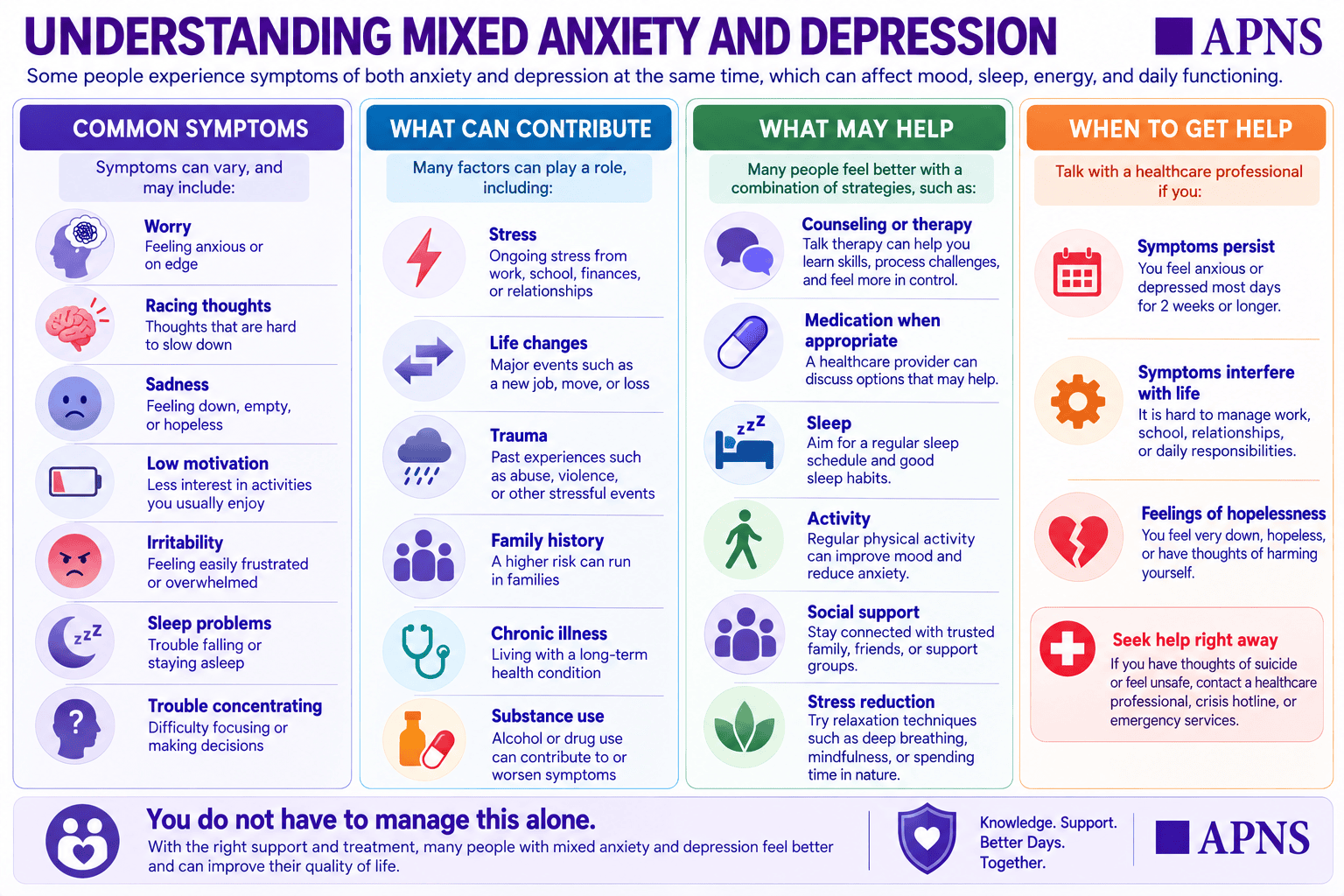
Mixed anxiety and depressive symptoms usually develop from a combination of biological, psychological, social, and medical factors.
Possible contributing factors include:
Sometimes symptoms begin without one clearly identifiable cause.
Factors that may worsen anxiety and depression include:
Alcohol may briefly reduce anxiety but can worsen sleep, depression, impulsivity, and next-day anxiety. Avoidance may provide temporary relief but can strengthen anxiety and reduce confidence over time.
Not every episode can be prevented, but early treatment and consistent routines may reduce recurrence or severity.
Helpful measures include:
Ask for help early during stressful periods.
The following video content is provided to help you better understand this condition. These resources are intended for educational purposes and should not replace personalized medical advice from your healthcare provider.
There is no blood test that directly diagnoses anxiety or depression.
Laboratory testing may be used to identify medical problems that can cause or worsen similar symptoms.
Possible tests include:
Testing depends on the symptoms, examination, medical history, and medications.
Most people do not need imaging for mixed anxiety and depressive symptoms.
Additional testing may be considered when symptoms could be caused by another condition.
Possible tests include:
New chest pain, severe breathing difficulty, fainting, confusion, or neurological symptoms should not automatically be attributed to anxiety.
Mixed anxiety and depression are treatable. Treatment is based on symptom severity, safety concerns, medical history, previous treatment response, and patient preferences.
Options may include:
Psychotherapy, medication, or a combination of both are commonly used for depression and anxiety. Finding the most effective plan may require adjustments over time.
Healthy routines can support professional treatment.
Helpful changes include:
A person experiencing depression may not feel motivated before beginning an activity. Starting with a small action, such as showering, eating, walking briefly, or contacting someone supportive, may help gradually rebuild routine and functioning.
Medication may be used when symptoms are persistent, moderate to severe, or significantly interfere with daily life.
Possible medications include:
SSRIs and SNRIs are commonly used for both depressive and anxiety disorders. They may take several weeks to provide their full benefit.
Possible early side effects include:
Contact the prescriber promptly for:
Antidepressants carry warnings about increased suicidal thoughts and behaviors in some children, adolescents, and young adults, particularly when treatment begins or the dose changes. Monitoring is important for people of every age when symptoms or medications change.
Benzodiazepines may cause sedation, memory problems, impaired driving, falls, tolerance, dependence, and withdrawal. Combining them with alcohol, opioids, sleep medications, or other sedatives may dangerously suppress breathing.
Do not stop antidepressants, benzodiazepines, or other psychiatric medication suddenly without medical guidance.
Most patients are treated without invasive procedures.
Possible structured interventions include:
These treatments require individualized assessment and monitoring by trained professionals.
Many people improve significantly with appropriate treatment. Some experience complete remission, while others have recurring symptoms during stressful periods.
Recovery may depend on:
Improvement may be gradual. Sleep, appetite, or anxiety may improve before mood and motivation. Continuing treatment after feeling better may reduce the risk of symptoms returning.
A relapse does not mean treatment has failed. Early recognition and prompt follow-up may reduce its severity and duration.
During a difficult period:
Do not remain alone when you feel unable to stay safe. Contact a trusted person, crisis service, healthcare professional, or emergency department.
Yes. A person may experience both conditions simultaneously, and the symptoms can affect one another.
The phrase may be used generally to describe overlapping symptoms. Some classification systems also include mixed anxiety and depressive disorder when both symptom groups are present but neither clearly meets the full threshold for another disorder. A clinician determines the most appropriate diagnosis.
Anxiety may keep the body tense and mentally alert, while depression, poor sleep, and prolonged stress reduce energy and motivation.
Persistent anxiety can contribute to isolation, poor sleep, reduced activity, and hopelessness. Depression may also increase worry and fear. However, the relationship differs between people.
Yes. Depression may contribute to fatigue, pain, headaches, digestive symptoms, sleep problems, appetite changes, and slowed or restless movement.
Some antidepressants, particularly SSRIs and SNRIs, are commonly used for both depression and anxiety. Medication selection depends on symptoms, medical history, side effects, and previous treatment response.
Psychotherapy skills develop over time, and antidepressants often require several weeks for their full effect. Some symptoms may improve before others.
Exercise may support recovery but may not replace psychotherapy or medication when symptoms are persistent, severe, or disabling.
Yes. Alcohol may worsen mood, sleep, anxiety, judgment, impulsivity, and medication side effects.
Not without consulting the prescriber. Stopping too early or too quickly may cause withdrawal symptoms or increase the risk of relapse.
Contact the prescriber promptly if you develop very little need for sleep, racing thoughts, rapid speech, unusual confidence, agitation, impulsive behavior, or excessive energy. These may be signs of medication activation, mania, or hypomania.

Consider asking:
Care may be provided by a primary care professional or a mental health specialist.
Possible referrals include:
SAMHSA provides information for locating mental health and substance-use treatment services.
Mixed anxiety and depressive symptoms are treatable. Some people recover fully and remain well for long periods. Others may experience recurring symptoms that require continued management.
Treatment may help:
Long-standing symptoms can still improve. Treatment should not be avoided because symptoms have been present for months or years.
Call 911 or go to the nearest emergency department for:
In the United States, call or text 988 for suicidal thoughts, emotional distress, substance-use concerns, or another mental health crisis. The 988 Suicide & Crisis Lifeline provides support 24 hours a day, seven days a week.
Seek urgent professional help for:
Stay with a person who may be at immediate risk when it is safe to do so. Reduce access to firearms, large medication supplies, and other potentially dangerous items, and contact emergency or crisis support.
CALL 911
APNS does not provide emergency medical services. If you believe you are experiencing a medical emergency, including (but not limited to) chest pain, difficulty breathing, stroke symptoms, severe allergic reactions, anaphylaxis, uncontrolled bleeding, seizures, loss of consciousness, or any other potentially life-threatening condition, you are instructed to call 911 immediately or go immediately to the nearest emergency department.
Depression – National Institute of Mental Health
Explains depression symptoms, risk factors, diagnosis, psychotherapy, medication, and advanced treatment options.
Anxiety Disorders – National Institute of Mental Health
Provides information about anxiety symptoms, overlapping conditions, research, and treatments.
Generalized Anxiety Disorder – NIMH
Explains persistent worry, diagnosis, psychotherapy, and medication.
Provides patient-friendly information about depressive disorders, symptoms, diagnosis, and treatment.
Provides information about anxiety symptoms, anxiety disorders, and treatment.
Depression Screening – NIH MedlinePlus
Explains how screening questionnaires are used to identify possible depression.
988 Suicide & Crisis Lifeline – SAMHSA
Provides 24-hour crisis support in the United States by calling or texting 988.
Provides information about finding mental health, substance-use, and community support services.
This guide is intended for educational purposes only and should not replace medical or mental health advice, diagnosis, screening, or treatment from a qualified healthcare professional. Anxiety and depressive symptoms may also be associated with bipolar disorder, trauma-related disorders, substance use, medication effects, thyroid disease, anemia, sleep disorders, chronic illness, hormonal changes, neurological conditions, or another health problem requiring different treatment. Do not begin, stop, increase, reduce, or combine psychiatric medications without guidance from the prescribing professional. Antidepressants may temporarily worsen agitation, anxiety, suicidal thoughts, or unusual behavior in some people, particularly when treatment begins or the dose changes. Benzodiazepines can cause dependence, withdrawal, impaired driving, falls, and dangerous breathing problems when combined with alcohol, opioids, sleep medicines, or other sedatives. Seek prompt professional care when symptoms persist, worsen, or interfere with daily functioning. In the United States, call or text 988 for suicidal thoughts or emotional crisis. Call 911 for an immediate suicide plan or attempt, danger to another person, overdose, severe confusion, inability to care for basic needs, severe chest pain, difficulty breathing, seizure, or another emergency.
At APNS, our providers take the time to understand your condition and your goals. We offer comprehensive telehealth visits at a fixed rate — no membership fees, no insurance required, and no unexpected charges. Whether you’re newly diagnosed or looking for a provider who actually listens, we’re here to help.