
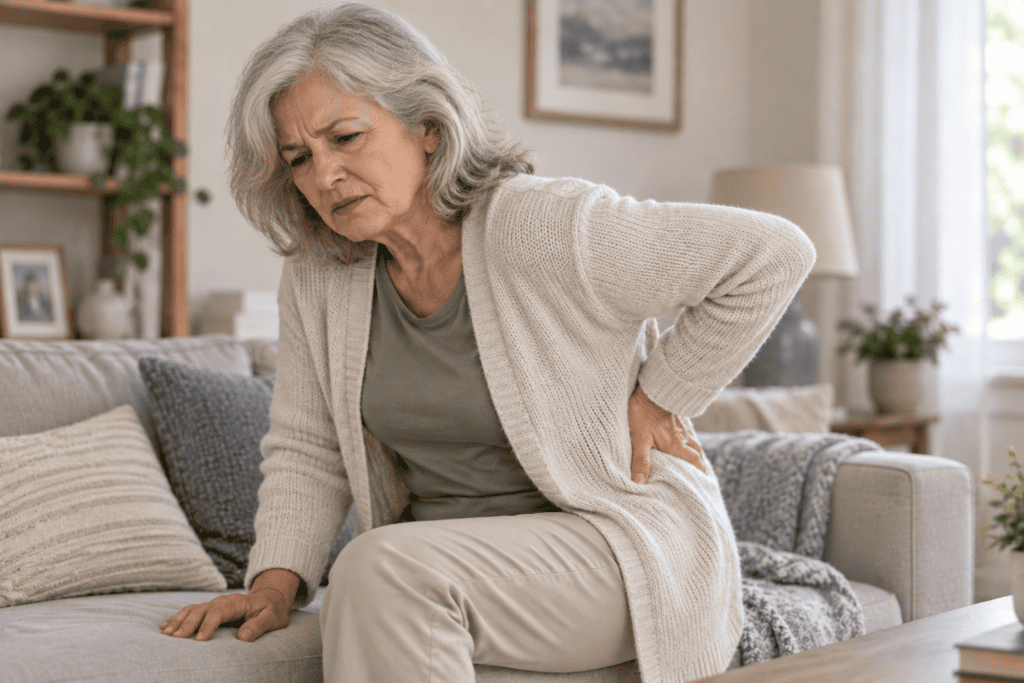
Osteoporosis is a disease that makes bones weak and easier to break. It develops when the body loses too much bone, makes too little new bone, or both. Bone strength depends on bone density as well as the quality and structure of the bone.
Osteoporosis is often called a “silent disease” because it usually causes no symptoms until a fracture occurs. Fractures are most common in the hip, spine, and wrist, but any bone can break. Screening, healthy habits, fall prevention, and medicine can lower fracture risk.
Osteoporosis – NIH NIAMS
https://www.niams.nih.gov/health-topics/osteoporosis
Explains osteoporosis symptoms, causes, risk factors, fractures, and steps that support bone health.
Osteoporosis – NIH MedlinePlus
https://medlineplus.gov/osteoporosis.html
Offers patient-friendly information about bone loss, diagnosis, treatment, exercise, nutrition, and fracture prevention.
Osteoporosis is common, especially after menopause and with older age. It is a major cause of fractures in postmenopausal women and older men.
The USPSTF recommends screening women age 65 and older and postmenopausal women younger than 65 who have increased fracture risk. Evidence is not sufficient for one universal screening rule for men, so clinicians use age, fractures, medicines, and other risks to decide.
Osteoporosis Screening Recommendation – USPSTF
https://www.uspreventiveservicestaskforce.org/uspstf/recommendation/osteoporosis-screening
Provides the 2025 U.S. recommendation for screening women age 65 and older and younger postmenopausal women at increased risk.
Osteoporosis in Men – NIH NIAMS
https://www.niams.nih.gov/health-topics/osteoporosis-men
Explains risk factors, diagnosis, prevention, and treatment of osteoporosis in men.
Most people notice nothing until a bone breaks. Possible signs include:
Osteoporosis itself does not usually cause aching throughout the body. New pain should be evaluated for a fracture or another condition.
Osteoporosis – NIH NIAMS
https://www.niams.nih.gov/health-topics/osteoporosis
Explains osteoporosis symptoms, causes, risk factors, fractures, and steps that support bone health.
A clinician reviews fractures, falls, height loss, diet, exercise, menopause or hormone history, medicines, family history, smoking, alcohol, and medical conditions. They may check height, posture, balance, strength, spine tenderness, and fall risk.
A central DXA or DEXA scan of the hip and spine is the most common diagnostic test. Osteoporosis may also be diagnosed after certain low-trauma hip or spine fractures even when a DXA result is not in the osteoporosis range.
Osteoporosis: Diagnosis, Treatment, and Steps to Take – NIH NIAMS
https://www.niams.nih.gov/health-topics/osteoporosis/diagnosis-treatment-and-steps-to-take
Reviews DXA testing, medicines, nutrition, exercise, fall prevention, and follow-up.
Bone Density Scan – NIH MedlinePlus
https://medlineplus.gov/lab-tests/bone-density-scan/
Explains why DXA scans are performed, how to prepare, what happens, and what results can mean.
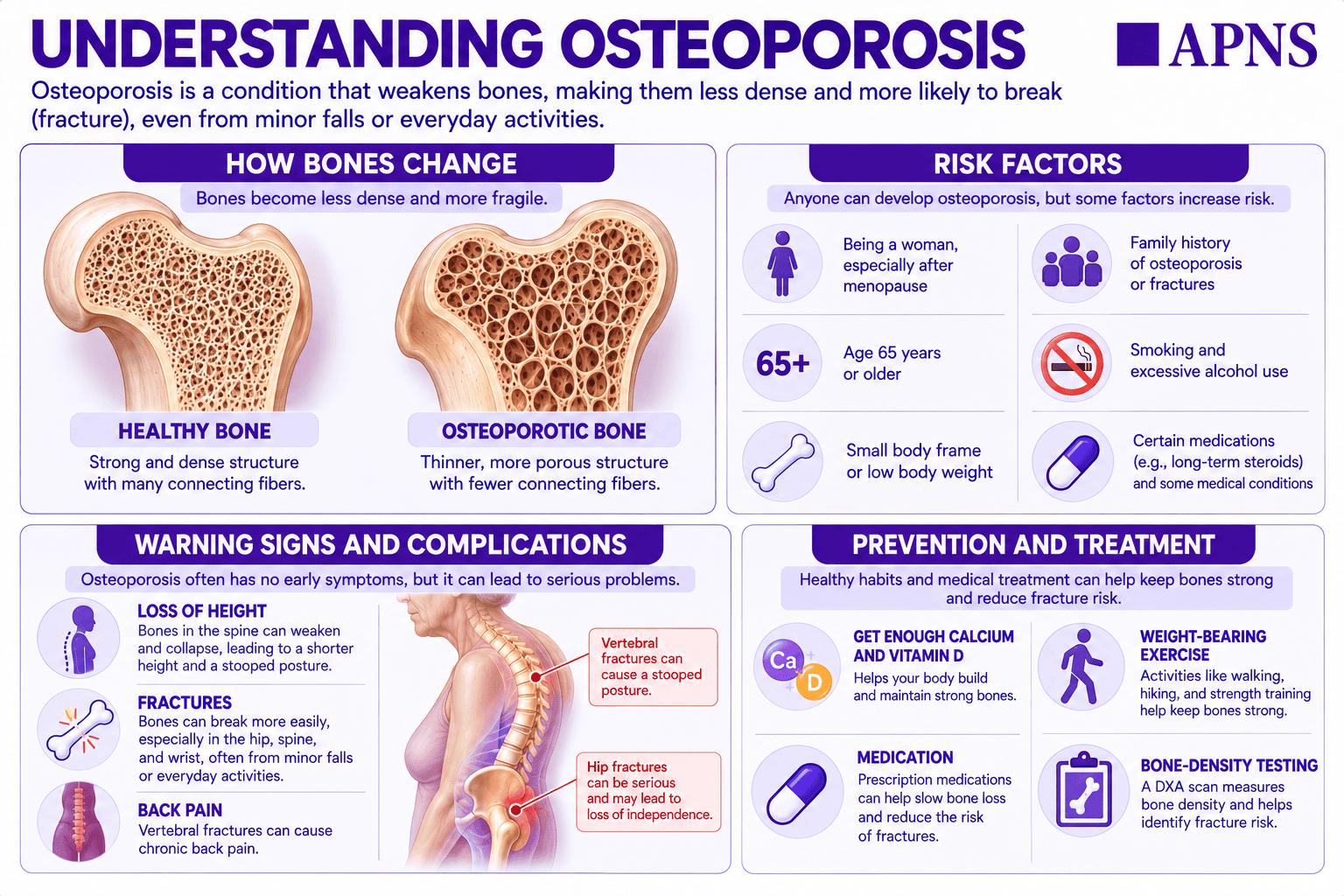
Bone is living tissue that is constantly removed and rebuilt. With aging, bone removal may happen faster than bone formation. Risk increases with:
Osteoporosis can affect people of every sex and background. Some risk factors cannot be changed, but many fracture risks can be lowered.
Osteoporosis – NIH NIAMS
https://www.niams.nih.gov/health-topics/osteoporosis
Explains osteoporosis symptoms, causes, risk factors, fractures, and steps that support bone health.
Osteoporosis in Men – NIH NIAMS
https://www.niams.nih.gov/health-topics/osteoporosis-men
Explains risk factors, diagnosis, prevention, and treatment of osteoporosis in men.
Bone loss or fracture risk may increase with:
A first fragility fracture strongly predicts another fracture. Prompt bone-health evaluation can prevent future injury.
Preventing Another Broken Bone – NIH NIAMS
https://www.niams.nih.gov/health-topics/preventing-another-broken-bone
Explains why a fracture may signal osteoporosis and how treatment can help prevent another fracture.
Bone health is built across the lifespan. Helpful steps include:
Supplements cannot make up for untreated high fracture risk. Prevention may require both healthy habits and medicine.
Osteoporosis – NIH NIAMS
https://www.niams.nih.gov/health-topics/osteoporosis
Explains osteoporosis symptoms, causes, risk factors, fractures, and steps that support bone health.
Osteoporosis Screening Recommendation – USPSTF
https://www.uspreventiveservicestaskforce.org/uspstf/recommendation/osteoporosis-screening
Provides the 2025 U.S. recommendation for screening women age 65 and older and younger postmenopausal women at increased risk.
Preventing Another Broken Bone – NIH NIAMS
https://www.niams.nih.gov/health-topics/preventing-another-broken-bone
Explains why a fracture may signal osteoporosis and how treatment can help prevent another fracture.
The following video content is provided to help you better understand this condition. These resources are intended for educational purposes and should not replace personalized medical advice from your healthcare provider.
Blood and urine tests do not measure bone density, but they may look for causes and guide safe treatment:
Testing is individualized. Normal lab results do not rule out osteoporosis.
Osteoporosis: Diagnosis, Treatment, and Steps to Take – NIH NIAMS
https://www.niams.nih.gov/health-topics/osteoporosis/diagnosis-treatment-and-steps-to-take
Reviews DXA testing, medicines, nutrition, exercise, fall prevention, and follow-up.
Tests used to assess bones and fracture risk include:
T-scores compare bone density with a healthy young adult. A T-score of −2.5 or lower generally meets the densitometric definition of osteoporosis in postmenopausal women and men age 50 or older. Results must be interpreted in context.
Bone Density Scan – NIH MedlinePlus
https://medlineplus.gov/lab-tests/bone-density-scan/
Explains why DXA scans are performed, how to prepare, what happens, and what results can mean.
Bone Mineral Density – NIH MedlinePlus
https://medlineplus.gov/bonedensity.html
Provides information about bone-density measurement, strong-bone habits, and related health resources.
Treatment aims to prevent fractures, maintain function, and protect quality of life. A plan may include:
Choice depends on fracture history, DXA results, kidney function, calcium level, swallowing or stomach problems, cancer or clot history, pregnancy potential, cost, preferences, and ability to follow the dosing schedule.
Osteoporosis: Diagnosis, Treatment, and Steps to Take – NIH NIAMS
https://www.niams.nih.gov/health-topics/osteoporosis/diagnosis-treatment-and-steps-to-take
Reviews DXA testing, medicines, nutrition, exercise, fall prevention, and follow-up.
Medicines for Osteoporosis – NIH MedlinePlus
https://medlineplus.gov/ency/patientinstructions/000502.htm
Describes common osteoporosis medicines, how they are taken, side effects, and safety precautions.
Daily habits can strengthen muscles and reduce falls:
A physical therapist can adapt exercise after a spine fracture, with severe osteoporosis, or when balance is poor.
Osteoporosis: Diagnosis, Treatment, and Steps to Take – NIH NIAMS
https://www.niams.nih.gov/health-topics/osteoporosis/diagnosis-treatment-and-steps-to-take
Reviews DXA testing, medicines, nutrition, exercise, fall prevention, and follow-up.
Osteoporosis – NIH MedlinePlus
https://medlineplus.gov/osteoporosis.html
Offers patient-friendly information about bone loss, diagnosis, treatment, exercise, nutrition, and fracture prevention.
Common osteoporosis medicines include:
Rare but important antiresorptive risks include jaw osteonecrosis and unusual thigh-bone fractures. These are much less common than osteoporotic fractures in appropriately selected high-risk patients. Report new thigh or groin pain and tell your dentist about treatment.
Medicines for Osteoporosis – NIH MedlinePlus
https://medlineplus.gov/ency/patientinstructions/000502.htm
Describes common osteoporosis medicines, how they are taken, side effects, and safety precautions.
FDA Safety Warning for Denosumab in Advanced Kidney Disease
https://www.fda.gov/drugs/drug-safety-communications/fda-adds-boxed-warning-increased-risk-severe-hypocalcemia-patients-advanced-chronic-kidney-disease
Explains the risk of severe low calcium with denosumab in advanced chronic kidney disease and needed monitoring.
Osteoporosis itself is treated with medicine and prevention, but fractures may require procedures:
After any fragility fracture, ask for an osteoporosis evaluation or fracture-liaison service. Fixing the broken bone alone does not treat the underlying bone weakness.
Preventing Another Broken Bone – NIH NIAMS
https://www.niams.nih.gov/health-topics/preventing-another-broken-bone
Explains why a fracture may signal osteoporosis and how treatment can help prevent another fracture.
Osteoporosis is usually a long-term condition, but fracture risk can be reduced. Medicines may improve bone density or prevent further loss even when the scan does not return to a normal range.
Follow-up timing depends on risk and treatment. Clinicians periodically review fractures, falls, height, adherence, side effects, labs, and DXA results. Some bisphosphonate users may later qualify for a supervised treatment pause, but denosumab should not be paused in the same way.
Osteoporosis: Diagnosis, Treatment, and Steps to Take – NIH NIAMS
https://www.niams.nih.gov/health-topics/osteoporosis/diagnosis-treatment-and-steps-to-take
Reviews DXA testing, medicines, nutrition, exercise, fall prevention, and follow-up.
Medicines for Osteoporosis – NIH MedlinePlus
https://medlineplus.gov/ency/patientinstructions/000502.htm
Describes common osteoporosis medicines, how they are taken, side effects, and safety precautions.
Protect your bones and prevent falls by:
Do not continue walking on a painful hip or leg after a fall. Some fractures allow limited movement at first but worsen without care.
No. Osteoporosis weakens bones; osteoarthritis damages joint cartilage. A person can have both.
Usually not until a fracture occurs. Sudden back pain, height loss, or pain after a minor fall may signal a fracture.
Osteopenia means bone density is below normal but not as low as osteoporosis. Treatment depends on total fracture risk, not the T-score alone.
No. Calcium and vitamin D support bone health but do not replace prescription treatment when fracture risk is high.
Yes. Older age, low testosterone, steroids, medical conditions, smoking, alcohol, and other factors can increase risk in men.
Serious side effects are uncommon. For people at high fracture risk, the benefit of preventing a hip or spine fracture usually outweighs medicine risks.
Not on your own. Some medicines remain in bone and may allow a planned pause, while stopping denosumab without another treatment can rapidly increase fracture risk.
Appropriate resistance exercise is helpful, but the program should match your fracture risk, balance, and spine health. Ask for physical-therapy guidance when unsure.

Consider asking:
Can I be referred to physical therapy or a fracture-liaison service?
Primary care can manage many cases. Referral may be made to:
Osteoporosis: Diagnosis, Treatment, and Steps to Take – NIH NIAMS
https://www.niams.nih.gov/health-topics/osteoporosis/diagnosis-treatment-and-steps-to-take
Reviews DXA testing, medicines, nutrition, exercise, fall prevention, and follow-up.
FDA Safety Warning for Denosumab in Advanced Kidney Disease
https://www.fda.gov/drugs/drug-safety-communications/fda-adds-boxed-warning-increased-risk-severe-hypocalcemia-patients-advanced-chronic-kidney-disease
Explains the risk of severe low calcium with denosumab in advanced chronic kidney disease and needed monitoring.
Osteoporosis is usually managed rather than permanently cured. Treatment can strengthen bone, slow loss, lower fracture risk, and sometimes improve bone density enough that the T-score no longer falls in the osteoporosis range.
Fracture risk may remain higher because age, prior fractures, and other risks still matter. Continuing exercise, nutrition, fall prevention, and follow-up remains important even after a better scan.
Osteoporosis – NIH NIAMS
https://www.niams.nih.gov/health-topics/osteoporosis
Explains osteoporosis symptoms, causes, risk factors, fractures, and steps that support bone health.
Seek urgent or emergency care for:
Do not move someone with a possible hip, spine, or neck fracture unless there is immediate danger. Call emergency services and keep the person warm and still.
Preventing Another Broken Bone – NIH NIAMS
https://www.niams.nih.gov/health-topics/preventing-another-broken-bone
Explains why a fracture may signal osteoporosis and how treatment can help prevent another fracture.
FDA Safety Warning for Denosumab in Advanced Kidney Disease
https://www.fda.gov/drugs/drug-safety-communications/fda-adds-boxed-warning-increased-risk-severe-hypocalcemia-patients-advanced-chronic-kidney-disease
Explains the risk of severe low calcium with denosumab in advanced chronic kidney disease and needed monitoring.
CALL 911
APNS does not provide emergency medical services. If you believe you are experiencing a medical emergency, including (but not limited to) chest pain, difficulty breathing, stroke symptoms, severe allergic reactions, anaphylaxis, uncontrolled bleeding, seizures, loss of consciousness, or any other potentially life-threatening condition, you are instructed to call 911 immediately or go immediately to the nearest emergency department.
Osteoporosis – NIH NIAMS
https://www.niams.nih.gov/health-topics/osteoporosis
Explains osteoporosis symptoms, causes, risk factors, fractures, and steps that support bone health.
Osteoporosis: Diagnosis, Treatment, and Steps to Take – NIH NIAMS
https://www.niams.nih.gov/health-topics/osteoporosis/diagnosis-treatment-and-steps-to-take
Reviews DXA testing, medicines, nutrition, exercise, fall prevention, and follow-up.
Osteoporosis Screening Recommendation – USPSTF
https://www.uspreventiveservicestaskforce.org/uspstf/recommendation/osteoporosis-screening
Provides the 2025 U.S. recommendation for screening women age 65 and older and younger postmenopausal women at increased risk.
Osteoporosis – NIH MedlinePlus
https://medlineplus.gov/osteoporosis.html
Offers patient-friendly information about bone loss, diagnosis, treatment, exercise, nutrition, and fracture prevention.
Bone Density Scan – NIH MedlinePlus
https://medlineplus.gov/lab-tests/bone-density-scan/
Explains why DXA scans are performed, how to prepare, what happens, and what results can mean.
Medicines for Osteoporosis – NIH MedlinePlus
https://medlineplus.gov/ency/patientinstructions/000502.htm
Describes common osteoporosis medicines, how they are taken, side effects, and safety precautions.
Osteoporosis in Men – NIH NIAMS
https://www.niams.nih.gov/health-topics/osteoporosis-men
Explains risk factors, diagnosis, prevention, and treatment of osteoporosis in men.
Preventing Another Broken Bone – NIH NIAMS
https://www.niams.nih.gov/health-topics/preventing-another-broken-bone
Explains why a fracture may signal osteoporosis and how treatment can help prevent another fracture.
FDA Safety Warning for Denosumab in Advanced Kidney Disease
https://www.fda.gov/drugs/drug-safety-communications/fda-adds-boxed-warning-increased-risk-severe-hypocalcemia-patients-advanced-chronic-kidney-disease
Explains the risk of severe low calcium with denosumab in advanced chronic kidney disease and needed monitoring.
Bone Mineral Density – NIH MedlinePlus
https://medlineplus.gov/bonedensity.html
Provides information about bone-density measurement, strong-bone habits, and related health resources.
This guide is for education only and does not replace professional medical care. Osteoporosis often has no symptoms until a fracture occurs. Seek urgent care after a fall with severe pain, deformity, inability to stand, neurologic symptoms, an open fracture, or a serious medicine reaction. Do not change osteoporosis treatment without your clinician’s guidance.
At APNS, our providers take the time to understand your condition and your goals. We offer comprehensive telehealth visits at a fixed rate — no membership fees, no insurance required, and no unexpected charges. Whether you’re newly diagnosed or looking for a provider who actually listens, we’re here to help.