
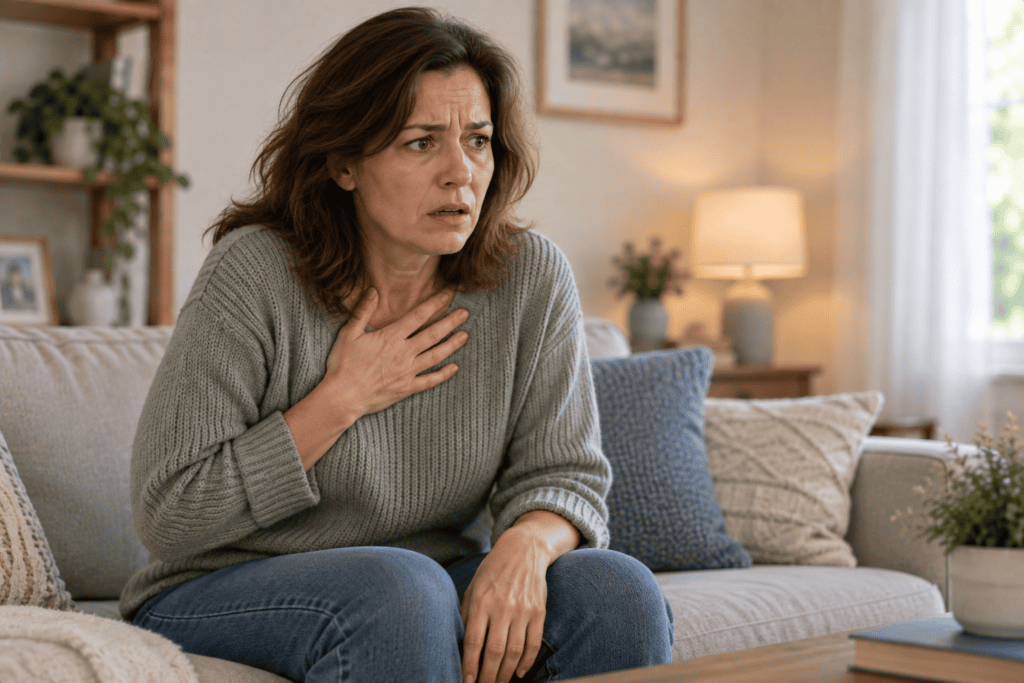
A panic attack is a sudden period of intense fear or discomfort that causes strong physical and emotional symptoms. It may happen when there is no clear danger and can create a frightening sense of losing control, fainting, having a heart attack, or dying. Not everyone who experiences a panic attack develops panic disorder.
Panic disorder is an anxiety disorder involving repeated, unexpected panic attacks. After an attack, the person may spend a month or longer worrying about another attack or changing their behavior to avoid situations where an attack might occur. Panic disorder may occur with agoraphobia, which involves fear or avoidance of places where escape or help might feel difficult.
Panic attacks are relatively common, but only some people who have them develop panic disorder. Panic disorder can begin at any age but often starts during late adolescence or early adulthood. It may occur alone or with depression, generalized anxiety, substance-use conditions, trauma-related disorders, or other mental health concerns.
Risk may be higher in people who:
Panic disorder is a medical condition and is not caused by weakness, lack of willpower, or poor character.
Panic attacks begin suddenly and often reach their strongest intensity within several minutes. Symptoms may continue for several minutes or longer, and fatigue or anxiety may remain after the main attack has passed.
Symptoms may include:
Between attacks, a person may experience:
Physical symptoms during a panic attack can feel extremely serious even when the attack itself is not medically dangerous.
A healthcare or mental health professional diagnoses panic disorder by asking about the attacks, symptoms, medical history, substance use, and effects on daily functioning.
The provider may ask:
Panic disorder is considered when a person has recurring unexpected panic attacks followed by persistent concern about additional attacks or meaningful behavior changes. A clinician must also consider whether symptoms are better explained by a medical condition, substance, medication, or another mental health disorder.
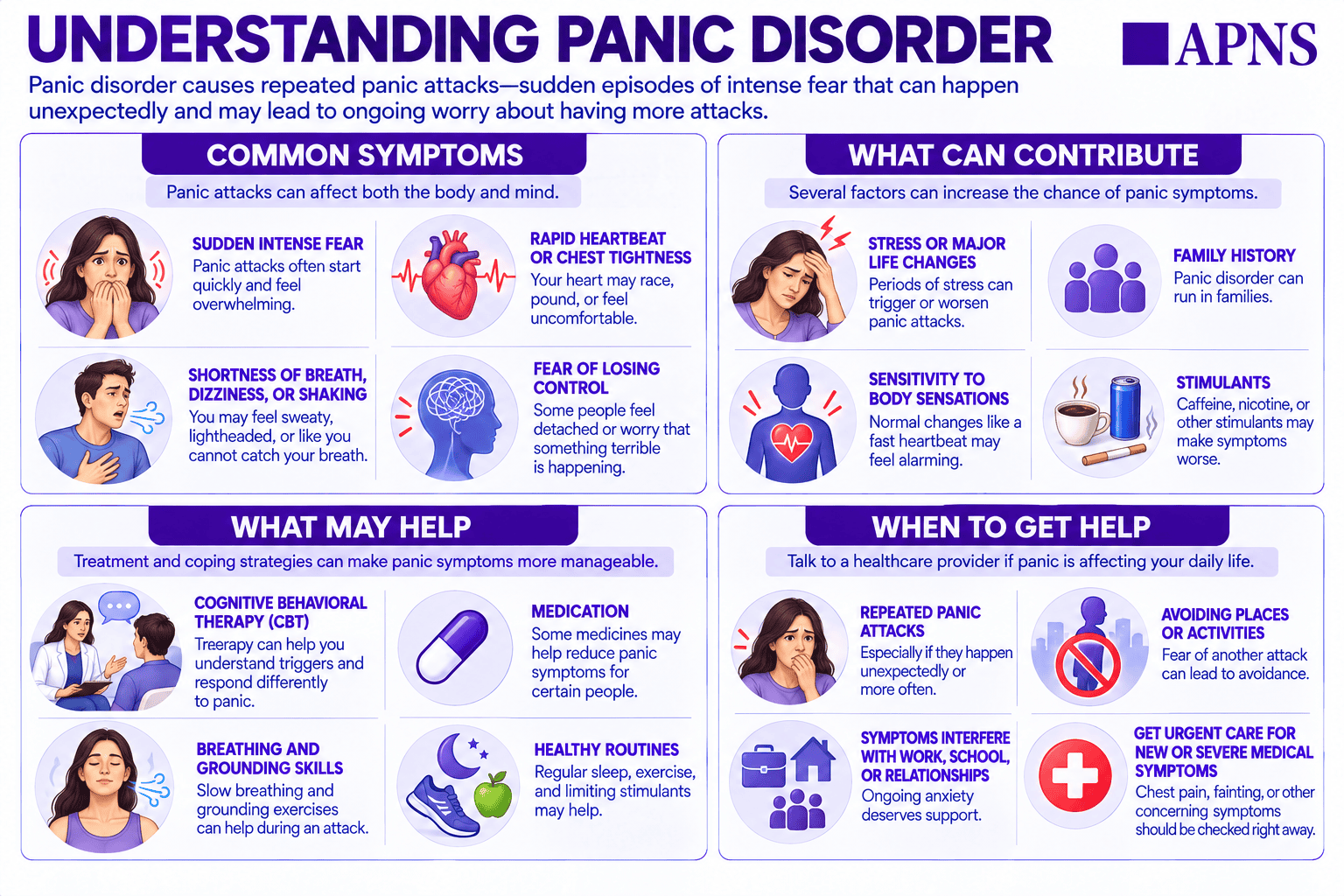
There is no single cause of panic disorder. It likely develops through a combination of biological, psychological, environmental, and inherited factors.
Possible contributing factors include:
A panic attack may also occur as part of another mental health condition and does not automatically mean the person has panic disorder.
Factors that may increase panic symptoms or the fear of future attacks include:
Avoidance may decrease anxiety temporarily, but over time it can reinforce the belief that the avoided place or sensation is dangerous. This can make panic disorder more limiting and contribute to agoraphobia.
Not every panic attack can be prevented, but consistent treatment can reduce their frequency and severity.
Helpful measures include:
Learning that panic sensations are uncomfortable but temporary can reduce fear and weaken the cycle that contributes to repeated attacks.
The following video content is provided to help you better understand this condition. These resources are intended for educational purposes and should not replace personalized medical advice from your healthcare provider.
There is no laboratory test that directly confirms panic disorder. Tests may be used to identify medical conditions that can cause similar symptoms.
Possible tests include:
Testing is individualized. Many people with typical panic disorder symptoms do not need repeated laboratory testing after appropriate medical causes have been evaluated.
Additional tests may be ordered when symptoms could be caused by a heart, lung, neurological, sleep, or other medical condition.
Possible tests include:
A first episode of severe chest pain, shortness of breath, fainting, or neurological symptoms should not automatically be diagnosed as a panic attack without appropriate medical evaluation.
The main treatments for panic disorder are psychotherapy, medication, or a combination of both. Treatment aims to reduce the frequency and severity of attacks, lower fear of future attacks, decrease avoidance, and restore daily functioning.
Treatment options may include:
Cognitive behavioral therapy, commonly called CBT, helps identify thoughts and behaviors that intensify panic. Treatment may include safely practicing physical sensations—such as a faster heartbeat or mild dizziness—so they become less frightening.
Lifestyle changes can support treatment and reduce factors that trigger physical sensations associated with panic.
Helpful changes include:
Exercise may temporarily increase heart rate, breathing, and sweating. These normal physical changes can feel frightening to someone with panic disorder, but avoiding all exercise may strengthen fear of bodily sensations. A therapist or healthcare provider can help develop a safe gradual activity plan.
Several medications may be used to treat panic disorder.
Possible medications include:
SSRIs and other antidepressants are commonly used as initial medication treatments because they can reduce panic attacks and ongoing anxiety without the same dependence risks associated with benzodiazepines. They may take several weeks to provide their full benefit.
Possible early antidepressant side effects include:
Starting with a lower dose and increasing gradually may reduce early activation for some patients.
Benzodiazepines may reduce panic symptoms quickly, but they can cause:
Combining benzodiazepines with alcohol, opioids, sleep medicines, or other sedatives may cause dangerous breathing suppression. Do not stop a regularly used benzodiazepine suddenly without medical supervision.
Contact the prescriber promptly for severe agitation, major behavioral changes, symptoms of mania, or new or worsening thoughts of self-harm after beginning or changing psychiatric medication.
Panic disorder is usually treated without invasive medical procedures.
Structured treatment interventions may include:
Brain-stimulation treatments are not routine treatments for panic disorder but may occasionally be used for a severe co-occurring condition, such as treatment-resistant depression.
Panic disorder is treatable, and many people experience substantial improvement with psychotherapy, medication, or both. Treatment may reduce attacks, make physical sensations less frightening, and help the person return to work, travel, exercise, and social activities.
Recovery may depend on:
Symptoms may return during stressful periods. Using previously learned skills and seeking care early may reduce the duration and severity of a relapse.
During a panic attack:
One grounding method is to identify:
Do not breathe into a paper bag. This could be dangerous if heart, lung, or other medical symptoms are incorrectly assumed to be panic.
Seek medical care when symptoms are new, significantly different from previous attacks, associated with fainting or severe chest pain, or do not improve as expected.
No. A panic attack is a single episode of intense fear or discomfort. Panic disorder involves recurring unexpected attacks followed by ongoing worry or behavior changes.
Yes. Not everyone who has a panic attack develops panic disorder. Panic attacks may occur during stress, with another mental health condition, because of substances, or because of a medical problem.
Symptoms often reach their highest intensity within several minutes. The strongest symptoms may pass relatively quickly, although anxiety, exhaustion, shakiness, or worry may continue afterward.
Yes. A nocturnal panic attack can wake a person suddenly with fear, rapid heartbeat, sweating, or breathing difficulty. Sleep apnea, abnormal heart rhythms, reflux, nightmares, and other conditions may cause similar symptoms and should be considered.
A panic attack itself does not usually cause a heart attack, but the symptoms can feel similar. New or severe chest pain, fainting, or pain spreading to the arm, jaw, neck, or back requires urgent evaluation.
Panic attacks are very frightening but are generally not physically dangerous. However, physical symptoms should not automatically be assumed to be panic, especially during a first episode or when they differ from previous attacks.
Yes. A person may begin avoiding public transportation, crowds, stores, driving, or leaving home because they fear having an attack where escape or help may be difficult.
Yes. Caffeine and other stimulants can increase heart rate, shaking, sweating, restlessness, and sleep problems, which may trigger or intensify panic symptoms.
Usually not. Exercise is healthy, but its physical sensations may initially trigger fear. Gradual exposure and professional guidance can help a person safely become more comfortable with these sensations.
Some benzodiazepines act quickly, but they have dependence, sedation, and interaction risks. Antidepressants are used for longer-term prevention and generally take several weeks to work fully.
People with an established diagnosis and a familiar symptom pattern may be able to use their treatment plan. New, severe, different, or medically concerning symptoms require appropriate medical evaluation.

Consider asking:
How long should treatment continue after I improve?
Panic disorder may be treated by a primary care provider or mental health professional.
Possible referrals include:
Panic disorder is highly treatable. Some people experience complete or long-lasting relief, while others have occasional symptoms that remain manageable through therapy, medication, and coping strategies.
Treatment can help:
Even long-standing panic disorder can improve with appropriate treatment.
Call 911 or seek emergency medical care immediately for:
Do not assume that a first episode of chest pain, breathing difficulty, fainting, or neurological symptoms is only a panic attack.
Seek urgent mental health or medical evaluation for:
In the United States, call or text 988 for suicidal thoughts, emotional distress, mental health concerns, or a substance-use crisis. The 988 Suicide & Crisis Lifeline provides confidential, judgment-free support 24 hours a day.
CALL 911
APNS does not provide emergency medical services. If you believe you are experiencing a medical emergency, including (but not limited to) chest pain, difficulty breathing, stroke symptoms, severe allergic reactions, anaphylaxis, uncontrolled bleeding, seizures, loss of consciousness, or any other potentially life-threatening condition, you are instructed to call 911 immediately or go immediately to the nearest emergency department.
Panic Disorder: What You Need to Know – National Institute of Mental Health
Explains panic attacks, panic disorder, symptoms, risk factors, psychotherapy, medication, and finding help.
Panic Disorder – NIH MedlinePlus
Provides patient-friendly information about repeated panic attacks, diagnosis, and treatment.
Panic Disorder Medical Encyclopedia – NIH MedlinePlus
Explains symptoms, possible causes, evaluation, treatment, and long-term outcomes.
Panic Disorder Test – NIH MedlinePlus
Explains how clinicians evaluate repeated panic symptoms and rule out physical causes.
Anxiety Disorders – National Institute of Mental Health
Provides information about anxiety conditions, research, treatment, and clinical trials.
Mental Health Medications – National Institute of Mental Health
Explains antidepressants, anti-anxiety medications, treatment expectations, and medication safety.
988 Suicide & Crisis Lifeline – SAMHSA
Provides 24-hour crisis support in the United States by calling or texting 988.
This guide is intended for educational purposes only and should not replace medical or mental health advice, diagnosis, testing, or treatment from a qualified healthcare professional. Symptoms that resemble a panic attack may also be caused by a heart attack, abnormal heart rhythm, asthma, blood clot, low blood sugar, thyroid disease, anemia, seizure, medication effect, alcohol or drug use, withdrawal, or another medical condition. A first episode of severe chest pain, breathing difficulty, fainting, or neurological symptoms should receive appropriate medical evaluation. Do not begin, stop, increase, reduce, or combine psychiatric medications without guidance from the prescribing professional. Benzodiazepines can cause sedation, impaired driving, falls, dependence, withdrawal, and dangerous breathing problems when combined with alcohol, opioids, sleep medicines, or other sedatives. Seek prompt professional care when attacks recur, worsen, cause significant avoidance, or interfere with daily functioning. In the United States, call or text 988 for suicidal thoughts or emotional crisis. Call 911 for severe chest pain, difficulty breathing, fainting, stroke symptoms, seizure, overdose, an immediate suicide plan or attempt, danger to another person, or another medical emergency.
At APNS, our providers take the time to understand your condition and your goals. We offer comprehensive telehealth visits at a fixed rate — no membership fees, no insurance required, and no unexpected charges. Whether you’re newly diagnosed or looking for a provider who actually listens, we’re here to help.