

Launching September 2027

Prediabetes

Prediabetes At A Glance

  • Prediabetes means blood sugar is higher than normal but not yet high enough to be diagnosed as type 2 diabetes.
  • It often develops as the body becomes less responsive to insulin, causing blood sugar levels to gradually rise.
  • Most people have no symptoms and discover prediabetes during routine blood testing.
  • Risk factors include family history, excess body weight, inactivity, age, high blood pressure, abnormal cholesterol, gestational diabetes, PCOS, sleep apnea, and smoking.
  • Prediabetes is diagnosed with blood tests such as A1C, fasting glucose, or an oral glucose tolerance test.
  • Weight loss when appropriate, regular physical activity, healthier eating, adequate sleep, and medication in selected cases can help prevent or delay type 2 diabetes.

Table of Contents

Table of Contents

What Is Prediabetes?

Prediabetes means your blood sugar levels are higher than normal but not yet high enough to be diagnosed as Type 2 diabetes.

Think of prediabetes as an early warning sign that your body is beginning to have difficulty using insulin effectively. Insulin is a hormone that helps move sugar (glucose) from your bloodstream into your cells for energy.

Without intervention, prediabetes can progress to Type 2 diabetes. The good news is that many people can prevent or delay diabetes through lifestyle changes.

Most people with prediabetes have no symptoms and may not know they have it until routine blood work is performed.

Learn More

  • CDC Prediabetes Overview
    https://www.cdc.gov/diabetes/about/about-prediabetes.html
  • NIH MedlinePlus Prediabetes Information
    https://medlineplus.gov/prediabetes.html
  • NIDDK Prediabetes and Insulin Resistance
    https://www.niddk.nih.gov/health-information/diabetes/overview/what-is-diabetes/prediabetes-insulin-resistance

How Common Is Prediabetes?

Prediabetes is extremely common.

Approximately:

  • More than 98 million adults in the United States have prediabetes
  • More than 80% of people with prediabetes do not know they have it
  • Many people with prediabetes develop Type 2 diabetes if no lifestyle changes are made

Because symptoms are often absent, routine screening is important.

Learn More

  • CDC National Diabetes Statistics Report
    https://www.cdc.gov/diabetes/data/statistics-report/index.html

What Symptoms Might You Notice?

Most people with prediabetes have no symptoms.

Possible Symptoms

  • Increased thirst
  • Increased hunger
  • Fatigue
  • Frequent urination
  • Blurry vision
  • Difficulty losing weight

Physical Signs

  • Darkened skin around the neck, armpits, or groin (acanthosis nigricans)
  • Skin tags
  • Increased waist circumference

Associated Conditions

  • Insulin resistance
  • Obesity
  • Metabolic syndrome
  • High blood pressure
  • High cholesterol

Many patients feel completely normal and are diagnosed during routine screening.

How Is Prediabetes Diagnosed?

Prediabetes is diagnosed through blood testing.

Diagnostic Criteria

Test Prediabetes Range
A1C 5.7%–6.4%
Fasting Blood Glucose 100–125 mg/dL
Oral Glucose Tolerance Test 140–199 mg/dL

If results exceed these ranges, Type 2 diabetes may be diagnosed.
Learn More

  • CDC A1C Information
    https://www.cdc.gov/diabetes/managing/managing-blood-sugar/a1c.html
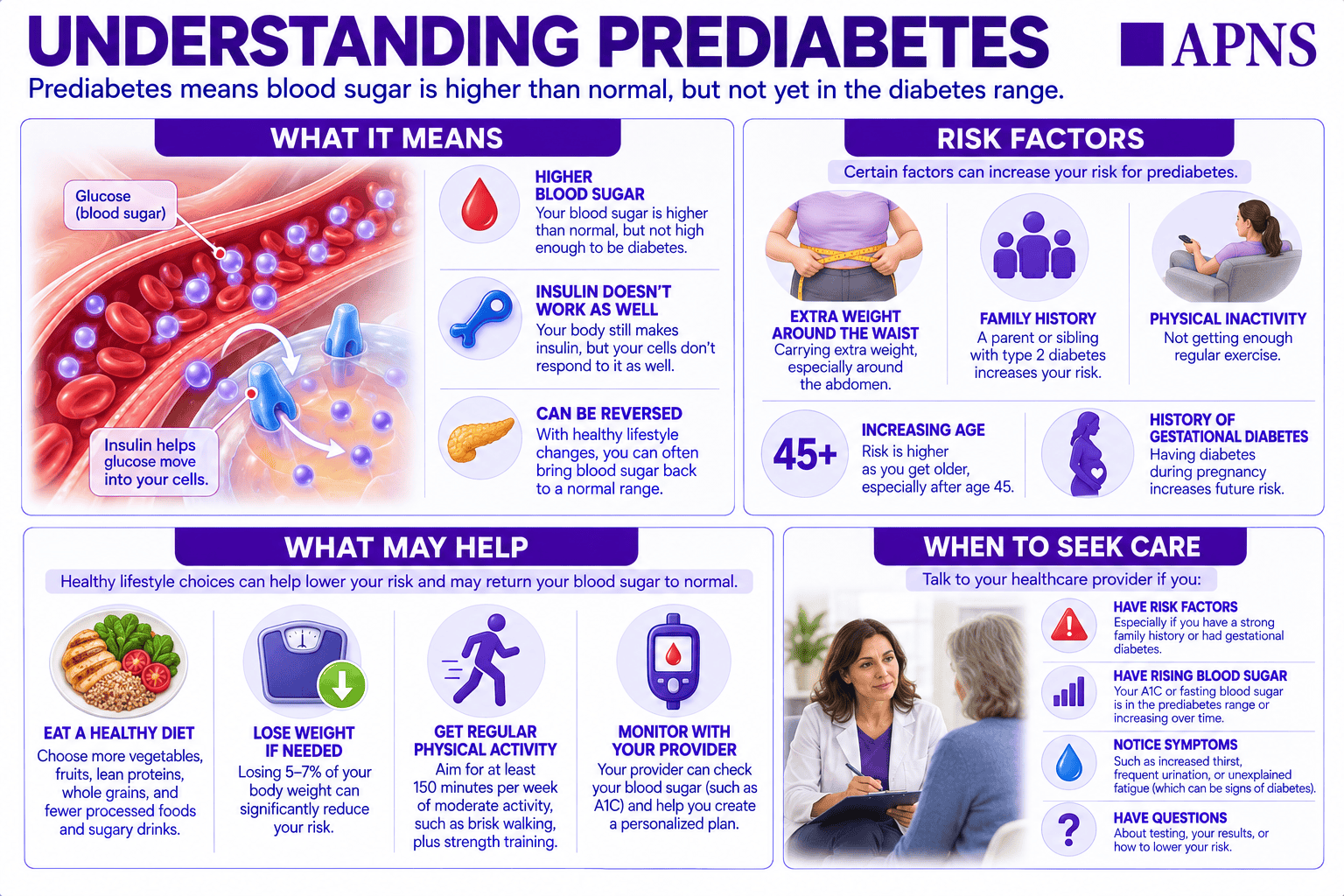
Prediabetes infographic – click to enlarge

What Causes Prediabetes?

Prediabetes develops when your body becomes resistant to insulin.

This means insulin is present, but your cells do not respond to it effectively.

Risk Factors

  • Family history of Type 2 diabetes
  • Being overweight or obese
  • Physical inactivity
  • Age 45 years or older
  • High blood pressure
  • High cholesterol
  • History of gestational diabetes
  • Polycystic ovary syndrome (PCOS)
  • Sleep apnea
  • Smoking

Prediabetes often develops from a combination of genetics and lifestyle factors.

What Can Make Prediabetes Worse?

Prediabetes may worsen if you:

  • Gain weight
  • Remain physically inactive
  • Drink sugary beverages regularly
  • Eat excessive processed foods
  • Smoke tobacco
  • Have untreated sleep apnea
  • Experience chronic stress
  • Miss routine medical appointments

Prevention

You may reduce your risk of developing prediabetes by:

  • Maintaining a healthy weight
  • Exercising regularly
  • Eating a balanced diet
  • Getting adequate sleep
  • Avoiding tobacco products
  • Managing stress
  • Attending preventive healthcare visits

Learn More About Prediabetes

The following video content is provided to help you better understand this condition. These resources are intended for educational purposes and should not replace personalized medical advice from your healthcare provider.

Labs

Hemoglobin A1C

What It Measures

Average blood sugar levels over approximately 2–3 months.

Why It Matters

Helps identify prediabetes and monitor progression toward diabetes.

What Results Mean

A1C Meaning
Below 5.7% Normal
5.7%–6.4% Prediabetes
6.5% or higher Diabetes

Monitoring Frequency

Typically every 6–12 months depending on your healthcare provider’s recommendations.

Learn More

https://www.cdc.gov/diabetes/managing/managing-blood-sugar/a1c.html

Fasting Blood Glucose

What It Measures

Blood sugar after fasting for at least 8 hours.

Why It Matters

Elevated levels may indicate insulin resistance or prediabetes.

What Results Mean

Result Meaning
Less than 100 mg/dL Normal
100–125 mg/dL Prediabetes
126 mg/dL or higher Diabetes

Monitoring Frequency

Often yearly or more frequently if risk factors increase.

Learn More

https://medlineplus.gov/lab-tests/glucose-test/

Lipid Panel

What It Measures

  • LDL cholesterol
  • HDL cholesterol
  • Triglycerides

Why It Matters

Prediabetes frequently occurs alongside abnormal cholesterol levels and increased cardiovascular risk.

Monitoring Frequency

Usually every 1–5 years depending on risk factors.

Learn More

https://www.heart.org/en/health-topics/cholesterol

Diagnostics

Blood Pressure Monitoring

What It Evaluates

High blood pressure.

Why It Is Ordered

High blood pressure commonly occurs alongside prediabetes and increases cardiovascular risk.

Body Mass Index (BMI)

What It Evaluates

Weight relative to height.

Why It Is Ordered

Excess body weight is one of the strongest risk factors for developing Type 2 diabetes.

Sleep Study

What It Evaluates

Sleep apnea and other sleep disorders.

Why It Is Ordered

Untreated sleep apnea may worsen insulin resistance and increase diabetes risk.

Learn More

https://www.nhlbi.nih.gov/health/sleep-apnea

Treatment & Management

Treatment Options

Treatment focuses on preventing progression to Type 2 diabetes.

Treatment may include:

  • Weight loss
  • Increased physical activity
  • Nutrition counseling
  • Diabetes prevention programs
  • Medication when appropriate
  • Treatment of contributing medical conditions

Lifestyle Changes

Lifestyle changes are the most effective treatment for prediabetes.

Weight Loss

Losing just 5–7% of your body weight can significantly reduce your risk of developing Type 2 diabetes.

Physical Activity

Aim for:

  • At least 150 minutes of moderate exercise each week
  • Strength training 2–3 times per week

Healthy Eating

Focus on:

  • Vegetables
  • Fruits
  • Lean proteins
  • Whole grains
  • High-fiber foods
  • Healthy fats

Limit:

  • Sugary beverages
  • Candy
  • Processed foods
  • Excess carbohydrates

Sleep

Aim for 7–9 hours of quality sleep each night.

Learn More

https://www.cdc.gov/diabetes/prevention/index.html

Medications

Metformin

What It Does

Improves insulin sensitivity and reduces glucose production by the liver.

Common Side Effects

  • Diarrhea
  • Nausea
  • Stomach upset

Important Safety Considerations

Often prescribed for individuals at particularly high risk of developing Type 2 diabetes.

Learn More

https://medlineplus.gov/druginfo/meds/a696005.html

GLP-1 Receptor Agonists

Examples

  • Semaglutide (Ozempic®, Wegovy®)
  • Tirzepatide (Mounjaro®, Zepbound®)

What They Do

  • Promote weight loss
  • Improve insulin sensitivity
  • Reduce progression toward diabetes

Common Side Effects

  • Nausea
  • Vomiting
  • Constipation

Important Safety Considerations

Not all patients with prediabetes require medication.

Learn More

https://medlineplus.gov/druginfo/meds/a618008.html

Procedures

There are no procedures specifically used to treat prediabetes.

Bariatric Surgery

Why It Is Performed

May be considered for individuals with severe obesity and significant metabolic risk.

Benefits

  • Significant weight loss
  • Improved insulin sensitivity
  • Reduced risk of Type 2 diabetes

Risks

  • Surgical complications
  • Nutritional deficiencies
  • Need for long-term follow-up

Recovery Expectations

Recovery varies based on the procedure performed.

Learn More

https://www.niddk.nih.gov/health-information/weight-management/bariatric-surgery

What Should You Expect Long-Term?

Many people successfully reverse prediabetes through lifestyle changes.

Without intervention, prediabetes may progress to:

  • Type 2 diabetes
  • Heart disease
  • Stroke
  • Kidney disease

With early intervention, progression can often be delayed or prevented.

What Can You Do At Home?

You can:

  • Exercise regularly
  • Maintain a healthy weight
  • Limit sugary beverages
  • Read food labels
  • Attend routine healthcare appointments
  • Monitor blood pressure
  • Prioritize sleep
  • Stop smoking if applicable

Even small changes can have a major impact on your health.

Frequently Asked Questions

Does prediabetes mean I will definitely get diabetes?

No. Many people prevent or delay Type 2 diabetes through lifestyle changes.

Can I still eat carbohydrates?

Yes. Focus on healthy carbohydrate sources such as fruits, vegetables, legumes, and whole grains.

Should I check my blood sugar at home?

Most people with prediabetes do not need routine home glucose monitoring unless recommended by their healthcare provider.

Can prediabetes cause symptoms?

Usually not. Most people feel completely normal.

Is weight loss really that important?

Yes. Even modest weight loss can significantly reduce diabetes risk.

Questions To Ask Your Provider

  • What is my current A1C?
  • How close am I to developing Type 2 diabetes?
  • How often should I have my blood sugar checked?
  • Should I see a dietitian?
  • Should I lose weight?
  • Am I a candidate for medication?
  • What exercise program is right for me?
  • How can I reduce my cardiovascular risk?

Specialist Referrals

You may be referred to:

  • Endocrinologist
  • Registered Dietitian
  • Diabetes Prevention Program
  • Weight Management Specialist
  • Sleep Medicine Specialist
  • Cardiologist

Is Prediabetes Curable?

Prediabetes can often be reversed.

Many people return their blood sugar levels to the normal range through:

  • Weight loss
  • Increased physical activity
  • Healthy eating habits
  • Treatment of underlying conditions

Even if prediabetes does not completely resolve, these changes can significantly reduce the risk of developing Type 2 diabetes.

Emergency Symptoms / When To Seek Immediate Help

Prediabetes itself rarely causes emergencies.

Seek immediate medical attention if you experience:

  • Chest pain
  • Difficulty breathing
  • Severe weakness
  • Sudden vision changes
  • Symptoms of stroke
  • Loss of consciousness

Call 911 for life-threatening symptoms.

CALL 911

APNS does not provide emergency medical services. If you believe you are experiencing a medical emergency, including (but not limited to) chest pain, difficulty breathing, stroke symptoms, severe allergic reactions, anaphylaxis, uncontrolled bleeding, seizures, loss of consciousness, or any other potentially life-threatening condition, you are instructed to call 911 immediately or go immediately to the nearest emergency department.

Official Resources / External Links

  • CDC Prediabetes Information
    https://www.cdc.gov/diabetes/about/about-prediabetes.html
  • CDC National Diabetes Prevention Program
    https://www.cdc.gov/diabetes/prevention/index.html
  • NIH MedlinePlus Prediabetes Information
    https://medlineplus.gov/prediabetes.html
  • NIDDK Prediabetes and Insulin Resistance
    https://www.niddk.nih.gov/health-information/diabetes/overview/what-is-diabetes/prediabetes-insulin-resistance
  • American Diabetes Association Prediabetes Resources
    https://diabetes.org/about-diabetes/prediabetes

This information is for educational purposes only and should not replace medical advice, diagnosis, or treatment from a licensed healthcare provider.

Always follow the recommendations of your healthcare provider. If you experience severe or worsening symptoms, seek immediate medical attention.

If you believe you are experiencing a medical emergency, call 911 or seek emergency medical care immediately.

Get personalized care for Prediabetes

At APNS, our providers take the time to understand your condition and your goals. We offer comprehensive telehealth visits at a fixed rate — no membership fees, no insurance required, and no unexpected charges. Whether you’re newly diagnosed or looking for a provider who actually listens, we’re here to help.