
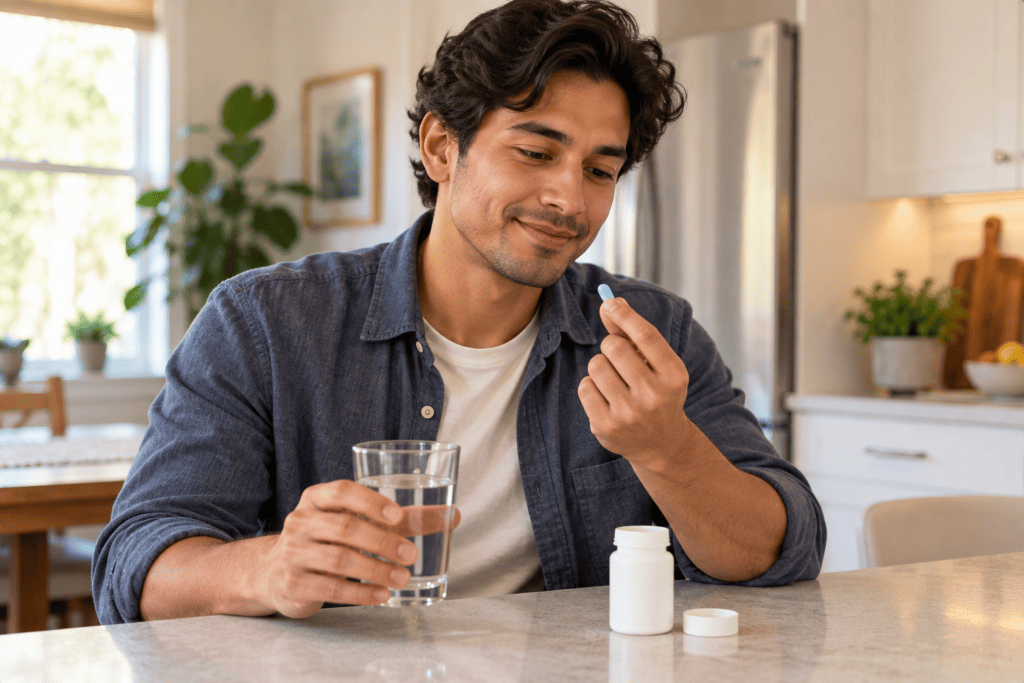
PrEP stands for pre-exposure prophylaxis. It is medicine taken before a possible exposure to prevent HIV. PrEP is for people who do not have HIV and may be exposed through sex or injection drug use. Options include daily pills and scheduled injections.
When used as prescribed, PrEP lowers the risk of getting HIV through sex by about 99%. Oral PrEP also lowers risk from injection drug use by at least 74%. PrEP does not prevent other sexually transmitted infections (STIs) or pregnancy, and HIV testing is required before and during treatment.
Preventing HIV with PrEP – Centers for Disease Control and Prevention
https://www.cdc.gov/hiv/prevention/prep.html
Explains who can use PrEP, available pills and injections, effectiveness, and how to access care.
Pre-Exposure Prophylaxis (PrEP) – NIH HIVinfo
https://hivinfo.nih.gov/understanding-hiv/fact-sheets/pre-exposure-prophylaxis-prep
Provides patient-friendly information about how PrEP works, effectiveness, options, and safety.
PrEP use has increased in the United States, but many people who could benefit still do not receive it. Anyone without HIV may ask about PrEP; a person does not need to identify with a specific sexual orientation or relationship type.
PrEP may be helpful when a partner has HIV with an unknown or detectable viral load, condoms are not used consistently, a recent STI occurred, PEP was used, or injection equipment may be shared.
PrEP is prevention, so there are usually no symptoms to monitor from HIV itself. Most people tolerate PrEP well.
Fever, rash, sore throat, swollen glands, or flu-like illness after a possible exposure could be acute HIV and requires immediate testing—not simply continued PrEP without evaluation.
A healthcare professional reviews HIV exposure, symptoms, medicines, kidney health, hepatitis history, pregnancy goals, and which option fits your routine. Care should be respectful and based on your goals.
PrEP can begin after HIV infection is excluded with appropriate testing. If a significant exposure occurred within the past 72 hours, PEP may be needed first because PrEP alone is not emergency treatment.
Clinical Guidance for PEP – CDC HIV Nexus
https://www.cdc.gov/hivnexus/hcp/pep/index.html
Explains emergency HIV prevention after a possible exposure and the 72-hour treatment window.
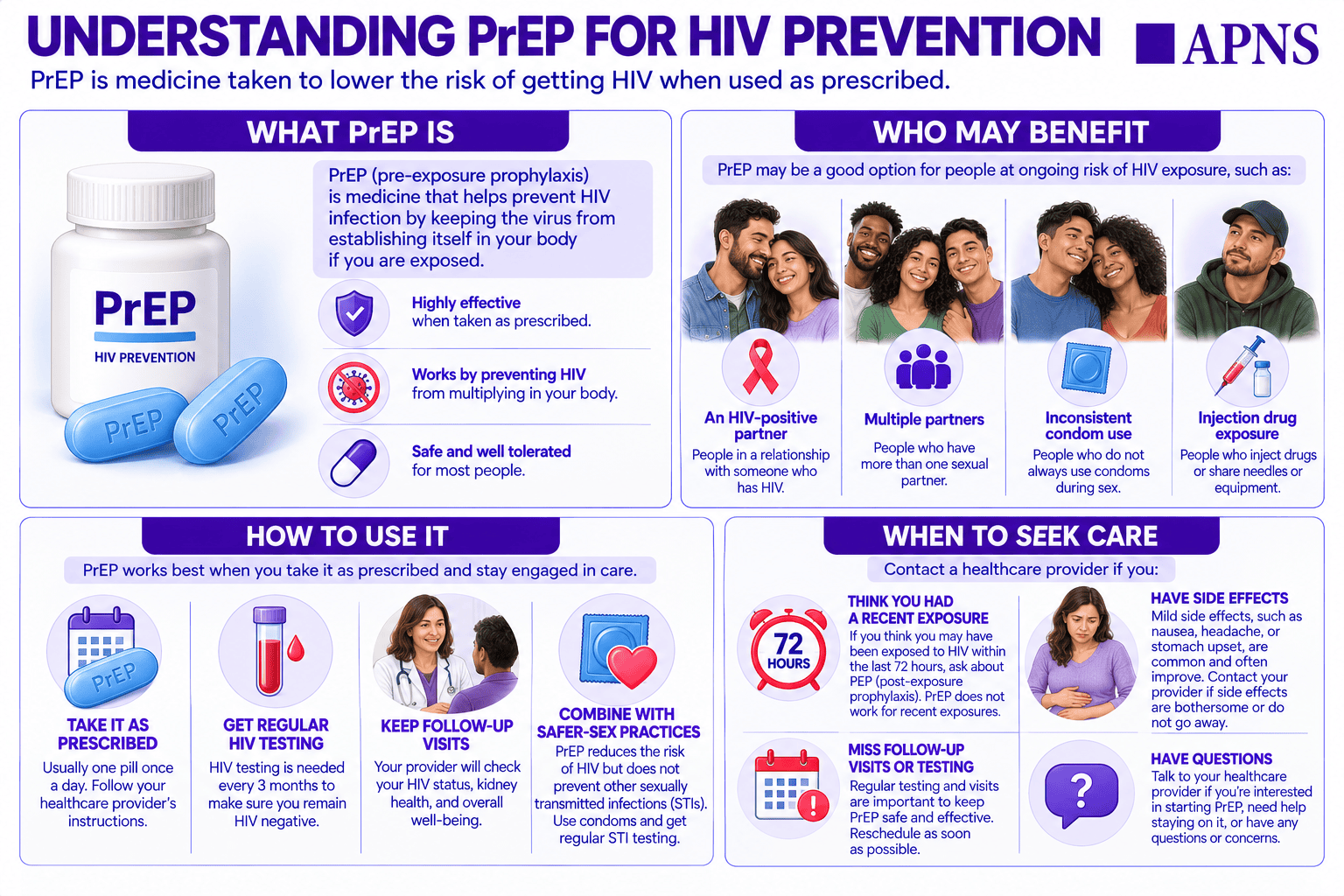
PrEP medicines block steps HIV needs to establish infection in the body. Enough medicine must be present before and after exposure, so taking pills consistently or receiving injections on schedule is essential.
PrEP cannot treat HIV by itself. Starting or continuing PrEP when unrecognized HIV is present can allow drug resistance, which is why sensitive HIV testing is required.
Clinical Guidance for PrEP – CDC HIV Nexus
https://www.cdc.gov/hivnexus/hcp/prep/index.html
Provides current testing, medication, monitoring, kidney, hepatitis B, pregnancy, and follow-up guidance.
Protection is not immediate for every exposure route. Ask when your chosen regimen becomes protective and how long to continue it after the last possible exposure.
PrEP is one part of a personalized HIV-prevention plan.
The following video content is provided to help you better understand this condition. These resources are intended for educational purposes and should not replace personalized medical advice from your healthcare provider.
Do not rely only on an oral-fluid home HIV test when starting PrEP or evaluating a recent exposure; blood-based testing is more sensitive for early infection.
Clinical Guidance for PrEP – CDC HIV Nexus
https://www.cdc.gov/hivnexus/hcp/prep/index.html
Provides current testing, medication, monitoring, kidney, hepatitis B, pregnancy, and follow-up guidance.
Imaging and procedures are not needed for PrEP. Follow-up consists mainly of conversation, examination when needed, and laboratory testing.
Swabs may be collected from the throat, rectum, vagina, cervix, or urine based on sexual exposure. Testing the exposed body sites can find infections that a urine test alone may miss.
PrEP choices include daily oral emtricitabine/tenofovir disoproxil fumarate, daily emtricitabine/tenofovir alafenamide for eligible sexual exposures, cabotegravir injections every two months after initiation, and lenacapavir injections every six months after initiation.
Not every option has the same evidence or approval for vaginal exposure or injection drug use. The best choice depends on exposure route, kidney and bone health, hepatitis B, pregnancy, comfort with injections, and ability to attend scheduled visits.
Clinical Guidance for PrEP – CDC HIV Nexus
https://www.cdc.gov/hivnexus/hcp/prep/index.html
Provides current testing, medication, monitoring, kidney, hepatitis B, pregnancy, and follow-up guidance.
CDC Recommendation for Twice-Yearly Injectable PrEP
https://www.cdc.gov/mmwr/volumes/74/wr/mm7435a1.htm
Reviews lenacapavir injections given every six months for HIV prevention.
Tell the prescriber about all medicines and supplements. Do not stop oral PrEP with chronic hepatitis B or discontinue injectable PrEP without a plan for HIV testing and alternative protection.
Clinical Guidance for PrEP – CDC HIV Nexus
https://www.cdc.gov/hivnexus/hcp/prep/index.html
Provides current testing, medication, monitoring, kidney, hepatitis B, pregnancy, and follow-up guidance.
Oral PrEP requires no procedure. Cabotegravir is injected into a buttock muscle by a healthcare professional; lenacapavir is injected under the skin of the abdomen by a healthcare professional.
A small injection-site lump or discomfort can occur. Keep every injection appointment because long-acting medicine remains in the body at gradually decreasing levels after stopping.
PrEP can be used during seasons of exposure or for many years while it remains helpful. Regular visits confirm that HIV testing is negative, side effects are manageable, and the chosen option still fits your life.
Stopping safely depends on the medication, exposure route, and timing of the last exposure. Injectable medicines require continued HIV testing after the last shot because drug levels decline slowly.
No. PrEP is for any person without HIV who may benefit, regardless of gender identity or sexual orientation.
No. Regular screening and optional condoms or barriers remain important.
PrEP may help prevent HIV during conception, pregnancy, and breastfeeding. Regimen choice should be discussed with a clinician.
It is off-label event-driven F/TDF dosing studied only for adult men who have sex with men. It is not CDC-recommended and does not fit every exposure or patient.
Discuss timing first. Protection fades after oral PrEP stops, hepatitis B can flare, and injectable drugs require extended follow-up.
Seek PEP immediately. It must start as soon as possible and no later than 72 hours after exposure.

No. PrEP prevents HIV in people who do not have HIV; it does not cure or adequately treat established HIV infection.
If testing confirms HIV, a complete HIV treatment regimen should begin promptly. Modern HIV treatment can support a long, healthy life and prevent sexual transmission when viral suppression is maintained.
Contact a PrEP clinician urgently for flu-like symptoms after a possible HIV exposure, an indeterminate or positive HIV test, a significant exposure during a medication gap, or a late injection.
Seek urgent or emergency care for:
CALL 911
APNS does not provide emergency medical services. If you believe you are experiencing a medical emergency, including (but not limited to) chest pain, difficulty breathing, stroke symptoms, severe allergic reactions, anaphylaxis, uncontrolled bleeding, seizures, loss of consciousness, or any other potentially life-threatening condition, you are instructed to call 911 immediately or go immediately to the nearest emergency department.
Preventing HIV with PrEP – Centers for Disease Control and Prevention
https://www.cdc.gov/hiv/prevention/prep.html
Explains who can use PrEP, available pills and injections, effectiveness, and how to access care.
Clinical Guidance for PrEP – CDC HIV Nexus
https://www.cdc.gov/hivnexus/hcp/prep/index.html
Provides current testing, medication, monitoring, kidney, hepatitis B, pregnancy, and follow-up guidance.
Pre-Exposure Prophylaxis (PrEP) – NIH HIVinfo
https://hivinfo.nih.gov/understanding-hiv/fact-sheets/pre-exposure-prophylaxis-prep
Provides patient-friendly information about how PrEP works, effectiveness, options, and safety.
Clinical Guidance for PEP – CDC HIV Nexus
https://www.cdc.gov/hivnexus/hcp/pep/index.html
Explains emergency HIV prevention after a possible exposure and the 72-hour treatment window.
CDC Recommendation for Twice-Yearly Injectable PrEP
https://www.cdc.gov/mmwr/volumes/74/wr/mm7435a1.htm
Reviews lenacapavir injections given every six months for HIV prevention.
Paying for PrEP – Centers for Disease Control and Prevention
https://www.cdc.gov/hiv/prevention/prep/paying-for-prep.html
Lists insurance, medication-assistance, and clinic resources that may reduce PrEP costs.
This guide is intended for educational purposes only and should not replace medical advice, HIV testing, diagnosis, or treatment from your healthcare provider. PrEP is only for people who do not have HIV and must be paired with appropriate HIV testing. Medication choice and follow-up depend on exposure route, kidney and liver health, hepatitis B, pregnancy, other medicines, and ability to receive injections on schedule. Seek immediate care for a possible HIV exposure within 72 hours, possible acute HIV symptoms, a positive or unclear HIV result, a severe allergic reaction, or serious medication effects.
At APNS, our providers take the time to understand your condition and your goals. We offer comprehensive telehealth visits at a fixed rate — no membership fees, no insurance required, and no unexpected charges. Whether you’re newly diagnosed or looking for a provider who actually listens, we’re here to help.