
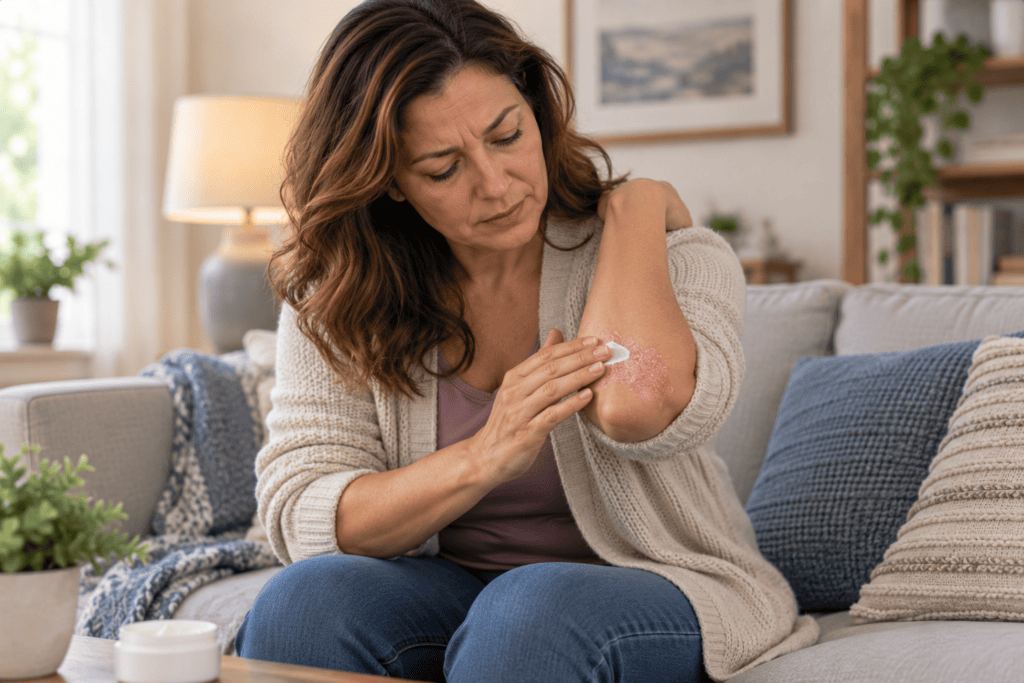
Psoriasis is a long-term inflammatory disease in which an overactive immune system makes skin cells build up too quickly. It often causes thick, well-defined patches called plaques. Plaques may look red with silvery-white scale on lighter skin, or violet, dark brown, or gray with scale on darker skin.
Psoriasis is not contagious and cannot be caught by touching someone. It may affect the scalp, nails, skin folds, hands, feet, genitals, or many areas at once. Some people also develop psoriatic arthritis, which causes joint pain, stiffness, or swelling.
Psoriasis – NIH NIAMS
https://www.niams.nih.gov/health-topics/psoriasis
Explains psoriasis symptoms, causes, diagnosis, treatment, and living with the condition.
Psoriasis – NIH MedlinePlus
https://medlineplus.gov/psoriasis.html
Links to reliable information about symptoms, testing, medicines, self-care, and research.
Psoriasis affects millions of people in the United States. It can begin at any age, but it commonly starts in adulthood and may run in families.
Symptoms often come and go. A time when symptoms worsen is called a flare, while a period with few or no symptoms is called remission.
Symptoms vary by psoriasis type and skin tone. You may notice:
Psoriasis can resemble eczema, ringworm, dandruff, medication reactions, or other skin diseases. A clinician should confirm the diagnosis.
A clinician usually diagnoses psoriasis by examining your skin, scalp, and nails and asking about symptoms, family history, infections, medicines, and joint problems. Tell the clinician about morning stiffness, swollen joints, heel pain, or eye pain and redness.
If the appearance is unusual, a small skin biopsy may be used to rule out another condition. Early evaluation of possible psoriatic arthritis can help prevent permanent joint damage.
Psoriasis – NIH NIAMS
https://www.niams.nih.gov/health-topics/psoriasis
Explains psoriasis symptoms, causes, diagnosis, treatment, and living with the condition.
Psoriatic Arthritis – NIH NIAMS
https://www.niams.nih.gov/health-topics/psoriatic-arthritis
Describes joint, tendon, nail, and eye symptoms that need timely evaluation.
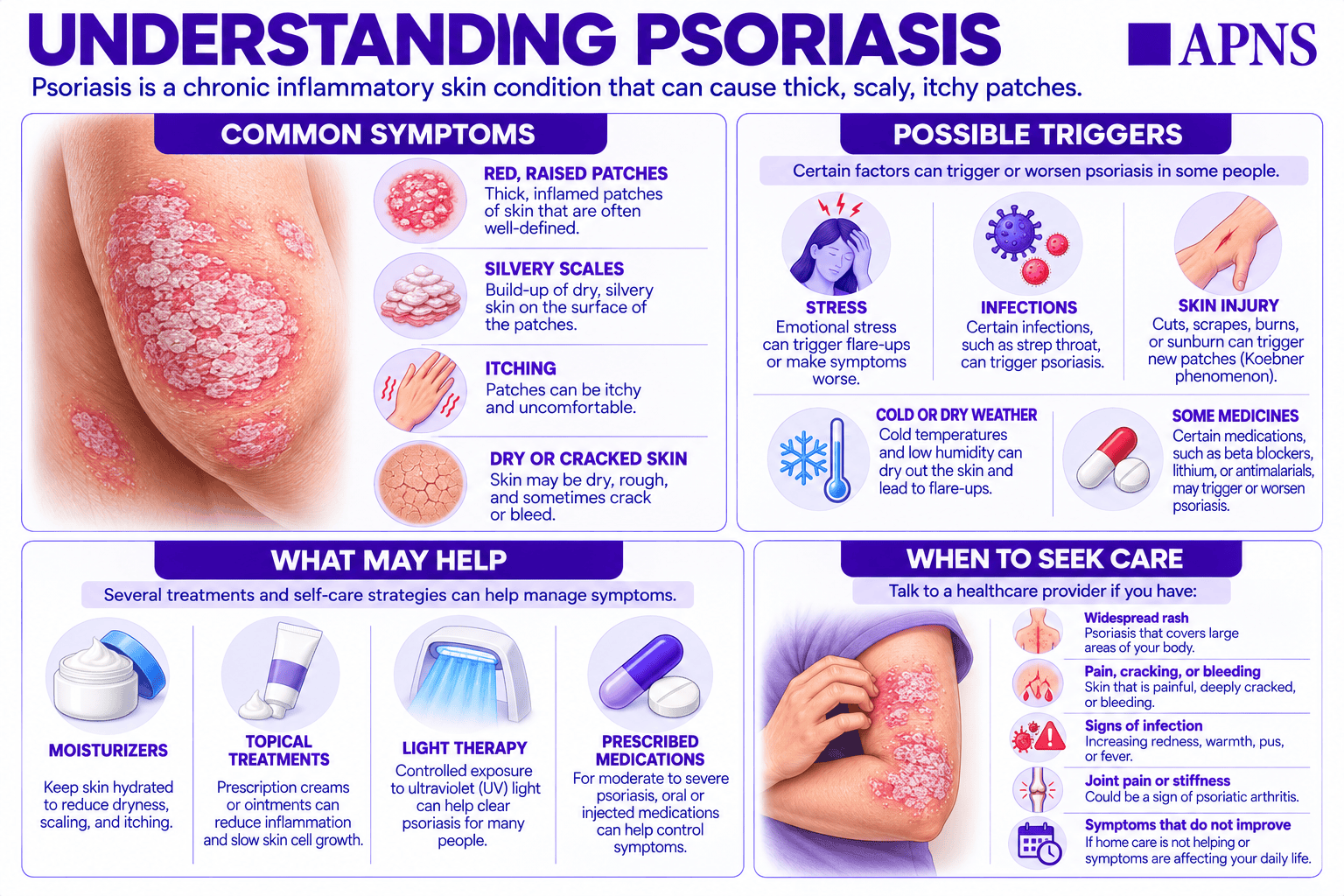
Psoriasis develops from a combination of immune-system activity, genes, and environmental triggers. The immune system mistakenly speeds skin-cell growth and causes inflammation.
It is not caused by poor hygiene, and it is not an infection. A family history raises risk, but many people with psoriasis have no known affected relative.
Triggers differ from person to person and may include:
Do not stop a prescription medicine on your own. Ask the prescriber whether it may be affecting your skin and how to change it safely.
Psoriasis cannot always be prevented because genes and immune activity play major roles. You may lower the chance of flares by:
Do not stop steroids or other prescription medicines suddenly; this can cause a severe rebound flare.
The following video content is provided to help you better understand this condition. These resources are intended for educational purposes and should not replace personalized medical advice from your healthcare provider.
There is no single blood test that proves a person has psoriasis. Tests are chosen based on symptoms and the treatment being considered.
The exact tests and schedule depend on your health history and medicine.
Most people do not need imaging for skin psoriasis. Possible tests include:
A dermatologist or rheumatologist may use symptom questionnaires to track skin severity, daily-life impact, and joint disease.
Treatment depends on the psoriasis type, body areas involved, severity, joint symptoms, other health conditions, pregnancy plans, and your preferences. Options include:
Finding the best plan may take time. Do not use tanning beds as treatment; they can burn the skin and increase skin-cancer risk.
Psoriasis: Diagnosis and Treatment – American Academy of Dermatology
https://www.aad.org/public/diseases/psoriasis/treatment/treatment
Reviews topical medicines, light therapy, pills, injections, and treatment planning.
Psoriasis Medications and Light Therapies – American Academy of Dermatology
https://www.aad.org/public/diseases/psoriasis/treatment/medications
Provides patient-friendly details about medicines and supervised phototherapy.
Healthy habits do not replace treatment, but they may reduce flares and lower related health risks.
Ask before starting supplements or restrictive diets. No special diet has been proven to cure psoriasis.
Common treatments include topical corticosteroids, vitamin D medicines such as calcipotriene, salicylic acid, tazarotene, roflumilast, tapinarof, and sometimes tacrolimus or pimecrolimus for sensitive areas. Strong steroids can thin skin when overused, so use the correct product, location, amount, and schedule.
Never take methotrexate daily unless specifically prescribed for another condition; psoriasis dosing is usually weekly, and dosing errors can be deadly. APNS provides medication refills only when you have an established diagnosis and the refill is clinically appropriate; an evaluation, monitoring tests, or specialist follow-up may be required.
Psoriasis Medications and Light Therapies – American Academy of Dermatology
https://www.aad.org/public/diseases/psoriasis/treatment/medications
Provides patient-friendly details about medicines and supervised phototherapy.
Psoriasis Treatment: Biologics – American Academy of Dermatology
https://www.aad.org/public/diseases/psoriasis/treatment/medications/biologics
Explains how biologics work, screening before treatment, benefits, and infection risks.
Narrowband UVB phototherapy exposes affected skin to a controlled medical light dose. It may help widespread disease when creams are not enough and usually requires repeated visits or an approved home unit with medical supervision.
Sunlamps and tanning beds are not safe substitutes for medical phototherapy.
Psoriasis is a lifelong condition, but modern treatment can greatly reduce or clear symptoms. Flares may return when treatment stops or a trigger occurs, and the plan may need adjustment over time.
Regular care should include checks for psoriatic arthritis, high blood pressure, diabetes, unhealthy cholesterol, heart disease risk, depression, and anxiety. Report new joint symptoms early.
Contact the clinic if treatment irritates the skin, symptoms spread, or the plan is not working. Do not share prescription products.
No. You cannot catch it through touch, sex, shared towels, or swimming pools.
No. Psoriasis involves inflammation and may affect joints and be linked with other health risks.
Not automatically. Strength and duration depend on the body area; the face, genitals, and folds need extra care.
Small controlled doses may help some people, but sunburn can trigger a flare. Medical phototherapy is safer and more precise.
Yes. Nail and scalp disease are common and may need products or treatments made for those areas.
Some people develop psoriatic arthritis. Report morning stiffness, swollen joints, heel pain, or a swollen finger or toe promptly.
Call the prescribing clinician for instructions, especially if you use a biologic or another immune-suppressing medicine.

Primary care can help recognize psoriasis and manage related health risks. Referral may include:
Psoriatic Arthritis – NIH NIAMS
https://www.niams.nih.gov/health-topics/psoriatic-arthritis
Describes joint, tendon, nail, and eye symptoms that need timely evaluation.
There is no permanent cure for psoriasis at this time. Treatment can control inflammation, clear or nearly clear the skin, protect joints, and produce long periods of remission.
Because the disease can return, continue follow-up even when the skin is clear. Do not stop systemic medicine suddenly unless a clinician tells you how to do so safely.
Seek immediate medical care for:
These symptoms may signal erythrodermic psoriasis, generalized pustular psoriasis, severe infection, allergy, or eye inflammation. Call emergency services for breathing trouble, fainting, confusion, or rapidly worsening illness.
CALL 911
APNS does not provide emergency medical services. If you believe you are experiencing a medical emergency, including (but not limited to) chest pain, difficulty breathing, stroke symptoms, severe allergic reactions, anaphylaxis, uncontrolled bleeding, seizures, loss of consciousness, or any other potentially life-threatening condition, you are instructed to call 911 immediately or go immediately to the nearest emergency department.
Psoriasis – NIH NIAMS
https://www.niams.nih.gov/health-topics/psoriasis
Explains psoriasis symptoms, causes, diagnosis, treatment, and living with the condition.
Psoriasis: Diagnosis and Treatment – American Academy of Dermatology
https://www.aad.org/public/diseases/psoriasis/treatment/treatment
Reviews topical medicines, light therapy, pills, injections, and treatment planning.
Psoriasis Medications and Light Therapies – American Academy of Dermatology
https://www.aad.org/public/diseases/psoriasis/treatment/medications
Provides patient-friendly details about medicines and supervised phototherapy.
Psoriasis – NIH MedlinePlus
https://medlineplus.gov/psoriasis.html
Links to reliable information about symptoms, testing, medicines, self-care, and research.
Psoriatic Arthritis – NIH NIAMS
https://www.niams.nih.gov/health-topics/psoriatic-arthritis
Describes joint, tendon, nail, and eye symptoms that need timely evaluation.
Psoriasis Treatment: Biologics – American Academy of Dermatology
https://www.aad.org/public/diseases/psoriasis/treatment/medications/biologics
Explains how biologics work, screening before treatment, benefits, and infection risks.
This guide is for education only and does not replace medical advice, examination, diagnosis, or treatment from a healthcare professional. Treatment safety depends on the psoriasis type, body area, other health conditions, pregnancy plans, infections, and current medicines. APNS provides medication refills only for patients with an established diagnosis when the refill is clinically appropriate; evaluation, laboratory monitoring, or specialist care may be required. Seek urgent help for widespread severe redness or shedding, widespread pustules with fever, serious infection, breathing trouble, or eye pain with vision changes.
At APNS, our providers take the time to understand your condition and your goals. We offer comprehensive telehealth visits at a fixed rate — no membership fees, no insurance required, and no unexpected charges. Whether you’re newly diagnosed or looking for a provider who actually listens, we’re here to help.