

Post-traumatic stress disorder, commonly called PTSD, is a mental health condition that may develop after experiencing, witnessing, or learning about a traumatic event. Trauma may involve actual or threatened death, serious injury, sexual violence, combat, abuse, a serious accident, a natural disaster, or another frightening experience. Not everyone who experiences trauma develops PTSD.
PTSD can cause distressing memories, nightmares, avoidance, negative changes in mood and thinking, and a feeling of constantly being in danger. Symptoms may interfere with sleep, relationships, work, school, health, and daily activities. PTSD is treatable with trauma-focused psychotherapy, medication, or a combination of treatments.
Post-Traumatic Stress Disorder – National Institute of Mental Health
Explains PTSD symptoms, risk factors, diagnosis, treatment, and ways to find help.
PTSD – National Center for PTSD
Provides education and treatment resources for trauma survivors, families, Veterans, and healthcare professionals.
PTSD can affect people of any age, sex, gender, culture, occupation, or background. It may develop after one event, repeated trauma, or long-term exposure to dangerous or distressing situations.
Many people experience temporary stress reactions after trauma. These reactions may include fear, sadness, anger, trouble sleeping, poor concentration, or repeatedly thinking about what happened. Most people gradually recover, but some develop persistent symptoms that meet the criteria for PTSD.
The risk may be higher in people who:
PTSD is not a sign of weakness, poor character, or failure to cope.
PTSD symptoms are generally grouped into four areas.
Intrusive or Re-Experiencing Symptoms
These symptoms make the traumatic event feel as though it is returning.
Examples include:
Avoidance Symptoms
A person may avoid reminders of what happened.
Examples include:
Changes in Thoughts and Mood
Examples include:
Changes in Alertness and Reactions
Examples include:
PTSD may significantly impair functioning at home, at work, in relationships, and in social settings.
PTSD is diagnosed through a clinical mental health evaluation. There is no blood test, brain scan, or online questionnaire that can confirm PTSD by itself.
A healthcare professional may ask about:
For a PTSD diagnosis, symptoms generally continue for more than one month, cause significant distress or impairment, and cannot be better explained by medication, substance use, or another condition.
A clinician may use a screening tool such as:
Screening tools help identify possible PTSD but do not replace a full clinical evaluation.
The provider should also consider conditions with similar symptoms, including:
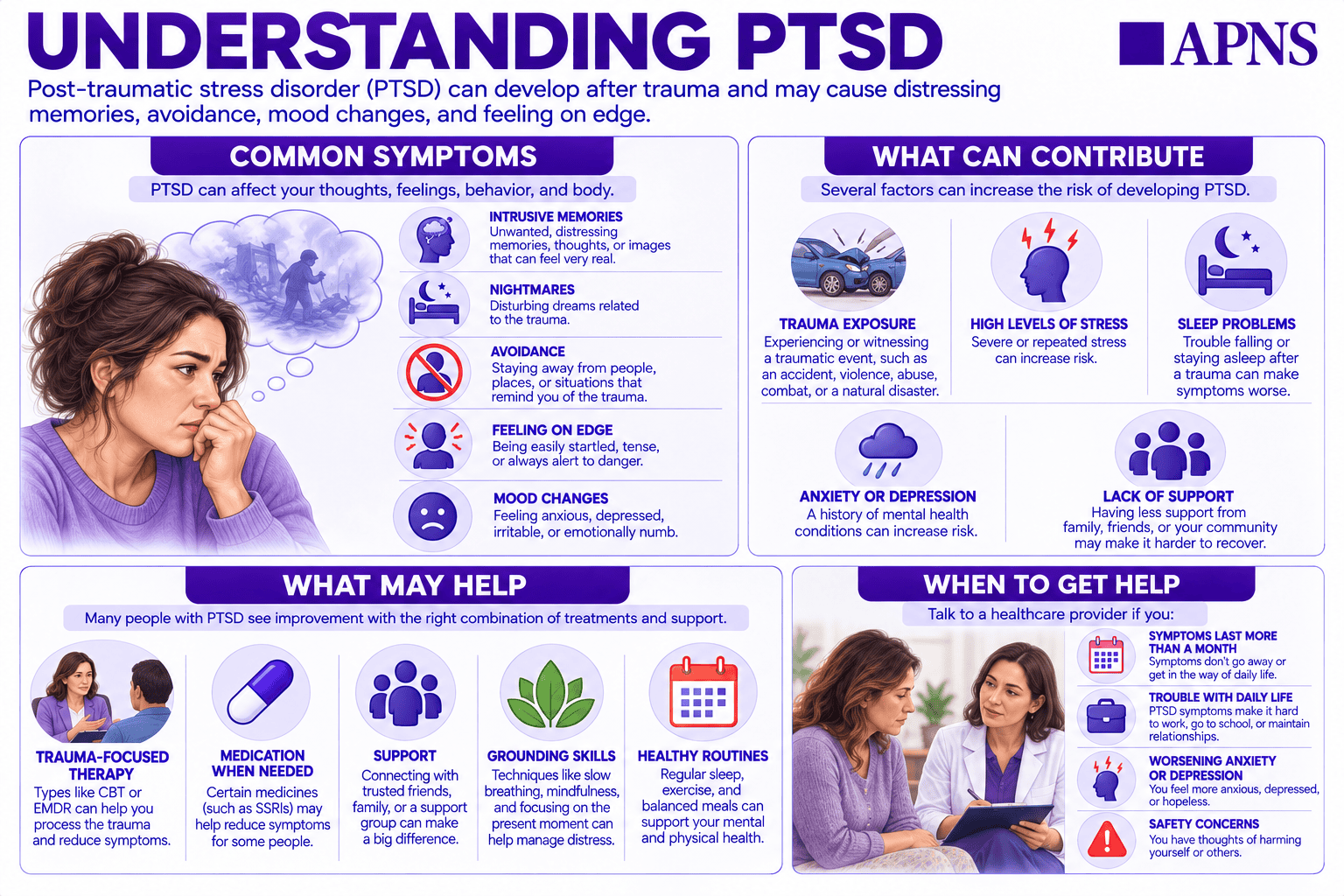
PTSD may develop after exposure to a traumatic event, but there is no single cause that explains why one person develops it and another does not.
Possible contributing factors include:
Traumatic events associated with PTSD may include:
Factors that may worsen PTSD symptoms include:
Avoidance may provide short-term relief but can keep PTSD symptoms going by preventing the person from learning that memories and safe reminders can be tolerated.
PTSD cannot always be prevented, but early support may reduce the severity and length of trauma-related symptoms.
Helpful measures include:
People should not be forced to repeatedly describe a traumatic event immediately afterward. Support should focus on safety, practical needs, connection, and access to appropriate care.
The following video content is provided to help you better understand this condition. These resources are intended for educational purposes and should not replace personalized medical advice from your healthcare provider.
Laboratory tests do not diagnose PTSD, but they may help identify physical conditions that contribute to sleep problems, fatigue, anxiety, mood changes, or poor concentration.
Possible tests include:
Testing should be based on the person’s symptoms, medical history, medications, and physical examination.
Most people with PTSD do not need brain imaging or another medical procedure.
Possible assessments include:
Other testing may be considered when symptoms suggest:
A CT scan, MRI, sleep study, or neurological evaluation is based on the person’s specific symptoms and is not routinely required for PTSD.
The main PTSD treatments are trauma-focused psychotherapy, medication, or a combination of both. Treatment should be provided by a clinician with experience treating trauma-related conditions whenever possible.
Treatment options may include:
Cognitive Processing Therapy
Cognitive processing therapy, commonly called CPT, helps a person examine distressing beliefs related to the trauma. Treatment may address guilt, shame, self-blame, trust, safety, power, control, and intimacy.
Prolonged Exposure Therapy
Prolonged exposure, commonly called PE, helps a person gradually approach safe memories, feelings, and situations that have been avoided. The process is planned and supported by a trained therapist rather than forced or rushed.
Eye Movement Desensitization and Reprocessing
Eye movement desensitization and reprocessing, commonly called EMDR, helps a person process traumatic memories while using guided eye movements or another form of alternating stimulation.
Written Exposure Therapy
Written exposure therapy uses structured writing about the traumatic experience over several sessions. It is an evidence-based trauma-focused treatment for PTSD.
Treatment should be individualized. A person should not be pressured to describe trauma in detail before adequate assessment, consent, preparation, and support.
Lifestyle changes can support recovery but should not replace professional PTSD treatment.
Helpful changes may include:
Recovery does not require forgetting what happened. Treatment helps the memory become less controlling and less disruptive.
Medication may reduce PTSD symptoms such as anxiety, depression, intrusive memories, and emotional distress. Medication decisions should consider symptoms, other health conditions, pregnancy status, side effects, and personal preferences.
Medications with strong evidence for PTSD include:
The National Center for PTSD identifies these three medications as recommended options for treating PTSD symptoms.
Other medications may sometimes be used based on individual symptoms and clinical judgment.
Possible Medication Side Effects
Side effects depend on the medication and may include:
Medication Safety
Benzodiazepines are generally not preferred as a routine long-term PTSD treatment. They may cause dependence, sedation, memory problems, falls, and interference with trauma-focused therapy. Alcohol, opioids, and other sedating substances can increase these risks.
Medication may be combined with trauma-focused psychotherapy when appropriate.
Most people with PTSD do not require a procedure.
Specialized treatments that may be considered in selected cases include:
Specialized or experimental procedures should be discussed with a qualified PTSD specialist, including potential benefits, limitations, costs, and risks.
PTSD can improve significantly with appropriate treatment. Some people recover fully, while others experience occasional symptoms that become manageable and no longer control their lives.
Recovery may include:
Symptoms may temporarily increase during stress, anniversaries, legal proceedings, health problems, major life changes, or exposure to reminders. This does not necessarily mean that treatment has failed.
Many people require time to find the treatment and clinician that fit their needs. Effective PTSD treatments are available, and improvement is possible even when symptoms have been present for years.
Home strategies should support—not replace—professional treatment.
Helpful measures include:
Simple Grounding Strategies
During a flashback or severe distress:
Grounding skills may reduce immediate distress but do not replace trauma-focused treatment.
No. Many people have temporary stress reactions and gradually recover. Only some people develop persistent symptoms that meet the criteria for PTSD.
Yes. Symptoms may begin soon after trauma or become noticeable later, especially during additional stress or life changes.
A flashback may feel as though the trauma is happening again in the present. An ordinary memory is generally recognized as something that happened in the past.
Yes. PTSD may cause rapid heartbeat, sweating, shaking, headaches, pain, stomach problems, fatigue, muscle tension, or sleep disturbance.
Yes. Irritability, anger, and aggressive reactions may occur when the nervous system remains prepared for danger.
Yes. Trauma, poor sleep, anxiety, depression, and feeling constantly alert may make concentration and memory more difficult.
Yes. Not everyone experiences every symptom. A person may have intrusive memories, avoidance, emotional numbness, or hypervigilance without frequent nightmares.
No. Combat can cause PTSD, but so can assault, abuse, serious accidents, disasters, medical emergencies, sudden traumatic loss, and many other events.
No. PTSD is a recognized mental health condition involving the brain and body’s response to trauma.
Different therapies use different methods. Treatment should involve informed consent and collaboration. A clinician can explain what each treatment requires before it begins.
Trauma-focused therapy may temporarily increase distress when difficult memories are addressed. A trained therapist should prepare the person, monitor symptoms, and adjust the treatment pace when needed.
Alcohol may briefly numb distress but often worsens sleep, mood, impulsivity, relationships, medication side effects, and long-term recovery.
Yes. Depression, anxiety, substance use, chronic pain, sleep disorders, and traumatic brain injury commonly require assessment alongside PTSD.
Yes. Symptoms may appear differently in younger people, including play that repeats the trauma, separation fears, irritability, regression, nightmares, or behavior changes.
Yes. Trauma-focused psychotherapy is a leading treatment. Some people use therapy alone, while others benefit from medication or combined treatment.

Consider asking:
PTSD may be treated by primary care or mental health professionals depending on the person’s needs.
Possible referrals include:
It is appropriate to ask a therapist about specific training and experience with trauma-focused PTSD treatment.
PTSD is treatable, and many people experience major improvement or complete recovery. Others may continue to have some symptoms but learn to manage them effectively.
Treatment can help a person:
PTSD symptoms can improve even when treatment begins months or years after the trauma. A person does not have to forget the event for treatment to work.
Call 911 or go to the nearest emergency department if a person:
In the United States, call or text 988 for suicidal thoughts, severe emotional distress, a mental health crisis, or a substance-use crisis. The 988 Suicide & Crisis Lifeline provides support by phone, text, or chat 24 hours a day.
Seek urgent same-day mental health or medical care for:
Do not leave a person alone when there is immediate danger. Remove or secure firearms, excess medication, and other lethal means when this can be done safely.
CALL 911
APNS does not provide emergency medical services. If you believe you are experiencing a medical emergency, including (but not limited to) chest pain, difficulty breathing, stroke symptoms, severe allergic reactions, anaphylaxis, uncontrolled bleeding, seizures, loss of consciousness, or any other potentially life-threatening condition, you are instructed to call 911 immediately or go immediately to the nearest emergency department.
Post-Traumatic Stress Disorder – National Institute of Mental Health
Provides information about PTSD symptoms, risk factors, diagnosis, therapy, medication, and finding help.
Traumatic Events and PTSD – National Institute of Mental Health
Provides an overview of traumatic stress, PTSD research, treatment, and educational materials.
PTSD: National Center for PTSD – U.S. Department of Veterans Affairs
Offers extensive patient and family education about PTSD, trauma, and evidence-based treatment.
PTSD Treatment Decision Aid – National Center for PTSD
Helps patients compare evidence-based PTSD therapies and medication options.
Post-Traumatic Stress Disorder – NIH MedlinePlus
Provides patient-friendly information about PTSD symptoms, diagnosis, and treatment.
988 Suicide & Crisis Lifeline – Substance Abuse and Mental Health Services Administration
Provides information about free crisis support available by calling or texting 988.
This guide is intended for educational purposes only and should not replace assessment, diagnosis, psychotherapy, medication management, or emergency treatment from a qualified healthcare professional. Trauma-related symptoms may also occur with acute stress disorder, depression, anxiety, grief, traumatic brain injury, sleep disorders, substance use, bipolar disorder, psychosis, medication effects, or another condition requiring different treatment. Do not begin, stop, or change psychiatric medication without speaking with the prescriber. Trauma-focused exercises should be individualized and should not involve unsafe, illegal, nonconsensual, or uncontrolled exposure. Seek prompt professional help for worsening symptoms, severe dissociation, substance misuse, inability to complete basic self-care, aggression, hallucinations, or thoughts of self-harm. In the United States, call or text 988 for a mental health or suicidal crisis. Call 911 or go to the nearest emergency department for an active suicide attempt, immediate danger, serious overdose, severe self-injury, or inability to remain safe.
At APNS, our providers take the time to understand your condition and your goals. We offer comprehensive telehealth visits at a fixed rate — no membership fees, no insurance required, and no unexpected charges. Whether you’re newly diagnosed or looking for a provider who actually listens, we’re here to help.