
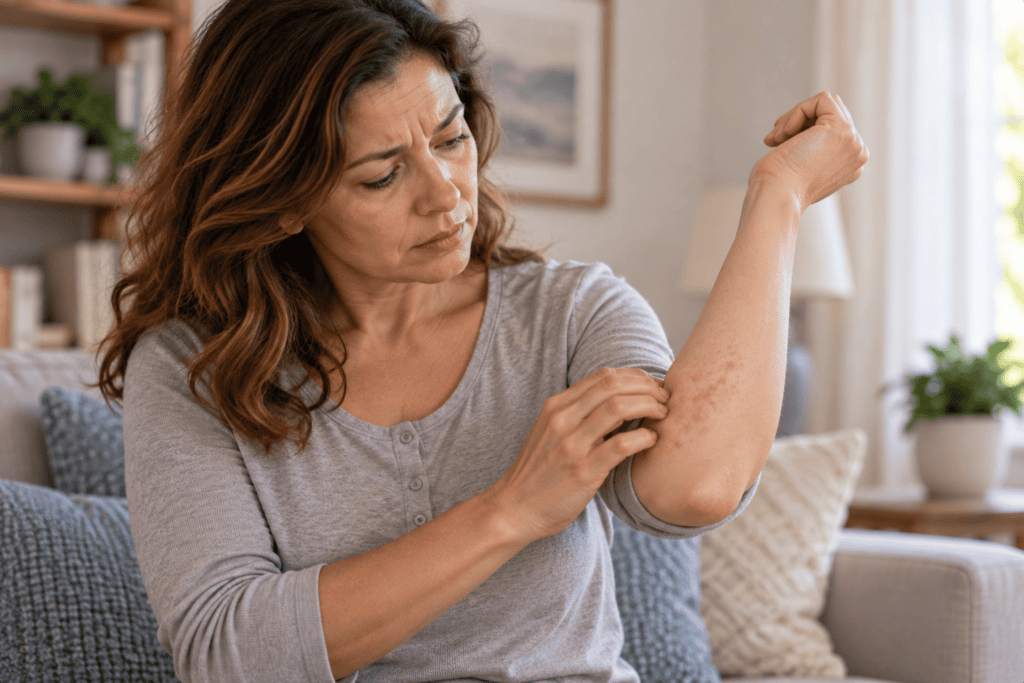
A rash is a change in the color, texture, appearance, or feeling of the skin. The affected area may become itchy, swollen, painful, dry, scaly, bumpy, blistered, cracked, or irritated. A rash may affect one small area or spread across large portions of the body.
A rash is a symptom rather than a single disease. It can develop from skin irritation, allergies, infections, medications, insect bites, autoimmune conditions, heat, or chronic skin disorders such as eczema or psoriasis. Some rashes are mild and improve with home care, while others require medical treatment.
A rash may also appear differently depending on a person’s natural skin tone. In lighter skin, inflammation may look pink or red. In darker skin, it may appear purple, gray, brown, or darker than the surrounding skin.
Rashes – NIH MedlinePlus
https://medlineplus.gov/rashes.html
Provides easy-to-understand information about rashes, possible causes, symptoms, diagnosis, and treatment.
Rashes – American Academy of Dermatology (AAD)
https://www.aad.org/public/everyday-care/itchy-skin/rash
Provides dermatologist-reviewed information about common rashes, self-care, and when medical attention is needed.
Rashes are extremely common and can affect people of all ages. Most people experience a rash at some point because the skin regularly comes into contact with soaps, plants, metals, cosmetics, medications, allergens, germs, and other substances that may cause irritation or inflammation.
Many rashes are temporary and improve after the trigger is removed or the underlying illness resolves. However, recurrent or long-lasting rashes may occur with chronic conditions such as eczema, psoriasis, allergies, or autoimmune disease.
Skin Diseases – National Institute of Arthritis and Musculoskeletal and Skin Diseases (NIAMS)
https://www.niams.nih.gov/health-topics/skin-diseases
Provides information about common inflammatory, genetic, autoimmune, and blistering skin conditions.
Symptoms depend on the cause and may affect one area or several areas of the body.
Common symptoms may include:
Other symptoms may include:
A rash involving blisters, open sores, most of the body, the eyes, mouth, or genital area should receive medical evaluation.
Your healthcare provider will examine the rash and ask about your symptoms, exposures, medications, allergies, recent illnesses, travel, occupation, and skin-care products.
They may ask:
The appearance, location, pattern, and associated symptoms often help identify the cause. Skin scraping, culture, allergy testing, or biopsy may be used when the diagnosis is uncertain.
Rash Evaluation – NIH MedlinePlus
https://medlineplus.gov/lab-tests/rash-evaluation/
Explains how healthcare providers evaluate a rash and determine whether testing is needed.
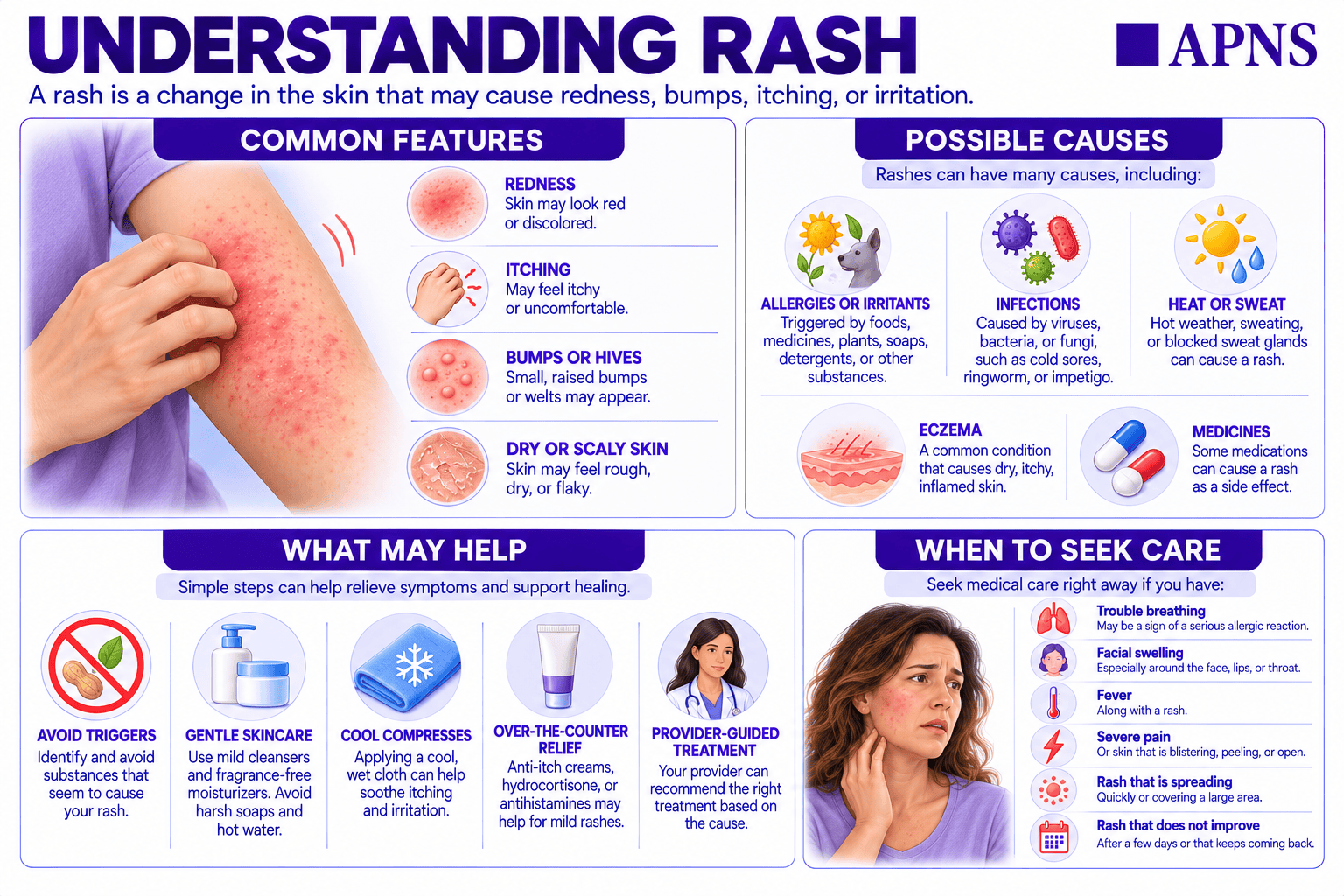
Rashes have many possible causes.
Common causes include:
Contact dermatitis occurs when something touching the skin causes direct irritation or an allergic reaction. Possible triggers include fragrance, metals, plants, adhesives, preservatives, cosmetics, and cleaning products.
Contact Dermatitis – American Academy of Dermatology
https://www.aad.org/public/diseases/eczema/types/contact-dermatitis
Explains how irritants and allergens cause rashes and how contact dermatitis is treated.
Skin Infections – NIH MedlinePlus
https://medlineplus.gov/skininfections.html
Provides information about bacterial, viral, fungal, and parasitic skin infections.
Several factors may worsen irritation, increase inflammation, or delay healing.
Common factors include:
Scratching may break the skin and allow bacteria to enter. Warning signs of infection include increasing pain, warmth, swelling, pus, yellow or golden crusts, unpleasant odor, fever, or rapidly spreading discoloration.
Signs Your Rash Needs Medical Attention – American Academy of Dermatology
https://www.aad.org/news/signs-your-rash-needs-medical-attention
Explains which rash symptoms may indicate infection or a more serious condition.
Not every rash can be prevented, but healthy habits may reduce the risk.
Helpful prevention tips include:
Rashes – American Academy of Dermatology
https://www.aad.org/public/everyday-care/itchy-skin/rash
Provides guidance for preventing and treating common skin rashes.
The following video content is provided to help you better understand this condition. These resources are intended for educational purposes and should not replace personalized medical advice from your healthcare provider.
Many rashes do not require laboratory testing.
When needed, laboratory tests may include:
Laboratory Tests – NIH MedlinePlus
https://medlineplus.gov/lab-tests/
Provides patient information about common laboratory tests.
Additional testing depends on the appearance and suspected cause of the rash.
Possible diagnostic tests include:
A skin biopsy may help distinguish between eczema, psoriasis, infection, autoimmune disease, medication reactions, or other conditions.
Skin Biopsy – NIH MedlinePlus
https://medlineplus.gov/lab-tests/skin-biopsy/
Explains why a skin biopsy may be performed and what to expect.
Treatment depends on the underlying cause.
Treatment options may include:
Antibiotics do not treat viral, allergic, or inflammatory rashes. Antifungal creams do not treat eczema or bacterial infections. Because different rashes may look similar, medical evaluation is important when the cause is unclear.
Rashes – NIH MedlinePlus
https://medlineplus.gov/rashes.html
Provides information about common rash treatments and when to contact a healthcare provider.
Healthy skin-care habits may reduce irritation and support healing.
Helpful lifestyle changes include:
Introduce new skin-care products one at a time so you can identify reactions.
Skin Care Basics – American Academy of Dermatology
https://www.aad.org/public/everyday-care/skin-care-basics
Provides practical recommendations for gentle cleansing, moisturizing, and protecting irritated skin.
Medication depends on the cause, location, and severity of the rash.
Common medications may include:
Do not use prescription creams belonging to someone else. Strong topical steroids can thin the skin, worsen certain infections, and cause other complications if used incorrectly.
Hives: Diagnosis and Treatment – American Academy of Dermatology
https://www.aad.org/public/diseases/a-z/hives-treatment
Provides information about antihistamines and treatment for allergic hives.
Most rashes do not require invasive procedures.
Possible procedures may include:
Rash Evaluation – NIH MedlinePlus
https://medlineplus.gov/lab-tests/rash-evaluation/
Provides information about testing and procedures that may be used to identify a rash.
The long-term outlook depends on the cause.
Temporary rashes caused by minor irritation, heat, an insect bite, or a short viral illness often resolve completely. Allergic rashes usually improve after the trigger is removed and inflammation is treated.
Chronic conditions such as eczema, psoriasis, rosacea, or autoimmune disease may improve and return over time. Repeated scratching or severe inflammation can lead to infection, scarring, thickened skin, or changes in skin color.
A rash caused by a medication may worsen with additional doses. Contact your healthcare provider promptly if a new rash develops after starting a prescription or over-the-counter medication.
Home care may be appropriate for mild rashes without emergency warning signs.
Helpful tips include:
For poison ivy, poison oak, or poison sumac, cool compresses, calamine lotion, or hydrocortisone may help relieve itching in mild cases.
Poison Ivy, Oak, and Sumac: Treatment – American Academy of Dermatology
https://www.aad.org/public/everyday-care/itchy-skin/poison-ivy/treat-rash
Provides practical treatment recommendations for itchy plant-related rashes.
No. Eczema, psoriasis, hives, allergies, and contact dermatitis are not contagious. Some bacterial, fungal, viral, or parasitic rashes can spread to others.
No. Hydrocortisone may help selected inflammatory or allergic rashes but can worsen or hide some infections. Ask a healthcare provider when the cause is uncertain.
Yes. Prescription medications, over-the-counter medicines, supplements, and herbal products can cause rashes. A medication reaction may begin shortly after treatment starts or appear days to weeks later.
Stress may trigger or worsen hives, eczema, psoriasis, and other inflammatory skin conditions.
Seek evaluation if the rash is painful, rapidly spreading, accompanied by fever, forms blisters or open sores, involves the eyes or mouth, appears after starting medication, or does not improve.
Yes. Food allergies may cause hives, swelling, itching, and sometimes anaphylaxis. Food intolerance does not usually cause an immediate allergic rash.
Yes. Inflammation may temporarily leave darker or lighter areas after the rash heals, especially in darker skin tones.

Consider asking your healthcare provider:
Many rashes can be evaluated by a primary care provider. Persistent, severe, or unusual rashes may require specialty care.
You may be referred to:
Skin Conditions – NIH MedlinePlus
https://medlineplus.gov/skinconditions.html
Provides information about skin diseases and the healthcare professionals who treat them.
Whether a rash is curable depends on its cause.
Many rashes are temporary and completely resolve after the trigger or infection is treated. Examples include mild contact dermatitis, heat rash, certain fungal infections, and some viral rashes.
Chronic inflammatory conditions such as eczema, psoriasis, and some autoimmune diseases may not have a permanent cure but can often be successfully controlled with skin care, medications, and trigger avoidance.
Call 911 or seek emergency medical care immediately if you experience:
These may be signs of anaphylaxis, a life-threatening allergic reaction.
Seek urgent medical evaluation if you notice:
These warning signs may indicate a serious infection, severe medication reaction, or another condition requiring prompt treatment.
Rash 101: When to Seek Medical Treatment – American Academy of Dermatology
https://www.aad.org/public/everyday-care/itchy-skin/rash/rash-101
Explains which rash symptoms require medical attention.
CALL 911
APNS does not provide emergency medical services. If you believe you are experiencing a medical emergency, including (but not limited to) chest pain, difficulty breathing, stroke symptoms, severe allergic reactions, anaphylaxis, uncontrolled bleeding, seizures, loss of consciousness, or any other potentially life-threatening condition, you are instructed to call 911 immediately or go immediately to the nearest emergency department.
Rashes – NIH MedlinePlus
https://medlineplus.gov/rashes.html
Easy-to-understand information about rash symptoms, causes, diagnosis, and treatment.
Rash Evaluation – NIH MedlinePlus
https://medlineplus.gov/lab-tests/rash-evaluation/
Explains how healthcare providers examine and test an unexplained rash.
Rashes – American Academy of Dermatology
https://www.aad.org/public/everyday-care/itchy-skin/rash
Dermatologist-reviewed information about common rashes and self-care.
Rash 101: When to Seek Medical Treatment – American Academy of Dermatology
https://www.aad.org/public/everyday-care/itchy-skin/rash/rash-101
Provides warning signs that indicate a rash needs medical attention.
Skin Diseases – National Institute of Arthritis and Musculoskeletal and Skin Diseases
https://www.niams.nih.gov/health-topics/skin-diseases
Provides information about inflammatory, genetic, autoimmune, and blistering skin diseases.
This guide is intended for educational purposes only and should not replace medical advice, diagnosis, or treatment from your healthcare provider or dermatologist. Many rashes have similar appearances but require different treatments. Using the wrong medication may worsen an infection, hide important symptoms, or delay proper diagnosis. Contact a healthcare provider if the rash worsens, spreads, becomes painful, develops drainage, appears after starting medication, or does not improve as expected. Call 911 immediately for difficulty breathing, throat tightness, facial or tongue swelling, fainting, widespread hives with breathing symptoms, loss of consciousness, or another medical emergency.
At APNS, our providers take the time to understand your condition and your goals. We offer comprehensive telehealth visits at a fixed rate — no membership fees, no insurance required, and no unexpected charges. Whether you’re newly diagnosed or looking for a provider who actually listens, we’re here to help.