
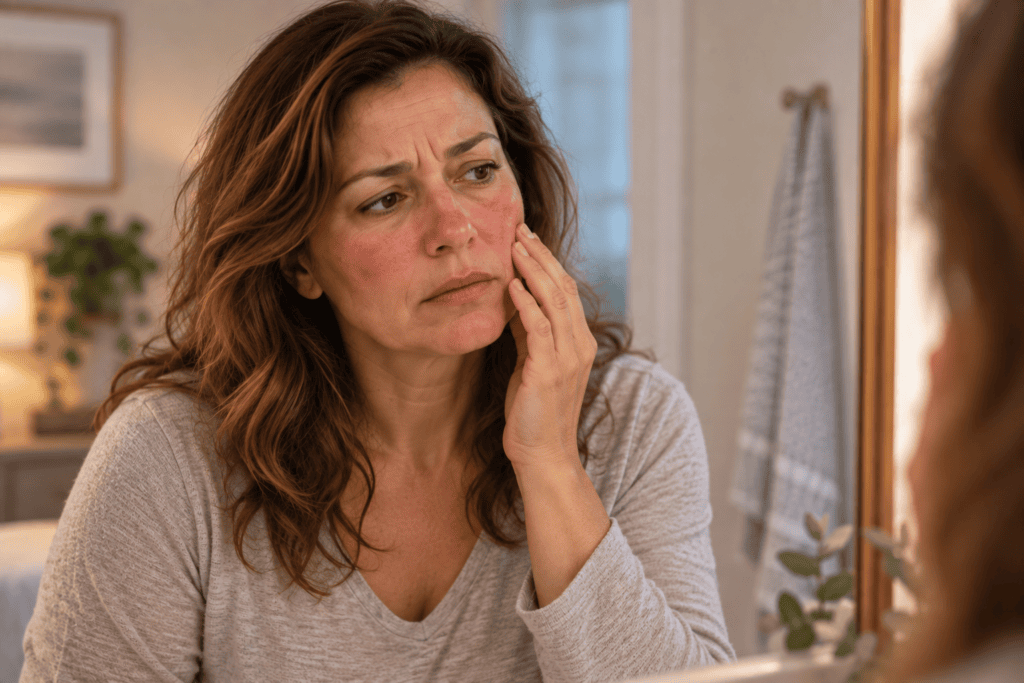
Rosacea is a long-term inflammatory skin condition that most often affects the center of the face, including the cheeks, nose, chin, and forehead. It may cause flushing, persistent redness or discoloration, visible blood vessels, sensitive skin, and acne-like bumps. Rosacea can also affect the eyes and eyelids.
Symptoms often come and go. A person may experience periods when symptoms worsen, called flare-ups, followed by periods when the skin improves. Rosacea can affect every skin tone, although redness or flushing may be more difficult to see on brown or Black skin. In darker skin tones, warmth, swelling, burning, dryness, or darker discoloration may be more noticeable.
Rosacea is not contagious and is not caused by poor hygiene. Although there is currently no cure, treatment, gentle skin care, and avoiding personal triggers can reduce symptoms and help prevent the condition from worsening.
Rosacea – NIH MedlinePlus
https://medlineplus.gov/rosacea.html
Provides easy-to-understand information about rosacea, including symptoms, treatment, and eye involvement.
Rosacea – National Institute of Arthritis and Musculoskeletal and Skin Diseases (NIAMS)
https://www.niams.nih.gov/health-topics/rosacea
Provides information about rosacea symptoms, possible causes, diagnosis, and treatment.
Rosacea is a common skin condition that most often begins during adulthood. It may affect anyone, but it is diagnosed more frequently in women, adults over age 30, people with a family history of rosacea, and people whose skin flushes easily. Severe thickening of the skin around the nose is less common and occurs more frequently in men.
Rosacea may be underdiagnosed in people with darker skin because facial redness and visible blood vessels can be less noticeable. Other signs, such as warmth, swelling, burning, acne-like bumps, or darker patches of skin, remain important.
Rosacea Resource Center – American Academy of Dermatology (AAD)
https://www.aad.org/public/diseases/rosacea
Provides dermatologist-reviewed information about rosacea symptoms, treatment, triggers, and skin care.
Rosacea symptoms differ from person to person and may change over time.
Common symptoms may include:
Rosacea may also affect the eyes and eyelids. This is called ocular rosacea.
Eye-related symptoms may include:
Some people develop eye symptoms before noticeable skin symptoms. Eye pain, significant light sensitivity, or vision changes require prompt evaluation by an eye-care professional.
Rosacea is usually diagnosed by examining the skin and reviewing your symptoms and medical history. There is no single blood test or laboratory test that confirms rosacea.
Your healthcare provider may ask about:
Rosacea can resemble acne, eczema, seborrheic dermatitis, lupus, allergic reactions, perioral dermatitis, or other skin conditions. Additional testing may be recommended when the diagnosis is unclear.
Rosacea: Diagnosis and Treatment – American Academy of Dermatology
https://www.aad.org/public/diseases/rosacea/treatment/diagnosis-treat
Explains how dermatologists diagnose rosacea and develop an individualized treatment plan.
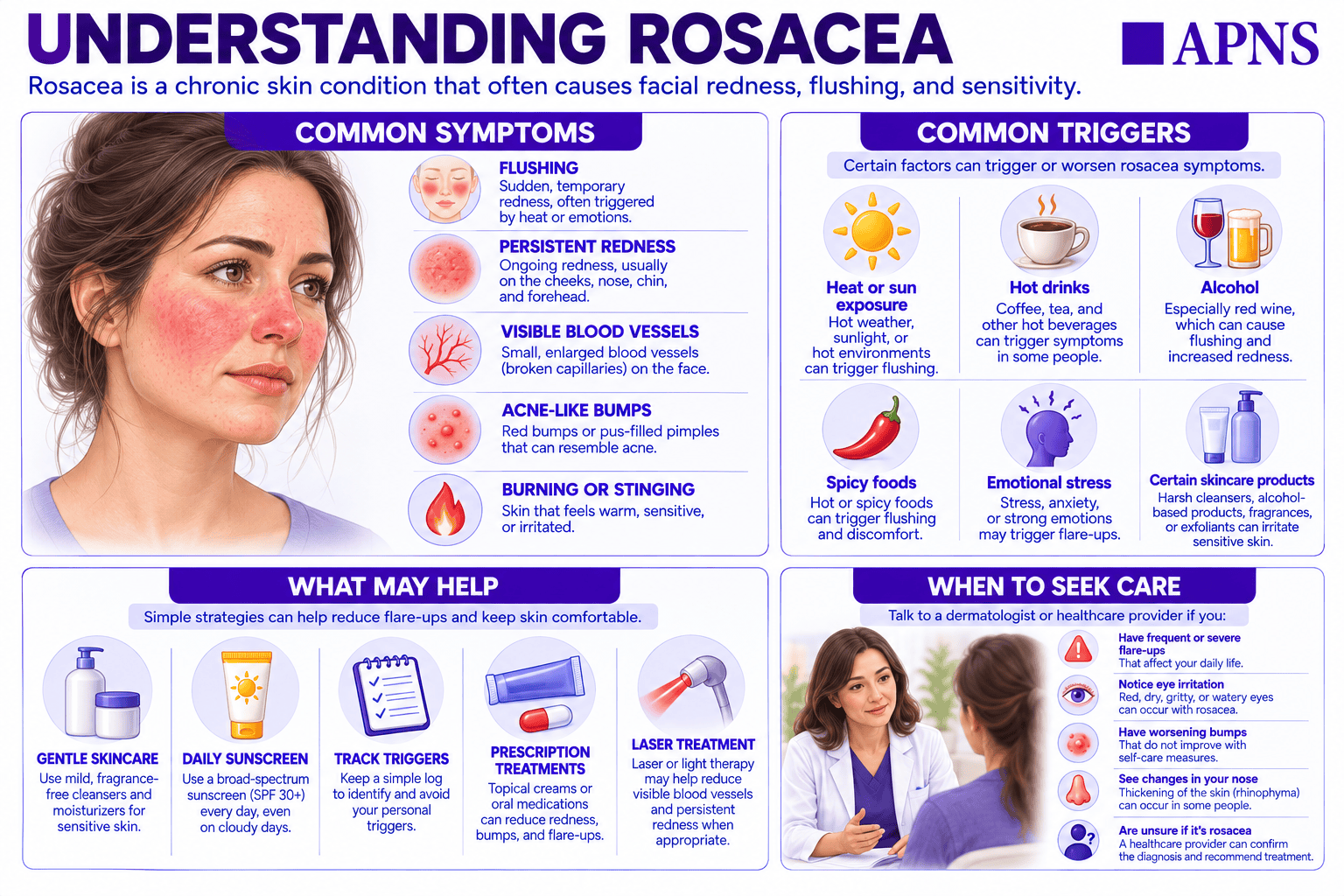
The exact cause of rosacea is not fully understood. Researchers believe it may involve inflammation, an overactive immune response, genetics, differences in facial blood vessels, microorganisms on the skin, and environmental factors.
Possible contributing factors include:
Rosacea is not caused by alcohol use. However, alcohol can trigger flushing or worsen symptoms in some people. Thickening of the nose, called rhinophyma, is also not proof of heavy alcohol use.
Rosacea: Causes – American Academy of Dermatology
https://www.aad.org/public/diseases/rosacea/what-is/causes
Explains what researchers know about inflammation, genetics, microorganisms, and other possible causes of rosacea.
Rosacea flare-ups may be triggered by anything that causes facial blood vessels to widen, overheats the skin, or irritates the skin barrier. Triggers vary between individuals.
Common triggers may include:
Keeping a symptom diary may help identify your personal triggers. Avoiding every possible trigger is usually unnecessary; focus on the ones that repeatedly affect your skin.
Rosacea Triggers – American Academy of Dermatology
https://www.aad.org/public/diseases/rosacea/triggers
Provides guidance for identifying personal triggers and reducing flare-ups.
Rosacea cannot always be prevented, but flare-ups may be reduced by protecting the skin and avoiding personal triggers.
Helpful prevention tips include:
Rosacea Skin Care and Triggers – American Academy of Dermatology
https://www.aad.org/public/diseases/rosacea/triggers
Provides recommendations for preventing flare-ups and protecting sensitive skin.
The following video content is provided to help you better understand this condition. These resources are intended for educational purposes and should not replace personalized medical advice from your healthcare provider.
Most people with rosacea do not require laboratory testing.
Laboratory tests may be recommended when another medical condition is suspected.
Possible laboratory tests may include:
Laboratory Tests – NIH MedlinePlus
https://medlineplus.gov/lab-tests/
Provides patient information about common laboratory tests that may be used to rule out other conditions.
Most people do not require imaging or extensive diagnostic testing.
Possible diagnostic evaluations may include:
Skin Biopsy – NIH MedlinePlus
https://medlineplus.gov/lab-tests/skin-biopsy/
Explains why a skin biopsy may be performed and what the results may show.
Treatment depends on which rosacea symptoms are present. One treatment may improve acne-like bumps but have little effect on visible blood vessels, so a combination of approaches may be needed.
Treatment options may include:
Treatment may take several weeks or months to produce noticeable improvement. Following the treatment plan consistently can reduce symptoms and help prevent worsening.
Rosacea Treatment – American Academy of Dermatology
https://www.aad.org/public/diseases/rosacea/treatment
Provides dermatologist-reviewed information about medications, laser therapy, trigger management, and skin care.
Gentle skin care and trigger management are important parts of controlling rosacea.
Helpful lifestyle changes include:
Cream-based, fragrance-free moisturizers are often better tolerated than lotions or gels. Mineral sunscreens containing zinc oxide or titanium dioxide may be less irritating for sensitive skin.
Rosacea Skin-Care Tips – American Academy of Dermatology
https://www.aad.org/public/diseases/rosacea/triggers/tips
Provides practical guidance for cleansing, moisturizing, choosing products, and protecting sensitive skin.
Medication is selected according to the symptoms being treated.
Common medications may include:
Do not apply topical corticosteroids to facial redness unless specifically directed by a healthcare professional. Steroids may temporarily reduce redness but can worsen rosacea over time or cause a rosacea-like rash.
Rosacea: Diagnosis and Treatment – American Academy of Dermatology
https://www.aad.org/public/diseases/rosacea/treatment/diagnosis-treat
Explains how medications are selected for redness, visible blood vessels, acne-like bumps, thickened skin, and eye symptoms.
Some rosacea symptoms respond better to procedures than medication. Procedures are usually performed by a dermatologist or another trained healthcare professional.
Common procedures may include:
Laser and light therapy can reduce visible blood vessels and persistent redness. Several treatment sessions may be needed, and results vary.
Lasers and Lights for Rosacea – American Academy of Dermatology
https://www.aad.org/public/diseases/rosacea/treatment/lasers-lights
Explains how laser and light procedures may reduce visible blood vessels, redness, and thickened skin.
Rosacea is a lifelong condition that commonly goes through periods of flare-ups and improvement. It does not usually disappear permanently, but symptoms can often be controlled with consistent treatment, gentle skin care, and trigger management.
Without treatment, persistent redness, visible blood vessels, acne-like bumps, skin thickening, or eye symptoms may gradually worsen in some people. Early treatment may reduce discomfort and help prevent progression.
Your treatment needs may change over time. Regular follow-up with a dermatologist or eye-care professional can help adjust treatment when new symptoms develop.
Daily care can reduce irritation and support medical treatment.
Helpful tips include:
Rosacea-Friendly Skin Care – American Academy of Dermatology
https://www.aad.org/public/diseases/rosacea/triggers/tips
Provides practical skin-care recommendations for reducing burning, stinging, dryness, and flare-ups.
No. Rosacea can cause acne-like bumps, but it is a different condition. Rosacea typically causes flushing, persistent redness or discoloration, visible blood vessels, and sensitive skin. Blackheads are generally more typical of acne.
No. Rosacea cannot spread from one person to another.
No. Alcohol does not cause rosacea, although it may trigger flushing or flare-ups in some people. Rhinophyma is also not evidence of alcohol misuse.
Yes. Ocular rosacea may cause dry, gritty, watery, bloodshot, or light-sensitive eyes, along with eyelid swelling or recurring styes.
Yes. Rosacea affects every skin tone. Redness may be harder to see on darker skin, but warmth, burning, swelling, bumps, or darker discoloration may be noticeable.
Harsh scrubs and exfoliating tools may worsen irritation. Ask your dermatologist before using exfoliating acids, retinoids, scrubs, or facial brushes.
Some treatments begin helping within several weeks, while others may take several months. Continue treatment as directed unless your healthcare provider recommends a change.

Consider asking your healthcare provider:
Rosacea is often managed by a primary care provider or dermatologist. Eye symptoms or severe skin changes may require additional specialty care.
You may be referred to:
Rosacea Resource Center – American Academy of Dermatology
https://www.aad.org/public/diseases/rosacea
Provides information about dermatology care, treatments, skin care, and living with rosacea.
There is currently no permanent cure for rosacea. However, treatment can reduce redness, bumps, discomfort, visible blood vessels, eye symptoms, and flare-up frequency.
Many people successfully control rosacea with a combination of:
Stopping treatment may allow symptoms to return. Long-term management is often necessary.
Rosacea itself rarely causes a life-threatening emergency.
Call 911 or seek emergency medical care immediately if you experience:
Seek urgent medical evaluation if you notice:
Eye pain, light sensitivity, and vision changes may indicate inflammation or damage involving the cornea rather than uncomplicated skin rosacea.
Eye Conditions and Diseases – National Eye Institute
https://www.nei.nih.gov/eye-health-information/eye-conditions-and-diseases
Provides information about eye symptoms and conditions that may require prompt evaluation.
CALL 911
APNS does not provide emergency medical services. If you believe you are experiencing a medical emergency, including (but not limited to) chest pain, difficulty breathing, stroke symptoms, severe allergic reactions, anaphylaxis, uncontrolled bleeding, seizures, loss of consciousness, or any other potentially life-threatening condition, you are instructed to call 911 immediately or go immediately to the nearest emergency department.
Rosacea – NIH MedlinePlus
https://medlineplus.gov/rosacea.html
Easy-to-understand information about rosacea symptoms, treatment, and eye involvement.
Rosacea – National Institute of Arthritis and Musculoskeletal and Skin Diseases
https://www.niams.nih.gov/health-topics/rosacea
Reliable information about rosacea symptoms, causes, diagnosis, treatment, and current research.
Rosacea Resource Center – American Academy of Dermatology
https://www.aad.org/public/diseases/rosacea
Dermatologist-reviewed guidance about rosacea symptoms, triggers, medications, procedures, and skin care.
Rosacea: Diagnosis and Treatment – American Academy of Dermatology
https://www.aad.org/public/diseases/rosacea/treatment/diagnosis-treat
Provides detailed information about individualized rosacea treatment.
National Eye Institute
https://www.nei.nih.gov/eye-health-information
Provides patient information about eye symptoms, examinations, and eye-care conditions.
This guide is intended for educational purposes only and should not replace medical advice, diagnosis, or treatment from your healthcare provider, dermatologist, or eye-care professional. Rosacea may resemble acne, dermatitis, lupus, allergic reactions, infections, and other conditions that require different treatment. Follow your healthcare provider’s recommendations and stop using a product if it causes significant burning, swelling, blistering, or worsening symptoms. Seek prompt eye care for eye pain, significant light sensitivity, severe eye redness, or vision changes. Call 911 or seek immediate medical attention for difficulty breathing, swelling of the lips or throat, sudden vision loss, loss of consciousness, or another medical emergency.
At APNS, our providers take the time to understand your condition and your goals. We offer comprehensive telehealth visits at a fixed rate — no membership fees, no insurance required, and no unexpected charges. Whether you’re newly diagnosed or looking for a provider who actually listens, we’re here to help.