

Sinusitis, also called a sinus infection or rhinosinusitis, is inflammation or swelling of the tissue lining the sinuses. The sinuses are air-filled spaces located behind your forehead, cheeks, eyes, and nose. When these spaces become inflamed or blocked, mucus cannot drain properly, allowing germs to grow and causing symptoms.
Most cases of sinusitis develop after a viral upper respiratory infection (such as the common cold), but some cases are caused by bacteria or, less commonly, fungi. Sinusitis may be acute (lasting less than 4 weeks), subacute (4–12 weeks), chronic (lasting more than 12 weeks), or recurrent (multiple episodes each year).
Most people recover with home care, but some individuals require prescription medications or additional treatment.
Sinusitis – NIH MedlinePlus
https://medlineplus.gov/sinusitis.html
Provides easy-to-understand information about sinus infections, symptoms, diagnosis, treatment, and prevention.
Sinus Infection (Sinusitis) – Centers for Disease Control and Prevention (CDC)
https://www.cdc.gov/sinus-infection/
Provides information about causes, treatment, and when antibiotics are appropriate.
Sinusitis is one of the most common reasons people visit healthcare providers. Millions of adults are diagnosed with sinus infections each year in the United States.
Most sinus infections are caused by viruses, meaning antibiotics are usually not needed. Bacterial sinus infections are less common but may require antibiotic treatment when symptoms are severe, prolonged, or worsening.
Sinus Infection – CDC
https://www.cdc.gov/sinus-infection/
Provides information about how common sinus infections are and appropriate treatment recommendations.
Symptoms vary depending on the cause and severity of the infection.
Common symptoms may include:
Your healthcare provider will review your symptoms, medical history, and perform a physical examination, including an examination of your nose, throat, and ears.
Most sinus infections are diagnosed based on symptoms and do not require additional testing. Imaging studies or specialist evaluation may be recommended for chronic, recurrent, or severe sinusitis.
Sinusitis – NIH MedlinePlus
https://medlineplus.gov/sinusitis.html
Explains how sinus infections are diagnosed and when further evaluation may be needed.
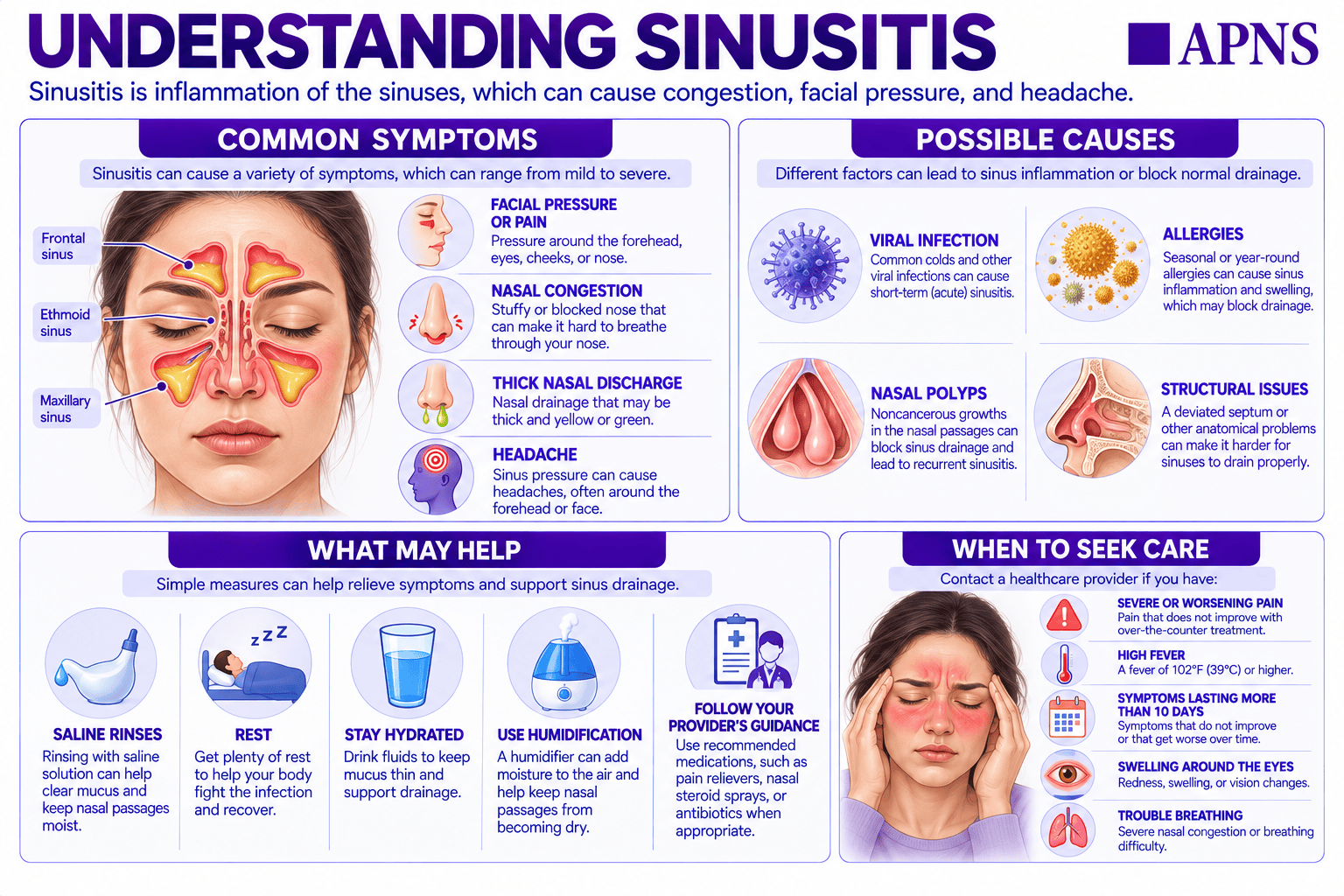
Sinusitis develops when swelling blocks normal sinus drainage.
Common causes include:
Sinusitis – NIH MedlinePlus
https://medlineplus.gov/sinusitis.html
Learn about the common causes and risk factors for sinus infections.
Several factors can worsen sinus symptoms or increase the risk of developing sinus infections.
Common factors include:
Sinus Infection – CDC
https://www.cdc.gov/sinus-infection/
Provides information about risk factors and preventing sinus infections.
Many sinus infections can be prevented by reducing exposure to viruses and managing conditions that increase your risk.
Helpful prevention tips include:
Sinus Infection – CDC
https://www.cdc.gov/sinus-infection/
Provides practical recommendations for preventing sinus infections and reducing your risk.
The following video content is provided to help you better understand this condition. These resources are intended for educational purposes and should not replace personalized medical advice from your healthcare provider.
Most sinus infections do not require laboratory testing.
Laboratory tests may occasionally include:
Laboratory Tests – NIH MedlinePlus
https://medlineplus.gov/lab-tests/
Provides information about laboratory testing when evaluating sinus infections.
Most people with acute sinusitis do not need imaging.
Additional testing may be recommended for chronic, severe, or recurrent sinus infections.
Common diagnostic tests include:
American Academy of Otolaryngology–Head and Neck Surgery
https://www.enthealth.org/
Provides patient education about sinusitis, nasal endoscopy, and chronic sinus disease.
Treatment depends on the cause of the sinus infection and how long symptoms have been present.
Treatment options may include:
Sinus Infection – CDC
https://www.cdc.gov/sinus-infection/
Provides information about treatment recommendations and appropriate antibiotic use.
Healthy habits can help improve symptoms and reduce the risk of future sinus infections.
Helpful lifestyle changes include:
ENT Health – Sinusitis
https://www.enthealth.org/
Provides practical recommendations for managing sinus infections and improving sinus health.
Medications
Treatment depends on the cause of your sinusitis.
Common medications may include:
Sinus Infection – CDC
https://www.cdc.gov/sinus-infection/
Provides information about medications, symptom relief, and appropriate antibiotic use.
Most people with sinusitis do not require surgery or invasive procedures. Treatment usually focuses on relieving symptoms, reducing inflammation, and treating bacterial infections when appropriate. However, additional procedures may be recommended if sinus infections are chronic, recurrent, or caused by structural problems.
Common procedures may include:
ENT Health – Sinusitis
https://www.enthealth.org/
Learn about sinus procedures, surgery, and treatment options for chronic sinusitis.
Most cases of acute sinusitis improve within 7–10 days, although symptoms may last up to several weeks. Viral sinus infections usually resolve without antibiotics.
People with chronic sinusitis or recurrent sinus infections may require ongoing treatment, allergy management, or referral to an ear, nose, and throat (ENT) specialist.
With appropriate treatment, most people recover completely and return to normal activities.
Home care is an important part of recovering from sinusitis.
Helpful tips include:
Sinusitis – NIH MedlinePlus
https://medlineplus.gov/sinusitis.html
Provides practical recommendations for managing sinus infections at home and promoting recovery.
No. Most sinus infections are caused by viruses and do not require antibiotics. Antibiotics are only recommended when a bacterial infection is suspected or confirmed.
Acute viral sinusitis usually improves within 7–10 days, while bacterial infections may last longer. Chronic sinusitis lasts
.
Yes. Allergies can cause swelling inside the nose, making it more difficult for mucus to drain and increasing the risk of sinus infections.
Yes. Saline rinses can help remove mucus, improve sinus drainage, and reduce nasal congestion.
You may benefit from an ENT evaluation if you have frequent sinus infections, symptoms lasting longer than 12 weeks, nasal polyps, or persistent symptoms despite treatment.

Consider asking your healthcare provider:
Most sinus infections are treated by a primary care provider. Depending on your symptoms or medical history, your provider may recommend seeing a specialist.
You may be referred to:
American Academy of Otolaryngology–Head and Neck Surgery (ENT Health)
https://www.enthealth.org/
Provides patient education about sinus disease, specialist care, and treatment options.
Most cases of acute sinusitis are temporary and resolve completely with supportive care or, when appropriate, antibiotics.
People with chronic sinusitis may require ongoing treatment to control inflammation, allergies, or structural problems affecting sinus drainage. Even chronic sinusitis can often be successfully managed with medications, lifestyle changes, or surgery when necessary.
Although uncommon, sinus infections can occasionally cause serious complications.
Call 911 or seek emergency medical care immediately if you experience:
Seek prompt medical evaluation if you notice:
Sinusitis – NIH MedlinePlus
https://medlineplus.gov/sinusitis.html
Learn about sinus infection complications and when emergency medical care is needed.
CALL 911
APNS does not provide emergency medical services. If you believe you are experiencing a medical emergency, including (but not limited to) chest pain, difficulty breathing, stroke symptoms, severe allergic reactions, anaphylaxis, uncontrolled bleeding, seizures, loss of consciousness, or any other potentially life-threatening condition, you are instructed to call 911 immediately or go immediately to the nearest emergency department.
Sinusitis – NIH MedlinePlus
https://medlineplus.gov/sinusitis.html
Easy-to-understand information about sinus infections, symptoms, diagnosis, treatment, and prevention.
Sinus Infection – Centers for Disease Control and Prevention (CDC)
https://www.cdc.gov/sinus-infection/
Comprehensive information about sinus infections, appropriate antibiotic use, and symptom management.
ENT Health – American Academy of Otolaryngology–Head and Neck Surgery
https://www.enthealth.org/
Reliable patient education about chronic sinusitis, nasal polyps, sinus surgery, and long-term management.
American Academy of Allergy, Asthma & Immunology (AAAAI)
https://www.aaaai.org/
Evidence-based information about allergies, sinus conditions, and allergy management.
This guide is intended for educational purposes only and should not replace medical advice, diagnosis, or treatment from your healthcare provider. Always follow the recommendations of your healthcare team regarding your individual health needs. Contact your healthcare provider if your symptoms worsen, last longer than expected, or do not improve with treatment. Call 911 immediately if you experience difficulty breathing, vision changes, swelling around the eyes, severe confusion, seizures, loss of consciousness, or another medical emergency.
At APNS, our providers take the time to understand your condition and your goals. We offer comprehensive telehealth visits at a fixed rate — no membership fees, no insurance required, and no unexpected charges. Whether you’re newly diagnosed or looking for a provider who actually listens, we’re here to help.