
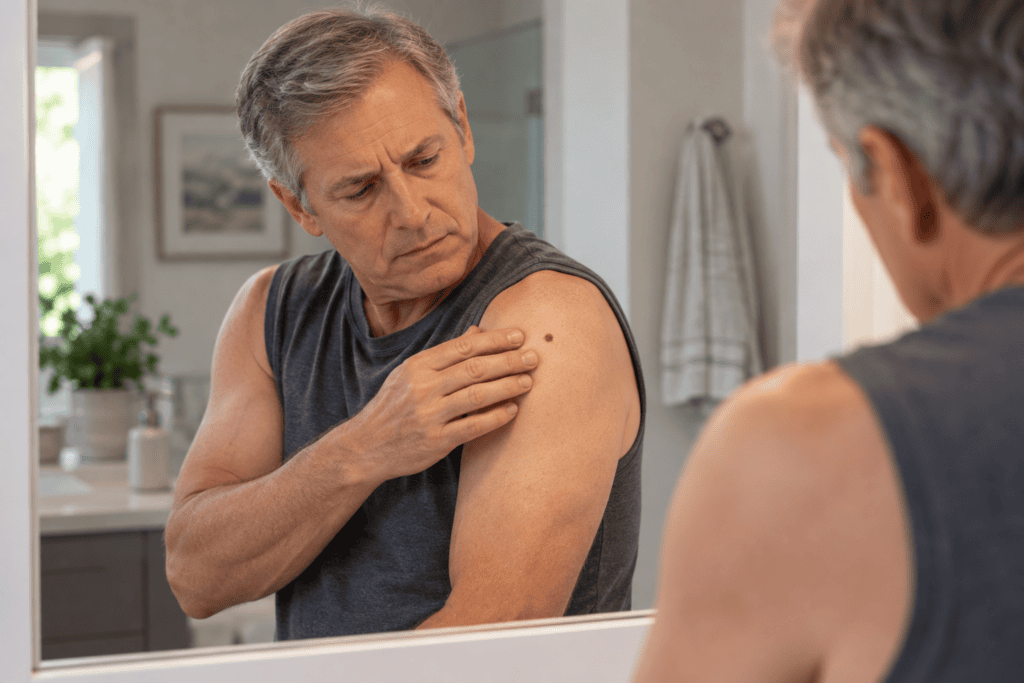
A skin disorder is any condition affecting the skin, hair, nails, sweat glands, or oil glands. A skin lesion is a visible or felt change such as a rash, bump, spot, blister, sore, scale, patch, mole, cyst, or area of changed color. Some are temporary and harmless; others need testing or treatment.
Possible causes include irritation, allergy, infection, bites, eczema, psoriasis, acne, medication reactions, autoimmune disease, circulation problems, benign growths, precancer, and skin cancer. Appearance alone may not identify the cause, especially across different skin tones, so new, changing, painful, spreading, bleeding, or nonhealing lesions should be evaluated.
Skin Conditions – NIH MedlinePlus
https://medlineplus.gov/skinconditions.html
Provides reliable information about common inflammatory, infectious, autoimmune, genetic, and cancerous skin conditions.
Rashes – NIH MedlinePlus
https://medlineplus.gov/rashes.html
Explains common causes of rashes, symptoms, diagnosis, treatment, and when medical care is needed.
Skin concerns are among the most common reasons people seek healthcare. Most adults develop rashes, irritation, infections, or benign growths at some point.
Anyone can develop skin cancer, regardless of age, gender, or skin color. Early evaluation improves the chance of simple, effective treatment when a serious condition is present.
Inflammation may appear bright red on lighter skin but deep red, purple, gray, or darker brown on darker skin.
A clinician examines the lesion’s size, shape, border, color, texture, pattern, location, and distribution. They may inspect the scalp, nails, mouth, genital skin, and lymph nodes when relevant.
Bring a list of medicines and products and photos showing how the area changed. Tell the clinician about fever, pain, travel, sexual exposure, sick contacts, animals, hobbies, work exposures, immune conditions, and prior skin cancer.
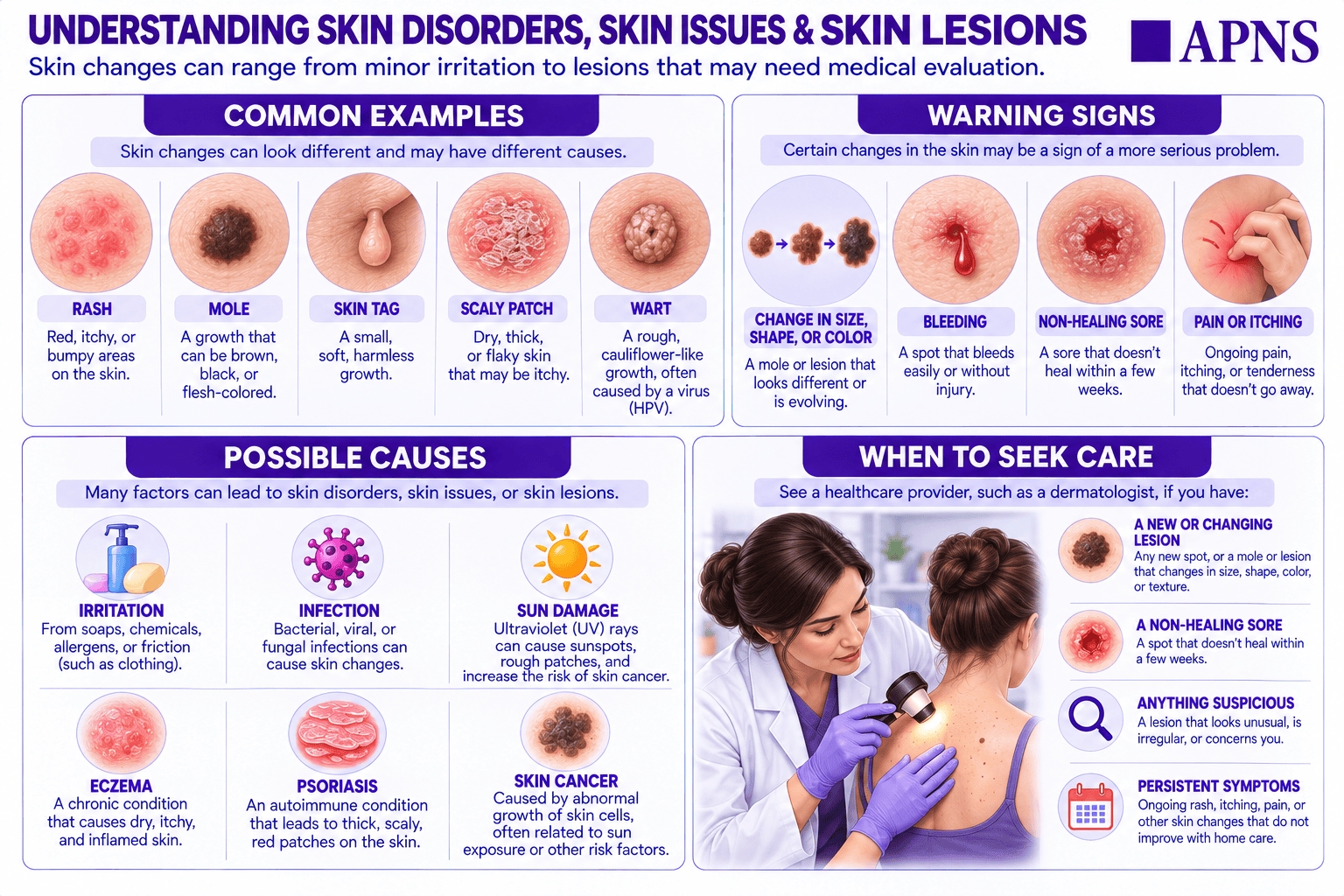
Skin changes may result from friction, heat, moisture, ultraviolet light, chemicals, cosmetics, medicines, allergens, bacteria, viruses, fungi, parasites, immune activity, genetics, or growth of abnormal cells.
Internal illnesses involving the liver, kidneys, blood, hormones, nerves, or circulation can also affect the skin. Location, timing, exposures, symptoms, and change over time help narrow the cause.
How to Perform a Skin Self-Exam – American Academy of Dermatology
https://www.aad.org/public/diseases/skin-cancer/find/check-skin
Explains how to check the entire skin surface and document new, changing, itching, or bleeding spots.
The following video content is provided to help you better understand this condition. These resources are intended for educational purposes and should not replace personalized medical advice from your healthcare provider.
Dermoscopy uses a magnifying light to view structures not easily seen with the naked eye. A Wood’s lamp may help evaluate selected pigment changes or infections.
A skin biopsy removes a small sample for microscopic examination and is often the best way to diagnose an uncertain, changing, or suspicious lesion. Imaging is reserved for deep masses, vascular problems, extensive infection, or possible cancer spread.
ABCDEs of Melanoma – American Academy of Dermatology
https://www.aad.org/public/diseases/skin-cancer/find/at-risk/abcdes
Describes asymmetry, border, color, diameter, and evolution warning signs that require professional evaluation.
Treatment must match the diagnosis. Options may include gentle skin care, avoiding a trigger, moisturizers, anti-inflammatory medicine, antibiotics, antivirals, antifungals, antiparasitic medicine, immune-directed treatment, or removal of a growth.
A steroid may calm eczema but worsen some fungal infections; an antibiotic will not treat an allergy or virus. Avoid using leftover prescriptions or combining multiple products before the cause is known.
Skin Care Basics – American Academy of Dermatology
https://www.aad.org/public/everyday-care/skin-care-basics
Offers dermatologist-reviewed guidance for gentle skin care, dryness, oiliness, sun protection, and preventing irritation.
Do not apply strong steroid, bleach, acid, wart remover, or online ‘cancer cure’ products to an undiagnosed lesion. Face, eyelid, genital, and skin-fold treatment requires extra caution.
Depending on the diagnosis, procedures may include freezing, drainage, curettage, shave removal, excision, electrosurgery, laser, light therapy, or Mohs surgery. Some procedures provide a tissue diagnosis as well as treatment.
Do not cut, burn, freeze, drain, or tie off a lesion at home. This can cause infection, scarring, bleeding, delayed cancer diagnosis, or incomplete treatment.
Some rashes resolve after a trigger is removed or an infection is treated. Chronic conditions such as eczema, psoriasis, vitiligo, hidradenitis, or rosacea may improve and flare over time.
Benign lesions may remain stable or recur after removal. Precancer and skin cancer outcomes are usually best when recognized and treated early, so follow-up and self-exams matter.
A clear photo can help with triage and tracking but may not show texture, depth, full distribution, or features needed for diagnosis.
No. Allergy is one cause, but dryness, eczema, infection, bites, medicines, liver or kidney disease, and other conditions can itch.
Yes. Skin cancer may resemble a mole, pimple, scar, scaly patch, or sore, so change and nonhealing are important clues.
No. Opening it can cause infection, scarring, spread, and diagnostic confusion.
No. Many inflammatory and allergic rashes are not contagious, while some infections are.
Redness may appear purple, gray, brown, or darker rather than bright red, and pigment change can remain after inflammation heals.

Some skin conditions are curable, including many infections and removable benign lesions. Others are chronic but can often be controlled with trigger avoidance, skin care, medicine, or procedures.
A visible lesion may improve before the underlying condition is fully treated. Complete the recommended plan and return if the area recurs, spreads, changes, or fails to heal.
Seek prompt care for a rapidly changing mole, a nonhealing sore, unexplained bleeding, a painful spreading rash, pus, fever, or a lesion near the eye or on genital skin.
Seek urgent or emergency care for:
CALL 911
APNS does not provide emergency medical services. If you believe you are experiencing a medical emergency, including (but not limited to) chest pain, difficulty breathing, stroke symptoms, severe allergic reactions, anaphylaxis, uncontrolled bleeding, seizures, loss of consciousness, or any other potentially life-threatening condition, you are instructed to call 911 immediately or go immediately to the nearest emergency department.
Skin Conditions – NIH MedlinePlus
https://medlineplus.gov/skinconditions.html
Provides reliable information about common inflammatory, infectious, autoimmune, genetic, and cancerous skin conditions.
Rashes – NIH MedlinePlus
https://medlineplus.gov/rashes.html
Explains common causes of rashes, symptoms, diagnosis, treatment, and when medical care is needed.
Skin Care Basics – American Academy of Dermatology
https://www.aad.org/public/everyday-care/skin-care-basics
Offers dermatologist-reviewed guidance for gentle skin care, dryness, oiliness, sun protection, and preventing irritation.
How to Perform a Skin Self-Exam – American Academy of Dermatology
https://www.aad.org/public/diseases/skin-cancer/find/check-skin
Explains how to check the entire skin surface and document new, changing, itching, or bleeding spots.
ABCDEs of Melanoma – American Academy of Dermatology
https://www.aad.org/public/diseases/skin-cancer/find/at-risk/abcdes
Describes asymmetry, border, color, diameter, and evolution warning signs that require professional evaluation.
Skin Cancer – National Cancer Institute
https://www.cancer.gov/types/skin
Provides information about skin cancer types, diagnosis, treatment, prevention, and research.
Find a Dermatologist – American Academy of Dermatology
Helps patients locate a board-certified dermatologist for evaluation of skin, hair, and nail concerns.
This guide is intended for educational purposes only and should not replace medical advice, examination, diagnosis, biopsy, or treatment from your healthcare provider. Skin lesions can have similar appearances but require very different care, including irritation, allergy, infection, autoimmune disease, medication reactions, benign growths, precancer, and cancer. Do not cut, drain, burn, freeze, or apply strong acids, steroids, antibiotics, or unapproved remedies to an undiagnosed lesion. Seek emergency care for breathing difficulty, facial or throat swelling, widespread blistering or peeling, severe infection symptoms, purple spots with fever, uncontrolled bleeding, or black and dying-appearing skin.
At APNS, our providers take the time to understand your condition and your goals. We offer comprehensive telehealth visits at a fixed rate — no membership fees, no insurance required, and no unexpected charges. Whether you’re newly diagnosed or looking for a provider who actually listens, we’re here to help.