

Nicotine dependence is a treatable condition in which the brain and body adapt to repeated nicotine exposure, causing cravings, withdrawal, and continued use despite harm or a desire to stop. Nicotine may come from cigarettes, cigars, pipes, hookah, smokeless tobacco, pouches, e-cigarettes, or vapes.
Smoking cessation means stopping combustible tobacco use, and nicotine cessation means ending dependence on all nicotine products. Quitting at any age improves health. Counseling plus an FDA-approved quit medicine generally offers the best chance of long-term success, and needing several quit attempts is common—not a personal failure.
How to Quit Smoking – Centers for Disease Control and Prevention
https://www.cdc.gov/tobacco/campaign/tips/quit-smoking/index.html
Provides quit-planning tools, medication information, quitline numbers, texting support, and the quitSTART app.
Millions of U.S. adults use cigarettes or other nicotine products. Most adults who smoke want to quit, and many make a quit attempt each year.
Nicotine products differ in how quickly and strongly they deliver nicotine. Cigarettes are especially addictive because inhaled nicotine reaches the brain rapidly, while vaping or nicotine pouches can also deliver high doses and maintain dependence.
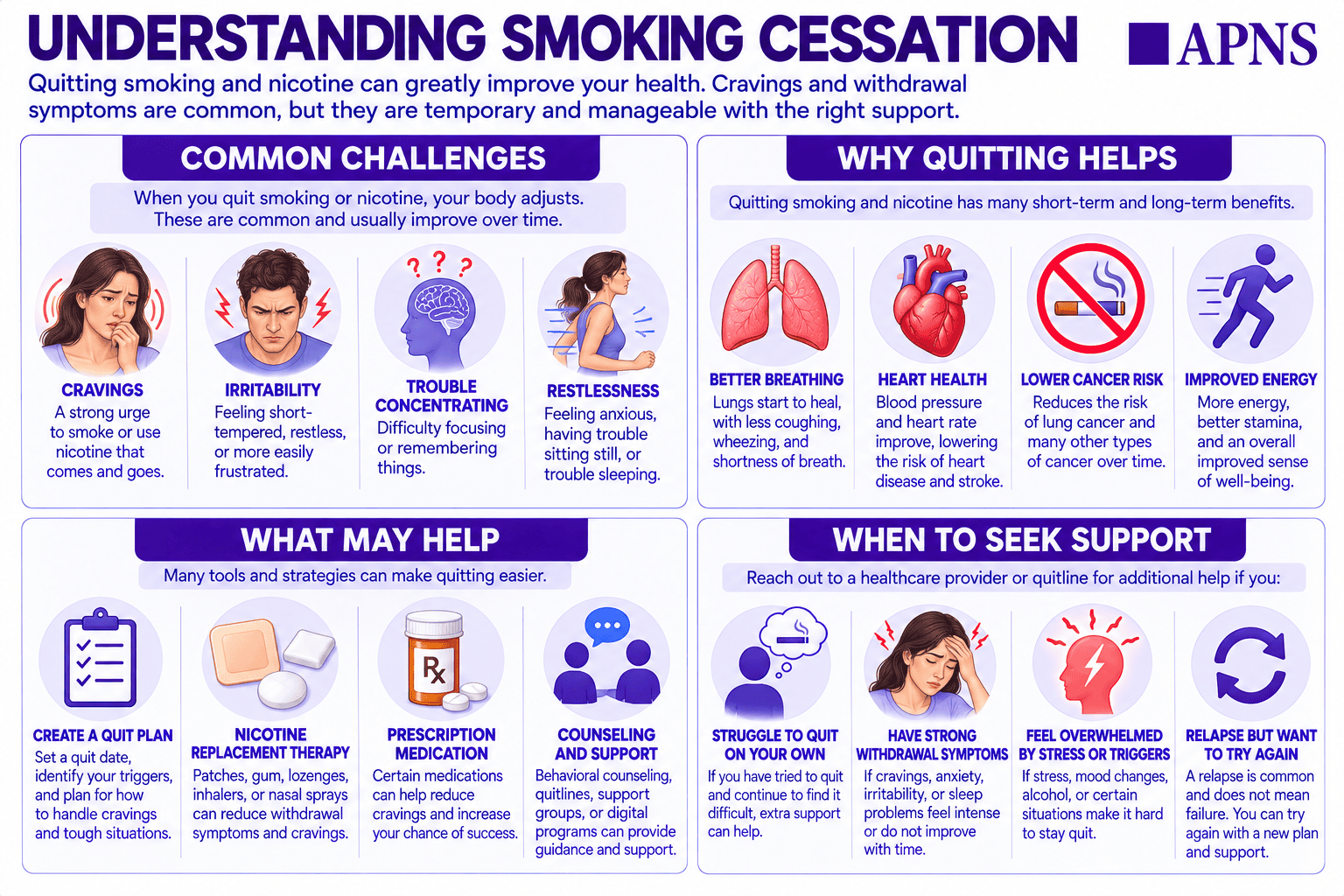
Withdrawal may include irritability, anxiety, low mood, restlessness, trouble concentrating, poor sleep, increased appetite, headache, cough, constipation, or fatigue.
A healthcare professional asks which products are used, amount and timing, first use after waking, prior quit attempts, withdrawal, triggers, motivation, medical history, pregnancy, mental health, and other substances.
The goal is a practical treatment plan, not judgment. Even if someone is not ready to quit completely, reducing harm, discussing medication, and choosing a future step can be useful.
Nicotine activates brain reward pathways and releases chemicals linked with pleasure, alertness, and relief. Repeated exposure changes these pathways, producing tolerance, withdrawal, and learned associations with routines and emotions.
Dependence is influenced by product design, age at first use, genetics, stress, mental health, environment, social exposure, and access to treatment. It is not simply a lack of willpower.
Smokefree.gov – National Cancer Institute
Offers free quit plans, text programs, apps, craving tools, and support for smoking and vaping cessation.
The following video content is provided to help you better understand this condition. These resources are intended for educational purposes and should not replace personalized medical advice from your healthcare provider.
No laboratory test is required to diagnose nicotine dependence or begin most cessation treatment.
A normal test does not make smoking or vaping safe. Testing should support care rather than punish or shame the patient.
No imaging confirms nicotine dependence. Lung function testing, chest imaging, heart testing, dental examination, or cancer screening may be recommended based on symptoms, age, and smoking history.
Adults at high risk may qualify for annual low-dose CT lung cancer screening. Screening does not replace quitting and should be discussed with a healthcare professional.
Effective treatment combines behavioral support with medication when appropriate. Support may include brief clinician counseling, individual or group therapy, a quitline, text messages, apps, or a structured tobacco-treatment program.
Medication options include nicotine replacement therapy (NRT), varenicline, and bupropion SR. A long-acting patch plus short-acting gum or lozenge is often more effective than one NRT product alone.
Quit Smoking Medicines – Centers for Disease Control and Prevention
Explains the seven FDA-approved cessation medicines, combination treatment, safe use, and coaching.
Quit medicines are much safer than smoking, but pregnancy, breastfeeding, age under 18, kidney disease, seizures, mental health symptoms, and other medicines require professional guidance. E-cigarettes are not FDA-approved smoking-cessation medicines.
Clinical Interventions to Treat Tobacco Use and Dependence – Centers for Disease Control and Prevention
https://www.cdc.gov/tobacco/hcp/patient-care-settings/clinical.html
Summarizes counseling and medication treatment, including special considerations during pregnancy.
No surgery or procedure treats nicotine dependence. Acupuncture, hypnosis, laser treatments, and supplements have not shown the same consistent evidence as counseling and approved medicines.
Healthcare visits may include motivational counseling, medication adjustment, breathing tests, dental care, or treatment of smoking-related disease.
Withdrawal is often strongest during the first week and may peak during the first three days. Symptoms usually lessen over several weeks, while occasional cue-related cravings may continue longer.
A lapse is information, not failure. Restart medication if advised, identify what triggered use, contact support, and return to the plan quickly rather than waiting for another perfect time.
1-800-QUIT-NOW – National Cancer Institute
https://1800quitnow.cancer.gov/
Connects callers with free state quitline coaching and available cessation resources.
NRT delivers nicotine more slowly and without toxic cigarette smoke. It is used in controlled doses and can be tapered after smoking stops.
Often yes. A patch provides steady control while gum or lozenges handle sudden cravings.
Vaping exposes users to nicotine and other chemicals and is not risk-free. FDA-approved medicines and counseling have established safety and dosing guidance.
Some people gain weight, but the health benefits of quitting are much larger. Activity, planned snacks, and treatment can help.
You can discuss medication, reduce use, make your home smoke-free, call a quitline, and choose a future step.
Yes. Health benefits begin soon after the last cigarette and continue for years.

Nicotine dependence is treatable, and many people stop permanently. The brain and routines need time to adjust, so treatment often works best when continued beyond the first difficult weeks.
Past unsuccessful attempts do not predict failure. Each attempt can identify effective medicines, triggers, and support needs, improving the next plan.
Nicotine withdrawal is uncomfortable but usually not medically dangerous. Contact a clinician promptly for severe mood changes, medication side effects, or symptoms of a smoking-related illness.
Seek urgent or emergency care for:
For suspected nicotine poisoning, call Poison Control at 1-800-222-1222; call 911 for severe symptoms.
CALL 911
APNS does not provide emergency medical services. If you believe you are experiencing a medical emergency, including (but not limited to) chest pain, difficulty breathing, stroke symptoms, severe allergic reactions, anaphylaxis, uncontrolled bleeding, seizures, loss of consciousness, or any other potentially life-threatening condition, you are instructed to call 911 immediately or go immediately to the nearest emergency department.
How to Quit Smoking – Centers for Disease Control and Prevention
https://www.cdc.gov/tobacco/campaign/tips/quit-smoking/index.html
Provides quit-planning tools, medication information, quitline numbers, texting support, and the quitSTART app.
Quit Smoking Medicines – Centers for Disease Control and Prevention
Explains the seven FDA-approved cessation medicines, combination treatment, safe use, and coaching.
Nicotine Withdrawal and Triggers – National Cancer Institute
https://www.cancer.gov/about-cancer/causes-prevention/risk/tobacco/withdrawal-fact-sheet
Explains cravings, mood and sleep changes, appetite, triggers, and practical coping strategies.
Smokefree.gov – National Cancer Institute
Offers free quit plans, text programs, apps, craving tools, and support for smoking and vaping cessation.
1-800-QUIT-NOW – National Cancer Institute
https://1800quitnow.cancer.gov/
Connects callers with free state quitline coaching and available cessation resources.
Cigarette Smoking: Health Risks and How to Quit – National Cancer Institute
https://www.cancer.gov/about-cancer/causes-prevention/risk/tobacco/quit-smoking-pdq
Reviews health risks, benefits of quitting, evidence-based counseling, and cessation treatment.
Clinical Interventions to Treat Tobacco Use and Dependence – Centers for Disease Control and Prevention
https://www.cdc.gov/tobacco/hcp/patient-care-settings/clinical.html
Summarizes counseling and medication treatment, including special considerations during pregnancy.
This guide is intended for educational purposes only and should not replace medical advice, diagnosis, medication selection, or treatment from your healthcare provider. Nicotine dependence is treatable, and counseling plus FDA-approved medication offers the best chance of success for many adults. Medication choice and dosing depend on the nicotine product, amount used, pregnancy, breastfeeding, age, kidney health, seizure or eating-disorder history, mental health, and other medicines. Seek emergency care for chest pain, severe breathing difficulty, stroke symptoms, seizure, serious allergic reaction, suspected nicotine poisoning, or suicidal thoughts.
At APNS, our providers take the time to understand your condition and your goals. We offer comprehensive telehealth visits at a fixed rate — no membership fees, no insurance required, and no unexpected charges. Whether you’re newly diagnosed or looking for a provider who actually listens, we’re here to help.