
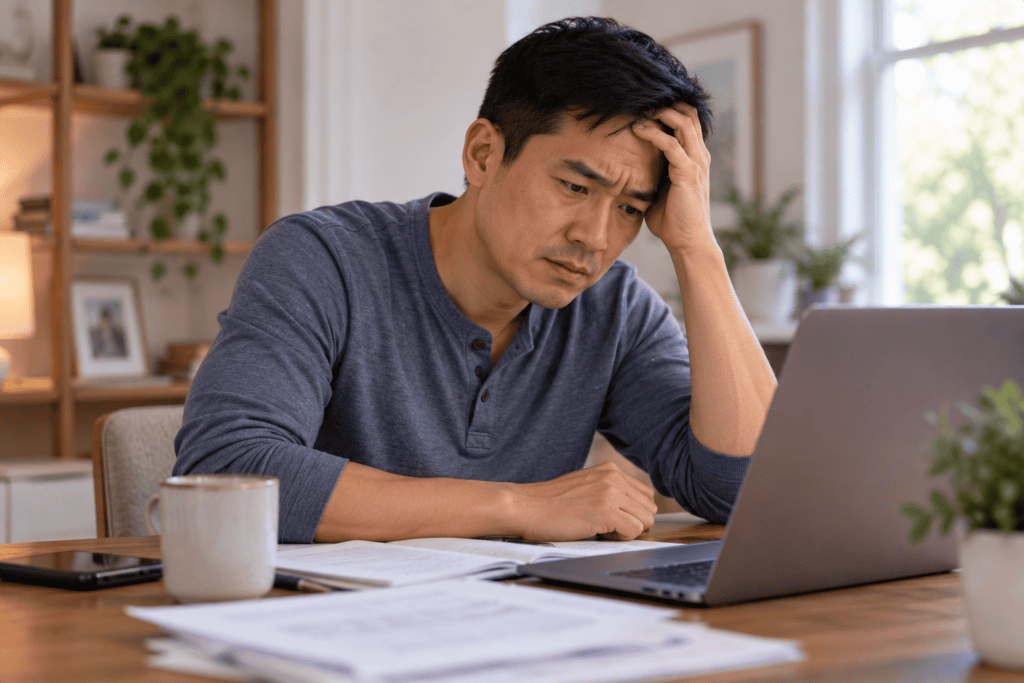
Stress is the body’s physical, emotional, and mental response to a challenge, demand, or change. Stress is a normal part of life and may help people stay alert, solve problems, or respond to emergencies. However, when stress becomes intense, lasts too long, or overwhelms a person’s ability to cope, it can affect physical health, emotional well-being, relationships, work, and daily life. (medlineplus.gov)
Situational stress refers to stress that develops because of a specific event or circumstance, such as starting a new job, financial problems, relationship difficulties, illness, or moving.
Acute stress is short-term stress that develops suddenly after an event or challenge. It usually improves once the stressful situation resolves.
These conditions are different from Acute Stress Disorder (ASD), which is a mental health condition that may develop after experiencing or witnessing a traumatic event. Acute Stress Disorder involves trauma-related symptoms lasting from 3 days to 1 month and requires professional evaluation. (nimh.nih.gov)
Stress is extremely common. Nearly everyone experiences periods of stress during their lifetime.
The risk of excessive stress may be higher in people who:
Although stress is common, persistent or overwhelming stress should not be ignored because it may contribute to both physical and mental health conditions.
Stress affects both the mind and body.
Emotional symptoms may include:
Mental symptoms may include:
Physical symptoms may include:
Behavioral symptoms may include:
Short-term stress usually improves as the stressful event resolves, while ongoing stress may continue to affect daily functioning.
There is no single medical test that diagnoses stress.
A healthcare provider evaluates:
The provider also evaluates whether symptoms may represent:
Stress itself is not considered a disease, but prolonged stress may contribute to many health conditions.
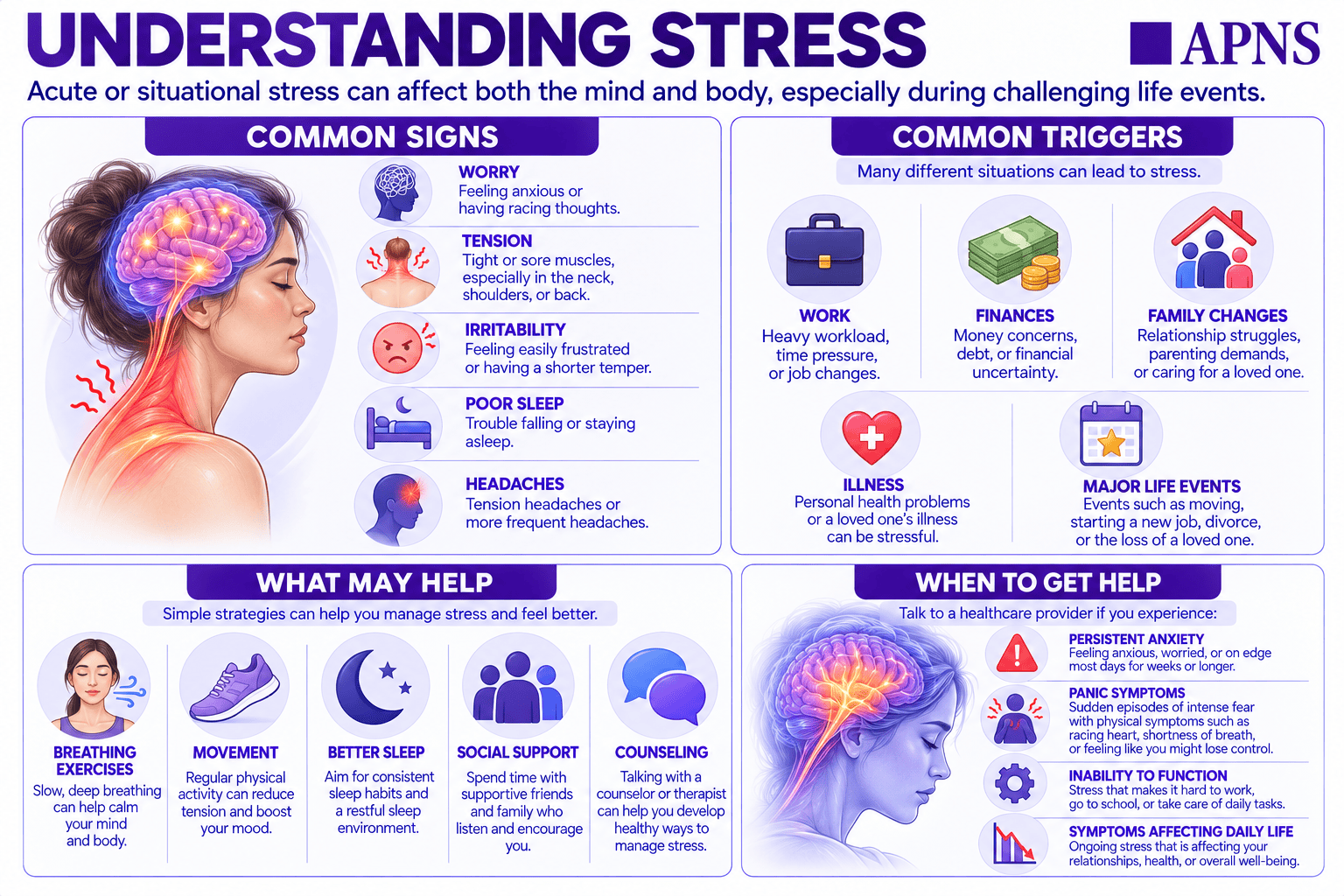
Stress can result from almost any significant life change or challenge.
Common causes include:
Different people respond differently to the same situation. What feels manageable for one person may feel overwhelming for another.
Stress may become more severe when combined with:
Alcohol may temporarily seem calming but often worsens sleep, mood, and stress over time.
Helpful strategies include:
Building healthy coping habits before stressful events occur can improve resilience and reduce the effects of future stress.
The following video content is provided to help you better understand this condition. These resources are intended for educational purposes and should not replace personalized medical advice from your healthcare provider.
Laboratory testing is not used to diagnose stress directly.
Testing may be ordered to identify medical conditions causing similar symptoms.
Possible tests include:
Testing depends on the individual’s symptoms and medical history.
Most people with stress do not require imaging or specialized testing.
Additional evaluation may include:
Testing focuses on excluding other medical conditions that may produce similar symptoms.
Treatment depends on the severity of symptoms and the cause of stress.
Treatment may include:
Professional treatment is recommended when stress significantly affects work, relationships, sleep, or physical health.
Healthy habits that reduce stress include:
Small daily changes often reduce stress more effectively than waiting for major life changes.
Stress itself is usually not treated with medication.
However, medication may be appropriate when stress contributes to another condition such as:
Possible medications include:
Benzodiazepines are generally not recommended for long-term stress management because they may cause dependence, tolerance, impaired driving, falls, and withdrawal.
Medication decisions should be individualized and made with a qualified healthcare professional.
Stress is generally treated without medical procedures.
Structured interventions may include:
Treatment focuses on developing healthier coping skills rather than eliminating every source of stress.
Most episodes of situational or acute stress improve as the stressful event resolves.
Recovery depends on:
Without treatment, chronic stress may contribute to:
Early intervention often improves recovery.
Helpful coping strategies include:
If stress feels unmanageable, seek professional support early.
Yes. Stress is a normal response to challenges. It becomes a concern when it is severe, prolonged, or interferes with daily life.
Stress usually develops in response to an identifiable situation. Anxiety may continue even when there is no immediate stressor and may persist long after the stressful event has passed.
Yes. Stress commonly causes headaches, muscle tension, stomach problems, rapid heartbeat, fatigue, and sleep problems.
Yes. Acute stress temporarily increases blood pressure and heart rate. Chronic stress may contribute to long-term cardiovascular disease.
Yes, but chest pain should never automatically be assumed to be stress. New, severe, or persistent chest pain requires medical evaluation.
Long-term stress may reduce immune function and increase susceptibility to illness.
Some people benefit from temporary time away from work, especially when stress is severe. Discuss this with your healthcare provider.
Seek help when stress persists for weeks, interferes with work or relationships, causes panic attacks, severe sleep problems, depression, or thoughts of self-harm.

Consider asking:
You may be referred to:
Most episodes of situational or acute stress improve significantly once the stressor resolves or effective coping strategies are developed.
Treatment may help:
Persistent stress should not be accepted as “normal” when it is affecting daily functioning.
Call 911 or seek emergency medical care immediately for:
Seek urgent mental health evaluation for:
In the United States, call or text 988 for suicidal thoughts, emotional distress, or another mental health crisis.
CALL 911
APNS does not provide emergency medical services. If you believe you are experiencing a medical emergency, including (but not limited to) chest pain, difficulty breathing, stroke symptoms, severe allergic reactions, anaphylaxis, uncontrolled bleeding, seizures, loss of consciousness, or any other potentially life-threatening condition, you are instructed to call 911 immediately or go immediately to the nearest emergency department.
National Institute of Mental Health – Coping With Traumatic Events
https://www.nimh.nih.gov/health/topics/coping-with-traumatic-events
Provides information about normal stress reactions, traumatic stress, coping strategies, and when to seek professional help.
NIH MedlinePlus – Stress and Your Health
https://medlineplus.gov/ency/article/002215.htm
Patient-friendly information about stress, symptoms, causes, and healthy coping strategies.
Centers for Disease Control and Prevention – Coping With Stress
https://www.cdc.gov/mentalhealth/stress-coping/index.html
Provides practical stress-management strategies and mental health resources.
Substance Abuse and Mental Health Services Administration (SAMHSA)
https://www.samhsa.gov/find-help
Provides information about finding mental health treatment and support services.
988 Suicide & Crisis Lifeline
https://988lifeline.org
Provides free, confidential crisis support 24 hours a day by calling or texting 988.
This guide is intended for educational purposes only and should not replace medical or mental health advice, diagnosis, or treatment from a qualified healthcare professional. Stress-related symptoms may also be caused by anxiety disorders, depression, acute stress disorder, post-traumatic stress disorder, sleep disorders, thyroid disease, heart disease, medication side effects, substance use, or other medical conditions. Do not begin, stop, or change medications without guidance from your healthcare provider. Seek prompt medical attention if stress causes significant impairment, persistent symptoms, severe anxiety, depression, panic attacks, or thoughts of self-harm. Call 911 immediately for severe chest pain, difficulty breathing, stroke symptoms, seizure, overdose, or another medical emergency. In the United States, call or text 988 for suicidal thoughts or a mental health crisis.
At APNS, our providers take the time to understand your condition and your goals. We offer comprehensive telehealth visits at a fixed rate — no membership fees, no insurance required, and no unexpected charges. Whether you’re newly diagnosed or looking for a provider who actually listens, we’re here to help.