
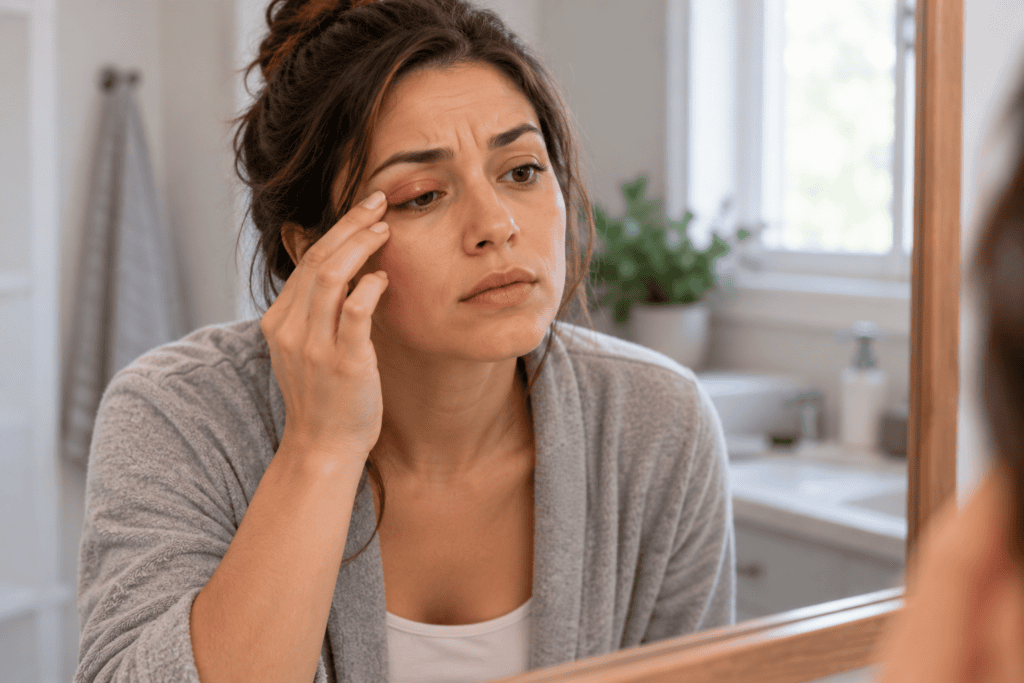
A stye, medically called a hordeolum, is a small, red, painful bump that develops on or inside the eyelid. It usually forms when an oil gland or eyelash follicle becomes blocked and infected with bacteria.
There are two main types of styes:
A chalazion is a firm eyelid lump caused by a blocked oil gland. Unlike a stye, a chalazion is usually not caused by an active bacterial infection and often becomes painless after the initial swelling improves.
A stye may occasionally develop into a chalazion if the infected or inflamed gland remains blocked after the infection improves.
Eyelid Disorders – NIH MedlinePlus
https://medlineplus.gov/eyeliddisorders.html
Provides easy-to-understand information about styes, chalazia, blepharitis, and other eyelid conditions.
Stye – NIH MedlinePlus
https://medlineplus.gov/ency/article/001009.htm
Explains the symptoms, causes, diagnosis, and treatment of a stye.
Chalazion – NIH MedlinePlus
https://medlineplus.gov/ency/article/001006.htm
Provides information about blocked eyelid glands, symptoms, treatment, and recovery.
Styes and chalazia are very common eyelid conditions that can affect people of all ages. Some people develop only one during their lifetime, while others experience recurring eyelid bumps.
People with chronic eyelid inflammation, oily skin, rosacea, or blocked eyelid glands may be more likely to develop repeated styes or chalazia. Children and adults who frequently touch or rub their eyes may also be at increased risk.
Stye – Cleveland Clinic
https://my.clevelandclinic.org/health/diseases/17658-stye
Provides patient-friendly information about how common styes are, their causes, and treatment.
Chalazion – American Optometric Association
https://www.aoa.org/healthy-eyes/eye-and-vision-conditions/chalazion
Provides information about chalazia, risk factors, symptoms, and treatment.
Symptoms depend on whether the eyelid bump is a stye or chalazion.
Common symptoms of a stye may include:
Common symptoms of a chalazion may include:
Styes are usually painful and located near the eyelid edge, while chalazia are usually deeper, firmer, and less painful.
A healthcare provider can usually diagnose a stye or chalazion by examining the eyelid. They may ask about:
The eyelid may be gently turned inside out to determine whether the lump is located on the inner surface. Additional testing is rarely needed unless the condition is recurrent, unusually persistent, or does not appear typical.
Stye – NIH MedlinePlus
https://medlineplus.gov/ency/article/001009.htm
Explains how healthcare providers identify and evaluate styes.
Chalazion – American Optometric Association
https://www.aoa.org/healthy-eyes/eye-and-vision-conditions/chalazion
Provides information about diagnosing a chalazion and distinguishing it from a stye.
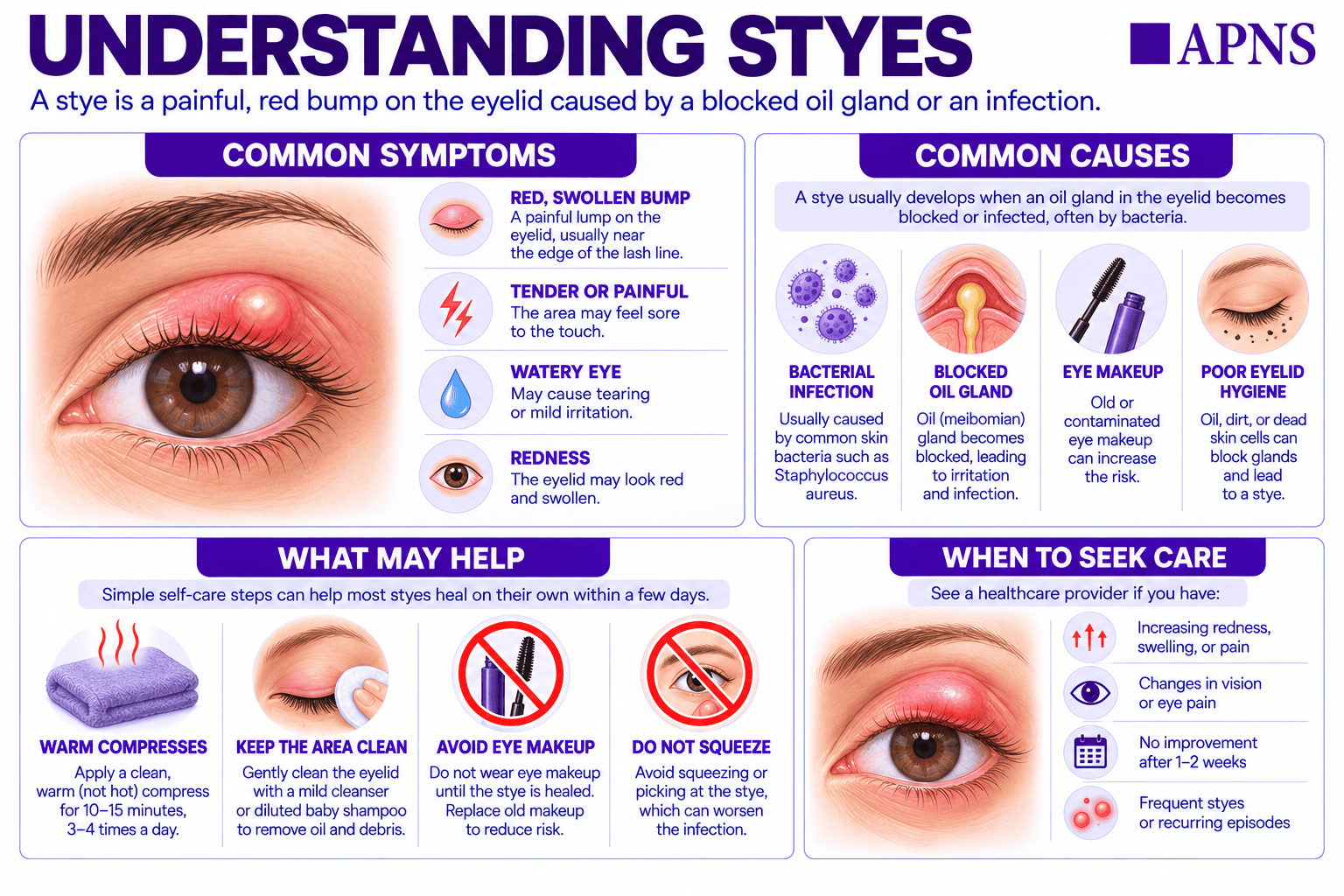
A stye usually develops when bacteria infect an oil gland or eyelash follicle. The bacteria involved are often normally present on the skin but may enter a blocked gland and cause inflammation.
A chalazion develops when a meibomian gland inside the eyelid becomes blocked and traps oily material.
Common causes and risk factors include:
Blepharitis – National Eye Institute
https://www.nei.nih.gov/eye-health-information/eye-conditions-and-diseases/blepharitis
Explains how eyelid inflammation and blocked oil glands may contribute to styes and chalazia.
Stye – Mayo Clinic
https://www.mayoclinic.org/diseases-conditions/sty/symptoms-causes/syc-20378017
Provides information about the causes and risk factors for styes.
Several factors may worsen eyelid swelling, delay healing, or increase the risk of infection.
Common factors include:
Do not puncture, squeeze, or attempt to drain a stye or chalazion at home. This may spread infection or injure the eyelid.
Stye – NHS
https://www.nhs.uk/conditions/stye/
Provides self-care advice and explains what to avoid when treating a stye.
Styes and chalazia cannot always be prevented, but healthy eyelid habits may reduce the risk.
Helpful prevention tips include:
Eye Care – NIH MedlinePlus
https://medlineplus.gov/eyecare.html
Provides guidance for maintaining healthy eyes and obtaining appropriate eye care.
The following video content is provided to help you better understand this condition. These resources are intended for educational purposes and should not replace personalized medical advice from your healthcare provider.
Most styes and chalazia do not require laboratory testing.
Laboratory testing may be considered when the eyelid infection is severe, recurrent, or does not improve with treatment.
Possible laboratory tests may include:
Laboratory Tests – NIH MedlinePlus
https://medlineplus.gov/lab-tests/
Provides information about common laboratory tests that may be used when infection or another condition is suspected.
Most people do not require imaging or advanced diagnostic testing.
Common evaluations may include:
A persistent or recurrent chalazion should be evaluated by an eye-care professional because some uncommon eyelid conditions can resemble a chalazion.
Eye Health – American Academy of Ophthalmology
https://www.aao.org/eye-health
Provides ophthalmologist-reviewed information about eyelid disorders and eye examinations.
Most styes and chalazia improve with conservative treatment.
Treatment options may include:
Warm compresses help soften blocked oil and encourage natural drainage. Chalazia often resolve without invasive treatment, although improvement may take several weeks.
Stye – Cleveland Clinic
https://my.clevelandclinic.org/health/diseases/17658-stye
Provides information about home care and medical treatment for styes.
Chalazion – Cleveland Clinic
https://my.clevelandclinic.org/health/diseases/17657-chalazion
Explains chalazion treatment, recovery, and when procedures may be needed.
Healthy eyelid habits may support healing and reduce future episodes.
Helpful lifestyle changes include:
Blepharitis – National Eye Institute
https://www.nei.nih.gov/eye-health-information/eye-conditions-and-diseases/blepharitis
Provides practical information about eyelid hygiene and managing blocked eyelid glands.
Most styes and chalazia do not require medication.
Medications that may be recommended include:
Antibiotics generally do not eliminate an uncomplicated chalazion because a chalazion is primarily caused by a blocked gland rather than an active infection.
Do not use leftover antibiotic or steroid eye medication without medical guidance. Steroid eye medications can cause serious complications when used incorrectly.
Eyelid Disorders – NIH MedlinePlus
https://medlineplus.gov/eyeliddisorders.html
Provides information about styes, chalazia, and other eyelid conditions.
Most styes and chalazia do not require invasive procedures. However, an eye-care professional may recommend a procedure if the lump is large, affects vision, repeatedly returns, or does not improve with conservative care.
Common procedures may include:
These procedures should only be performed by a qualified healthcare professional. Attempting to drain an eyelid lump at home may spread infection or damage the eyelid.
Chalazion – American Association for Pediatric Ophthalmology and Strabismus
https://aapos.org/glossary/chalazion
Provides information about chalazion treatment and procedures, including care for children.
Most styes begin improving within several days and heal without long-term complications. A chalazion may take several weeks or sometimes longer to completely disappear.
Some people experience recurrent styes or chalazia, especially if they have:
A large chalazion may temporarily blur vision by pressing against the surface of the eye. Persistent or repeatedly recurring eyelid lumps may require examination by an ophthalmologist.
Home care is often effective for uncomplicated styes and chalazia.
Helpful tips include:
The compress should feel comfortably warm, not hot enough to burn the skin.
Chalazion – NIH MedlinePlus
https://medlineplus.gov/ency/article/001006.htm
Provides practical recommendations for warm compresses, eyelid care, and recovery.
A stye is usually painful and caused by an infected eyelid gland or eyelash follicle. A chalazion is generally a painless, firm lump caused by a blocked oil gland.
A stye itself is not usually considered contagious, but bacteria from the eyelid can spread through contaminated hands, towels, makeup, or eye-care products.
No. Squeezing or popping a stye can spread infection and damage the eyelid.
Many styes improve within several days and heal within one to two weeks, although recovery time varies.
A chalazion may take several weeks or occasionally longer to disappear completely.
It is generally best to stop wearing contact lenses until the eyelid has healed and an eye-care professional says it is safe to resume.
A large chalazion may temporarily blur vision by pressing against the eye.

Consider asking your healthcare provider:
Most uncomplicated styes and chalazia can be treated by a primary care provider, optometrist, or ophthalmologist.
You may be referred to:
American Academy of Ophthalmology – Eye Health
https://www.aao.org/eye-health
Provides patient education about eyelid conditions, eye specialists, and treatment options.
Yes. Most styes and chalazia are temporary and resolve completely with appropriate care.
A stye generally improves as the infection drains and inflammation decreases. A chalazion often resolves when the blocked gland gradually opens and the trapped material is absorbed or drained.
Some people develop recurrent eyelid bumps because of chronic blepharitis, rosacea, or gland dysfunction. Treating the underlying condition may reduce future episodes.
Call 911 or seek emergency medical care immediately if you experience:
Seek urgent medical evaluation if you notice:
Spreading redness, fever, eye-movement pain, or vision changes may indicate cellulitis around or behind the eye, which requires prompt treatment.
Orbital Cellulitis – NIH MedlinePlus
https://medlineplus.gov/ency/article/001012.htm
Explains the warning signs of a serious infection involving the tissues around the eye.
CALL 911
APNS does not provide emergency medical services. If you believe you are experiencing a medical emergency, including (but not limited to) chest pain, difficulty breathing, stroke symptoms, severe allergic reactions, anaphylaxis, uncontrolled bleeding, seizures, loss of consciousness, or any other potentially life-threatening condition, you are instructed to call 911 immediately or go immediately to the nearest emergency department.
Eyelid Disorders – NIH MedlinePlus
https://medlineplus.gov/eyeliddisorders.html
Easy-to-understand information about styes, chalazia, blepharitis, and other eyelid conditions.
Stye – NIH MedlinePlus
https://medlineplus.gov/ency/article/001009.htm
Provides information about stye symptoms, diagnosis, treatment, and recovery.
Chalazion – NIH MedlinePlus
https://medlineplus.gov/ency/article/001006.htm
Provides information about chalazion symptoms, home care, procedures, and recovery.
Blepharitis – National Eye Institute
https://www.nei.nih.gov/eye-health-information/eye-conditions-and-diseases/blepharitis
Reliable patient education about eyelid inflammation and blocked oil glands.
American Academy of Ophthalmology – Eye Health
https://www.aao.org/eye-health
Ophthalmologist-reviewed education about eyelid conditions, eye symptoms, and treatment.
This guide is intended for educational purposes only and should not replace medical advice, diagnosis, or treatment from your healthcare provider or eye-care professional. Always follow the recommendations of your healthcare team regarding your individual health needs. Contact a healthcare provider if the eyelid bump worsens, does not improve, repeatedly returns, affects your vision, or is accompanied by spreading redness or fever. Seek immediate medical care for sudden vision loss, severe eye pain, pain with eye movement, a bulging eye, rapidly spreading facial swelling, major eye trauma, or another medical emergency.
At APNS, our providers take the time to understand your condition and your goals. We offer comprehensive telehealth visits at a fixed rate — no membership fees, no insurance required, and no unexpected charges. Whether you’re newly diagnosed or looking for a provider who actually listens, we’re here to help.