
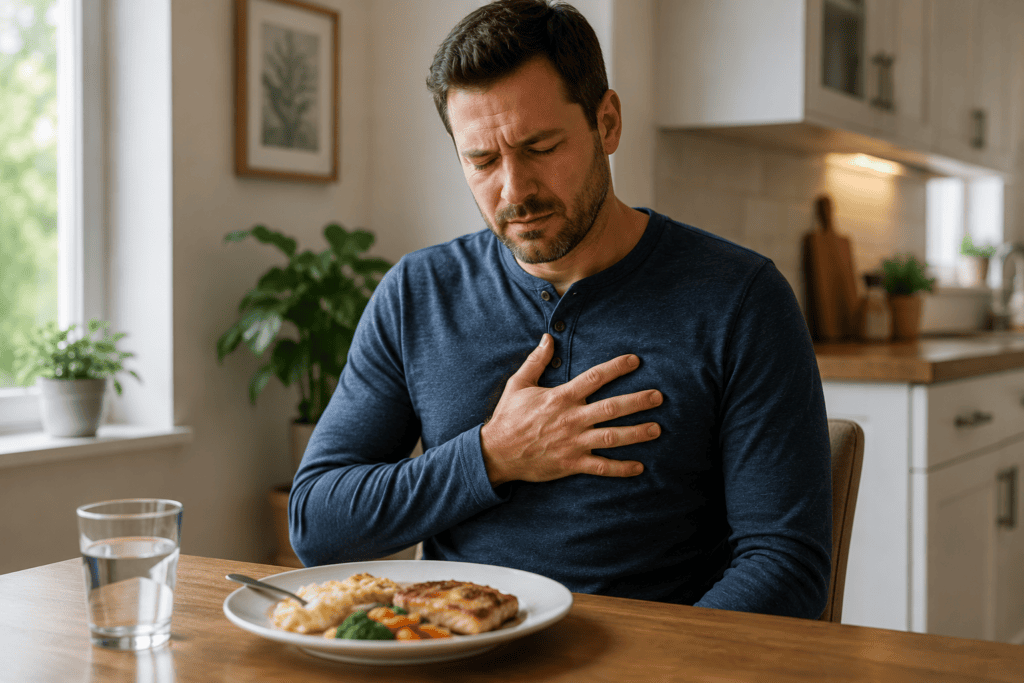
Acid reflux disease, also known as Gastroesophageal Reflux Disease (GERD), occurs when stomach acid repeatedly flows backward into the esophagus, the tube that carries food from your mouth to your stomach.
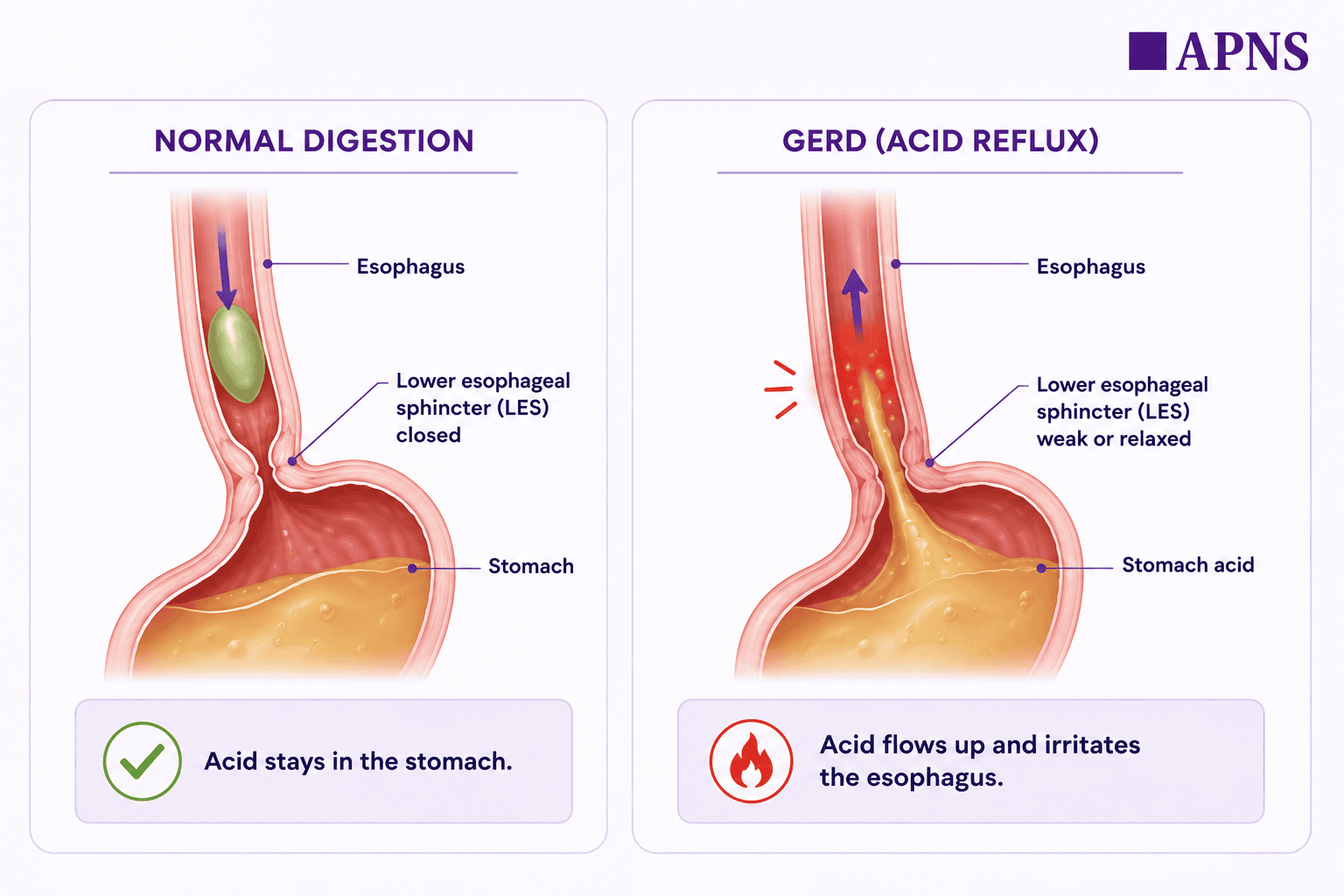
Normally, a ring of muscle called the lower esophageal sphincter (LES) acts as a valve between the esophagus and stomach. The LES opens to allow food into the stomach and closes afterward. When this muscle weakens or relaxes at inappropriate times, stomach acid can move back into the esophagus and cause irritation.
Occasional heartburn is common and does not necessarily mean you have GERD. GERD is diagnosed when reflux symptoms occur regularly, interfere with daily life, or cause complications.
Without treatment, chronic acid reflux can damage the lining of the esophagus and increase the risk of complications.
NIDDK Acid Reflux (GER & GERD) Information
https://www.niddk.nih.gov/health-information/digestive-diseases/acid-reflux-ger-gerd-adults
NIH MedlinePlus GERD Information
https://medlineplus.gov/gerd.html
American College of Gastroenterology GERD Resources
https://gi.org/topics/acid-reflux/
GERD is one of the most common digestive disorders in the United States.
Approximately:
Many people successfully manage symptoms through lifestyle changes, medications, or both.
National Institute of Diabetes and Digestive and Kidney Diseases
https://www.niddk.nih.gov
Some people experience symptoms every day, while others only notice symptoms after eating certain foods.
Many cases of GERD can be diagnosed based on symptoms and medical history.
Your healthcare provider may ask about:
Additional testing may be recommended if symptoms are severe, persistent, or associated with warning signs.
Several factors can contribute to GERD.
Not everyone has the same triggers.
Symptoms may worsen if you:
You may reduce your risk of GERD by:
Healthy lifestyle habits can significantly reduce reflux symptoms and lower the risk of complications.
The following video content is provided to help you better understand this condition. These resources are intended for educational purposes and should not replace personalized medical advice from your healthcare provider.
Long-term irritation or bleeding from the esophagus may occasionally cause anemia.
Ordered when clinically indicated.
MedlinePlus Complete Blood Count Information
https://medlineplus.gov/lab-tests/complete-blood-count-cbc/
May help evaluate symptoms and identify other medical conditions contributing to digestive complaints.
Ordered based on symptoms and medical history.
MedlinePlus Comprehensive Metabolic Panel Information
https://medlineplus.gov/lab-tests/comprehensive-metabolic-panel-cmp/
A flexible camera examines the esophagus, stomach, and upper portion of the small intestine.
https://www.niddk.nih.gov/health-information/diagnostic-tests/upper-gi-endoscopy
Measures how much acid enters the esophagus.
Used when the diagnosis remains uncertain despite treatment.
https://medlineplus.gov/ency/article/003889.htm
The structure and movement of the esophagus.
May help identify narrowing, swallowing disorders, or hiatal hernias.
Treatment may include:
Many people improve with a combination of treatments.
Lifestyle changes are often the first step in treatment.
Losing excess weight can significantly improve reflux symptoms.
Try to:
Elevating the head of your bed by 6–8 inches may reduce nighttime symptoms.
Common triggers include:
Keeping a food diary can help identify your personal triggers.
Quitting smoking can reduce reflux symptoms and improve overall digestive health.
Examples
Neutralize stomach acid and provide rapid symptom relief.
May provide short-term relief but do not heal inflammation.
https://medlineplus.gov/ency/patientinstructions/000381.htm
Examples
Reduce acid production in the stomach.
May be helpful for mild to moderate GERD symptoms.
https://medlineplus.gov/druginfo/meds/a687011.html
Examples
Strongly reduce stomach acid production and promote healing of the esophagus.
Long-term use should be discussed with your healthcare provider.
Most people with GERD do not require surgery. However, some patients with severe symptoms or complications may benefit from procedural treatment.
Fundoplication strengthens the barrier between the stomach and esophagus by wrapping the upper portion of the stomach around the lower esophagus.
Most patients return to normal activities within several weeks.
A small ring of magnetic beads is placed around the lower esophageal sphincter to help prevent stomach acid from flowing backward.
Most patients recover within a few days to weeks.
https://www.hopkinsmedicine.org/health/treatment-tests-and-therapies/linx-procedure-for-acid-reflux
Many people successfully control GERD symptoms through lifestyle changes and medication.
Without treatment, GERD may lead to:
Routine follow-up with your healthcare provider can help identify complications early.
Many patients experience significant improvement when they consistently follow their treatment plan.
You can:
Small lifestyle changes often make a significant difference in symptom control.
Yes. GERD can sometimes cause chest discomfort that feels similar to heart-related pain. New or severe chest pain should always be evaluated immediately.
Yes. Chronic cough, hoarseness, throat irritation, and frequent throat clearing can all occur because of acid reflux.
Not necessarily. Some people require only short-term treatment, while others benefit from long-term therapy.
Stress does not directly cause GERD but may worsen symptoms and increase awareness of discomfort.
Long-standing untreated GERD may increase the risk of Barrett’s esophagus and esophageal cancer in some individuals.
Yes. Nighttime reflux can disrupt sleep and contribute to chronic fatigue.
No. Occasional heartburn is common. GERD refers to frequent or chronic reflux symptoms that may cause complications.

You may be referred to:
These specialists can help develop a personalized treatment plan.
GERD is generally considered a chronic condition.
However, many people achieve excellent symptom control through:
Some patients experience complete resolution of symptoms after successful treatment, particularly when underlying causes such as obesity or hiatal hernia are addressed.
Seek immediate medical attention if you experience:
Call 911 for severe chest pain or other life-threatening symptoms.
CALL 911
APNS does not provide emergency medical services. If you believe you are experiencing a medical emergency, including (but not limited to) chest pain, difficulty breathing, stroke symptoms, severe allergic reactions, anaphylaxis, uncontrolled bleeding, seizures, loss of consciousness, or any other potentially life-threatening condition, you are instructed to call 911 immediately or go immediately to the nearest emergency department.
NIDDK GERD Resource Center
https://www.niddk.nih.gov/health-information/digestive-diseases/acid-reflux-ger-gerd-adults
NIH MedlinePlus GERD Library
https://medlineplus.gov/gerd.html
American College of Gastroenterology GERD Resources
https://gi.org/topics/acid-reflux/
Mayo Clinic GERD Overview
https://www.mayoclinic.org/diseases-conditions/gerd/symptoms-causes/syc-20361940
Cleveland Clinic GERD Information
https://my.clevelandclinic.org/health/diseases/17019-gerd-gastroesophageal-reflux-disease
This information is for educational purposes only and should not replace medical advice, diagnosis, or treatment from a licensed healthcare provider.
Always follow the recommendations of your healthcare provider. If you experience severe or worsening symptoms, seek immediate medical attention.
If you believe you are experiencing a medical emergency, call 911 or seek emergency medical care immediately.
At APNS, our providers take the time to understand your condition and your goals. We offer comprehensive telehealth visits at a fixed rate — no membership fees, no insurance required, and no unexpected charges. Whether you’re newly diagnosed or looking for a provider who actually listens, we’re here to help.