
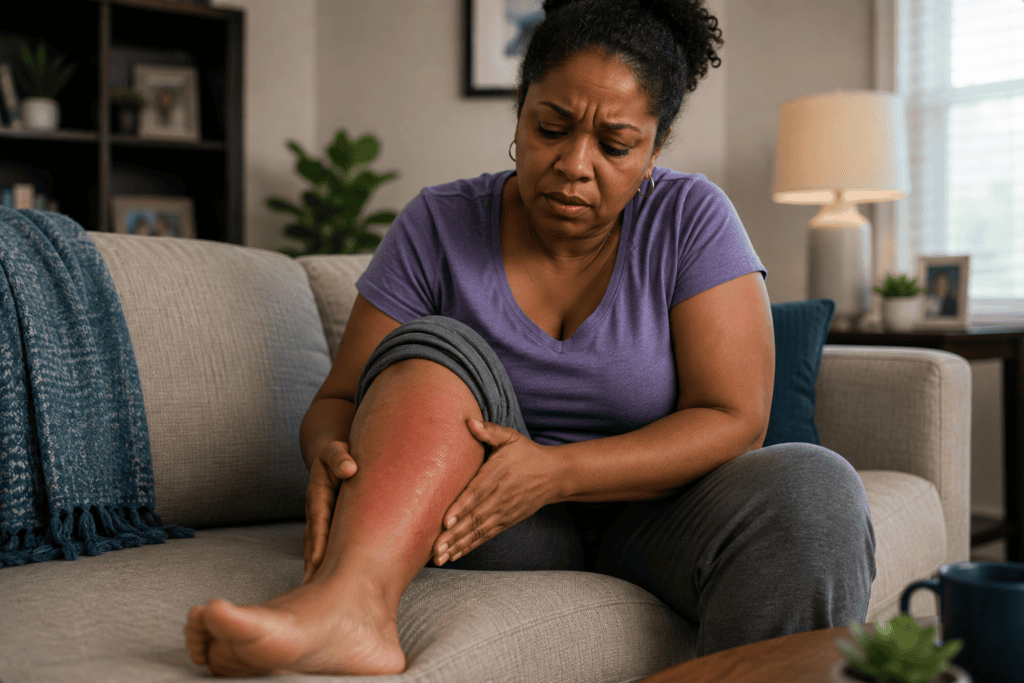
What Is Cellulitis?
Cellulitis is a bacterial infection of the deeper layers of skin and the tissue just beneath it. It usually causes an area that is warm, swollen, tender, and red or discolored. Adults most often develop it on a lower leg, but it can occur anywhere.
Cellulitis needs prompt antibiotic treatment because infection can spread into deeper tissue or the bloodstream. It is different from cellulite, the harmless dimpled appearance of skin, and from an abscess, which is a pocket of pus that may require drainage.
About Cellulitis – CDC
https://www.cdc.gov/group-a-strep/about/cellulitis.html
Explains cellulitis symptoms, diagnosis, antibiotic treatment, recovery, and prevention.
Cellulitis – NIH MedlinePlus
https://medlineplus.gov/ency/article/000855.htm
Provides patient information about symptoms, tests, treatment, hospitalization, and emergency warning signs.
Cellulitis is a common skin infection. Anyone can develop it, sometimes through a skin opening too small to notice.
Risk and recurrence are higher with leg swelling, lymphedema, athlete’s foot, eczema, ulcers, obesity, diabetes, poor circulation, prior cellulitis, or a weakened immune system.
Clinical Guidance for Cellulitis – CDC
https://www.cdc.gov/group-a-strep/hcp/clinical-guidance/cellulitis.html
Reviews causes, testing, antibiotics, complications, elevation, and recurrence prevention.
Preventing Cellulitis From Returning – American Academy of Dermatology
https://www.aad.org/public/diseases/a-z/cellulitis-self-care
Provides wound, skin, athlete’s-foot, swelling, and health-condition prevention advice.
Redness may be less obvious on brown or Black skin; warmth, swelling, pain, texture, and color change from the person’s normal skin remain important.
About Cellulitis – CDC
https://www.cdc.gov/group-a-strep/about/cellulitis.html
Explains cellulitis symptoms, diagnosis, antibiotic treatment, recovery, and prevention.
Cellulitis: Signs and Symptoms – American Academy of Dermatology
https://www.aad.org/public/diseases/a-z/cellulitis-symptoms
Shows common skin and whole-body symptoms and signs of severe infection.
A clinician examines the skin and asks about timing, spread, pain, fever, wounds, bites, water exposure, procedures, prior infection, medicines, allergies, diabetes, circulation, and immune health.
Many conditions mimic cellulitis, including blood clots, venous stasis dermatitis, gout, contact dermatitis, lymphedema, shingles, abscess, and necrotizing infection. Redness and swelling in both legs is often caused by something other than cellulitis.
Clinical Guidance for Cellulitis – CDC
https://www.cdc.gov/group-a-strep/hcp/clinical-guidance/cellulitis.html
Reviews causes, testing, antibiotics, complications, elevation, and recurrence prevention.
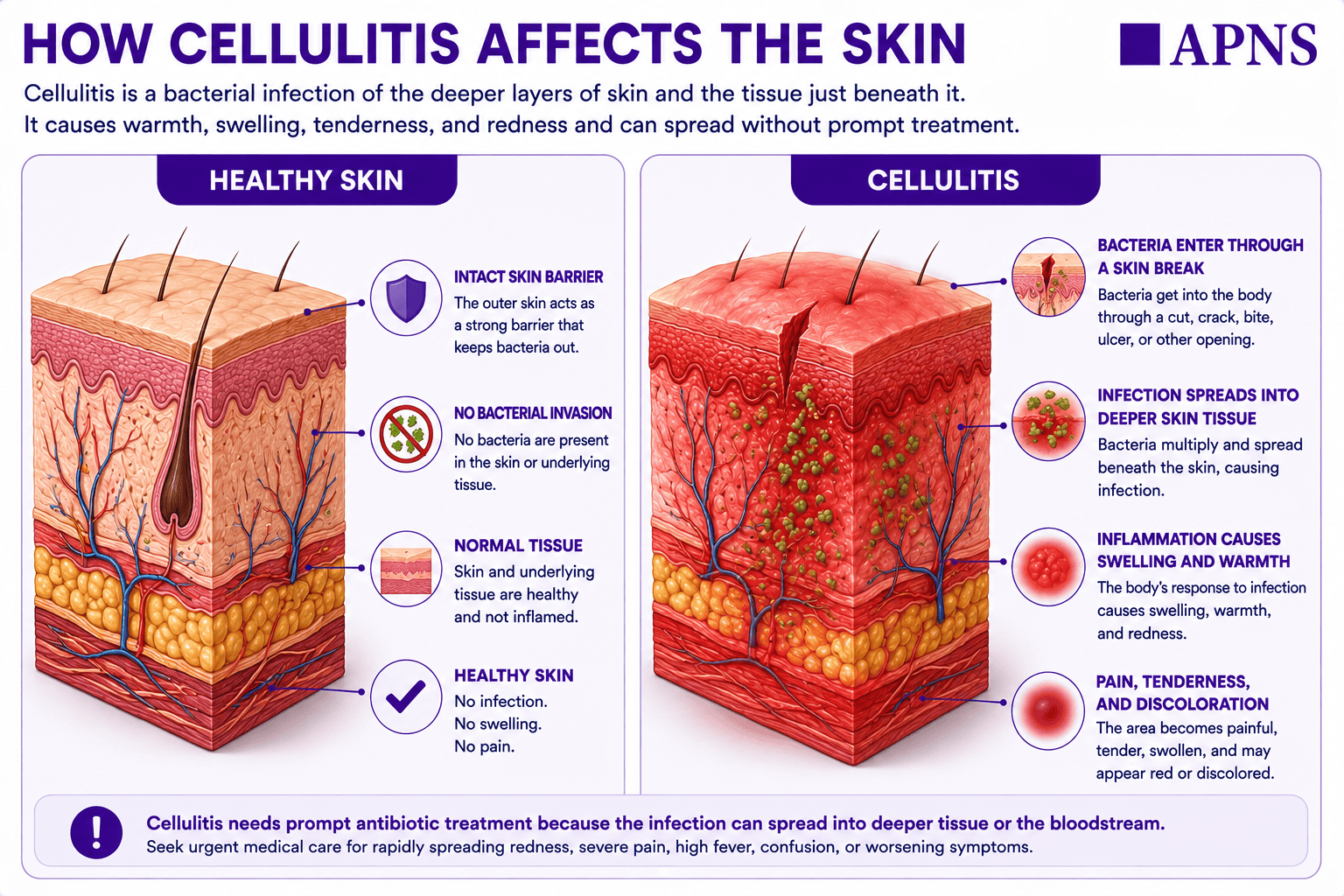
Streptococcus and Staphylococcus bacteria are common causes. They enter through a cut, crack, ulcer, bite, burn, surgical wound, injection site, fungal infection, or inflamed skin.
Cellulitis is generally not spread through casual contact, although drainage from an open wound can carry germs.
Facial or eye-area infection, bites, water exposure, surgical wounds, and infections near implanted joints or devices need special assessment.
People with repeated cellulitis should ask about skin care, edema treatment, specialist referral, and whether preventive antibiotics are appropriate.
Preventing Cellulitis From Returning – American Academy of Dermatology
https://www.aad.org/public/diseases/a-z/cellulitis-self-care
Provides wound, skin, athlete’s-foot, swelling, and health-condition prevention advice.
Clinical Guidance for Cellulitis – CDC
https://www.cdc.gov/group-a-strep/hcp/clinical-guidance/cellulitis.html
Reviews causes, testing, antibiotics, complications, elevation, and recurrence prevention.
The following video content is provided to help you better understand this condition. These resources are intended for educational purposes and should not replace personalized medical advice from your healthcare provider.
Antibiotic treatment should not be delayed for test results when cellulitis is suspected.
Clinical Guidance for Cellulitis – CDC
https://www.cdc.gov/group-a-strep/hcp/clinical-guidance/cellulitis.html
Reviews causes, testing, antibiotics, complications, elevation, and recurrence prevention.
A rapidly worsening patient may need urgent surgical assessment even before imaging is completed.
Most mild cellulitis is treated with oral antibiotics active against likely bacteria. Severe infection may require IV antibiotics, hospital care, fluids, monitoring, and specialist or surgical treatment.
Cellulitis can look slightly worse during the first day, but it should begin improving within about 24–48 hours. Contact the clinician promptly if it continues spreading or systemic symptoms persist.
Cellulitis: Diagnosis and Treatment – American Academy of Dermatology
https://www.aad.org/public/diseases/a-z/cellulitis-treatment
Explains antibiotics, wound care, elevation, expected improvement, and when to call the clinician.
Clinical Guidance for Cellulitis – CDC
https://www.cdc.gov/group-a-strep/hcp/clinical-guidance/cellulitis.html
Reviews causes, testing, antibiotics, complications, elevation, and recurrence prevention.
Do not massage an acutely infected area. Ask when it is safe to restart compression for chronic swelling.
Take antibiotics exactly as prescribed. Report allergy symptoms, severe diarrhea, fainting, or other serious effects. Never save or share leftover antibiotics.
Cellulitis itself does not contain a drainable pocket. If ultrasound or examination shows an abscess, a clinician may numb and drain it and send pus for culture.
Deep infection, dead tissue, infected hardware, severe bite injury, or necrotizing soft-tissue infection may require emergency surgery. Wounds or ulcers may need cleaning, debridement, or specialized dressings.
With prompt treatment, most people recover fully. Pain, warmth, and spread should improve first; swelling and skin discoloration may take longer to resolve.
One episode increases the chance of another, especially when edema, lymphedema, athlete’s foot, ulcers, obesity, or skin disease continues. Repeated episodes can further damage lymph drainage.
Cellulitis: Diagnosis and Treatment – American Academy of Dermatology
https://www.aad.org/public/diseases/a-z/cellulitis-treatment
Explains antibiotics, wound care, elevation, expected improvement, and when to call the clinician.
Preventing Cellulitis From Returning – American Academy of Dermatology
https://www.aad.org/public/diseases/a-z/cellulitis-self-care
Provides wound, skin, athlete’s-foot, swelling, and health-condition prevention advice.
Contact the clinician if symptoms are not clearly improving within 24–48 hours or if they worsen at any time.
Usually not through casual contact. Cover draining wounds and use good hand hygiene because wound bacteria can spread.
No. Cellulitis spreads through tissue without a pus pocket; an abscess contains pus and often needs drainage.
A clinician may recommend marking and dating the edge to track spread. Do not delay care while monitoring it.
It may look slightly worse during the first day, but ongoing spread, fever, or illness needs prompt reassessment.
No. Cellulitis is deeper than the skin surface and generally needs oral or IV antibiotics.
Rest and elevate during acute swelling or fever. Resume gradually after improvement and clinician guidance.
Common reasons include lymphedema, leg swelling, athlete’s foot, cracked skin, ulcers, obesity, and poorly controlled diabetes.
Not usually for uncomplicated nonpurulent cellulitis. Cultures are more useful with pus, severe illness, bites, water exposure, or immune suppression.

Yes. Most cellulitis clears with the correct antibiotic and supportive care. Severe or delayed cases can still be treated but may need hospitalization or surgery.
A cured episode can recur. Protecting skin and treating swelling, fungal infection, wounds, and chronic disease lowers the risk.
Call emergency services for confusion, collapse, breathing difficulty, signs of shock, or suspected sepsis. Severe pain and rapid skin change can signal necrotizing infection and require emergency surgery.
Cellulitis – NIH MedlinePlus
https://medlineplus.gov/ency/article/000855.htm
Provides patient information about symptoms, tests, treatment, hospitalization, and emergency warning signs.
Cellulitis: Signs and Symptoms – American Academy of Dermatology
https://www.aad.org/public/diseases/a-z/cellulitis-symptoms
Shows common skin and whole-body symptoms and signs of severe infection.
CALL 911
APNS does not provide emergency medical services. If you believe you are experiencing a medical emergency, including (but not limited to) chest pain, difficulty breathing, stroke symptoms, severe allergic reactions, anaphylaxis, uncontrolled bleeding, seizures, loss of consciousness, or any other potentially life-threatening condition, you are instructed to call 911 immediately or go immediately to the nearest emergency department.
About Cellulitis – CDC
https://www.cdc.gov/group-a-strep/about/cellulitis.html
Explains cellulitis symptoms, diagnosis, antibiotic treatment, recovery, and prevention.
Clinical Guidance for Cellulitis – CDC
https://www.cdc.gov/group-a-strep/hcp/clinical-guidance/cellulitis.html
Reviews causes, testing, antibiotics, complications, elevation, and recurrence prevention.
Cellulitis – NIH MedlinePlus
https://medlineplus.gov/ency/article/000855.htm
Provides patient information about symptoms, tests, treatment, hospitalization, and emergency warning signs.
Cellulitis: Diagnosis and Treatment – American Academy of Dermatology
https://www.aad.org/public/diseases/a-z/cellulitis-treatment
Explains antibiotics, wound care, elevation, expected improvement, and when to call the clinician.
Cellulitis: Signs and Symptoms – American Academy of Dermatology
https://www.aad.org/public/diseases/a-z/cellulitis-symptoms
Shows common skin and whole-body symptoms and signs of severe infection.
Preventing Cellulitis From Returning – American Academy of Dermatology
https://www.aad.org/public/diseases/a-z/cellulitis-self-care
Provides wound, skin, athlete’s-foot, swelling, and health-condition prevention advice.
This guide is educational and does not replace professional medical care. Cellulitis requires prompt evaluation and usually antibiotics. Seek emergency help for rapid spread, severe pain, purple or black skin, confusion, fainting, breathing trouble, eye involvement, or signs of sepsis. Do not use leftover antibiotics or attempt to drain the area at home.
At APNS, our providers take the time to understand your condition and your goals. We offer comprehensive telehealth visits at a fixed rate — no membership fees, no insurance required, and no unexpected charges. Whether you’re newly diagnosed or looking for a provider who actually listens, we’re here to help.