
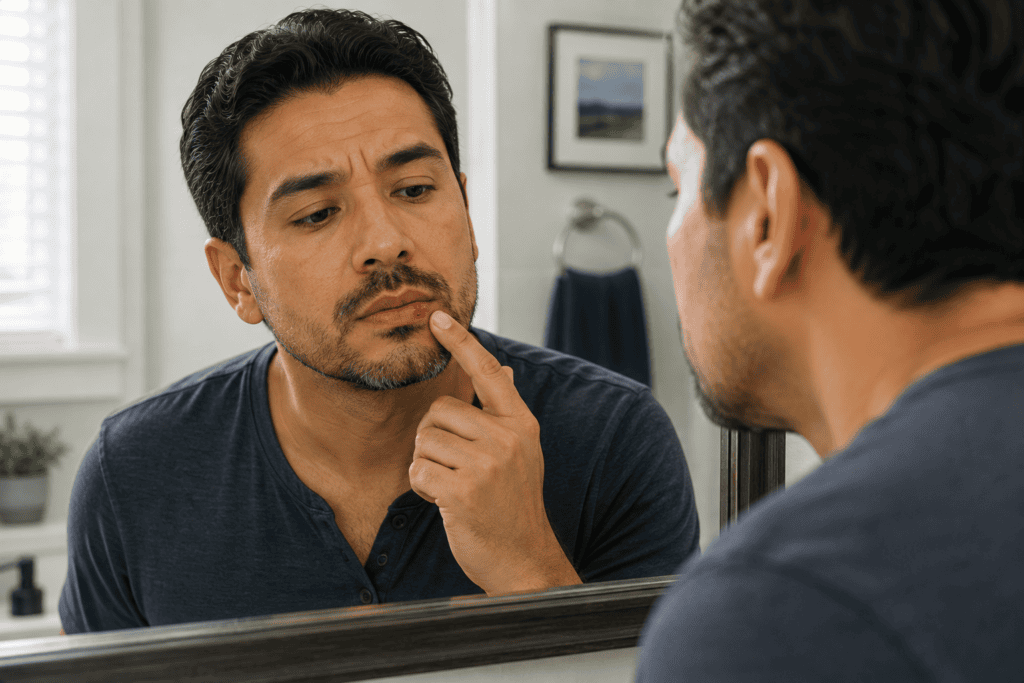
Cold sores, also called fever blisters or oral herpes, are caused by herpes simplex virus (HSV). HSV-1 causes most oral herpes, but HSV-2 can also infect the mouth. The first infection may cause painful mouth or lip sores, swollen gums, fever, or no symptoms at all.
After infection, HSV remains inactive in nearby nerves and may reactivate later. Recurrent outbreaks often begin with tingling, burning, or itching, followed by small fluid-filled blisters that open, crust, and heal. HSV is common, manageable, and not a sign of poor hygiene, but there is currently no cure that removes it from the body.
Cold Sores – NIH MedlinePlus
https://medlineplus.gov/coldsores.html
Provides patient-friendly information about cold-sore symptoms, treatment, recurrence, and prevention.
Herpes Simplex Virus – World Health Organization
https://www.who.int/news-room/fact-sheets/detail/herpes-simplex-virus
Reviews HSV-1 and HSV-2 transmission, oral and genital infection, symptoms, complications, and prevention.
Cold sores, also called fever blisters or oral herpes, are caused by herpes simplex virus (HSV). HSV-1 causes most oral herpes, but HSV-2 can also infect the mouth. The first infection may cause painful mouth or lip sores, swollen gums, fever, or no symptoms at all.
After infection, HSV remains inactive in nearby nerves and may reactivate later. Recurrent outbreaks often begin with tingling, burning, or itching, followed by small fluid-filled blisters that open, crust, and heal. HSV is common, manageable, and not a sign of poor hygiene, but there is currently no cure that removes it from the body.
Cold Sores – NIH MedlinePlus
https://medlineplus.gov/coldsores.html
Provides patient-friendly information about cold-sore symptoms, treatment, recurrence, and prevention.
Herpes Simplex Virus – World Health Organization
https://www.who.int/news-room/fact-sheets/detail/herpes-simplex-virus
Reviews HSV-1 and HSV-2 transmission, oral and genital infection, symptoms, complications, and prevention.
Recurrent cold sores usually affect the lip border or nearby skin.
Canker sores are different: they occur inside the mouth, are not caused by HSV, and are not contagious.
A healthcare provider can often diagnose a typical cold sore by examining it and asking about tingling, recurrence, location, exposures, and healing pattern. Tell the provider if this is your first outbreak, sores are inside the mouth, you are pregnant, or your immune system is weakened.
Testing is most useful when the appearance is unusual, the diagnosis is uncertain, the outbreak is severe, or treatment is not working. A fresh blister or ulcer provides the best sample.
Oral Herpes – NIH MedlinePlus Medical Encyclopedia
https://medlineplus.gov/ency/article/000606.htm
Explains oral herpes causes, symptoms, diagnosis, home care, and antiviral treatment.
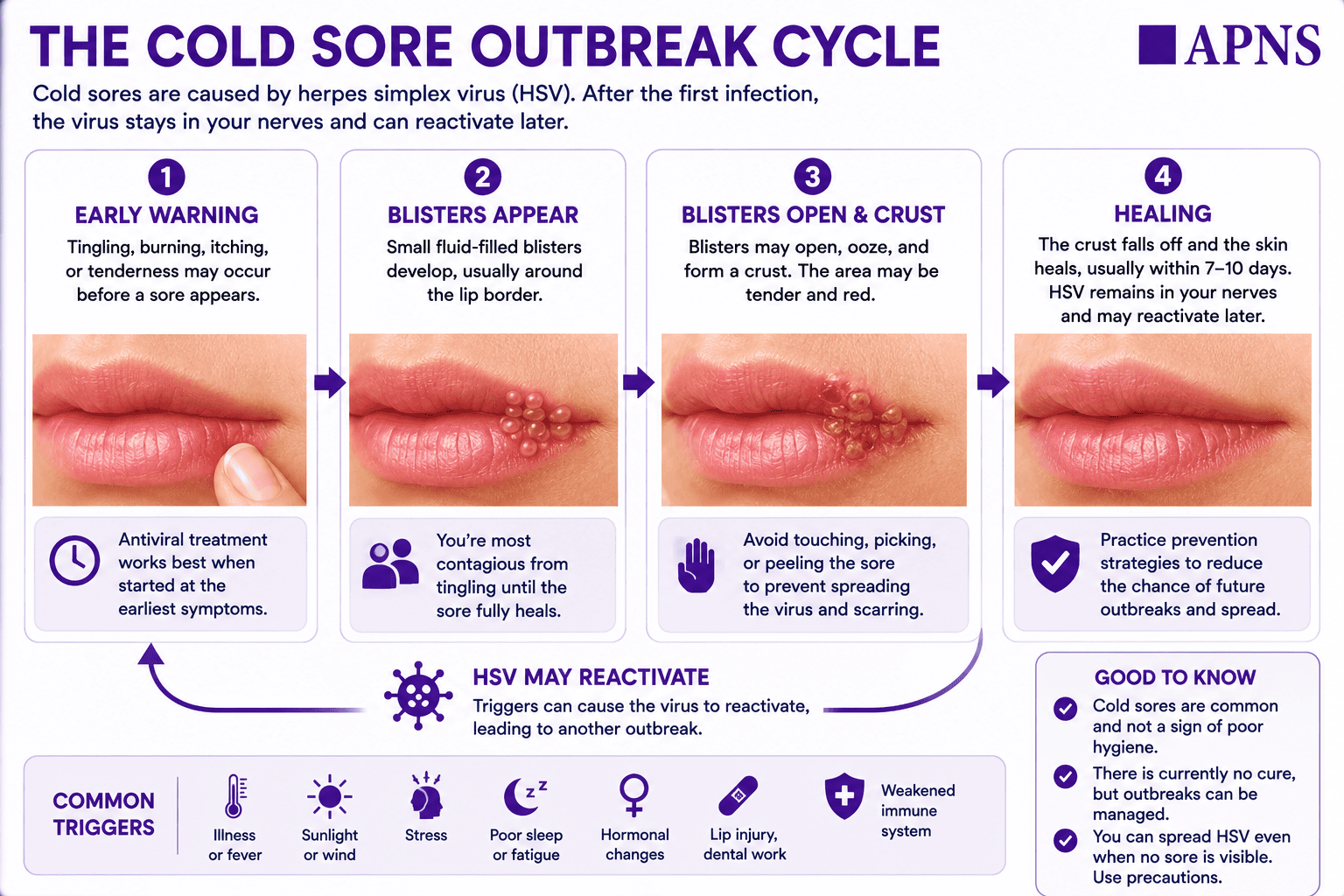
Cold sores occur when HSV infects skin or mucous membranes through direct contact with saliva, a sore, or skin that is shedding virus. The virus then remains in nerve cells and can reactivate.
Transmission can occur through kissing, oral sex, shared sex toys, or close skin-to-skin contact. Spread is most likely from tingling until the sore fully heals, but it can also occur when no sore is visible.
Oral Herpes – NIH MedlinePlus Medical Encyclopedia
https://medlineplus.gov/ency/article/000606.htm
Explains oral herpes causes, symptoms, diagnosis, home care, and antiviral treatment.
Triggers differ from person to person and sometimes no trigger is clear.
Repeated touching can spread HSV to the eyes, fingers, genital area, or broken skin elsewhere.
HSV transmission cannot always be prevented because the virus may shed without symptoms. Risk can still be reduced.
Herpes Simplex Virus – World Health Organization
https://www.who.int/news-room/fact-sheets/detail/herpes-simplex-virus
Reviews HSV-1 and HSV-2 transmission, oral and genital infection, symptoms, complications, and prevention.
The following video content is provided to help you better understand this condition. These resources are intended for educational purposes and should not replace personalized medical advice from your healthcare provider.
Most routine cold sores do not require laboratory testing.
Imaging is not needed for ordinary cold sores. A dermatologist or oral-health specialist may perform a biopsy when a persistent ulcer, growth, or unusual lesion does not behave like herpes.
An eye examination with special dye and magnification is needed when HSV eye infection is suspected. A lumbar puncture or brain imaging is reserved for rare symptoms suggesting meningitis or encephalitis.
Herpes Simplex Eye Infections – NIH MedlinePlus
https://medlineplus.gov/ency/article/001387.htm
Explains eye symptoms from herpes infection and why prompt treatment is important.
Cold sores usually heal without treatment in about one to two weeks, although a first outbreak may last longer. Antiviral medicine works best when started during tingling, burning, or itching—before blisters fully develop.
Treatment options may include:
Cold Sores – NIH MedlinePlus
https://medlineplus.gov/coldsores.html
Provides patient-friendly information about cold-sore symptoms, treatment, recurrence, and prevention.
Healthy routines do not eliminate HSV but may reduce some triggers and make outbreaks easier to manage.
Ask a healthcare professional which option fits your outbreak pattern, kidney function, pregnancy status, other medicines, and immune health.
Topical cold-sore medicines are generally for the lips or nearby skin—not inside the eye or deep inside the mouth unless specifically prescribed. Use the exact prescribed dose and ask about dose adjustment with kidney disease.
Valacyclovir Prescribing Information – U.S. Food and Drug Administration
https://www.accessdata.fda.gov/drugsatfda_docs/label/2021/020487s022lbl.pdf
Provides FDA-approved prescribing information for valacyclovir, including early treatment of cold sores.
Acyclovir Topical – NIH MedlinePlus
https://medlineplus.gov/druginfo/meds/a606001.html
Explains how prescription topical acyclovir is used for cold sores and how to apply it safely.
Routine cold sores do not require drainage, cutting, freezing, or removal. Popping or puncturing a blister increases pain, bacterial infection risk, and spread to other skin.
People with predictable outbreaks after dental work, laser treatment, filler, lip tattooing, or resurfacing should discuss preventive antiviral medicine before the procedure. Eye or severe widespread infection requires specialist treatment rather than a cosmetic procedure.
HSV remains in the body for life, but outbreaks often become less frequent and milder over time. Some people have one recognized episode; others have recurring sores.
Antiviral treatment controls outbreaks but does not eradicate the virus. Daily suppression may be considered when outbreaks are frequent, severe, emotionally distressing, or linked to predictable triggers.
Start your prescribed antiviral at the first warning symptom if your clinician provided an outbreak plan.
Oral Herpes – NIH MedlinePlus Medical Encyclopedia
https://medlineplus.gov/ency/article/000606.htm
Explains oral herpes causes, symptoms, diagnosis, home care, and antiviral treatment.
No. Cold sores are caused by HSV and are contagious. Canker sores usually occur inside the mouth and are not caused by HSV.
Yes. Asymptomatic viral shedding can occur, although transmission risk is highest during tingling, blistering, and open sores.
Yes. Oral HSV-1 can spread to a partner’s genitals during oral sex.
No. Popping can worsen pain, delay healing, introduce bacteria, and spread the virus.
No. It may reduce viral activity but does not remove all risk. Avoid contact during outbreaks and use barrier protection.
Stress does not create HSV infection, but physical or emotional stress may trigger reactivation in some people.

Consider asking:
Most cold sores can be treated by primary care, urgent care, or telehealth when appropriate.
No. Current medicines cannot remove HSV from nerve cells, so the virus remains in the body after infection.
Cold sores are treatable. Antiviral medicines can shorten outbreaks, reduce pain, and lower recurrence frequency, and practical precautions can reduce transmission.
Most cold sores are not emergencies. Seek prompt care for a first severe outbreak, sores lasting more than about two weeks, repeated outbreaks, dehydration, spreading redness or pus, or any outbreak with a weakened immune system.
Seek urgent or emergency care for:
Herpes Simplex Eye Infections – NIH MedlinePlus
https://medlineplus.gov/ency/article/001387.htm
Explains eye symptoms from herpes infection and why prompt treatment is important.
CALL 911
APNS does not provide emergency medical services. If you believe you are experiencing a medical emergency, including (but not limited to) chest pain, difficulty breathing, stroke symptoms, severe allergic reactions, anaphylaxis, uncontrolled bleeding, seizures, loss of consciousness, or any other potentially life-threatening condition, you are instructed to call 911 immediately or go immediately to the nearest emergency department.
Cold Sores – NIH MedlinePlus
https://medlineplus.gov/coldsores.html
Provides patient-friendly information about cold-sore symptoms, treatment, recurrence, and prevention.
Oral Herpes – NIH MedlinePlus Medical Encyclopedia
https://medlineplus.gov/ency/article/000606.htm
Explains oral herpes causes, symptoms, diagnosis, home care, and antiviral treatment.
Herpes Simplex Virus – World Health Organization
https://www.who.int/news-room/fact-sheets/detail/herpes-simplex-virus
Reviews HSV-1 and HSV-2 transmission, oral and genital infection, symptoms, complications, and prevention.
About Genital Herpes – Centers for Disease Control and Prevention
https://www.cdc.gov/herpes/about/index.html
Explains how HSV-1 and HSV-2 can affect oral or genital areas and spread even without visible sores.
Herpes – CDC STI Treatment Guidelines
https://www.cdc.gov/std/treatment-guidelines/herpes.htm
Provides clinical guidance for herpes testing, antiviral treatment, counseling, pregnancy, and complications.
Acyclovir Topical – NIH MedlinePlus
https://medlineplus.gov/druginfo/meds/a606001.html
Explains how prescription topical acyclovir is used for cold sores and how to apply it safely.
Famciclovir – NIH MedlinePlus
https://medlineplus.gov/druginfo/meds/a694038.html
Provides safety and use information for an oral antiviral used for recurrent cold sores in selected adults.
Valacyclovir Prescribing Information – U.S. Food and Drug Administration
https://www.accessdata.fda.gov/drugsatfda_docs/label/2021/020487s022lbl.pdf
Provides FDA-approved prescribing information for valacyclovir, including early treatment of cold sores.
Herpes Simplex Eye Infections – NIH MedlinePlus
https://medlineplus.gov/ency/article/001387.htm
Explains eye symptoms from herpes infection and why prompt treatment is important.
This guide is intended for educational purposes only and should not replace medical advice, diagnosis, testing, or treatment from your healthcare provider. Lip and mouth sores may be caused by herpes, canker sores, bacterial infection, medication reactions, autoimmune disease, precancerous changes, or other conditions requiring different care. Antiviral medicines work best when started early and may require dose adjustment or special guidance during pregnancy, kidney disease, or immune suppression. Seek urgent care for eye pain or vision changes, confusion or seizure, severe dehydration, widespread blistering, serious allergic symptoms, or possible herpes infection in a newborn.
At APNS, our providers take the time to understand your condition and your goals. We offer comprehensive telehealth visits at a fixed rate — no membership fees, no insurance required, and no unexpected charges. Whether you’re newly diagnosed or looking for a provider who actually listens, we’re here to help.