

Constipation is a common digestive condition in which bowel movements become infrequent, difficult to pass, or both. Although bowel habits vary from person to person, constipation is generally defined as having fewer than three bowel movements per week, passing hard or dry stools, or feeling that you are unable to completely empty your bowels.
Constipation may be acute (short-term) or chronic (lasting several weeks or longer). Most cases are temporary and improve with dietary changes, increased fluid intake, physical activity, and other lifestyle modifications. However, persistent constipation may be a sign of an underlying medical condition and should be evaluated by a healthcare provider.
Common causes include a low-fiber diet, dehydration, lack of physical activity, certain medications, pregnancy, irritable bowel syndrome (IBS), thyroid disorders, neurological conditions, and bowel disorders.
Constipation – NIH MedlinePlus
https://medlineplus.gov/constipation.html
Provides easy-to-understand information about constipation, symptoms, diagnosis, treatment, and prevention.
Constipation – National Institute of Diabetes and Digestive and Kidney Diseases (NIDDK)
https://www.niddk.nih.gov/health-information/digestive-diseases/constipation
Provides comprehensive information about constipation, risk factors, diagnosis, and treatment.
Constipation is one of the most common digestive complaints worldwide. It affects millions of adults and children each year and is especially common among older adults, pregnant individuals, and people taking certain medications.
Although constipation is usually not serious, chronic constipation can significantly affect quality of life and occasionally lead to complications if left untreated.
Constipation – NIH MedlinePlus
https://medlineplus.gov/constipation.html
Provides information about constipation, common causes, and treatment options.
Symptoms vary from person to person.
Common symptoms may include:
Severe constipation may also cause rectal discomfort or bleeding from hemorrhoids or small tears (anal fissures).
Your healthcare provider will review your symptoms, diet, medications, bowel habits, and medical history and perform a physical examination.
Most cases are diagnosed based on your history and physical exam. Additional testing may be recommended if symptoms are severe, persistent, or concerning for another medical condition.
Constipation – NIH MedlinePlus
https://medlineplus.gov/constipation.html
Explains how constipation is diagnosed and when additional testing is recommended.
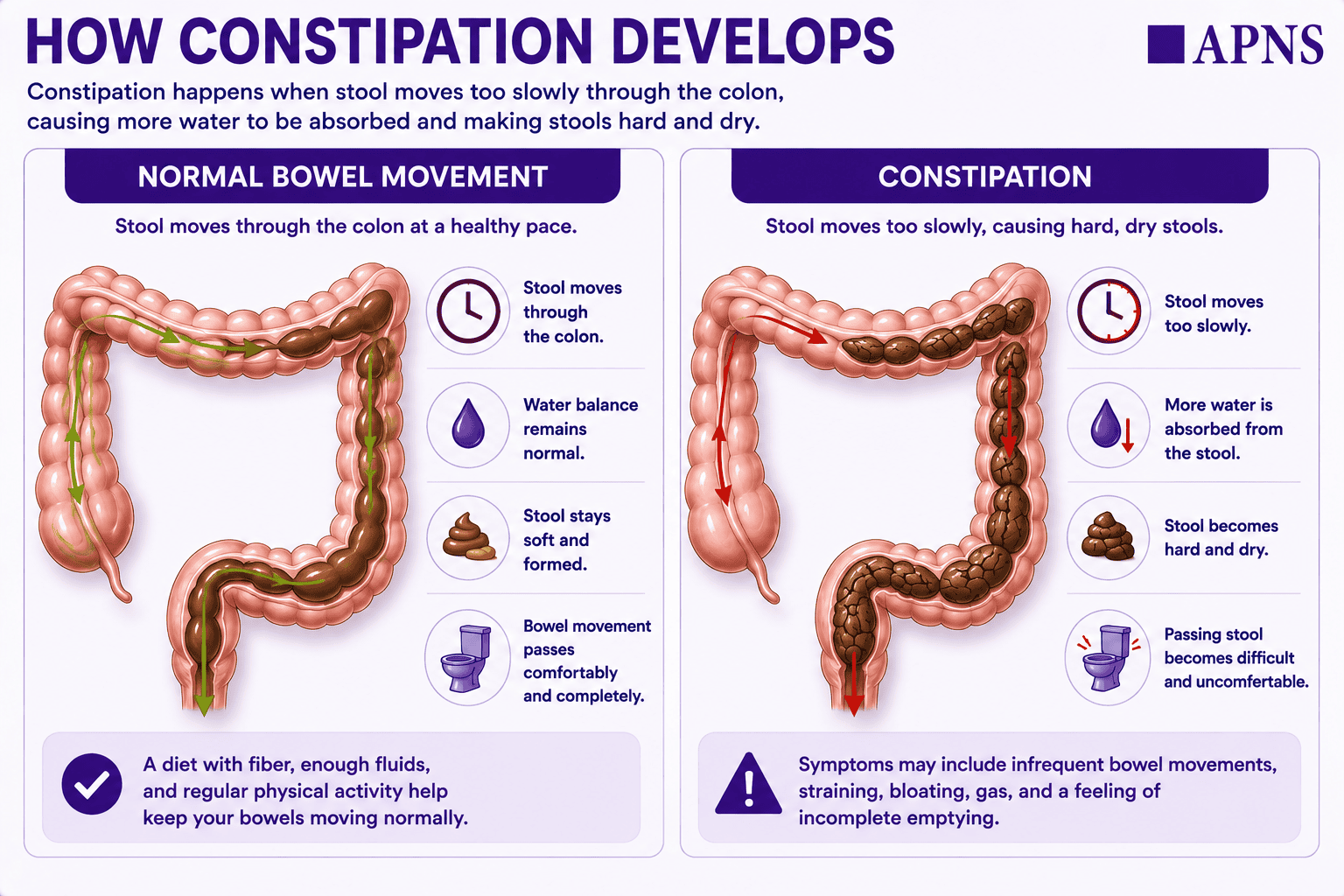
Constipation has many possible causes.
Common causes include:
Constipation – NIH MedlinePlus
https://medlineplus.gov/constipation.html
Learn about the many causes of constipation and when medical evaluation is recommended.
Several factors may worsen constipation or delay recovery.
Common factors include:
Constipation – NIH MedlinePlus
https://medlineplus.gov/constipation.html
Provides information about common risk factors and factors that worsen constipation.
Many cases of constipation can be prevented by maintaining healthy bowel habits.
Helpful prevention tips include:
National Institute of Diabetes and Digestive and Kidney Diseases (NIDDK)
https://www.niddk.nih.gov/health-information/digestive-diseases/constipation
Provides practical recommendations for preventing constipation and maintaining digestive health.
The following video content is provided to help you better understand this condition. These resources are intended for educational purposes and should not replace personalized medical advice from your healthcare provider.
Laboratory testing may be recommended if an underlying medical condition is suspected.
Common laboratory tests may include:
Laboratory Tests – NIH MedlinePlus
https://medlineplus.gov/lab-tests/
Provides information about laboratory testing commonly used to evaluate constipation.
Additional testing depends on your symptoms and medical history.
Common diagnostic tests may include:
American College of Gastroenterology (ACG)
https://gi.org/
Provides patient education about gastrointestinal testing and digestive disorders.
Treatment depends on the underlying cause and severity of constipation.
Treatment options may include:
Constipation – NIH MedlinePlus
https://medlineplus.gov/constipation.html
Provides information about treatment options for constipation.
Healthy habits are often the most effective way to prevent and manage constipation.
Helpful lifestyle changes include:
National Institute of Diabetes and Digestive and Kidney Diseases (NIDDK)
https://www.niddk.nih.gov/health-information/digestive-diseases/constipation
Provides practical recommendations for preventing and managing constipation.
Treatment depends on the underlying cause of your constipation.
Common medications may include:
Constipation – NIH MedlinePlus
https://medlineplus.gov/constipation.html
Provides information about medications commonly used to treat constipation.
Most people with constipation do not require invasive procedures. However, additional procedures may be recommended when constipation is severe, chronic, or caused by another medical condition.
Common procedures may include:
Constipation – NIH MedlinePlus
https://medlineplus.gov/constipation.html
Learn about constipation, diagnostic testing, and treatment options.
Most cases of constipation improve with lifestyle changes, increased fiber intake, hydration, and appropriate treatment.
People with chronic constipation may require ongoing dietary modifications, medications, or treatment of underlying medical conditions. When managed appropriately, most people experience significant improvement in symptoms and quality of life.
Home care is often the first step in treating constipation.
Helpful tips include:
Constipation – NIH MedlinePlus
https://medlineplus.gov/constipation.html
Provides practical recommendations for managing constipation at home.
Normal bowel habits vary widely. Some people have bowel movements three times a day, while others have them three times a week. Both may be normal if stools are passed comfortably.
Yes. Constipation commonly causes abdominal pain, bloating, cramping, and discomfort.
Increasing fiber too quickly without drinking enough water may worsen constipation. Fiber should be increased gradually while maintaining adequate hydration.
Seek medical evaluation if constipation lasts longer than three weeks, is associated with severe pain, unexplained weight loss, blood in the stool, or persistent vomiting.
Yes. Repeated straining during bowel movements increases the risk of hemorrhoids and anal fissures.

Consider asking your healthcare provider:
Most cases of constipation are treated by a primary care provider. Depending on your symptoms or diagnosis, your provider may recommend seeing a specialist.
You may be referred to:
American College of Gastroenterology (ACG)
https://gi.org/
Provides patient education about constipation, digestive diseases, and specialty care.
Many cases of constipation are temporary and completely treatable, especially those caused by dehydration, dietary changes, or certain medications.
Chronic constipation related to underlying medical conditions may not always be curable, but it can usually be managed successfully with lifestyle changes, medications, and ongoing medical care.
Call 911 or seek emergency medical care immediately if you experience:
Seek prompt medical evaluation if you notice:
Constipation – NIH MedlinePlus
https://medlineplus.gov/constipation.html
Learn about constipation complications and when emergency medical care is needed.
CALL 911
APNS does not provide emergency medical services. If you believe you are experiencing a medical emergency, including (but not limited to) chest pain, difficulty breathing, stroke symptoms, severe allergic reactions, anaphylaxis, uncontrolled bleeding, seizures, loss of consciousness, or any other potentially life-threatening condition, you are instructed to call 911 immediately or go immediately to the nearest emergency department.
Constipation – NIH MedlinePlus
https://medlineplus.gov/constipation.html
Easy-to-understand information about constipation, symptoms, diagnosis, treatment, and prevention.
National Institute of Diabetes and Digestive and Kidney Diseases (NIDDK)
https://www.niddk.nih.gov/health-information/digestive-diseases/constipation
Comprehensive information about constipation, digestive health, diagnosis, and treatment.
American College of Gastroenterology (ACG)
https://gi.org/
Evidence-based patient education about constipation, digestive disorders, and available treatments.
American Gastroenterological Association (AGA)
https://gastro.org/
Trusted patient education about digestive health, gastrointestinal disorders, and constipation.
This guide is intended for educational purposes only and should not replace medical advice, diagnosis, or treatment from your healthcare provider. Always follow the recommendations of your healthcare team regarding your individual health needs. Contact your healthcare provider if your symptoms worsen, do not improve as expected, or new symptoms develop. Call 911 immediately if you experience severe abdominal pain, persistent vomiting, inability to pass stool or gas with severe abdominal pain, loss of consciousness, or another medical emergency.
At APNS, our providers take the time to understand your condition and your goals. We offer comprehensive telehealth visits at a fixed rate — no membership fees, no insurance required, and no unexpected charges. Whether you’re newly diagnosed or looking for a provider who actually listens, we’re here to help.