

An upper respiratory infection (URI) is an infection that affects the nose, sinuses, throat, and upper airways. The common cold is the most frequent type of upper respiratory infection. Most URIs are caused by viruses, although some infections may be caused by bacteria.
Common upper respiratory infections include:
Most upper respiratory infections are mild and improve on their own within 7 to 14 days with rest, fluids, and symptom management. Because most URIs are caused by viruses, antibiotics are usually not needed unless a bacterial infection is suspected or confirmed.
Upper Respiratory Infection – NIH MedlinePlus
https://medlineplus.gov/respiratorytractinfections.html
Provides easy-to-understand information about upper respiratory infections, symptoms, diagnosis, treatment, and prevention.
Respiratory Viruses – Centers for Disease Control and Prevention (CDC)
https://www.cdc.gov/respiratory-viruses/
Provides information about common respiratory viruses, including influenza, COVID-19, RSV, and the common cold.
Upper respiratory infections are among the most common illnesses affecting people of all ages. Adults typically experience two to four colds each year, while children may have six to eight or more because their immune systems are still developing.
URIs occur throughout the year but are most common during the fall and winter months when respiratory viruses spread more easily.
Common Cold – CDC
https://www.cdc.gov/common-cold/
Provides information about the common cold, how it spreads, and prevention strategies.
Symptoms vary depending on the virus or bacteria causing the infection.
Common symptoms may include:
Most symptoms gradually improve over one to two weeks, although a cough may last longer.
Your healthcare provider will review your symptoms, recent exposures, and medical history, and perform a physical examination.
Most upper respiratory infections are diagnosed based on your symptoms alone. Additional testing may be recommended if influenza, COVID-19, RSV, strep throat, or another illness is suspected.
Upper Respiratory Infection – NIH MedlinePlus
https://medlineplus.gov/respiratorytractinfections.html
Explains how upper respiratory infections are diagnosed and when testing may be recommended.
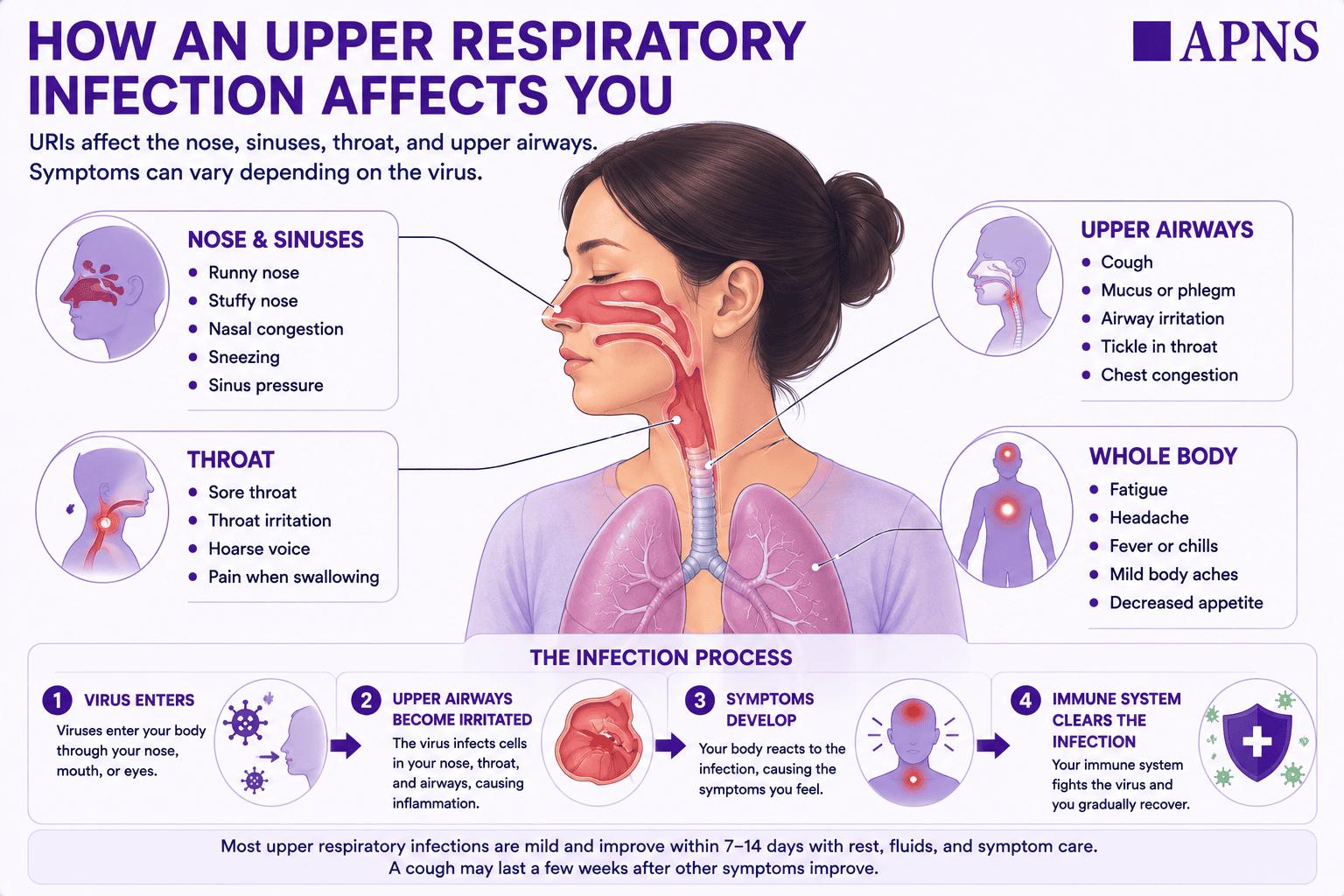
Most upper respiratory infections are caused by viruses that spread easily from person to person.
Common causes include:
Less commonly, bacterial infections may develop after a viral illness.
Respiratory infections spread through:
Respiratory Viruses – CDC
https://www.cdc.gov/respiratory-viruses/
Learn how upper respiratory infections spread and ways to reduce your risk.
Several factors increase the risk of developing more severe illness or complications.
Common risk factors include:
Respiratory Viruses – CDC
https://www.cdc.gov/respiratory-viruses/
Provides information about risk factors for severe respiratory infections.
Many upper respiratory infections can be prevented by practicing good hygiene and staying up to date with recommended vaccinations.
Helpful prevention tips include:
Respiratory Viruses – CDC
https://www.cdc.gov/respiratory-viruses/
Provides practical recommendations for preventing upper respiratory infections and reducing transmission.
The following video content is provided to help you better understand this condition. These resources are intended for educational purposes and should not replace personalized medical advice from your healthcare provider.
Most upper respiratory infections do not require laboratory testing.
When indicated, laboratory tests may include:
Laboratory Tests – NIH MedlinePlus
https://medlineplus.gov/lab-tests/
Provides information about laboratory testing commonly used to diagnose respiratory infections.
Additional testing depends on your symptoms and overall health.
Common diagnostic tests may include:
Respiratory Viruses – CDC
https://www.cdc.gov/respiratory-viruses/
Provides information about respiratory infection testing and evaluation.
Treatment depends on the cause of the infection and the severity of symptoms.
Treatment options may include:
Respiratory Viruses – CDC
https://www.cdc.gov/respiratory-viruses/
Provides information about treatment options and symptom management.
Healthy habits help support recovery and reduce the spread of infection.
Helpful lifestyle changes include:
Respiratory Viruses – CDC
https://www.cdc.gov/respiratory-viruses/
Provides recommendations for preventing illness and recovering safely.
Treatment depends on your symptoms and the cause of your illness.
Common medications may include:
Respiratory Viruses – CDC
https://www.cdc.gov/respiratory-viruses/
Provides information about medications, antiviral treatment, and supportive care.
Treatment depends on your symptoms and the cause of your illness.
Common medications may include:
Respiratory Viruses – CDC
https://www.cdc.gov/respiratory-viruses/
Provides information about medications, antiviral treatment, and supportive care.
Most upper respiratory infections improve within 7–14 days, although a cough may last up to 3–8 weeks after the infection has resolved.
Most people recover completely without long-term problems. However, some individuals—especially older adults, infants, or those with chronic medical conditions—may develop complications such as sinus infections, ear infections, bronchitis, or pneumonia.
Follow up with your healthcare provider if symptoms persist or worsen.
Home care is one of the most important parts of recovering from an upper respiratory infection.
Helpful tips include:
Respiratory Viruses – CDC
https://www.cdc.gov/respiratory-viruses/
Provides recommendations for recovering safely and preventing the spread of respiratory illnesses.
No. Most colds and upper respiratory infections are caused by viruses, so antibiotics do not help.
A cough often improves within
, although some coughs may continue for several weeks after the infection has resolved.
Light activity may be acceptable if your symptoms are mild and limited to above the neck (such as a runny nose or sore throat). If you have fever, chest congestion, shortness of breath, or significant fatigue, rest until you recover. If you are unsure, ask your healthcare provider.
In general, you should stay home until your fever has resolved without fever-reducing medication and you feel well enough to participate in normal activities. Follow your healthcare provider’s recommendations.
Many can be prevented by washing your hands frequently, avoiding close contact with sick individuals, staying current on recommended vaccinations, and maintaining healthy lifestyle habits.

Consider asking your healthcare provider:
Most upper respiratory infections are managed by a primary care provider. Depending on your symptoms or medical history, your provider may recommend seeing a specialist.
You may be referred to:
Respiratory Infections – NIH MedlinePlus
https://medlineplus.gov/respiratorytractinfections.html
Provides information about respiratory infections, treatment, and specialty care.
Most upper respiratory infections are temporary and resolve completely with rest, fluids, and supportive care.
Because most URIs are caused by viruses, they improve as your immune system clears the infection. Bacterial infections may require antibiotics. Most people recover fully without lasting complications.
Call 911 or seek emergency medical care immediately if you experience:
Seek prompt medical evaluation if you notice:
Respiratory Viruses – CDC
https://www.cdc.gov/respiratory-viruses/
Learn when upper respiratory symptoms require emergency medical care and how to recognize serious complications.
CALL 911
APNS does not provide emergency medical services. If you believe you are experiencing a medical emergency, including (but not limited to) chest pain, difficulty breathing, stroke symptoms, severe allergic reactions, anaphylaxis, uncontrolled bleeding, seizures, loss of consciousness, or any other potentially life-threatening condition, you are instructed to call 911 immediately or go immediately to the nearest emergency department.
Respiratory Infections – NIH MedlinePlus
https://medlineplus.gov/respiratorytractinfections.html
Easy-to-understand information about upper respiratory infections, symptoms, diagnosis, treatment, and prevention.
Respiratory Viruses – Centers for Disease Control and Prevention (CDC)
https://www.cdc.gov/respiratory-viruses/
Comprehensive information about influenza, COVID-19, RSV, and other common respiratory viruses.
Common Cold – Centers for Disease Control and Prevention (CDC)
https://www.cdc.gov/common-cold/
Reliable information about preventing and managing the common cold.
American Lung Association
https://www.lung.org/
Evidence-based information about respiratory health, lung disease, bronchitis, pneumonia, and healthy breathing.
This guide is intended for educational purposes only and should not replace medical advice, diagnosis, or treatment from your healthcare provider. Always follow the recommendations of your healthcare team regarding your individual health needs. Contact your healthcare provider if your symptoms worsen, new symptoms develop, or do not improve as expected. Call 911 immediately if you experience difficulty breathing, chest pain, blue lips, confusion, loss of consciousness, coughing up large amounts of blood, or another medical emergency.
At APNS, our providers take the time to understand your condition and your goals. We offer comprehensive telehealth visits at a fixed rate — no membership fees, no insurance required, and no unexpected charges. Whether you’re newly diagnosed or looking for a provider who actually listens, we’re here to help.