
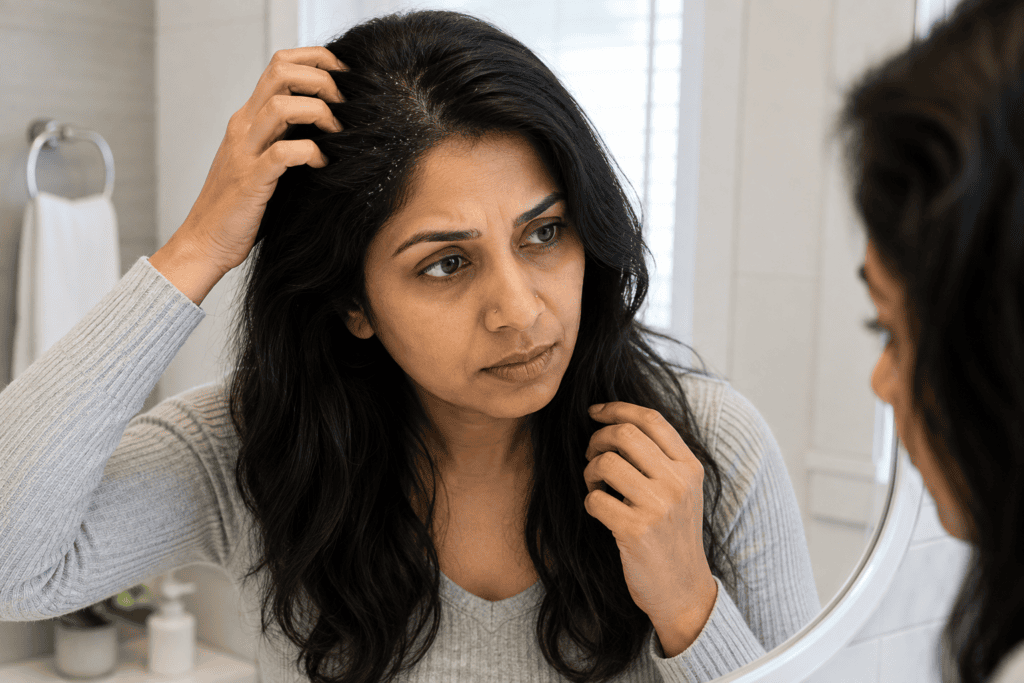
Dandruff is a common scalp condition that causes white, gray, or yellowish flakes of skin to appear on the scalp and in the hair. It may also cause itching, irritation, oiliness, or mild scalp inflammation. Dandruff is usually considered a mild form of seborrheic dermatitis, also called seborrhea or seborrheic eczema.
Seborrhea capitis or seborrheic capitis refers to seborrheic dermatitis involving the scalp. More noticeable cases may cause greasy scales, crusting, and inflamed patches. Seborrheic dermatitis may also affect oily areas such as the eyebrows, eyelids, sides of the nose, behind the ears, beard area, upper chest, and skin folds.
Dandruff and seborrheic dermatitis are not contagious and are not caused by poor hygiene. Although there is no permanent cure, regular scalp care and medicated shampoos can usually control the symptoms.
Dandruff, Cradle Cap, and Other Scalp Conditions – NIH MedlinePlus
https://medlineplus.gov/dandruffcradlecapandotherscalpconditions.html
Provides patient-friendly information about dandruff, seborrheic dermatitis, cradle cap, and other scalp conditions.
Seborrheic Dermatitis – NIH MedlinePlus
https://medlineplus.gov/ency/article/000963.htm
Explains the symptoms, possible causes, diagnosis, and treatment of seborrheic dermatitis.
Dandruff is very common and usually begins after puberty. It may affect people of every age and skin tone, although scalp flaking can look different depending on hair type, scalp oil production, and natural skin color. Dandruff is reported more commonly in men.
Seborrheic dermatitis can occur during infancy, adolescence, or adulthood. In infants, scalp seborrheic dermatitis is commonly called cradle cap. Adult seborrheic dermatitis often improves and returns over time.
Seborrheic Dermatitis: Overview – American Academy of Dermatology
https://www.aad.org/public/diseases/a-z/seborrheic-dermatitis-overview
Provides dermatologist-reviewed information about seborrheic dermatitis, who develops it, and how it affects the skin.
Symptoms may be mild or more noticeable during a flare-up.
Common symptoms may include:
On lighter skin, affected areas may appear pink or red. On darker skin, inflammation may look purple, gray, brown, or darker or lighter than the surrounding skin.
Itching is often mild but can become intense, especially on the scalp. Effective treatment usually reduces the itching, burning, and scaling.
A healthcare provider usually diagnoses dandruff or seborrheic dermatitis by examining the scalp and reviewing your symptoms. They may also examine the eyebrows, ears, beard, eyelids, nose, chest, and other oily areas.
Your provider may ask about:
Dandruff may resemble dry scalp, scalp psoriasis, eczema, allergic contact dermatitis, or tinea capitis. Additional testing may be needed when the diagnosis is unclear.
Is Your Dry Scalp Something More Serious? – American Academy of Dermatology
https://www.aad.org/public/everyday-care/hair-scalp-care/scalp/dry-scalp-conditions
Explains differences between dandruff, dry scalp, psoriasis, eczema, and scalp fungal infections.
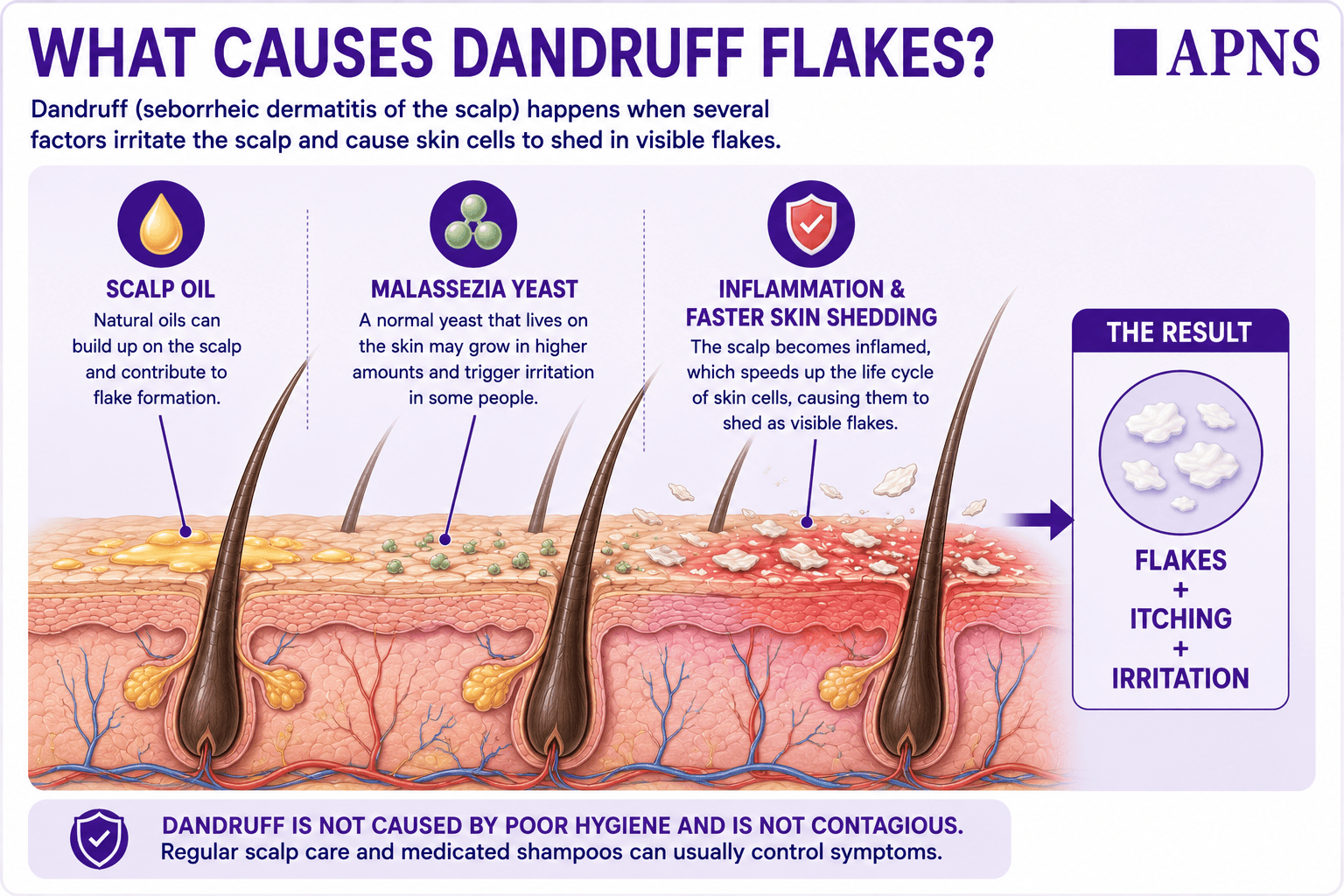
The exact cause is not completely understood. Seborrheic dermatitis appears to involve a combination of natural skin oils, inflammation, immune-system activity, and an increased reaction to Malassezia, a type of yeast that normally lives on the skin.
Antifungal treatments often improve seborrheic dermatitis by reducing yeast on the skin. Symptoms may return as yeast levels and inflammation increase again.
Possible contributing factors include:
Dandruff is not caused by worms, lice, poor hygiene, or an infection that spreads between people.
Seborrheic Dermatitis: Causes – American Academy of Dermatology
https://www.aad.org/public/diseases/a-z/seborrheic-dermatitis-causes
Explains current understanding of yeast, skin oil, inflammation, and other possible contributors.
Several factors may cause symptoms to flare or make scalp irritation more noticeable.
Common triggers may include:
Dry shampoo absorbs oil but does not fully clean the scalp. Regularly using dry shampoo without washing with shampoo and water may contribute to buildup and seborrheic dermatitis.
Seborrheic Dermatitis: Self-Care – American Academy of Dermatology
https://www.aad.org/public/diseases/a-z/seborrheic-dermatitis-self-care
Provides practical guidance for reducing flare-ups and caring for the scalp and other affected areas.
Dandruff cannot always be prevented, but consistent scalp care may reduce flare-ups.
Helpful prevention tips include:
Seborrheic Dermatitis: Self-Care – American Academy of Dermatology
https://www.aad.org/public/diseases/a-z/seborrheic-dermatitis-self-care
Provides recommendations for controlling flare-ups and maintaining healthy scalp and skin care.
The following video content is provided to help you better understand this condition. These resources are intended for educational purposes and should not replace personalized medical advice from your healthcare provider.
Most people with dandruff or seborrheic dermatitis do not require laboratory testing.
Testing may be recommended if another condition is suspected.
Possible laboratory tests may include:
Laboratory Tests – NIH MedlinePlus
https://medlineplus.gov/lab-tests/
Provides information about laboratory tests that may be used to rule out other scalp or skin conditions.
Most people do not require imaging or extensive diagnostic testing.
Possible evaluations may include:
Skin Biopsy – NIH MedlinePlus
https://medlineplus.gov/lab-tests/skin-biopsy/
Explains why a small skin sample may occasionally be needed to diagnose an unclear scalp condition.
Treatment reduces yeast, scale, itching, and inflammation. Mild dandruff may improve with regular washing and an over-the-counter dandruff shampoo. Moderate or severe seborrheic dermatitis may require prescription shampoo, antifungal medication, or a short course of anti-inflammatory treatment.
Treatment options may include:
One medicated shampoo may work better than another. Some people benefit from rotating shampoos with different active ingredients.
Seborrheic Dermatitis: Diagnosis and Treatment – American Academy of Dermatology
https://www.aad.org/public/diseases/a-z/seborrheic-dermatitis-treatment
Provides information about dandruff shampoos, prescription medication, and treatment for the scalp, face, and body.
Consistent scalp and skin care can reduce symptoms and prevent flare-ups.
Helpful lifestyle changes include:
Hair textures and styling needs differ. A dermatologist can help create a washing and treatment schedule that controls dandruff without excessively drying or damaging the hair.
How to Treat Dandruff – American Academy of Dermatology
https://www.aad.org/public/diseases/hair-and-scalp-problems/dandruff-how-to-treat
Provides dermatologist-recommended guidance for selecting and properly using dandruff shampoo.
Medicated shampoos and topical medications are the main treatments.
Common active ingredients may include:
Dandruff shampoos should be massaged into the scalp rather than applied only to the hair. Many products need to remain on the scalp for several minutes before rinsing. Follow the package or prescription instructions.
Ketoconazole shampoo is commonly used during active treatment and may later be used less often for maintenance. Exact frequency should follow the product instructions or healthcare provider’s recommendation.
Coal-tar shampoo may discolor light-colored, bleached, tinted, or chemically treated hair.
Ketoconazole Topical – NIH MedlinePlus
https://medlineplus.gov/druginfo/meds/a605014.html
Provides information about ketoconazole shampoo and cream, correct use, precautions, and possible side effects.
Most dandruff and seborrheic dermatitis do not require invasive procedures.
Possible office-based evaluations or treatments may include:
Do not scrape the scalp with fingernails, combs, or sharp objects. This may damage the skin, increase inflammation, and cause infection.
Seborrheic Dermatitis Treatment – American Academy of Dermatology
https://www.aad.org/public/diseases/a-z/seborrheic-dermatitis-treatment
Explains the medical evaluation and treatment of persistent seborrheic dermatitis.
Dandruff and adult seborrheic dermatitis are usually chronic or recurring. Symptoms may clear with treatment and then return, especially during stress, illness, seasonal changes, or interruptions in scalp care.
Most people can successfully control symptoms with:
Seborrheic dermatitis generally does not cause permanent hair loss. Temporary shedding may occur because of scratching, inflammation, or thick scale. Persistent patchy hair loss may suggest another condition such as tinea capitis, alopecia areata, or scalp psoriasis and should be evaluated.
Home treatment is often effective for mild to moderate dandruff.
Helpful steps include:
People with tightly curled, coiled, color-treated, or chemically treated hair may need a less frequent shampoo schedule. A dermatologist can recommend a treatment plan that protects both scalp and hair.
How to Treat Dandruff – American Academy of Dermatology
https://www.aad.org/public/diseases/hair-and-scalp-problems/dandruff-how-to-treat
Provides instructions for using different types of dandruff shampoo safely and effectively.
No. Dandruff and seborrheic dermatitis do not spread from one person to another.
No. Poor hygiene does not cause dandruff. However, infrequent scalp washing may allow oil and flakes to build up and become more noticeable.
No. Dry scalp results from loss of moisture and often produces small, dry flakes. Dandruff is commonly related to seborrheic dermatitis and may produce oily, larger, or yellowish flakes.
Dandruff is not usually considered a contagious fungal infection. However, Malassezia yeast appears to contribute to seborrheic dermatitis, which is why antifungal shampoos may help.
Dandruff usually does not permanently damage hair follicles. Scratching and inflammation may cause temporary shedding or breakage.
The recommended schedule depends on the active ingredient, symptom severity, and hair type. Follow the package instructions or your healthcare provider’s recommendations.
Some people benefit from alternating shampoos with different active ingredients. Avoid using several strong products during the same wash unless directed.
Yes. Conditioner may help protect the hair from dryness. Apply it mainly to the hair lengths and ends if scalp buildup worsens your symptoms.
Seborrheic dermatitis may affect the eyebrows, beard, eyelids, sides of the nose, behind the ears, and upper chest.
Yes. Emotional stress and fatigue may contribute to flare-ups.

Consider asking your healthcare provider:
Mild dandruff can often be managed at home or with guidance from a primary care provider.
You may be referred to:
Seborrheic Dermatitis: Overview – American Academy of Dermatology
https://www.aad.org/public/diseases/a-z/seborrheic-dermatitis-overview
Provides information about diagnosis, treatment, and when dermatology care may be helpful.
There is no permanent cure for adult dandruff or seborrheic dermatitis. However, symptoms can usually be controlled successfully with medicated shampoos, topical medication, and regular maintenance care.
Some people experience long symptom-free periods. Others need ongoing treatment once or twice weekly or during seasonal flare-ups.
Cradle cap in infants usually improves over time and commonly resolves without long-term problems.
Dandruff and seborrheic dermatitis rarely cause medical emergencies.
Call 911 or seek emergency medical care immediately if you experience:
Seek prompt medical evaluation if you notice:
Patchy hair loss, broken hairs, and scalp scaling may indicate tinea capitis, which generally requires prescription oral antifungal medication.
Ringworm of the Scalp – NIH MedlinePlus
https://medlineplus.gov/ency/article/000878.htm
Explains symptoms of tinea capitis, including scalp scaling, broken hairs, and hair loss.
CALL 911
APNS does not provide emergency medical services. If you believe you are experiencing a medical emergency, including (but not limited to) chest pain, difficulty breathing, stroke symptoms, severe allergic reactions, anaphylaxis, uncontrolled bleeding, seizures, loss of consciousness, or any other potentially life-threatening condition, you are instructed to call 911 immediately or go immediately to the nearest emergency department.
Dandruff, Cradle Cap, and Other Scalp Conditions – NIH MedlinePlus
https://medlineplus.gov/dandruffcradlecapandotherscalpconditions.html
Easy-to-understand information about dandruff, seborrheic dermatitis, cradle cap, and other scalp problems.
Seborrheic Dermatitis – NIH MedlinePlus
https://medlineplus.gov/ency/article/000963.htm
Provides information about symptoms, causes, treatment, and expected outcomes.
Seborrheic Dermatitis: Diagnosis and Treatment – American Academy of Dermatology
https://www.aad.org/public/diseases/a-z/seborrheic-dermatitis-treatment
Dermatologist-reviewed information about shampoos, antifungal treatments, anti-inflammatory medication, and maintenance care.
How to Treat Dandruff – American Academy of Dermatology
https://www.aad.org/public/diseases/hair-and-scalp-problems/dandruff-how-to-treat
Provides detailed instructions for choosing and correctly using dandruff shampoos.
Seborrheic Dermatitis: Self-Care – American Academy of Dermatology
https://www.aad.org/public/diseases/a-z/seborrheic-dermatitis-self-care
Provides practical recommendations for reducing flare-ups on the scalp, face, beard, and body.
This guide is intended for educational purposes only and should not replace medical advice, diagnosis, testing, or treatment from your healthcare provider or dermatologist. Dandruff and seborrheic dermatitis can resemble dry scalp, eczema, psoriasis, allergic contact dermatitis, tinea capitis, bacterial infection, and other scalp conditions that require different treatments. Use medicated shampoos and prescription products exactly as directed, and avoid using strong topical corticosteroids for prolonged periods without medical supervision. Contact your healthcare provider if symptoms become painful, spread, produce drainage, cause patchy hair loss, involve the eyes, or do not improve with treatment. Call 911 immediately for difficulty breathing, facial or throat swelling, loss of consciousness, sudden vision loss, or another medical emergency.
At APNS, our providers take the time to understand your condition and your goals. We offer comprehensive telehealth visits at a fixed rate — no membership fees, no insurance required, and no unexpected charges. Whether you’re newly diagnosed or looking for a provider who actually listens, we’re here to help.