

Decreased libido, also called low sex drive or loss of sexual desire, means having less interest in sexual activity than usual. It may involve fewer sexual thoughts, less interest in initiating or participating in sex, or less response to sexual situations. Sexual desire differs widely between people and may naturally change throughout life.
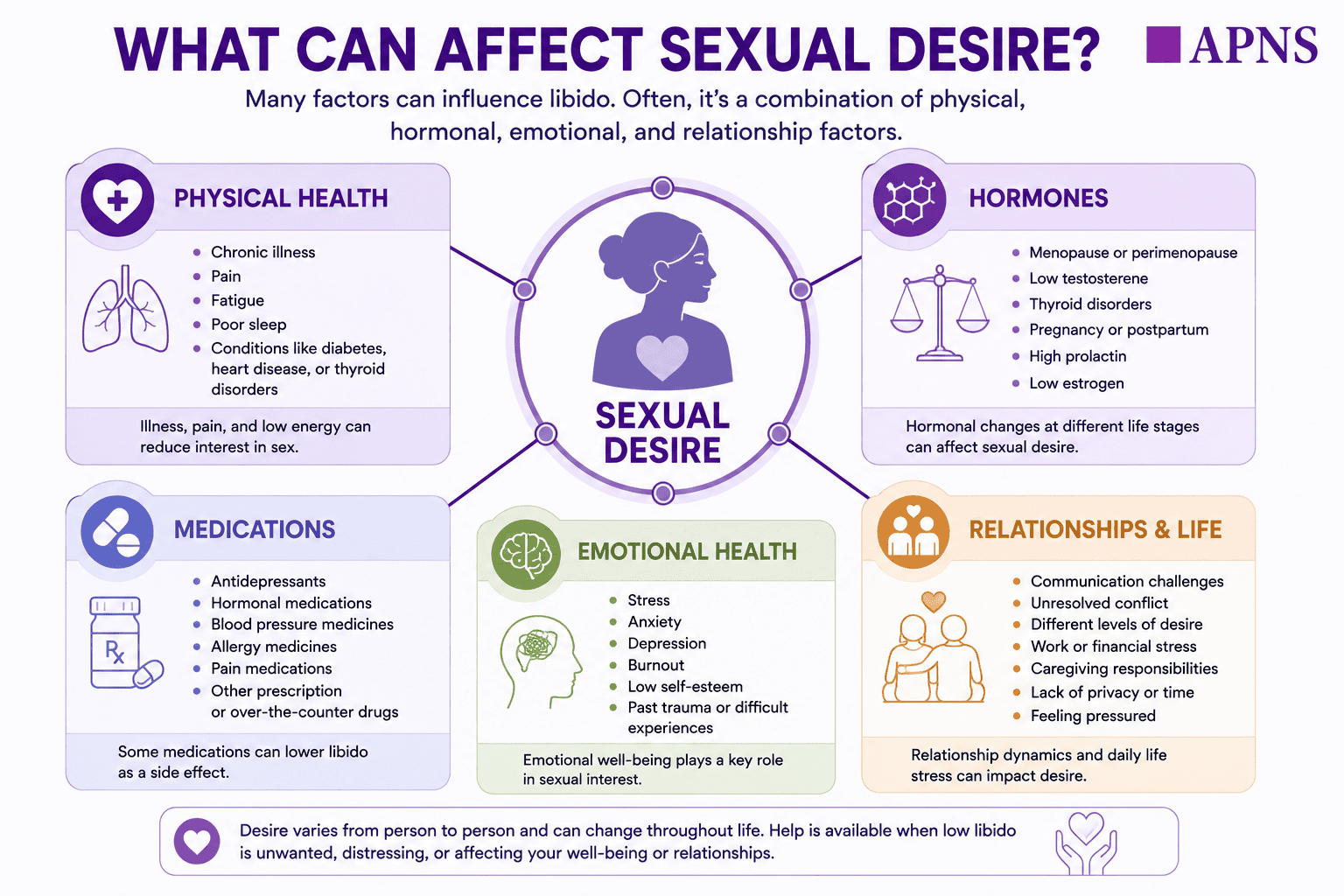
Low desire is considered a health concern mainly when it is a noticeable change, lasts over time, causes personal distress, or affects a relationship. It may result from physical illness, hormonal changes, medication effects, pain, fatigue, stress, depression, relationship concerns, or a combination of factors.
Changes in sexual desire are common. Libido may increase or decrease with age, stress, health, relationship circumstances, pregnancy, childbirth, breastfeeding, or menopause.
Low desire may be more likely in people who:
A lower level of sexual interest is not automatically a disorder. Treatment is generally considered when the change is unwanted or distressing.
Symptoms may include:
Some people experience responsive desire, meaning interest develops after affectionate or sexual activity begins rather than appearing spontaneously beforehand. This can be normal and does not necessarily indicate a disorder.
A healthcare provider may ask about:
Evaluation should be respectful, private, and free of assumptions about sexual orientation, gender identity, relationship structure, or sexual activity.
Low desire should not be diagnosed as a disorder solely because one partner wants sex more often than the other.
Symptoms may include:
Some people experience responsive desire, meaning interest develops after affectionate or sexual activity begins rather than appearing spontaneously beforehand. This can be normal and does not necessarily indicate a disorder.
Factors that may worsen low libido include:
Pressure, guilt, criticism, or unwanted sexual activity can further reduce desire and damage trust.
Not every change in libido can be prevented. Helpful measures include:
Consent should always be freely given and may be withdrawn at any time. Treatment for differences in sexual desire should never involve pressure, coercion, or forced sexual activity.
The following video content is provided to help you better understand this condition. These resources are intended for educational purposes and should not replace personalized medical advice from your healthcare provider.
A healthcare provider may ask about:
Evaluation should be respectful, private, and free of assumptions about sexual orientation, gender identity, relationship structure, or sexual activity.
Low desire should not be diagnosed as a disorder solely because one partner wants sex more often than the other.
Most people do not need imaging for low libido.
Possible assessments include:
Additional testing may include:
Testing should address the suspected cause rather than applying the same evaluation to every patient.
Treatment depends on the cause, the person’s goals, and whether the change is distressing.
Options may include:
Relationship counseling, treatment of sexual pain or erectile problems, mental health treatment, and selected hormone therapies may help when those factors are contributing.
Helpful measures may include:
ACOG suggests addressing relationship concerns, improving emotional closeness, communicating about preferences, reducing stress, and exploring different forms of affection or sexual activity.
Medication changes should be made only with the prescribing healthcare provider.
Medications That May Reduce Libido
Possible contributors include:
Some medicines may affect desire indirectly by causing fatigue, erectile problems, dryness, delayed orgasm, or difficulty reaching orgasm. SSRIs are a commonly recognized medication-related contributor.
A prescriber may consider:
Do not stop antidepressants, blood-pressure medications, hormones, or other prescribed medicines suddenly.
Medications for Selected Patients
Possible treatments include:
Herbal libido supplements may contain undisclosed ingredients, interact with medications, or be unsafe. Discuss any supplement with a healthcare provider.
Low libido itself rarely requires a procedure.
Procedures may be used for an underlying condition, such as:
Counseling, medication adjustment, and treatment of contributing medical or relationship concerns are more common than procedures.
depression, pain, hormonal changes, medication side effects, sleep problems, or relationship stress are addressed.
Sexual desire may continue to vary because of:
Successful treatment does not always mean returning to a previous frequency of sex. A meaningful outcome may include reduced distress, improved communication, greater comfort, better sexual function, or increased satisfaction with intimacy.
Helpful steps include:
Lubricants may reduce discomfort during sexual activity, while vaginal moisturizers may help ongoing dryness. Oil-based products can weaken latex condoms and may cause irritation.
Yes. Desire may change with stress, aging, health, relationships, pregnancy, childbirth, breastfeeding, menopause, and medication use.
There is no medically required frequency. The important questions are whether the level of desire is a change, causes distress, or creates difficulties that the person wants help addressing.
No. Sexual desire can decrease because of stress, fatigue, medication, pain, hormones, depression, or many other factors unrelated to love.
Yes. Depression may reduce interest, energy, pleasure, confidence, and emotional connection.
Yes. Some antidepressants, particularly SSRIs, may reduce desire or make arousal and orgasm more difficult. Do not stop medication without discussing options with the prescriber.
Some people notice a change after starting hormonal contraception, while others do not. Libido is influenced by many factors, so the timing, benefits, side effects, and alternative options should be reviewed with a clinician.
No. Low desire can occur with normal testosterone, and a low laboratory result does not explain every case. Symptoms, repeat testing, health conditions, and medication use must be considered together.
Yes. Hormonal changes, dryness, pain, sleep disruption, mood symptoms, and relationship factors may all contribute. Treatments may include lubricants, vaginal therapies, menopausal hormone treatment, counseling, or specialist-guided testosterone in selected cases.
Yes. Fear of erection difficulty or embarrassment may lead to avoidance and reduced interest. Erectile dysfunction may also be caused by medical conditions that affect libido.
Yes. Pain can lead to anxiety, avoidance, and reduced sexual interest. Painful sex should be evaluated rather than treated as something the person must tolerate.
Sildenafil may help an erection develop during sexual stimulation, but it does not directly increase sexual desire.
Over-the-counter products may be ineffective, contaminated, or unsafe. Testosterone should be used only after appropriate assessment and monitoring.
Yes. Asexuality is a sexual orientation and is not a medical disorder. It should not be treated unless the person has an unwanted change or another distressing health concern.

Consider asking:
Possible referrals include:
Low libido is not always an illness requiring a cure. Sexual desire naturally differs between people and changes over time.
When decreased desire is caused by a treatable problem, it may improve after:
Some people continue to have lower desire but experience much less distress after understanding their sexual response and developing a mutually acceptable approach to intimacy.
Low libido by itself is not usually an emergency.
Call 911 or seek emergency care for:
Seek prompt medical evaluation for:
Vision changes, headaches, abnormal hormone levels, and nipple discharge may suggest a pituitary disorder and require evaluation.
CALL 911
APNS does not provide emergency medical services. If you believe you are experiencing a medical emergency, including (but not limited to) chest pain, difficulty breathing, stroke symptoms, severe allergic reactions, anaphylaxis, uncontrolled bleeding, seizures, loss of consciousness, or any other potentially life-threatening condition, you are instructed to call 911 immediately or go immediately to the nearest emergency department.
Explains common physical, emotional, medication-related, and relationship causes and possible treatments.
Your Sexual Health – American College of Obstetricians and Gynecologists
Provides guidance about sexual desire, arousal, communication, comfort, and sexual health.
Sexual Problems in Women – NIH MedlinePlus
Provides patient information about desire, arousal, orgasm, pain, and possible causes of sexual concerns.
Could You Have Low Testosterone? – NIH MedlinePlus
Explains symptoms, testing, and treatment considerations related to low testosterone.
Prolactin Levels – NIH MedlinePlus
Explains prolactin testing and evaluation of abnormal hormone levels.
Sexual Health – Centers for Disease Control and Prevention
Provides information about sexual health, infections, prevention, testing, and healthy decision-making.
This guide is intended for educational purposes only and should not replace individualized medical, hormonal, mental health, relationship, or sexual-health evaluation. Decreased libido may be related to medications, depression, anxiety, trauma, relationship concerns, pain, erectile dysfunction, vaginal dryness, pregnancy, menopause, low testosterone, thyroid disease, elevated prolactin, chronic illness, substance use, or other conditions requiring different treatment. Do not stop or change prescribed medication or begin hormone therapy, testosterone products, or sexual-enhancement supplements without professional guidance. Sexual desire varies widely, and a person does not require treatment simply because their level of desire differs from someone else’s. Consent must always be voluntary and free of pressure. Seek urgent care for suicidal thoughts, sexual assault, severe genital or pelvic pain, testicular pain, unexplained bleeding, major vision changes, severe medication reactions, or other emergency symptoms.
At APNS, our providers take the time to understand your condition and your goals. We offer comprehensive telehealth visits at a fixed rate — no membership fees, no insurance required, and no unexpected charges. Whether you’re newly diagnosed or looking for a provider who actually listens, we’re here to help.