
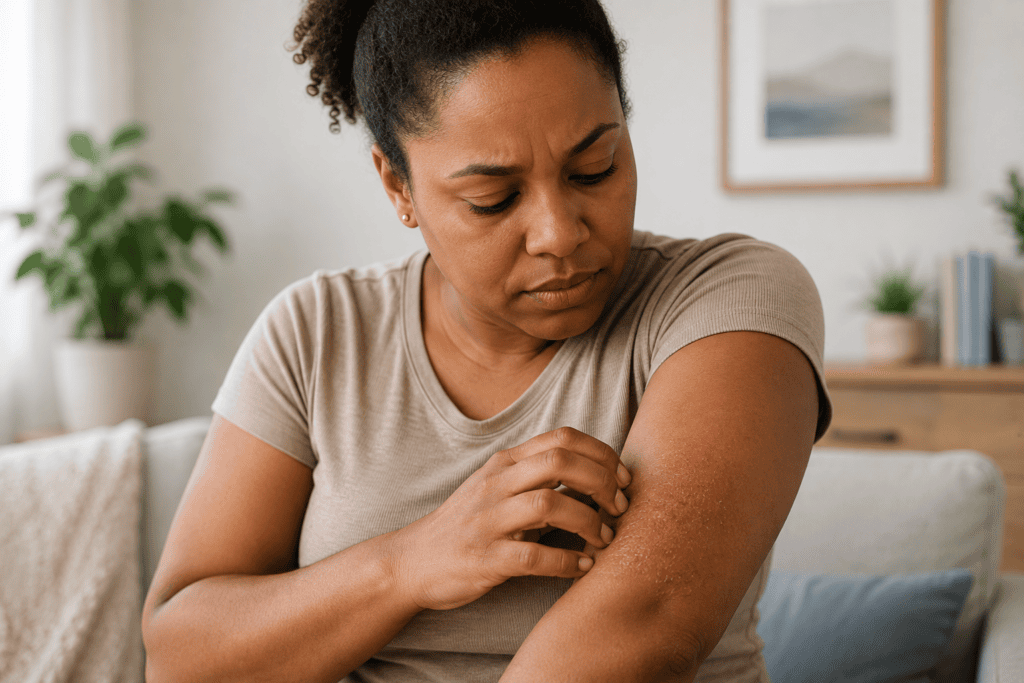
Eczema, also called atopic dermatitis, is a common long-term skin condition that causes dry, itchy, inflamed skin. It occurs when the skin’s protective barrier does not work as well as it should, allowing moisture to escape and irritants, allergens, and germs to enter more easily. This can lead to redness, itching, dryness, and recurring skin flare-ups. (medlineplus.gov)
Eczema is not contagious, meaning it cannot spread from one person to another. It often begins during infancy or childhood but can develop at any age. Many people experience periods when symptoms improve followed by flare-ups triggered by environmental factors, stress, illness, or skin irritation.
Eczema is one type of a broader group of conditions called dermatitis. Although there is currently no cure, proper skin care, avoiding triggers, and medications can help control symptoms and improve quality of life.
Eczema – NIH MedlinePlus
https://medlineplus.gov/eczema.html
Provides easy-to-understand information about eczema, symptoms, diagnosis, treatment, and prevention.
Atopic Dermatitis – National Institute of Arthritis and Musculoskeletal and Skin Diseases (NIAMS)
https://www.niams.nih.gov/health-topics/atopic-dermatitis
Provides information about eczema causes, symptoms, treatment, and current research.
Eczema is one of the most common skin conditions worldwide. It affects millions of children and adults. It commonly begins during childhood, but some people develop eczema for the first time as adults.
People with eczema are more likely to have allergies, asthma, or seasonal allergic rhinitis (“hay fever”), a combination sometimes called the atopic triad.
American Academy of Dermatology – Eczema
https://www.aad.org/public/diseases/eczema
Provides information about eczema, who develops it, and available treatment options.
Symptoms vary from person to person and may range from mild to severe.
Common symptoms include:
Common areas affected include:
A healthcare provider usually diagnoses eczema by reviewing your symptoms, medical history, family history, and examining your skin.
They may ask about:
Additional testing may be recommended if another skin condition or allergy is suspected.
American Academy of Dermatology – Eczema Diagnosis
https://www.aad.org/public/diseases/eczema
Explains how eczema is diagnosed and evaluated.
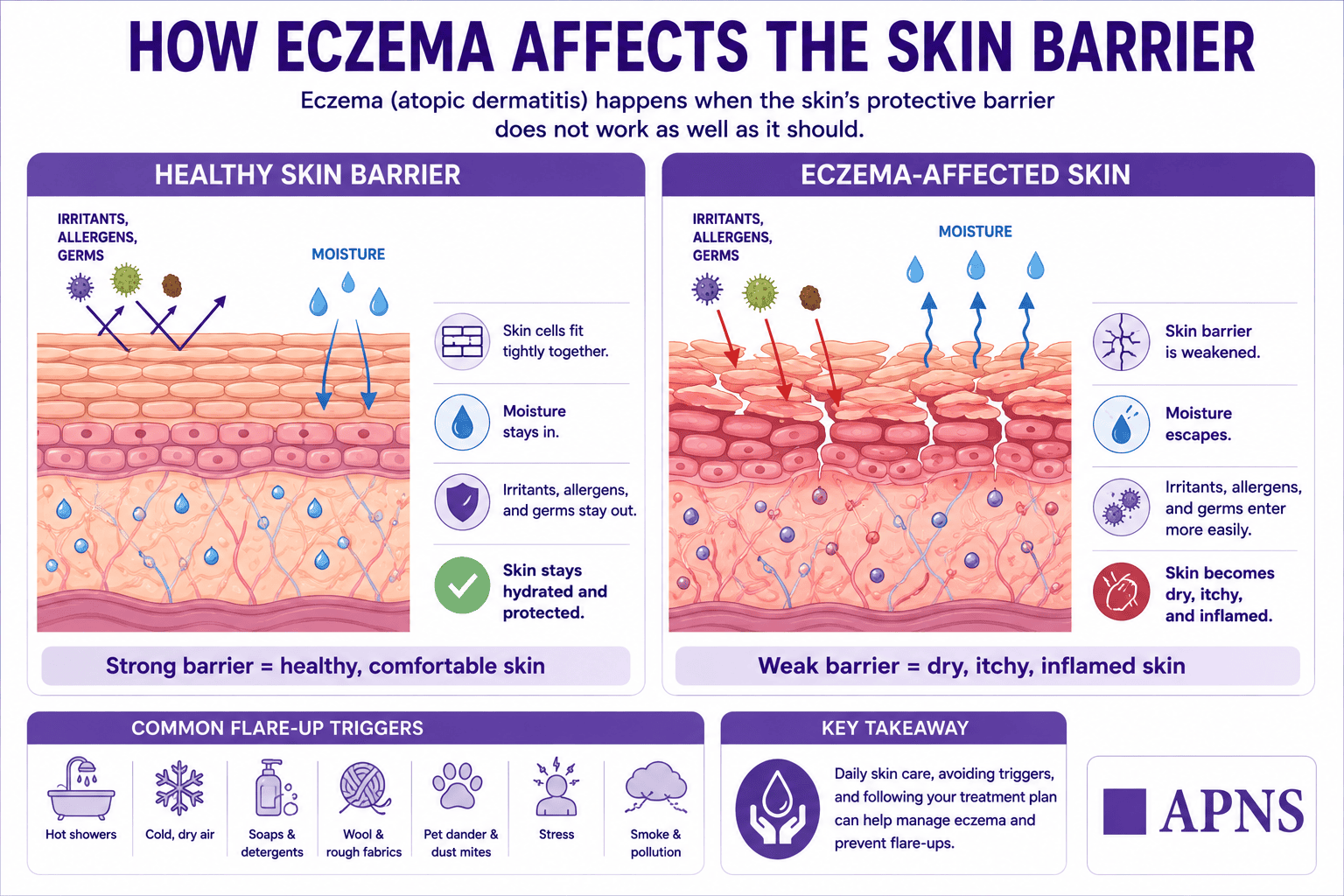
The exact cause is not fully understood. Eczema develops because of a combination of genetics, immune-system activity, and problems with the skin barrier.
Contributing factors may include:
Atopic Dermatitis – NIAMS
https://www.niams.nih.gov/health-topics/atopic-dermatitis
Explains current understanding of eczema causes and risk factors.
Common triggers include:
Triggers vary from person to person. Identifying your individual triggers can help reduce flare-ups.
Eczema Triggers – American Academy of Dermatology
https://www.aad.org/public/diseases/eczema/insider/triggers
Provides information about common eczema triggers and how to avoid them.
Although eczema cannot always be prevented, flare-ups may be reduced by:
Eczema Self-Care – American Academy of Dermatology
https://www.aad.org/public/diseases/eczema/self-care
Provides recommendations for preventing eczema flare-ups.
The following video content is provided to help you better understand this condition. These resources are intended for educational purposes and should not replace personalized medical advice from your healthcare provider.
Most people with eczema do not require laboratory testing.
When needed, testing may include:
Laboratory Tests – NIH MedlinePlus
https://medlineplus.gov/lab-tests/
Provides information about laboratory testing used for various medical conditions.
Most eczema is diagnosed without imaging or extensive testing.
Possible evaluations include:
A skin biopsy is uncommon but may help distinguish eczema from psoriasis, fungal infections, cutaneous lymphoma, or other skin diseases.
Skin Biopsy – NIH MedlinePlus
https://medlineplus.gov/lab-tests/skin-biopsy/
Provides information about skin biopsy procedures and why they may be performed.
Treatment focuses on restoring the skin barrier, reducing inflammation, relieving itching, and preventing infections.
Treatment options include:
Many people require long-term maintenance treatment even after symptoms improve.
Eczema Treatment – American Academy of Dermatology
https://www.aad.org/public/diseases/eczema/treatment
Provides information about eczema medications, moisturizers, phototherapy, and biologic treatments.
Helpful lifestyle habits include:
Daily moisturizing is one of the most effective ways to reduce eczema flare-ups.
Skin Care for Eczema – American Academy of Dermatology
https://www.aad.org/public/diseases/eczema/self-care
Provides practical recommendations for bathing, moisturizing, and daily skin care.
Common medications include:
Use topical steroids exactly as prescribed to reduce the risk of side effects such as skin thinning.
Atopic Dermatitis Treatment – NIAMS
https://www.niams.nih.gov/health-topics/atopic-dermatitis
Provides information about medications used to manage eczema.
Some people with moderate or severe eczema may benefit from specialized treatments.
Possible procedures or therapies include:
Eczema Treatment – American Academy of Dermatology
https://www.aad.org/public/diseases/eczema/treatment
Provides information about phototherapy and advanced eczema treatments.
Eczema is usually a chronic condition with periods of improvement and flare-ups.
Many children experience improvement as they grow older, while others continue to have eczema into adulthood. Adults may also develop eczema for the first time later in life.
With regular skin care, trigger avoidance, and appropriate treatment, most people are able to successfully manage their symptoms and reduce flare-ups.
Helpful home care includes:
Eczema Self-Care – American Academy of Dermatology
https://www.aad.org/public/diseases/eczema/self-care
Provides practical daily skin-care recommendations for people with eczema.
No. Eczema cannot spread from one person to another.
Food allergies may worsen eczema in some people, especially children, but food is not the cause for most individuals.
Yes. Emotional stress commonly triggers flare-ups.
Yes. Daily moisturizing is one of the most important treatments for eczema.
Yes. Rinse your skin afterward and apply moisturizer promptly. Chlorinated pools may irritate some people but improve symptoms in others.
Yes. Repeated scratching can allow bacteria, viruses, or fungi to enter the skin.

Consider asking:
You may be referred to:
American Academy of Dermatology – Eczema
https://www.aad.org/public/diseases/eczema
Provides information about specialty care and eczema management.
There is currently no cure for eczema.
However, most people can successfully control symptoms with:
Many children experience significant improvement as they grow older, although flare-ups can still occur.
Call 911 or seek emergency medical care immediately if you experience:
Seek prompt medical evaluation if you notice:
Eczema – NIH MedlinePlus
https://medlineplus.gov/eczema.html
Provides information about eczema complications and when to seek medical care.
CALL 911
APNS does not provide emergency medical services. If you believe you are experiencing a medical emergency, including (but not limited to) chest pain, difficulty breathing, stroke symptoms, severe allergic reactions, anaphylaxis, uncontrolled bleeding, seizures, loss of consciousness, or any other potentially life-threatening condition, you are instructed to call 911 immediately or go immediately to the nearest emergency department.
Eczema – NIH MedlinePlus
https://medlineplus.gov/eczema.html
Easy-to-understand information about eczema symptoms, diagnosis, treatment, and prevention.
National Institute of Arthritis and Musculoskeletal and Skin Diseases (NIAMS)
https://www.niams.nih.gov/health-topics/atopic-dermatitis
Reliable information about eczema causes, treatment, and current research.
American Academy of Dermatology – Eczema
https://www.aad.org/public/diseases/eczema
Dermatologist-reviewed information about eczema symptoms, treatment, self-care, and prevention.
National Eczema Association
https://nationaleczema.org/
Provides educational resources, treatment information, support, and practical skin-care guidance for people living with eczema.
This guide is intended for educational purposes only and should not replace medical advice, diagnosis, or treatment from your healthcare provider or dermatologist. Eczema symptoms can resemble other skin conditions that require different treatments. Always follow your healthcare provider’s recommendations regarding medications, skin care, and trigger avoidance. Contact your healthcare provider if your symptoms worsen, signs of infection develop, or your treatment is no longer effective. Call 911 immediately if you experience difficulty breathing, swelling of the face or throat, a severe allergic reaction, loss of consciousness, or another medical emergency.
At APNS, our providers take the time to understand your condition and your goals. We offer comprehensive telehealth visits at a fixed rate — no membership fees, no insurance required, and no unexpected charges. Whether you’re newly diagnosed or looking for a provider who actually listens, we’re here to help.