
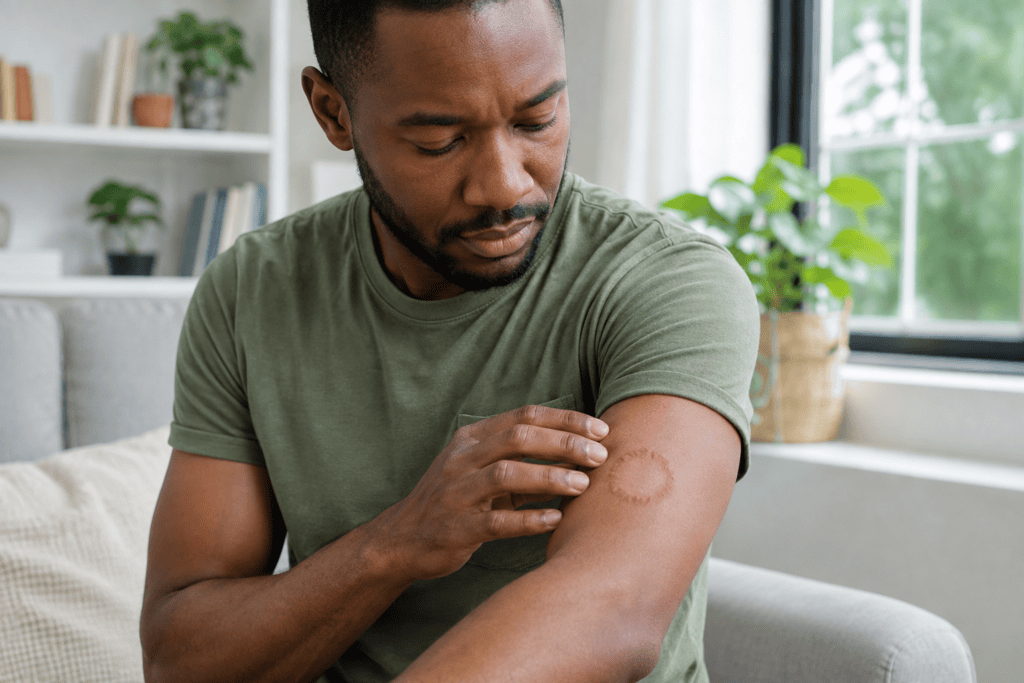
Tinea is a contagious fungal infection that affects the outer layers of the skin, hair, or nails. It is commonly called ringworm, although it is caused by fungi called dermatophytes—not worms. The infection may produce an itchy, scaly, ring-shaped rash, but it does not always form a visible ring.
The name of the infection often depends on the area affected:
Most tinea infections are treatable with antifungal medication. Infections involving the scalp, beard, or nails usually require prescription oral medication rather than creams alone.
Tinea Infections – NIH MedlinePlus
https://medlineplus.gov/tineainfections.html
Provides easy-to-understand information about ringworm, athlete’s foot, jock itch, and scalp fungal infections.
Ringworm – Centers for Disease Control and Prevention (CDC)
https://www.cdc.gov/ringworm/
Provides information about symptoms, transmission, diagnosis, treatment, and prevention.
Tinea infections are among the most common skin infections worldwide. They affect people of all ages and are more likely to spread in warm, humid environments and places where people have close contact or share locker rooms, showers, towels, equipment, or living spaces.
Athlete’s foot is especially common after puberty, while scalp ringworm occurs most often in children. Anyone can become infected through contact with an infected person, animal, object, or surface.
Ringworm Basics – CDC
https://www.cdc.gov/ringworm/about/
Provides an overview of common tinea infections and the body areas they affect.
Symptoms depend on the location of the infection.
Common skin symptoms may include:
Symptoms may look different depending on natural skin tone. On darker skin, affected areas may appear red-purple, gray, brown, or black rather than bright red.
Athlete’s foot may cause:
Jock itch may cause:
Scalp ringworm may cause:
Fungal nail infection may cause:
Delayed treatment of severe scalp ringworm may occasionally result in scarring and permanent hair loss.
A healthcare provider may suspect tinea by examining the rash and reviewing your symptoms, exposures, contact with animals, sports participation, travel, medications, and previous treatments.
Because eczema, psoriasis, contact dermatitis, candidiasis, and other rashes may resemble tinea, testing may be recommended before treatment—especially when the rash is widespread, unusual, recurrent, or does not improve.
Ringworm: Diagnosis and Treatment – American Academy of Dermatology
https://www.aad.org/public/diseases/a-z/ringworm-treatment
Explains how dermatologists diagnose and treat ringworm.
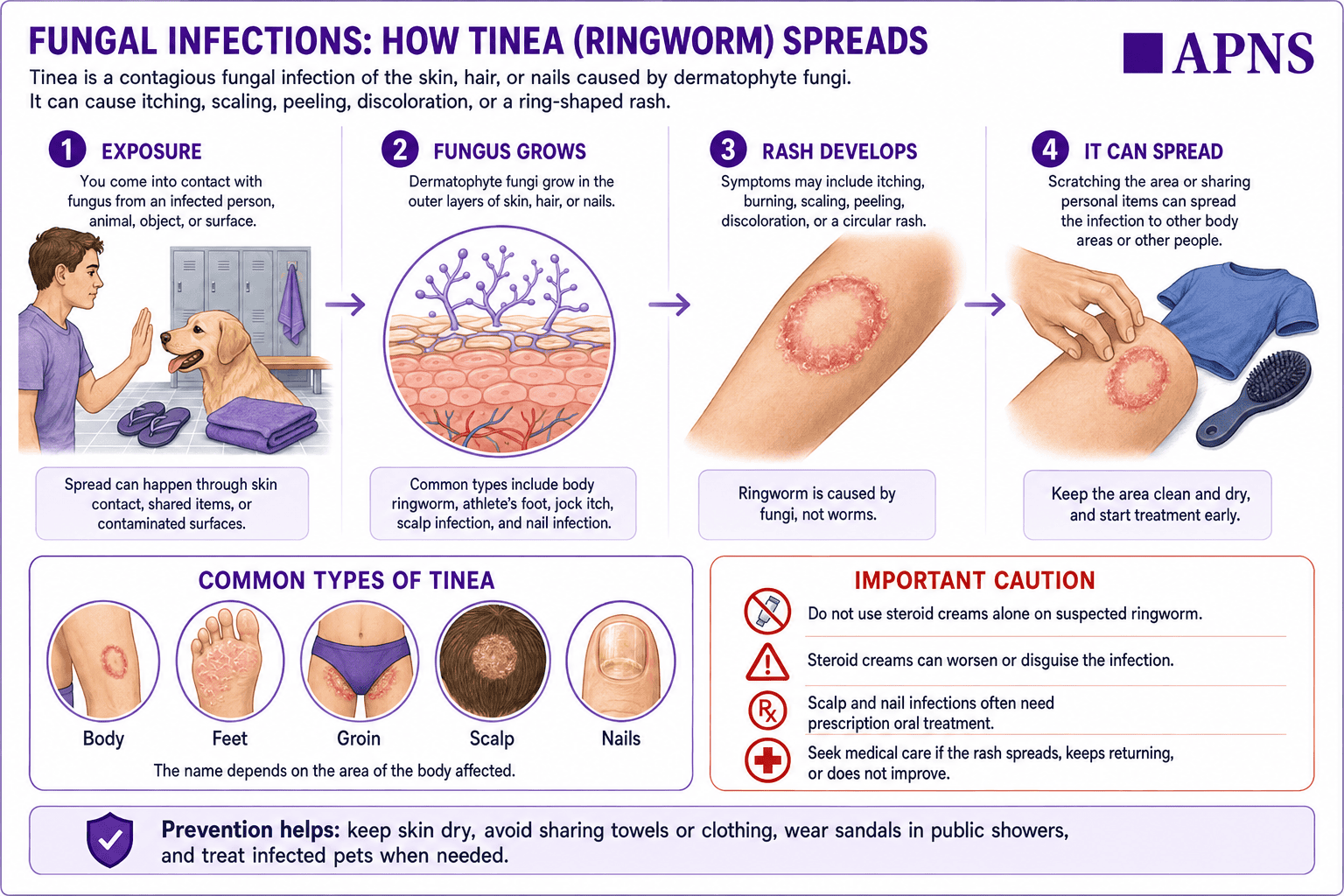
What Causes Tinea?
Tinea is caused by dermatophyte fungi that live on keratin, a protein found in the outer skin, hair, and nails. Common fungal groups include Trichophyton, Microsporum, and Epidermophyton.
The infection can spread through:
Pets, especially cats and dogs, may carry ringworm even when the infection is not immediately obvious.
Ringworm: Causes and Spread – CDC
https://www.cdc.gov/ringworm/about/
Explains how fungal infections spread between people, animals, objects, and surfaces.
Several factors may allow fungal infections to spread, return, or become harder to treat.
Common factors include:
Steroid creams can temporarily reduce redness while allowing the fungal infection to spread or change appearance. The CDC advises against using steroid creams to treat ringworm or a rash that may be ringworm.
Treatment of Ringworm – CDC
https://www.cdc.gov/ringworm/treatment/
Provides guidance about antifungal treatment and why steroid creams should be avoided.
Many fungal infections can be prevented by reducing moisture and avoiding contaminated people, animals, objects, and surfaces.
Helpful prevention tips include:
Ringworm Prevention – CDC
https://www.cdc.gov/ringworm/aboutemergingringworm/
Provides recommendations for preventing ringworm and reducing transmission.
The following video content is provided to help you better understand this condition. These resources are intended for educational purposes and should not replace personalized medical advice from your healthcare provider.
Most uncomplicated skin infections do not require blood tests.
Laboratory tests may include:
KOH examination of skin scrapings is an important method for confirming dermatophyte infection.
Fungal Culture Test – NIH MedlinePlus
https://medlineplus.gov/lab-tests/fungal-culture-test/
Explains how samples of skin, hair, nails, or other material are tested for fungi.
Most tinea infections do not require imaging.
Possible evaluations include:
Antifungal-resistant and emerging forms of ringworm may require specialized testing when the infection is severe, unusually widespread, or does not respond to standard treatment.
Clinical Overview of Ringworm – CDC
https://www.cdc.gov/ringworm/hcp/clinical-overview/
Provides information about diagnostic testing and conditions that may resemble ringworm.
Treatment depends on the location, severity, and extent of infection.
Treatment options may include:
Skin infections commonly require topical antifungal treatment for approximately two to four weeks. Scalp, beard, extensive skin, and nail infections often require prescription oral medication.
Treatment of Ringworm – CDC
https://www.cdc.gov/ringworm/treatment/
Provides information about creams, ointments, oral medication, and treatment precautions.
Healthy habits can support treatment and reduce transmission.
Helpful lifestyle changes include:
Ringworm Prevention – CDC
https://www.cdc.gov/ringworm/aboutemergingringworm/
Provides recommendations for keeping skin dry and preventing exposure to contaminated people, animals, and surfaces.
Antifungal medication is used to eliminate the infection.
Common topical medications may include:
Common oral medications may include:
Medication choice depends on the infected area, fungal species, age, pregnancy status, other medications, and liver health. Oral antifungals may cause medication interactions or liver-related side effects and should be taken only under medical supervision.
Use treatment exactly as directed and continue for the recommended duration, even when the rash begins to improve.
Ringworm: Diagnosis and Treatment – American Academy of Dermatology
https://www.aad.org/public/diseases/a-z/ringworm-treatment
Provides information about topical and oral antifungal medications.
Most tinea infections do not require invasive procedures.
Possible procedures or office-based treatments may include:
Scalp ringworm should not be treated by shaving or attempting to remove infected skin. Oral antifungal medication is generally required because topical creams cannot adequately reach the infected hair follicles.
Tinea Infections – NIH MedlinePlus
https://medlineplus.gov/tineainfections.html
Provides information about the evaluation and treatment of skin, scalp, foot, groin, and nail infections.
Most skin tinea infections resolve completely with appropriate antifungal treatment. Itching and scaling often begin improving before the discoloration fully fades.
The infection may return when:
Scalp ringworm generally resolves with oral treatment, although severe inflammation or delayed care may occasionally cause scarring or permanent hair loss.
Helpful home-care steps include:
Do not use bleach, vinegar, essential oils, or household chemicals on infected skin. These products can burn or irritate the skin and are not substitutes for proven antifungal treatment.
Ringworm Self-Care – American Academy of Dermatology
https://www.aad.org/public/diseases/a-z/ringworm-self-care
Provides practical tips for obtaining the best results from treatment and preventing spread.
No. Ringworm is caused by fungi, not worms.
Yes. It can spread through direct contact with infected people or animals and through contaminated objects or surfaces.
Yes. Cats, dogs, and other animals can transmit the fungi that cause ringworm.
Steroid creams should not be used alone because they may worsen the infection or change its appearance.
Many skin infections require two to four weeks of topical treatment. Scalp, nail, beard, or extensive infections may require longer oral treatment.
Yes. Scratching or touching the rash and then touching another area may spread the fungus.
Many people can return after treatment begins, but policies vary based on the location, activity, and workplace or school requirements. Cover the rash when practical and follow medical guidance.
The rash may not be fungal, the medication may not be appropriate, treatment may have been stopped too early, reinfection may be occurring, or the fungus may be resistant.

Consider asking your healthcare provider:
What should I do if treatment does not work?
Most uncomplicated infections are managed by a primary care provider.
You may be referred to:
Ringworm – CDC
https://www.cdc.gov/ringworm/
Provides information about diagnosis, treatment, prevention, and emerging infections.
Yes. Most tinea infections are completely curable with appropriate antifungal treatment.
Successful treatment depends on:
Nail infections may require several months of treatment, and the nail may take many additional months to grow back with a normal appearance.
Tinea rarely causes a medical emergency.
Call 911 or seek emergency medical care immediately if you experience:
Seek prompt medical evaluation if you notice:
Skin Infections – NIH MedlinePlus
https://medlineplus.gov/skininfections.html
Provides information about warning signs of bacterial, viral, fungal, and parasitic skin infections.
CALL 911
APNS does not provide emergency medical services. If you believe you are experiencing a medical emergency, including (but not limited to) chest pain, difficulty breathing, stroke symptoms, severe allergic reactions, anaphylaxis, uncontrolled bleeding, seizures, loss of consciousness, or any other potentially life-threatening condition, you are instructed to call 911 immediately or go immediately to the nearest emergency department.
Ringworm – Centers for Disease Control and Prevention
https://www.cdc.gov/ringworm/
Comprehensive information about symptoms, diagnosis, treatment, prevention, and emerging resistant infections.
Tinea Infections – NIH MedlinePlus
https://medlineplus.gov/tineainfections.html
Easy-to-understand information about ringworm, athlete’s foot, jock itch, and scalp infection.
Ringworm: Diagnosis and Treatment – American Academy of Dermatology
https://www.aad.org/public/diseases/a-z/ringworm-treatment
Dermatologist-reviewed information about testing and antifungal treatment.
Ringworm Self-Care – American Academy of Dermatology
https://www.aad.org/public/diseases/a-z/ringworm-self-care
Provides practical recommendations for treatment, cleaning, and preventing spread.
Fungal Culture Test – NIH MedlinePlus
https://medlineplus.gov/lab-tests/fungal-culture-test/
Explains how fungal infections are confirmed using samples from the skin, hair, or nails.
This guide is intended for educational purposes only and should not replace medical advice, diagnosis, testing, or treatment from your healthcare provider or dermatologist. Tinea can resemble eczema, psoriasis, candidiasis, contact dermatitis, bacterial infection, and other skin conditions that require different treatments. Do not use steroid creams on a suspected fungal infection unless specifically directed by a healthcare professional, because steroids may worsen the infection or make it more difficult to diagnose. Oral antifungal medications may cause liver problems or interact with other medications and should be used only under medical supervision. Contact your healthcare provider if the rash spreads, repeatedly returns, involves the scalp or nails, or does not improve with treatment. Call 911 immediately for difficulty breathing, facial or throat swelling, loss of consciousness, or another medical emergency.
At APNS, our providers take the time to understand your condition and your goals. We offer comprehensive telehealth visits at a fixed rate — no membership fees, no insurance required, and no unexpected charges. Whether you’re newly diagnosed or looking for a provider who actually listens, we’re here to help.