
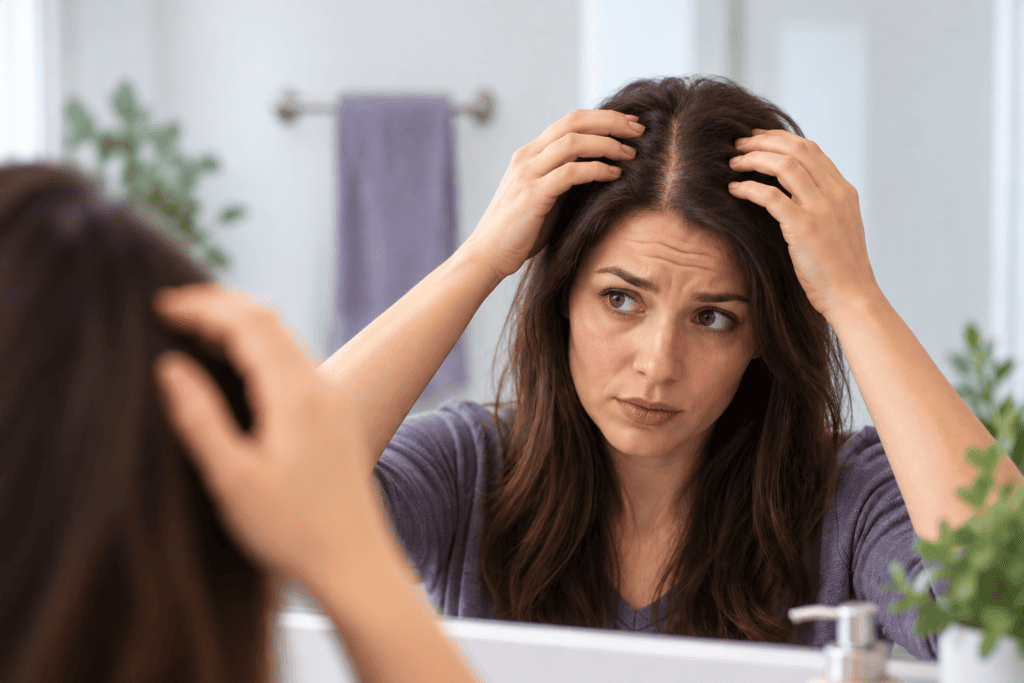
Hair loss, also called alopecia, means losing more hair than your body replaces or having hair that becomes noticeably thinner. It can affect the scalp, eyebrows, eyelashes, beard, or other body areas. Hair loss may be gradual or sudden, temporary or permanent, and limited to one area or spread across a larger area.
Alopecia is not one single disease. Common types include hereditary pattern hair loss, alopecia areata, temporary shedding after stress or illness, hair loss from tight hairstyles, and scarring conditions that damage hair follicles. Finding the type and cause matters because treatments and chances of regrowth are different.
Hair Loss – NIH MedlinePlus
https://medlineplus.gov/hairloss.html
Provides patient-friendly information about common causes, evaluation, treatment, and related health topics.
Alopecia Areata – National Institute of Arthritis and Musculoskeletal and Skin Diseases (NIAMS)
https://www.niams.nih.gov/health-topics/alopecia-areata
Explains alopecia areata symptoms, causes, diagnosis, treatment, and living with the condition.
Hair loss is very common. Hereditary pattern hair loss becomes more likely with age and can affect people of any sex. Alopecia areata is less common, but it can begin at any age and occurs in people of all racial and ethnic backgrounds.
Some shedding is normal; many people lose up to about 100 scalp hairs per day. A widening part, receding hairline, bald patches, or much more hair than usual in the brush or shower should be discussed with a healthcare provider.
Hair Loss – NIH MedlinePlus
https://medlineplus.gov/hairloss.html
Provides patient-friendly information about common causes, evaluation, treatment, and related health topics.
Hair Loss – American Academy of Dermatology
https://www.aad.org/public/diseases/hair-loss
Dermatologist-reviewed information about types of hair loss, diagnosis, treatment, and self-care.
Hair loss can look different depending on the cause. You may notice:
Contact a provider when hair loss is sudden, patchy, painful, associated with scalp inflammation, or causing distress. Early evaluation is especially important when a scarring type is possible because permanent loss may be preventable.
Your provider will ask when the hair loss began, how quickly it changed, where it occurs, and whether you have itching, pain, scaling, illness, weight change, pregnancy, stress, new medicines, or a family history. They will examine the scalp and other hair-bearing areas and may inspect your nails and skin.
The pattern often gives important clues. Your provider may gently pull a small group of hairs, look closely with a magnifying device, check for broken hairs or scarring, and review your hair-care practices. A dermatologist may be needed when the diagnosis is unclear, the scalp is inflamed, or loss is progressing.
Hair Loss – American Academy of Dermatology
https://www.aad.org/public/diseases/hair-loss
Dermatologist-reviewed information about types of hair loss, diagnosis, treatment, and self-care.
Alopecia Areata – National Institute of Arthritis and Musculoskeletal and Skin Diseases (NIAMS)
https://www.niams.nih.gov/health-topics/alopecia-areata
Explains alopecia areata symptoms, causes, diagnosis, treatment, and living with the condition.
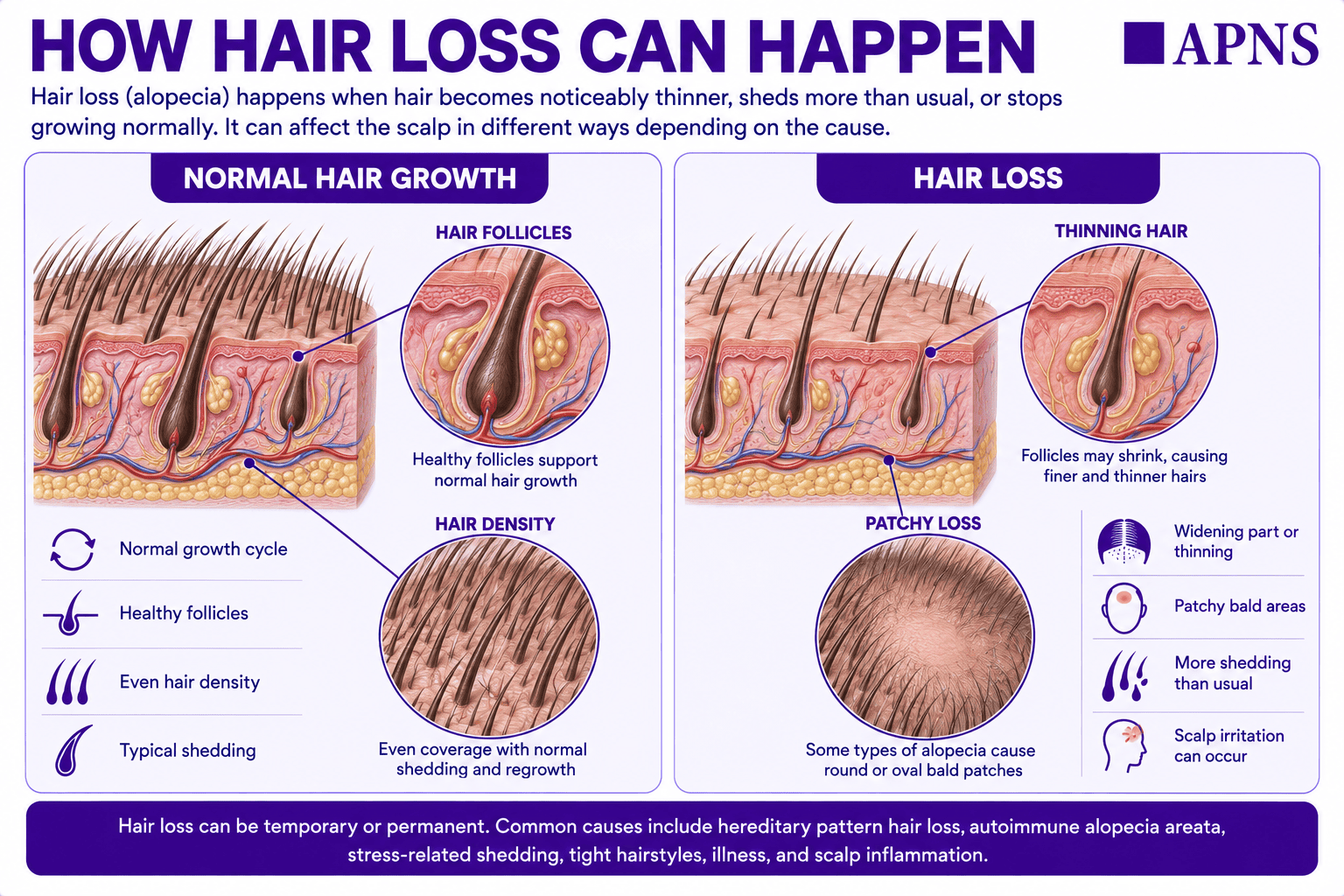
Hair growth follows a cycle. Hair loss can occur when follicles shrink, the immune system attacks follicles, many hairs enter the shedding phase at once, or follicles are injured or scarred.
Common causes include:
Hair Loss – NIH MedlinePlus
https://medlineplus.gov/hairloss.html
Provides patient-friendly information about common causes, evaluation, treatment, and related health topics.
Alopecia Areata – National Institute of Arthritis and Musculoskeletal and Skin Diseases (NIAMS)
https://www.niams.nih.gov/health-topics/alopecia-areata
Explains alopecia areata symptoms, causes, diagnosis, treatment, and living with the condition.
The factors that worsen hair loss depend on the type. Ongoing inflammation, delayed diagnosis, or continued pulling can increase damage, while harsh hair practices can add breakage to another form of hair loss.
Stress does not cause every type of alopecia, and hair loss is not your fault. A clinician can help separate a true trigger from common myths.
Hair Loss – American Academy of Dermatology
https://www.aad.org/public/diseases/hair-loss
Dermatologist-reviewed information about types of hair loss, diagnosis, treatment, and self-care.
Not every type of hair loss can be prevented because genes, aging, autoimmune disease, and necessary medical treatments may be involved. You may reduce avoidable hair damage and traction by:
Early action can sometimes prevent traction alopecia and inflammatory scarring alopecia from becoming permanent.
Hair Loss – American Academy of Dermatology
https://www.aad.org/public/diseases/hair-loss
Dermatologist-reviewed information about types of hair loss, diagnosis, treatment, and self-care.
The following video content is provided to help you better understand this condition. These resources are intended for educational purposes and should not replace personalized medical advice from your healthcare provider.
Laboratory tests are not needed for every person. They are chosen based on your history, examination, diet, symptoms, and the suspected cause—not as a standard large panel for everyone.
Possible tests include:
Do not start high-dose iron, biotin, or other supplements only because of hair loss. Too much can be harmful, and biotin can interfere with certain laboratory results.
Medical Tests – NIH MedlinePlus
https://medlineplus.gov/lab-tests/
Explains common blood tests and other medical tests in clear language.
Treatment depends on the exact type, how much hair is affected, whether follicles are scarred, your health, and your goals. Some people choose treatment to support regrowth, while others focus on stopping progression, scalp comfort, or cosmetic options.
A treatment plan may include:
Hair grows slowly, so many treatments need several months before change is visible. Results vary, and some treatments must continue to maintain benefit.
Hair Loss – American Academy of Dermatology
https://www.aad.org/public/diseases/hair-loss
Dermatologist-reviewed information about types of hair loss, diagnosis, treatment, and self-care.
Alopecia Areata – National Institute of Arthritis and Musculoskeletal and Skin Diseases (NIAMS)
https://www.niams.nih.gov/health-topics/alopecia-areata
Explains alopecia areata symptoms, causes, diagnosis, treatment, and living with the condition.
Lifestyle care cannot reverse every kind of alopecia, but it can reduce avoidable damage and support overall health.
Choose hair practices that fit your hair texture and culture without causing pain, bumps, or continuous pulling. Pain from a hairstyle is a warning sign that it may be too tight.
Hair Loss – American Academy of Dermatology
https://www.aad.org/public/diseases/hair-loss
Dermatologist-reviewed information about types of hair loss, diagnosis, treatment, and self-care.
Medication choice depends on the diagnosis. Ask what the medicine is expected to do, how long it may take, whether benefit requires ongoing use, and what monitoring is needed.
Pregnancy, plans for pregnancy, breastfeeding, heart or liver disease, infection history, and other medicines can change which options are safe. Never share prescriptions or combine hair-loss medicines without professional guidance.
Alopecia Areata – National Institute of Arthritis and Musculoskeletal and Skin Diseases (NIAMS)
https://www.niams.nih.gov/health-topics/alopecia-areata
Explains alopecia areata symptoms, causes, diagnosis, treatment, and living with the condition.
Drug Safety Information – U.S. Food and Drug Administration
https://www.fda.gov/drugs/drug-safety-and-availability
Provides current safety communications and patient information about prescription medicines
Procedures are not needed for everyone. Depending on the cause and stability of hair loss, a dermatologist may discuss:
Ask about expected benefit, number of sessions, discomfort, risks, recovery, total cost, maintenance, and the clinician’s training. Hair transplantation is usually not appropriate while active scarring inflammation is destroying follicles.
Hair Loss – American Academy of Dermatology
https://www.aad.org/public/diseases/hair-loss
Dermatologist-reviewed information about types of hair loss, diagnosis, treatment, and self-care.
Skin Biopsy – NIH MedlinePlus
https://medlineplus.gov/lab-tests/skin-biopsy/
Explains why a skin biopsy may be performed, what to expect, and what results may show.
The outlook depends on the cause. Temporary shedding often improves after the trigger resolves, although visible recovery may take months. Hereditary pattern loss usually progresses slowly without treatment, and many treatments work only while they are continued.
Alopecia areata can regrow, recur, or become more extensive. Scarring alopecia can permanently destroy follicles, so the main goal may be to stop further loss. Follow-up photographs and examinations can help determine whether a plan is working.
Alopecia Areata – National Institute of Arthritis and Musculoskeletal and Skin Diseases (NIAMS)
https://www.niams.nih.gov/health-topics/alopecia-areata
Explains alopecia areata symptoms, causes, diagnosis, treatment, and living with the condition.
Hair Loss – American Academy of Dermatology
https://www.aad.org/public/diseases/hair-loss
Dermatologist-reviewed information about types of hair loss, diagnosis, treatment, and self-care.
Helpful home care includes:
Be cautious with products promising guaranteed or instant regrowth. Look for evidence, review ingredients, and ask a dermatologist before spending heavily or using products that may irritate the scalp.
Hair Loss – American Academy of Dermatology
https://www.aad.org/public/diseases/hair-loss
Dermatologist-reviewed information about types of hair loss, diagnosis, treatment, and self-care.
No. Temporary shedding and some patchy conditions may regrow, while hereditary or scarring loss may persist. The diagnosis helps predict recovery.
A normally fitting hat does not cause common pattern hair loss. Constant tight pressure or pulling could irritate hair or contribute to traction in some situations.
Major physical or emotional stress can trigger temporary shedding several weeks to months later. Stress is not the cause of every type of alopecia.
Biotin helps only when a true deficiency is present, which is uncommon. High doses may interfere with lab tests, so discuss supplements with your provider.
Temporary early shedding can occur as hairs shift into a new growth cycle. Contact your provider if shedding is severe, prolonged, or accompanied by other symptoms.
Yes. Ongoing traction can first cause reversible loss and later scar follicles. Stop or loosen styles that cause pain, bumps, or thinning at the edges.
Most alopecia is not contagious. Some fungal scalp infections can spread and require medical treatment.

Consider asking:
You may be referred to:
Hair Loss – American Academy of Dermatology
https://www.aad.org/public/diseases/hair-loss
Dermatologist-reviewed information about types of hair loss, diagnosis, treatment, and self-care.
Whether hair loss is curable depends on the cause. Hair may fully regrow after temporary shedding, treatment of some infections, removal of traction, or correction of a confirmed medical or nutrition problem—especially when follicles remain healthy.
Hereditary pattern hair loss and alopecia areata do not currently have a guaranteed permanent cure, but treatment may slow loss or promote regrowth. Once follicles are destroyed by scarring, they usually cannot regrow hair, making early treatment important.
Alopecia Areata – National Institute of Arthritis and Musculoskeletal and Skin Diseases (NIAMS)
https://www.niams.nih.gov/health-topics/alopecia-areata
Explains alopecia areata symptoms, causes, diagnosis, treatment, and living with the condition.
Hair Loss – NIH MedlinePlus
https://medlineplus.gov/hairloss.html
Provides patient-friendly information about common causes, evaluation, treatment, and related health topics.
Hair loss by itself is rarely an emergency. Call 911 or seek emergency care for trouble breathing, swelling of the lips or throat, fainting, severe chest pain, or another sign of a serious allergic reaction—especially after starting a medicine.
Seek prompt medical evaluation if you notice:
In the United States, call or text 988 for immediate mental-health crisis support. If there is immediate danger, call 911.
Hair Loss – NIH MedlinePlus
https://medlineplus.gov/hairloss.html
Provides patient-friendly information about common causes, evaluation, treatment, and related health topics.
988 Suicide & Crisis Lifeline
https://988lifeline.org/
Provides free, confidential crisis support by call, text, or chat in the United States.
CALL 911
APNS does not provide emergency medical services. If you believe you are experiencing a medical emergency, including (but not limited to) chest pain, difficulty breathing, stroke symptoms, severe allergic reactions, anaphylaxis, uncontrolled bleeding, seizures, loss of consciousness, or any other potentially life-threatening condition, you are instructed to call 911 immediately or go immediately to the nearest emergency department.
Hair Loss – NIH MedlinePlus
https://medlineplus.gov/hairloss.html
Provides patient-friendly information about common causes, evaluation, treatment, and related health topics.
Alopecia Areata – National Institute of Arthritis and Musculoskeletal and Skin Diseases (NIAMS)
https://www.niams.nih.gov/health-topics/alopecia-areata
Explains alopecia areata symptoms, causes, diagnosis, treatment, and living with the condition.
Hair Loss – American Academy of Dermatology
https://www.aad.org/public/diseases/hair-loss
Dermatologist-reviewed information about types of hair loss, diagnosis, treatment, and self-care.
Drug Safety Information – U.S. Food and Drug Administration
https://www.fda.gov/drugs/drug-safety-and-availability
Provides current safety communications and patient information about prescription medicines.
This guide is intended for educational purposes only and should not replace medical advice, diagnosis, or treatment from your healthcare provider or dermatologist. Hair loss has many possible causes, and treatments that are appropriate for one type may be unsafe or ineffective for another. Seek prompt medical care for sudden or painful hair loss, signs of infection or scarring, severe or worsening symptoms, serious medication reactions, or concerns about your emotional safety.
At APNS, our providers take the time to understand your condition and your goals. We offer comprehensive telehealth visits at a fixed rate — no membership fees, no insurance required, and no unexpected charges. Whether you’re newly diagnosed or looking for a provider who actually listens, we’re here to help.