
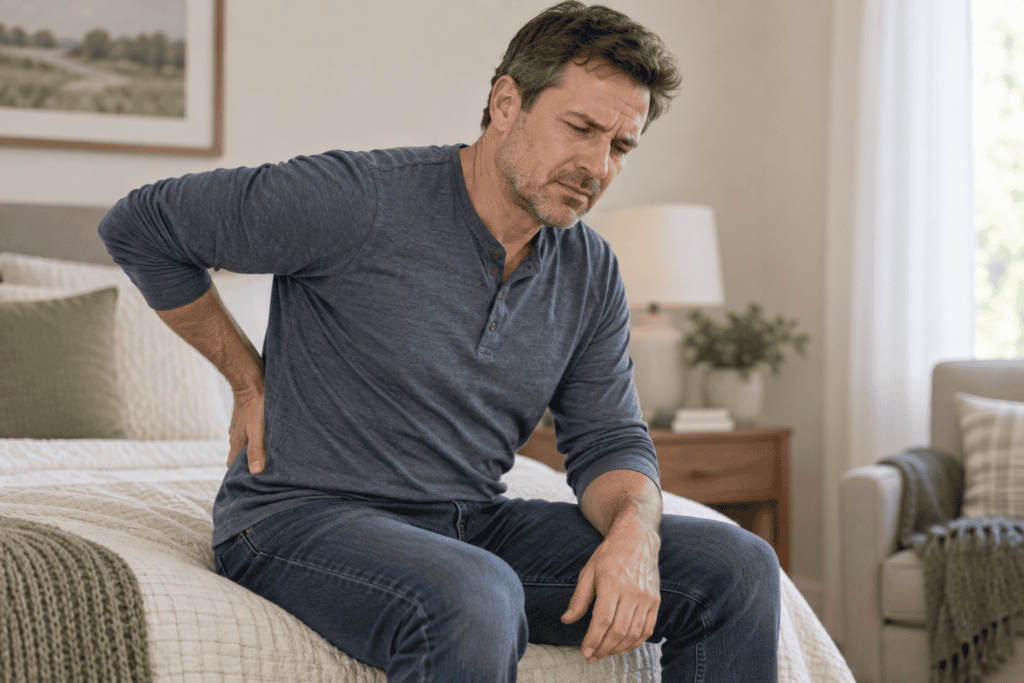
Low back pain is discomfort in the lower part of the back, usually between the bottom of the ribs and the buttocks. It may feel like a dull ache, tightness, burning, stiffness, or sudden sharp pain. Pain may remain in the back or travel into the buttock, hip, or leg.
Back pain is a symptom rather than one specific disease. It may develop after lifting, twisting, falling, prolonged sitting, or repetitive activity, but sometimes there is no clear injury. Acute back pain begins suddenly and generally lasts a few days to a few weeks. Pain lasting longer than three months is considered chronic back pain.
Provides patient-friendly information about causes, symptoms, treatment, and prevention.
Back Pain – National Institute of Arthritis and Musculoskeletal and Skin Diseases
Explains how back pain develops and describes common mechanical, structural, inflammatory, and medical causes.
Back pain is one of the most common medical problems. About 8 out of 10 people experience back pain at some point during their lives.
Low back pain can affect adults of any age. It becomes more common with age and may be associated with physically demanding work, prolonged sitting, previous injuries, limited physical activity, excess body weight, smoking, and certain health conditions. More than one in four working adults has reported low back pain.
Provides practical information about managing pain, staying active, and protecting back function.
Symptoms vary depending on the cause and severity.
Common symptoms may include:
Pain traveling down one leg may occur when a spinal nerve is irritated or compressed. This is commonly called sciatica, although not all leg pain is caused by the sciatic nerve.
A healthcare provider will ask about the pain and perform a physical examination.
They may ask:
The examination may include:
Most uncomplicated low back pain can initially be diagnosed without immediate imaging. Imaging is more likely to be needed when symptoms suggest fracture, infection, cancer, severe nerve compression, or another serious condition.
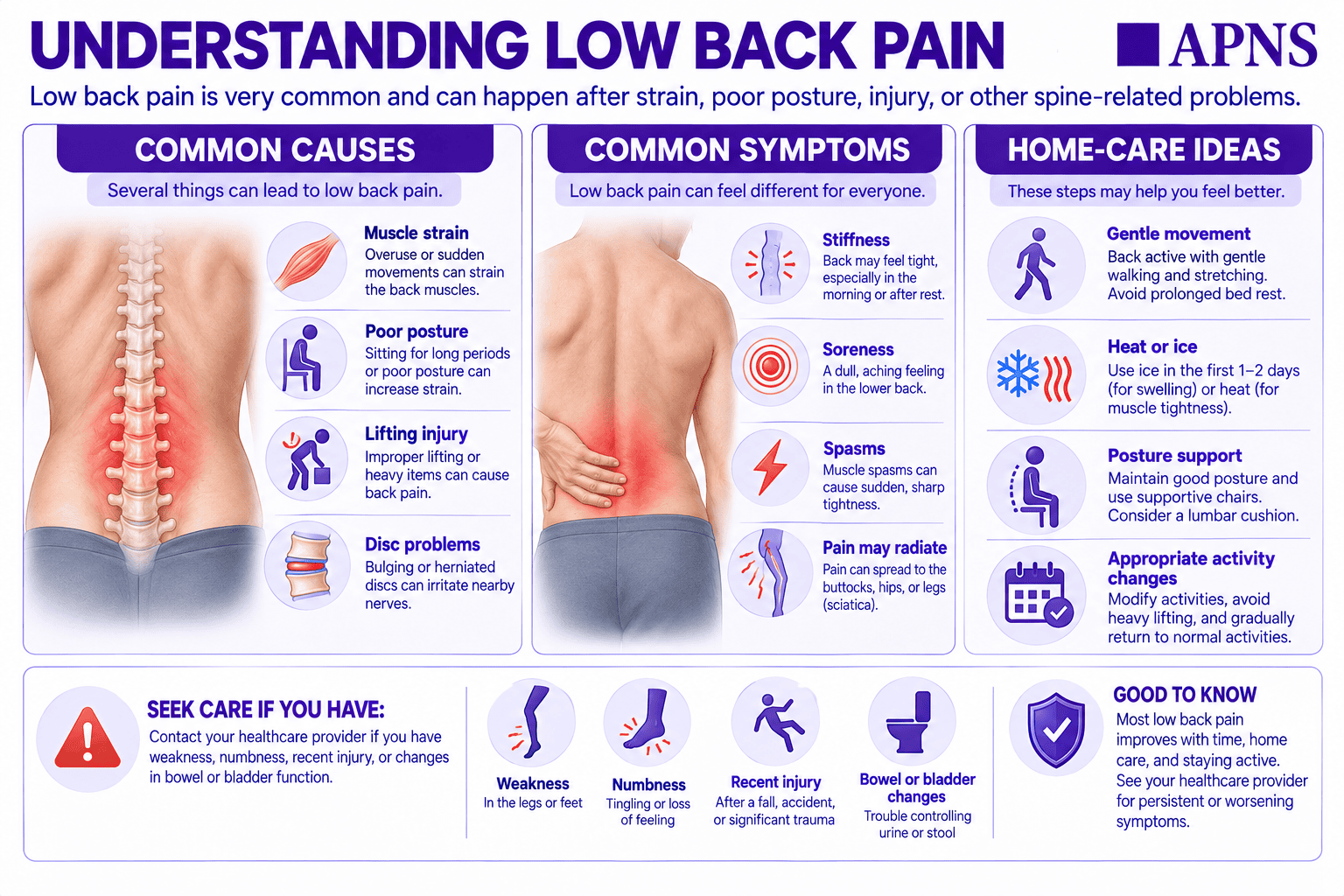
Back pain may result from an injury, gradual wear, inflammation, nerve compression, or another medical condition.
Common causes include:
Back pain often develops from mechanical or structural changes involving the spinal bones, discs, muscles, ligaments, tendons, joints, or nerves. In many cases, a single exact cause cannot be identified.
Back Pain Symptoms, Types, and Causes – NIAMS
Explains common causes involving the spine, discs, muscles, ligaments, joints, and nerves.
Factors that may worsen back pain or delay recovery include:
Extended bed rest is generally not recommended for uncomplicated low back pain. Limiting painful activities briefly while continuing gentle movement and gradually increasing activity usually supports recovery better than remaining in bed.
Not every episode can be prevented, but healthy movement and workplace habits may reduce risk.
Helpful prevention measures include:
Regular walking and continued core-strengthening exercises may help reduce future back injuries and support a safe return to work.
The following video content is provided to help you better understand this condition. These resources are intended for educational purposes and should not replace personalized medical advice from your healthcare provider.
Most people with uncomplicated back pain do not need blood or urine testing.
Possible tests include:
Blood tests cannot diagnose most muscle strains or ordinary mechanical back pain. They are used when the history or examination suggests inflammation, infection, organ disease, or another underlying problem.
Medical Tests – NIH MedlinePlus
Provides explanations of common blood, urine, and other laboratory tests.
Imaging is not always necessary during the early stages of uncomplicated back pain. Many spinal changes found on imaging are also present in people without pain, so results must be considered together with the symptoms and physical examination.
Possible tests include:
MRI or other advanced imaging may be recommended when there is progressive leg weakness, loss of bladder or bowel control, fever, history of cancer, major trauma, severe persistent pain, or other warning signs.
MRI and Low Back Pain – NIH MedlinePlus
Explains when MRI may be appropriate and why it is not routinely needed for every episode of back pain.
Treatment depends on the cause, duration, severity, and effect on daily activities.
Treatment options may include:
For acute or subacute uncomplicated low back pain, nonmedication options such as superficial heat, massage, acupuncture, or spinal manipulation may be considered. Chronic pain treatment often combines exercise, rehabilitation, behavioral approaches, and carefully selected medications.
Back Pain: Diagnosis, Treatment, and Steps to Take – NIAMS
Provides information about activity, physical therapy, medications, complementary treatments, injections, and surgery.
Helpful lifestyle changes may include:
Adults generally benefit from regular aerobic and muscle-strengthening activity, but an exercise program should be adjusted for pain severity, physical ability, and medical conditions.
Medication may reduce symptoms but does not always correct the underlying cause.
Possible medications include:
Nonsteroidal anti-inflammatory drugs may increase the risk of stomach bleeding, kidney injury, elevated blood pressure, and heart problems. Acetaminophen can cause severe liver injury if too much is taken or if several acetaminophen-containing products are combined.
Muscle relaxants and opioids may cause sleepiness, poor coordination, falls, breathing problems, dependence, or dangerous interactions with alcohol and sedating medications. Do not drive or operate machinery when a medication causes drowsiness.
Pain Relievers – NIH MedlinePlus
Provides information about common pain medicines, safe use, side effects, and interactions.
Most back pain does not require a procedure or surgery.
Possible procedures include:
Spinal surgery is generally considered when there is a correctable structural problem, significant nerve compression, progressive neurological impairment, spinal instability, or persistent disabling symptoms that have not improved with appropriate nonsurgical treatment.
Most episodes of acute low back pain improve within days to several weeks. Some people experience recurring episodes, while others develop chronic symptoms lasting longer than three months.
Long-term recovery may depend on:
Persistent pain does not always mean that the spine is continuing to become damaged. Chronic pain may involve changes in movement, muscle conditioning, sleep, mood, stress, and the nervous system’s response to pain. Treatment often focuses on improving function and quality of life rather than completely eliminating every sensation.
For uncomplicated back pain without warning signs:
Cold may reduce pain after a recent injury, while heat can improve blood flow and relieve muscle stiffness. Remaining gently active is generally preferred over prolonged bed rest.
Avoid aggressive stretching, heavy lifting, or forceful spinal manipulation when pain follows major trauma or is accompanied by numbness, weakness, fever, osteoporosis, or other warning signs.
Taking Care of Your Back at Home – NIH MedlinePlus
Provides practical information about activity, sleep positions, exercise, heat, cold, and returning to normal routines.
No. Muscle or ligament irritation, arthritis, joint changes, posture, physical workload, and many other factors can cause pain. A herniated disc is only one possible cause.
Sciatica describes pain caused by irritation or compression involving the sciatic nerve or its spinal nerve roots. Pain may travel from the back or buttock down the leg and may include tingling, numbness, or weakness.
Usually not. Briefly reducing painful activity may help, but prolonged bed rest can increase stiffness and weakness. Gentle activity should be resumed as tolerated.
Cold may help after a recent injury or when swelling is present. Heat may help stiffness and muscle spasm. Protect the skin and stop if symptoms worsen.
Most people with uncomplicated new back pain do not need immediate MRI testing. MRI may be appropriate when there are serious warning signs, progressive neurological symptoms, or persistent symptoms that could change treatment.
Gentle movement is often helpful. Avoid exercises that cause sharp pain, worsening leg symptoms, or new weakness. A physical therapist can develop an individualized program.
Yes. Stress may increase muscle tension, interfere with sleep, reduce activity, and make pain feel more intense.
Yes. Kidney stones or infection may cause pain in the side or back. Kidney-related pain may occur with fever, nausea, painful urination, frequent urination, or blood in the urine.
Cancer is an uncommon cause of back pain. Risk is higher when pain occurs with a history of cancer, unexplained weight loss, persistent night pain, or other concerning symptoms.
Many acute episodes improve over several days to a few weeks. Pain lasting longer than three months is considered chronic.

Consider asking:
Many cases can be managed by a primary care provider.
You may be referred to:
Whether back pain is curable depends on its cause.
A mild muscle or ligament injury may heal completely. Infections, fractures, herniated discs, inflammatory disease, spinal stenosis, and other conditions require specific treatment and may have different long-term outcomes.
Chronic degenerative or inflammatory conditions may not have a permanent cure, but treatment can often:
Call 911 or seek emergency medical care immediately if back pain occurs with:
Loss of bladder or bowel control, urinary retention, saddle-area numbness, or rapidly worsening leg weakness may indicate severe compression of the lower spinal nerves and requires emergency evaluation.
Seek urgent same-day medical evaluation for:
MRI and Low Back Pain – NIH MedlinePlus
Lists warning signs that may require urgent assessment and advanced imaging.
CALL 911
APNS does not provide emergency medical services. If you believe you are experiencing a medical emergency, including (but not limited to) chest pain, difficulty breathing, stroke symptoms, severe allergic reactions, anaphylaxis, uncontrolled bleeding, seizures, loss of consciousness, or any other potentially life-threatening condition, you are instructed to call 911 immediately or go immediately to the nearest emergency department.
Patient-friendly information about acute and chronic back pain, causes, symptoms, and treatment.
Acute Low Back Pain – NIH MedlinePlus
Explains symptoms, recovery, self-care, and when to contact a healthcare provider.
Chronic Low Back Pain – NIH MedlinePlus
Provides information about persistent back pain, nerve symptoms, testing, and treatment.
Back Pain – National Institute of Arthritis and Musculoskeletal and Skin Diseases
Explains common causes, risk factors, symptoms, and types of back pain.
Back Pain: Diagnosis, Treatment, and Steps to Take – NIAMS
Provides guidance about evaluation, home care, exercise, medication, complementary care, injections, and surgery.
Taking Care of Your Back at Home – NIH MedlinePlus
Provides practical advice about activity, sleeping positions, exercise, heat, and cold.
MRI and Low Back Pain – NIH MedlinePlus
Explains when advanced imaging may be needed and why routine MRI is not always helpful.
This guide is intended for educational purposes only and should not replace medical advice, diagnosis, imaging, or treatment from your healthcare provider. Back pain may be caused by a muscle or ligament injury, spinal-disc problem, nerve compression, arthritis, fracture, osteoporosis, inflammatory disease, infection, kidney condition, abdominal or pelvic condition, cancer, or another problem requiring specific treatment. Consult a healthcare professional before beginning a new exercise program, taking pain medication regularly, or combining over-the-counter products. Avoid forceful spinal manipulation after significant trauma or when you have osteoporosis, progressive weakness, numbness, fever, or another warning sign. Seek urgent medical care for fever, serious trauma, rapidly worsening pain, progressive leg weakness, difficulty walking, unexplained weight loss, or a history of cancer with new back pain. Call 911 immediately for loss of bladder or bowel control, inability to urinate, numbness around the genital or buttock area, sudden severe leg weakness, chest pain, difficulty breathing, loss of consciousness, or another medical emergency.
At APNS, our providers take the time to understand your condition and your goals. We offer comprehensive telehealth visits at a fixed rate — no membership fees, no insurance required, and no unexpected charges. Whether you’re newly diagnosed or looking for a provider who actually listens, we’re here to help.