
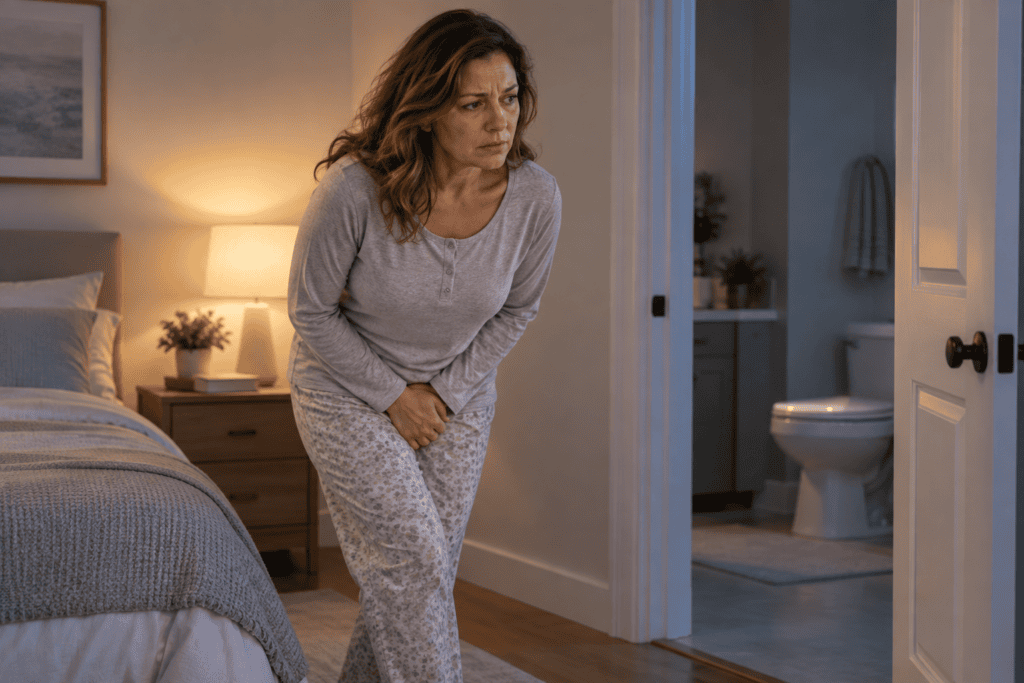
Overactive bladder (OAB) is a group of symptoms centered on urinary urgency—a sudden, difficult-to-delay need to urinate. It often includes urinating frequently during the day, waking at night to urinate, and sometimes leaking urine before reaching a toilet. OAB is diagnosed when another clear cause, such as a urinary tract infection, is not responsible for the symptoms.
Urinary frequency means urinating more often than is usual for you, while urgency describes the sudden strong need to go. These symptoms do not always mean OAB; they may result from drinking large amounts of fluid, caffeine, medicines, diabetes, pregnancy, prostate problems, urinary retention, bladder pain syndrome, or a neurologic condition. A healthcare provider can identify the likely cause and help you choose treatment.
Overactive Bladder – Urology Care Foundation
https://www.urologyhealth.org/urology-a-z/o/overactive-bladder-%28oab%29
Explains overactive bladder symptoms, diagnosis, lifestyle strategies, medicines, and procedures.
Definition and Facts for Bladder Control Problems – NIDDK
Defines urgency incontinence, overactive bladder, and other types of bladder-control problems.
Overactive bladder and urinary urgency are common in adults of all sexes. Symptoms become more common with age, but they are not an unavoidable or normal part of aging.
Many people avoid discussing bladder symptoms because of embarrassment. Treatment can reduce bathroom trips, urgency, nighttime waking, leakage, and the effect symptoms have on work, sleep, travel, exercise, and relationships.
Overactive Bladder Patient Guide – Urology Care Foundation
Provides a detailed patient guide to urgency, frequency, urine leakage, evaluation, and treatment choices.
Symptoms vary in frequency and severity.
You may notice:
Burning, fever, pelvic pain, blood in the urine, a weak stream, or difficulty emptying the bladder may suggest another problem and should be discussed with a healthcare provider.
Symptoms and Causes of Bladder Control Problems – NIDDK
Reviews bladder symptoms, possible causes, and signs that require prompt medical care.
Your provider will ask when symptoms began, how often you urinate, whether you leak, how much you drink, which medicines you take, and whether you have pain, blood, weak stream, constipation, or trouble emptying. A bladder diary for several days can show fluid intake, bathroom trips, urgency, leakage, and nighttime symptoms.
The examination may include the abdomen, pelvis, genital area, prostate when appropriate, pelvic-floor muscles, and a brief neurologic assessment. OAB is usually diagnosed after infection and other likely causes are considered.
Diagnosis of Bladder Control Problems – NIDDK
https://www.niddk.nih.gov/health-information/urologic-diseases/bladder-control-problems/diagnosis
Explains bladder diaries, physical examinations, urine testing, and specialized diagnostic tests.
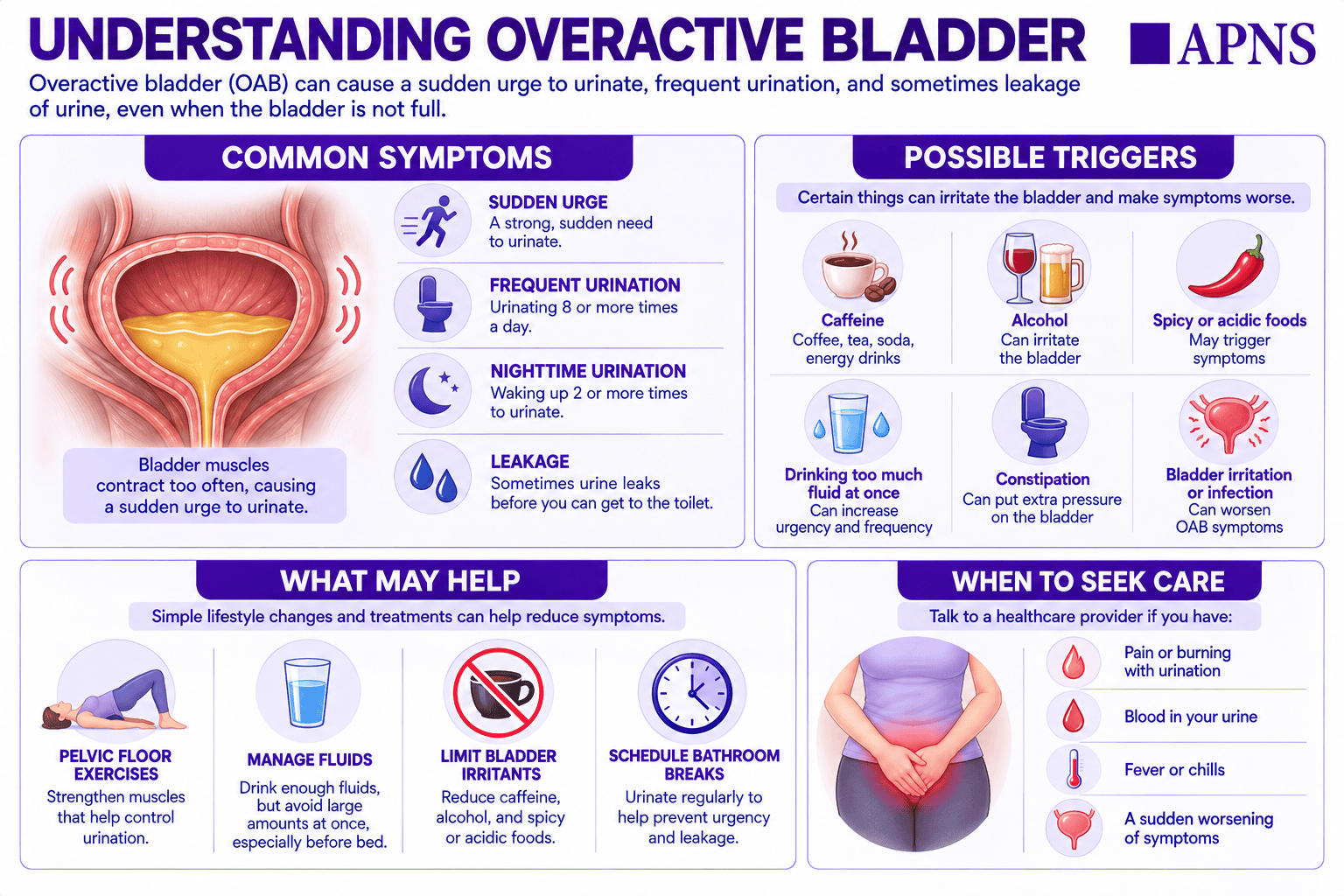
OAB symptoms may occur when the bladder muscle contracts before the bladder is full or when bladder and brain signals become overly sensitive. Sometimes no single cause is found.
Other possible causes of frequency or urgency include:
Symptoms and Causes of Bladder Control Problems – NIDDK
Reviews bladder symptoms, possible causes, and signs that require prompt medical care.
constipation and mobility problems make toileting harder.
Common triggers include:
Not every case can be prevented. Healthy bladder habits and early treatment of contributing conditions may lower risk or reduce symptom severity.
The following video content is provided to help you better understand this condition. These resources are intended for educational purposes and should not replace personalized medical advice from your healthcare provider.
Testing is based on your symptoms and health history.
Possible laboratory tests include:
Urinalysis – NIH MedlinePlus
https://medlineplus.gov/lab-tests/urinalysis/
Explains urine testing used to look for infection, blood, glucose, and other abnormalities.
Most people do not need imaging, cystoscopy, or urodynamic testing during a straightforward initial evaluation.
Possible tests include:
Diagnosis of Bladder Control Problems – NIDDK
https://www.niddk.nih.gov/health-information/urologic-diseases/bladder-control-problems/diagnosis
Explains bladder diaries, physical examinations, urine testing, and specialized diagnostic tests.
Treatment is matched to the cause, symptom burden, medical history, and your preferences. You do not have to complete every conservative treatment before discussing other options with your provider.
Options may include:
Treatment for Bladder Control Problems – NIDDK
https://www.niddk.nih.gov/health-information/urologic-diseases/bladder-control-problems/treatment
Describes bladder training, pelvic-floor exercises, medicines, nerve stimulation, Botox, and other treatments.
Small changes may significantly reduce urgency and bathroom trips. Avoid severe fluid restriction, which can cause dehydration, constipation, and concentrated urine that irritates the bladder.
Helpful changes include:
Medicines may be used alone or with bladder training. Your provider will consider blood pressure, constipation, glaucoma, memory concerns, urinary retention risk, kidney and liver function, and other medicines.
Do not stop or change a prescribed medicine on your own. Contact your provider if you develop severe constipation, confusion, inability to urinate, or other concerning effects.
Treatment for Bladder Control Problems – NIDDK
https://www.niddk.nih.gov/health-information/urologic-diseases/bladder-control-problems/treatment
Describes bladder training, pelvic-floor exercises, medicines, nerve stimulation, Botox, and other treatments.
Procedures may be considered when symptoms remain bothersome or when you prefer them after discussing benefits and risks.
Idiopathic Overactive Bladder Guideline – American Urological Association
https://www.auanet.org/guidelines-and-quality/guidelines/idiopathic-overactive-bladder
Summarizes evidence-based evaluation and treatment recommendations used by urology professionals.
OAB is often a long-term condition, but symptoms can improve greatly with the right combination of strategies. Treatment may need to change as your health, medicines, mobility, or goals change.
Keeping follow-up appointments helps your provider monitor side effects, bladder emptying, infections, and progress. A return of symptoms does not mean treatment has failed; another option or combination may work better.
A bladder diary and gradual bladder training are useful starting points. If you have pain, infection symptoms, blood in the urine, or trouble emptying, contact a provider before assuming symptoms are OAB.
Overactive Bladder Patient Resource Center – Urology Care Foundation
https://www.urologyhealth.org/overactive-bladder
Offers assessment tools and practical information for discussing bladder symptoms with a healthcare provider.
Not always. Frequency depends on fluid intake, medicines, weather, and health. A change from your usual pattern or symptoms that disrupt life should be evaluated.
No. OAB occurs without an active infection, but infection can cause similar urgency and frequency and should be ruled out when appropriate.
Avoid overdrinking, but do not severely restrict fluids unless your provider directs you. Too little fluid can worsen constipation and bladder irritation.
They can help many people, but technique matters. Some people need relaxation rather than more tightening, so professional instruction may be useful.
Some antimuscarinic medicines may cause confusion or cognitive effects, especially in susceptible adults. Discuss individual risks and alternatives with your provider.
No. OAB may occur with or without urgency urinary incontinence.

Consider asking:
You may be referred to:
Overactive Bladder – Urology Care Foundation
https://www.urologyhealth.org/urology-a-z/o/overactive-bladder-%28oab%29
Explains overactive bladder symptoms, diagnosis, lifestyle strategies, medicines, and procedures.
Some cases of urinary frequency or urgency resolve when a temporary cause—such as infection, high blood sugar, constipation, excess caffeine, or a medication effect—is corrected. Idiopathic OAB may not have a permanent cure, but it can often be managed very effectively.
Many people need more than one approach, and benefits may require ongoing treatment. The goal is fewer urgent trips, less leakage, better sleep, and improved daily life.
Contact a healthcare provider promptly for new burning, fever, pelvic or flank pain, visible blood in urine, repeated infections, a weak stream, or worsening difficulty emptying.
Seek urgent or emergency care for:
Symptoms and Causes of Bladder Control Problems – NIDDK
Reviews bladder symptoms, possible causes, and signs that require prompt medical care.
Urinary Retention – NIDDK
https://www.niddk.nih.gov/health-information/urologic-diseases/urinary-retention
Explains symptoms and causes of incomplete bladder emptying and when urgent care is needed.
CALL 911
APNS does not provide emergency medical services. If you believe you are experiencing a medical emergency, including (but not limited to) chest pain, difficulty breathing, stroke symptoms, severe allergic reactions, anaphylaxis, uncontrolled bleeding, seizures, loss of consciousness, or any other potentially life-threatening condition, you are instructed to call 911 immediately or go immediately to the nearest emergency department.
Overactive Bladder – Urology Care Foundation
https://www.urologyhealth.org/urology-a-z/o/overactive-bladder-%28oab%29
Explains overactive bladder symptoms, diagnosis, lifestyle strategies, medicines, and procedures.
Overactive Bladder Patient Guide – Urology Care Foundation
Provides a detailed patient guide to urgency, frequency, urine leakage, evaluation, and treatment choices.
Overactive Bladder Patient Resource Center – Urology Care Foundation
https://www.urologyhealth.org/overactive-bladder
Offers assessment tools and practical information for discussing bladder symptoms with a healthcare provider.
Definition and Facts for Bladder Control Problems – NIDDK
Defines urgency incontinence, overactive bladder, and other types of bladder-control problems.
Symptoms and Causes of Bladder Control Problems – NIDDK
Reviews bladder symptoms, possible causes, and signs that require prompt medical care.
Diagnosis of Bladder Control Problems – NIDDK
https://www.niddk.nih.gov/health-information/urologic-diseases/bladder-control-problems/diagnosis
Explains bladder diaries, physical examinations, urine testing, and specialized diagnostic tests.
Treatment for Bladder Control Problems – NIDDK
https://www.niddk.nih.gov/health-information/urologic-diseases/bladder-control-problems/treatment
Describes bladder training, pelvic-floor exercises, medicines, nerve stimulation, Botox, and other treatments.
Idiopathic Overactive Bladder Guideline – American Urological Association
https://www.auanet.org/guidelines-and-quality/guidelines/idiopathic-overactive-bladder
Summarizes evidence-based evaluation and treatment recommendations used by urology professionals.
Urinary Tract Infections – NIH MedlinePlus
https://medlineplus.gov/urinarytractinfections.html
Provides information about urinary infection symptoms, testing, treatment, and prevention.
This guide is intended for educational purposes only and should not replace medical advice, diagnosis, or treatment from your healthcare provider, urologist, or urogynecologist. Urinary urgency and frequency can result from overactive bladder, infection, diabetes, urinary retention, medication effects, prostate or pelvic conditions, neurologic disorders, or other causes that require different treatment. Do not severely restrict fluids or stop prescribed medicines without guidance. Seek urgent care if you cannot urinate, have fever with flank pain or vomiting, heavy blood or clots in the urine, or new bladder loss with leg weakness, groin numbness, or severe back pain.
At APNS, our providers take the time to understand your condition and your goals. We offer comprehensive telehealth visits at a fixed rate — no membership fees, no insurance required, and no unexpected charges. Whether you’re newly diagnosed or looking for a provider who actually listens, we’re here to help.