

Launching September 2027

Post-Traumatic Stress Disorder (PTSD)

PTSD At A Glance

  • PTSD is a mental health condition that can develop after experiencing, witnessing, or learning about a traumatic event.
  • Symptoms commonly include unwanted memories, nightmares, flashbacks, avoidance of reminders, negative changes in mood or thinking, and feeling constantly on guard.
  • PTSD can interfere with sleep, concentration, relationships, work, school, and everyday activities.
  • Risk is influenced by factors such as the severity or repetition of trauma, previous trauma, limited support, ongoing danger, and other mental health conditions.
  • Diagnosis is based on a clinical mental health evaluation when symptoms persist, cause significant distress or impairment, and are not better explained by another condition.
  • Effective treatment may include trauma-focused psychotherapy such as cognitive processing therapy, prolonged exposure, EMDR, medication, or a combination of approaches.

Table of Contents

Table of Contents

What Is PTSD?

Post-traumatic stress disorder, commonly called PTSD, is a mental health condition that may develop after experiencing, witnessing, or learning about a traumatic event. Trauma may involve actual or threatened death, serious injury, sexual violence, combat, abuse, a serious accident, a natural disaster, or another frightening experience. Not everyone who experiences trauma develops PTSD.

PTSD can cause distressing memories, nightmares, avoidance, negative changes in mood and thinking, and a feeling of constantly being in danger. Symptoms may interfere with sleep, relationships, work, school, health, and daily activities. PTSD is treatable with trauma-focused psychotherapy, medication, or a combination of treatments.

Learn More

Post-Traumatic Stress Disorder – National Institute of Mental Health

Explains PTSD symptoms, risk factors, diagnosis, treatment, and ways to find help.

PTSD – National Center for PTSD

Provides education and treatment resources for trauma survivors, families, Veterans, and healthcare professionals.

How Common Is PTSD?

PTSD can affect people of any age, sex, gender, culture, occupation, or background. It may develop after one event, repeated trauma, or long-term exposure to dangerous or distressing situations.

Many people experience temporary stress reactions after trauma. These reactions may include fear, sadness, anger, trouble sleeping, poor concentration, or repeatedly thinking about what happened. Most people gradually recover, but some develop persistent symptoms that meet the criteria for PTSD.

The risk may be higher in people who:

  • Experienced severe or repeated trauma
  • Were injured during the event
  • Believed they or someone else would die
  • Experienced childhood abuse or neglect
  • Experienced sexual assault or intimate partner violence
  • Work in military, emergency, healthcare, or public-safety settings
  • Have limited support after the trauma
  • Continue to face danger or instability
  • Have a history of depression, anxiety, or another mental health condition
  • Use alcohol or drugs to manage distress
  • Experienced additional stress or loss after the event

PTSD is not a sign of weakness, poor character, or failure to cope.

What Symptoms Might You Notice?

PTSD symptoms are generally grouped into four areas.

Intrusive or Re-Experiencing Symptoms

These symptoms make the traumatic event feel as though it is returning.

Examples include:

  • Unwanted memories
  • Distressing dreams or nightmares
  • Flashbacks
  • Feeling as though the event is happening again
  • Strong emotional distress when reminded of the trauma
  • Sweating, shaking, nausea, rapid heartbeat, or panic when triggered
  • Sudden images, sounds, smells, or physical sensations connected to the event

Avoidance Symptoms

A person may avoid reminders of what happened.

Examples include:

  • Avoiding thoughts or feelings about the trauma
  • Refusing to discuss the event
  • Avoiding people, places, activities, objects, or media connected to it
  • Avoiding medical care, driving, intimacy, crowds, or other situations
  • Staying constantly busy to avoid memories
  • Using alcohol or drugs to numb emotions

Changes in Thoughts and Mood

Examples include:

  • Persistent guilt or shame
  • Blaming yourself for what happened
  • Believing the world is completely unsafe
  • Feeling detached from other people
  • Difficulty experiencing positive emotions
  • Loss of interest in activities
  • Difficulty remembering parts of the trauma
  • Hopelessness about the future
  • Feeling emotionally numb
  • Depression
  • Social withdrawal
  • Feeling damaged or permanently changed

Changes in Alertness and Reactions

Examples include:

  • Feeling constantly on guard
  • Being easily startled
  • Irritability or anger
  • Aggressive behavior
  • Difficulty concentrating
  • Trouble falling or staying asleep
  • Scanning rooms for danger
  • Sitting near exits
  • Reckless or self-destructive behavior
  • Difficulty relaxing
  • Panic-like symptoms

PTSD may significantly impair functioning at home, at work, in relationships, and in social settings.

How Is PTSD Diagnosed?

PTSD is diagnosed through a clinical mental health evaluation. There is no blood test, brain scan, or online questionnaire that can confirm PTSD by itself.

A healthcare professional may ask about:

  • The traumatic event or events
  • When symptoms began
  • Intrusive memories, dreams, or flashbacks
  • Avoided thoughts, people, or situations
  • Changes in mood and beliefs
  • Sleep and concentration
  • Irritability or feeling constantly alert
  • Work, school, and relationship functioning
  • Depression or suicidal thoughts
  • Alcohol or substance use
  • Physical health and chronic pain
  • Previous trauma
  • Current safety and ongoing abuse
  • Medications and medical conditions
  • Symptoms of mania or psychosis

For a PTSD diagnosis, symptoms generally continue for more than one month, cause significant distress or impairment, and cannot be better explained by medication, substance use, or another condition.

A clinician may use a screening tool such as:

  • Primary Care PTSD Screen
  • PTSD Checklist for DSM-5
  • Clinician-Administered PTSD Scale

Screening tools help identify possible PTSD but do not replace a full clinical evaluation.

The provider should also consider conditions with similar symptoms, including:
  • Acute stress disorder
  • Depression
  • Generalized anxiety disorder
  • Panic disorder
  • Obsessive-compulsive disorder
  • Traumatic brain injury
  • Substance-related conditions
  • Bipolar disorder
  • Psychotic disorders
  • Sleep disorders
  • Grief-related conditions
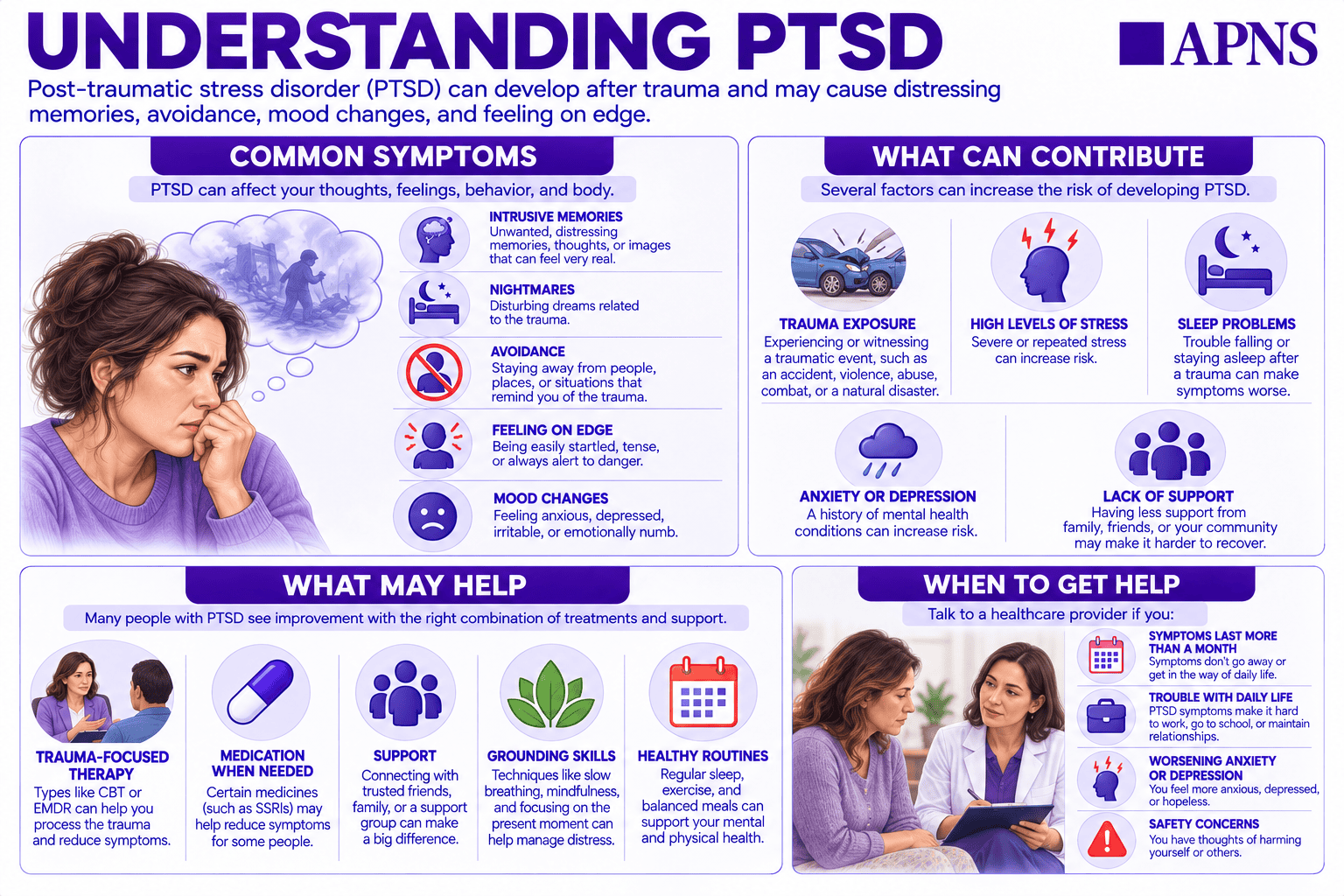
Post-Traumatic Stress Disorder (PTSD) infographic – click to enlarge

What Causes PTSD?

PTSD may develop after exposure to a traumatic event, but there is no single cause that explains why one person develops it and another does not.

Possible contributing factors include:

  • The severity and length of the trauma
  • Repeated exposure to trauma
  • Physical injury
  • Feeling helpless or trapped
  • Previous traumatic experiences
  • Childhood adversity
  • Genetic or biological vulnerability
  • Differences in the body’s stress response
  • Lack of support after the event
  • Continued danger or instability
  • Additional losses after the trauma
  • Depression, anxiety, or substance use
  • Sleep deprivation
  • Occupational exposure to suffering, death, violence, or disaster

Traumatic events associated with PTSD may include:

  • Military combat
  • Sexual assault
  • Physical assault
  • Childhood abuse
  • Intimate partner violence
  • Serious accidents
  • Natural disasters
  • Terrorism
  • Mass violence
  • Kidnapping
  • Torture
  • Sudden traumatic loss
  • Serious medical emergencies
  • Witnessing severe injury or death
  • Repeated exposure to traumatic details through work

What Can Make PTSD Worse?

Factors that may worsen PTSD symptoms include:

  • Avoiding all trauma reminders
  • Ongoing exposure to danger
  • Poor sleep
  • Alcohol or recreational drug use
  • Social isolation
  • Untreated depression or anxiety
  • Chronic pain
  • Major relationship conflict
  • Financial or housing instability
  • Repeated traumatic experiences
  • Keeping symptoms secret
  • Stopping medication suddenly
  • Missing therapy or follow-up appointments
  • Excessive exposure to upsetting news or media
  • Lack of structure or daily routine
  • Repeatedly blaming yourself
  • Using anger or aggression to manage fear
  • Relying only on distraction without treating the underlying symptoms

Avoidance may provide short-term relief but can keep PTSD symptoms going by preventing the person from learning that memories and safe reminders can be tolerated.

Prevention

PTSD cannot always be prevented, but early support may reduce the severity and length of trauma-related symptoms.

Helpful measures include:

  • Seek support after a traumatic event.
  • Address immediate safety needs.
  • Maintain contact with trusted people.
  • Restore sleep, meals, and daily routines when possible.
  • Avoid excessive alcohol or drug use.
  • Seek care for physical injuries.
  • Obtain help for ongoing abuse or danger.
  • Monitor symptoms over time.
  • Contact a clinician if symptoms continue or worsen.
  • Receive treatment for depression, anxiety, pain, or substance use.
  • Participate in evidence-based PTSD treatment.
  • Continue practicing treatment skills after improvement.
  • Develop a plan for anniversaries and known triggers.
  • Keep crisis contacts available.
  • Reduce access to lethal means when suicide risk is present.

People should not be forced to repeatedly describe a traumatic event immediately afterward. Support should focus on safety, practical needs, connection, and access to appropriate care.

Learn More About PTSD

The following video content is provided to help you better understand this condition. These resources are intended for educational purposes and should not replace personalized medical advice from your healthcare provider.

Labs

Laboratory tests do not diagnose PTSD, but they may help identify physical conditions that contribute to sleep problems, fatigue, anxiety, mood changes, or poor concentration.

Possible tests include:

  • Complete Blood Count: Checks for anemia, infection, or other blood abnormalities.
  • Comprehensive Metabolic Panel: Evaluates electrolytes, kidney function, liver function, and blood glucose.
  • Thyroid Testing: Checks for thyroid conditions that may affect mood, sleep, or anxiety.
  • Vitamin B12 and Folate: May identify deficiencies affecting mood or cognition.
  • Iron Studies: May be considered when fatigue or anemia is suspected.
  • Vitamin D: May be checked based on symptoms and risk factors.
  • Pregnancy Test: May affect medication choices.
  • Toxicology Testing: May be used when substance exposure is a concern.
  • Medication Levels: May be needed for selected psychiatric medications.

Testing should be based on the person’s symptoms, medical history, medications, and physical examination.

Diagnostics

Most people with PTSD do not need brain imaging or another medical procedure.

Possible assessments include:

  • Mental health evaluation
  • PTSD screening questionnaire
  • Suicide-risk assessment
  • Depression and anxiety screening
  • Substance-use screening
  • Sleep assessment
  • Traumatic brain injury evaluation
  • Cognitive screening when indicated
  • Physical and neurological examination
  • Medication review
  • Assessment for ongoing abuse or danger

Other testing may be considered when symptoms suggest:

  • Head injury
  • Seizure disorder
  • Sleep apnea
  • Neurological illness
  • Medication side effects
  • Hormonal illness
  • Another medical cause

A CT scan, MRI, sleep study, or neurological evaluation is based on the person’s specific symptoms and is not routinely required for PTSD.

Treatment & Management

Treatment Options

The main PTSD treatments are trauma-focused psychotherapy, medication, or a combination of both. Treatment should be provided by a clinician with experience treating trauma-related conditions whenever possible.

Treatment options may include:

  • Cognitive processing therapy
  • Prolonged exposure therapy
  • Eye movement desensitization and reprocessing
  • Written exposure therapy
  • Trauma-focused cognitive behavioral therapy
  • Medication
  • Treatment for nightmares and sleep problems
  • Treatment for depression, anxiety, or substance use
  • Couples or family therapy
  • Group therapy
  • Peer support
  • Intensive outpatient treatment
  • Partial hospitalization
  • Inpatient psychiatric care when safety is at risk

Cognitive Processing Therapy

Cognitive processing therapy, commonly called CPT, helps a person examine distressing beliefs related to the trauma. Treatment may address guilt, shame, self-blame, trust, safety, power, control, and intimacy.

Prolonged Exposure Therapy

Prolonged exposure, commonly called PE, helps a person gradually approach safe memories, feelings, and situations that have been avoided. The process is planned and supported by a trained therapist rather than forced or rushed.

Eye Movement Desensitization and Reprocessing

Eye movement desensitization and reprocessing, commonly called EMDR, helps a person process traumatic memories while using guided eye movements or another form of alternating stimulation.

Written Exposure Therapy

Written exposure therapy uses structured writing about the traumatic experience over several sessions. It is an evidence-based trauma-focused treatment for PTSD.

Treatment should be individualized. A person should not be pressured to describe trauma in detail before adequate assessment, consent, preparation, and support.

Lifestyle Changes

Lifestyle changes can support recovery but should not replace professional PTSD treatment.

Helpful changes may include:

  • Maintain a consistent sleep schedule.
  • Eat regular meals.
  • Participate in physical activity as tolerated.
  • Limit alcohol.
  • Avoid recreational drugs.
  • Reduce excessive caffeine.
  • Build a predictable daily routine.
  • Spend time with supportive people.
  • Use grounding and relaxation skills.
  • Limit upsetting news or media when needed.
  • Address chronic pain and other medical conditions.
  • Return gradually to safe activities.
  • Practice skills provided by the therapist.
  • Attend treatment consistently.
  • Identify triggers and early warning signs.
  • Set realistic recovery goals.

Recovery does not require forgetting what happened. Treatment helps the memory become less controlling and less disruptive.

Medications

Medication may reduce PTSD symptoms such as anxiety, depression, intrusive memories, and emotional distress. Medication decisions should consider symptoms, other health conditions, pregnancy status, side effects, and personal preferences.

Medications with strong evidence for PTSD include:

  • Sertraline
  • Paroxetine
  • Venlafaxine

The National Center for PTSD identifies these three medications as recommended options for treating PTSD symptoms.

Other medications may sometimes be used based on individual symptoms and clinical judgment.

Possible Medication Side Effects

Side effects depend on the medication and may include:

  • Nausea
  • Headache
  • Diarrhea or constipation
  • Sleepiness
  • Insomnia
  • Increased anxiety when first starting
  • Sweating
  • Dry mouth
  • Sexual side effects
  • Appetite or weight changes
  • Dizziness
  • Blood-pressure changes

Medication Safety

  • Take medication exactly as prescribed.
  • Do not stop an antidepressant suddenly.
  • Do not use another person’s medication.
  • Tell the prescriber about all supplements and medications.
  • Report new or worsening suicidal thoughts.
  • Report extreme restlessness or agitation.
  • Report unusual energy, risky behavior, or little need for sleep.
  • Discuss pregnancy, plans for pregnancy, or breastfeeding.
  • Seek immediate help for a severe allergic reaction, seizure, fainting, or serious medication reaction.

Benzodiazepines are generally not preferred as a routine long-term PTSD treatment. They may cause dependence, sedation, memory problems, falls, and interference with trauma-focused therapy. Alcohol, opioids, and other sedating substances can increase these risks.

Medication may be combined with trauma-focused psychotherapy when appropriate.

Procedures

Most people with PTSD do not require a procedure.

Specialized treatments that may be considered in selected cases include:

  • Transcranial Magnetic Stimulation: Uses magnetic pulses to stimulate targeted areas of the brain.
  • Intensive Trauma-Focused Programs: Provide several hours of structured treatment each day.
  • Residential Treatment: Offers continuous support for severe symptoms.
  • Inpatient Psychiatric Care: May be needed when there is immediate danger, severe self-neglect, psychosis, or inability to remain safe.
  • Treatment for Coexisting Medical Conditions: Procedures may be required for chronic pain, traumatic brain injury, sleep disorders, or physical injuries related to the trauma.

Specialized or experimental procedures should be discussed with a qualified PTSD specialist, including potential benefits, limitations, costs, and risks.

What Should You Expect Long-Term?

PTSD can improve significantly with appropriate treatment. Some people recover fully, while others experience occasional symptoms that become manageable and no longer control their lives.

Recovery may include:

  • Fewer nightmares or flashbacks
  • Improved sleep
  • Less avoidance
  • Reduced guilt or shame
  • Feeling safer in ordinary situations
  • Better concentration
  • Improved relationships
  • Returning to work or school
  • Reduced alcohol or substance use
  • Greater ability to manage reminders
  • Increased hope and enjoyment

Symptoms may temporarily increase during stress, anniversaries, legal proceedings, health problems, major life changes, or exposure to reminders. This does not necessarily mean that treatment has failed.

Many people require time to find the treatment and clinician that fit their needs. Effective PTSD treatments are available, and improvement is possible even when symptoms have been present for years.

What Can You Do At Home?

Home strategies should support—not replace—professional treatment.

Helpful measures include:

  • Follow the agreed treatment plan.
  • Take medication consistently.
  • Attend therapy appointments.
  • Practice grounding skills.
  • Maintain sleep and meal routines.
  • Reduce alcohol and drug use.
  • Stay connected with trusted people.
  • Identify safe places and supportive contacts.
  • Track symptoms and triggers.
  • Limit avoidance gradually with professional guidance.
  • Use calming breathing without forcing deep breaths.
  • Engage the senses to reconnect with the present.
  • Keep crisis contacts readily available.
  • Secure firearms, medications, or other lethal means when suicide risk is present.
  • Create a written safety plan with a clinician.
  • Tell someone when symptoms are worsening.

Simple Grounding Strategies

During a flashback or severe distress:

  • State your name, location, and the current date.
  • Remind yourself that the traumatic event is not happening now.
  • Place both feet on the floor.
  • Name objects you can see.
  • Hold a cool object or splash cool water on your face.
  • Notice nearby sounds.
  • Describe the room in detail.
  • Slowly lengthen your exhale.
  • Contact a trusted person.

Grounding skills may reduce immediate distress but do not replace trauma-focused treatment.

Frequently Asked Questions

Does everyone develop PTSD after trauma?

No. Many people have temporary stress reactions and gradually recover. Only some people develop persistent symptoms that meet the criteria for PTSD.

Can PTSD develop long after the event?

Yes. Symptoms may begin soon after trauma or become noticeable later, especially during additional stress or life changes.

Are flashbacks the same as memories?

A flashback may feel as though the trauma is happening again in the present. An ordinary memory is generally recognized as something that happened in the past.

Can PTSD cause physical symptoms?

Yes. PTSD may cause rapid heartbeat, sweating, shaking, headaches, pain, stomach problems, fatigue, muscle tension, or sleep disturbance.

Can PTSD cause anger?

Yes. Irritability, anger, and aggressive reactions may occur when the nervous system remains prepared for danger.

Can PTSD affect memory?

Yes. Trauma, poor sleep, anxiety, depression, and feeling constantly alert may make concentration and memory more difficult.

Can someone have PTSD without nightmares?

Yes. Not everyone experiences every symptom. A person may have intrusive memories, avoidance, emotional numbness, or hypervigilance without frequent nightmares.

Is PTSD only associated with military combat?

No. Combat can cause PTSD, but so can assault, abuse, serious accidents, disasters, medical emergencies, sudden traumatic loss, and many other events.

Is PTSD a sign of weakness?

No. PTSD is a recognized mental health condition involving the brain and body’s response to trauma.

Do I have to discuss every detail of my trauma?

Different therapies use different methods. Treatment should involve informed consent and collaboration. A clinician can explain what each treatment requires before it begins.

Can therapy make symptoms worse?

Trauma-focused therapy may temporarily increase distress when difficult memories are addressed. A trained therapist should prepare the person, monitor symptoms, and adjust the treatment pace when needed.

Can alcohol help with PTSD symptoms?

Alcohol may briefly numb distress but often worsens sleep, mood, impulsivity, relationships, medication side effects, and long-term recovery.

Can PTSD occur with depression?

Yes. Depression, anxiety, substance use, chronic pain, sleep disorders, and traumatic brain injury commonly require assessment alongside PTSD.

Can children and adolescents develop PTSD?

Yes. Symptoms may appear differently in younger people, including play that repeats the trauma, separation fears, irritability, regression, nightmares, or behavior changes.

Can PTSD be treated without medication?

Yes. Trauma-focused psychotherapy is a leading treatment. Some people use therapy alone, while others benefit from medication or combined treatment.

Questions To Ask Your Provider

Consider asking:

  • Do my symptoms meet the criteria for PTSD?
  • Could I have acute stress disorder or another condition?
  • Should I be screened for depression or substance use?
  • Which trauma-focused therapy is recommended for me?
  • Do you provide CPT, PE, EMDR, or written exposure therapy?
  • What happens during trauma-focused treatment?
  • Will I have to discuss every detail of the trauma?
  • How will treatment be paced safely?
  • Should I consider medication?
  • What side effects should I monitor?
  • How long should a medication trial last?
  • What can help with nightmares or sleep?
  • How should I manage flashbacks?
  • What should I do if symptoms worsen?
  • Can my family or partner be involved?
  • Are virtual or intensive treatment programs available?
  • What should I do if I have suicidal thoughts?
  • How will we measure treatment progress?

Specialist Referrals

PTSD may be treated by primary care or mental health professionals depending on the person’s needs.

Possible referrals include:

  • Trauma-Focused Therapist: Provides evidence-based PTSD psychotherapy.
  • Psychiatrist: Diagnoses mental health conditions and manages medication or complex treatment.
  • Psychiatric Mental Health Nurse Practitioner: Provides assessment, diagnosis, therapy, and medication management within their scope.
  • Psychologist: Provides psychological testing and psychotherapy.
  • Licensed Clinical Social Worker or Counselor: May provide trauma-focused therapy when appropriately trained.
  • Substance-Use Treatment Specialist: Treats alcohol or drug use occurring with PTSD.
  • Sleep Specialist: Evaluates severe insomnia, nightmares, or sleep apnea.
  • Neurologist: Evaluates traumatic brain injury, seizures, or other neurological symptoms.
  • Pain Specialist: Helps manage chronic pain related to injury or trauma.
  • Domestic Violence or Sexual Assault Advocate: Helps with safety planning and community resources.
  • Veterans Health Specialist: Provides trauma treatment and military-related support.
  • Emergency or Crisis Mental Health Team: Evaluates immediate safety concerns.

It is appropriate to ask a therapist about specific training and experience with trauma-focused PTSD treatment.

Is PTSD Curable?

PTSD is treatable, and many people experience major improvement or complete recovery. Others may continue to have some symptoms but learn to manage them effectively.

Treatment can help a person:

  • Process traumatic memories
  • Reduce nightmares and flashbacks
  • Feel safer
  • Decrease avoidance
  • Improve sleep
  • Reduce shame and self-blame
  • Restore relationships
  • Return to meaningful activities
  • Reduce depression and anxiety
  • Improve quality of life

PTSD symptoms can improve even when treatment begins months or years after the trauma. A person does not have to forget the event for treatment to work.

Emergency Symptoms / When To Seek Immediate Help

Call 911 or go to the nearest emergency department if a person:

  • Is attempting suicide
  • Has a suicide plan and intends to act
  • Has taken an overdose
  • Has seriously injured themselves
  • Cannot remain safe
  • Intends to seriously harm someone else
  • Has access to a weapon and intends to use it
  • Is severely confused or disconnected from reality
  • Is experiencing dangerous hallucinations or paranoia
  • Is unable to care for basic needs
  • Is having a severe medication reaction

In the United States, call or text 988 for suicidal thoughts, severe emotional distress, a mental health crisis, or a substance-use crisis. The 988 Suicide & Crisis Lifeline provides support by phone, text, or chat 24 hours a day.

Seek urgent same-day mental health or medical care for:

  • New or worsening suicidal thoughts
  • Self-harm
  • Increasing alcohol or drug use
  • Severe depression or hopelessness
  • Several nights with little or no sleep
  • Inability to eat, work, or complete basic self-care
  • Frequent or severe dissociation
  • Dangerous anger or aggression
  • Rapidly worsening flashbacks or panic
  • Reckless or self-destructive behavior
  • Hallucinations or severe paranoia
  • New symptoms after starting or changing medication
  • Ongoing abuse, violence, or immediate danger at home

Do not leave a person alone when there is immediate danger. Remove or secure firearms, excess medication, and other lethal means when this can be done safely.

CALL 911

APNS does not provide emergency medical services. If you believe you are experiencing a medical emergency, including (but not limited to) chest pain, difficulty breathing, stroke symptoms, severe allergic reactions, anaphylaxis, uncontrolled bleeding, seizures, loss of consciousness, or any other potentially life-threatening condition, you are instructed to call 911 immediately or go immediately to the nearest emergency department.

Official Resources / External Links

Post-Traumatic Stress Disorder – National Institute of Mental Health

Provides information about PTSD symptoms, risk factors, diagnosis, therapy, medication, and finding help.

Traumatic Events and PTSD – National Institute of Mental Health

Provides an overview of traumatic stress, PTSD research, treatment, and educational materials.

PTSD: National Center for PTSD – U.S. Department of Veterans Affairs

Offers extensive patient and family education about PTSD, trauma, and evidence-based treatment.

PTSD Treatment Decision Aid – National Center for PTSD

Helps patients compare evidence-based PTSD therapies and medication options.

Post-Traumatic Stress Disorder – NIH MedlinePlus

Provides patient-friendly information about PTSD symptoms, diagnosis, and treatment.

988 Suicide & Crisis Lifeline – Substance Abuse and Mental Health Services Administration

Provides information about free crisis support available by calling or texting 988.

This guide is intended for educational purposes only and should not replace assessment, diagnosis, psychotherapy, medication management, or emergency treatment from a qualified healthcare professional. Trauma-related symptoms may also occur with acute stress disorder, depression, anxiety, grief, traumatic brain injury, sleep disorders, substance use, bipolar disorder, psychosis, medication effects, or another condition requiring different treatment. Do not begin, stop, or change psychiatric medication without speaking with the prescriber. Trauma-focused exercises should be individualized and should not involve unsafe, illegal, nonconsensual, or uncontrolled exposure. Seek prompt professional help for worsening symptoms, severe dissociation, substance misuse, inability to complete basic self-care, aggression, hallucinations, or thoughts of self-harm. In the United States, call or text 988 for a mental health or suicidal crisis. Call 911 or go to the nearest emergency department for an active suicide attempt, immediate danger, serious overdose, severe self-injury, or inability to remain safe.

Get personalized care for PTSD

At APNS, our providers take the time to understand your condition and your goals. We offer comprehensive telehealth visits at a fixed rate — no membership fees, no insurance required, and no unexpected charges. Whether you’re newly diagnosed or looking for a provider who actually listens, we’re here to help.