

Prediabetes means your blood sugar levels are higher than normal but not yet high enough to be diagnosed as Type 2 diabetes.
Think of prediabetes as an early warning sign that your body is beginning to have difficulty using insulin effectively. Insulin is a hormone that helps move sugar (glucose) from your bloodstream into your cells for energy.
Without intervention, prediabetes can progress to Type 2 diabetes. The good news is that many people can prevent or delay diabetes through lifestyle changes.
Most people with prediabetes have no symptoms and may not know they have it until routine blood work is performed.
Prediabetes is extremely common.
Approximately:
Because symptoms are often absent, routine screening is important.
Most people with prediabetes have no symptoms.
Many patients feel completely normal and are diagnosed during routine screening.
Prediabetes is diagnosed through blood testing.
| Test | Prediabetes Range |
| A1C | 5.7%–6.4% |
| Fasting Blood Glucose | 100–125 mg/dL |
| Oral Glucose Tolerance Test | 140–199 mg/dL |
If results exceed these ranges, Type 2 diabetes may be diagnosed.
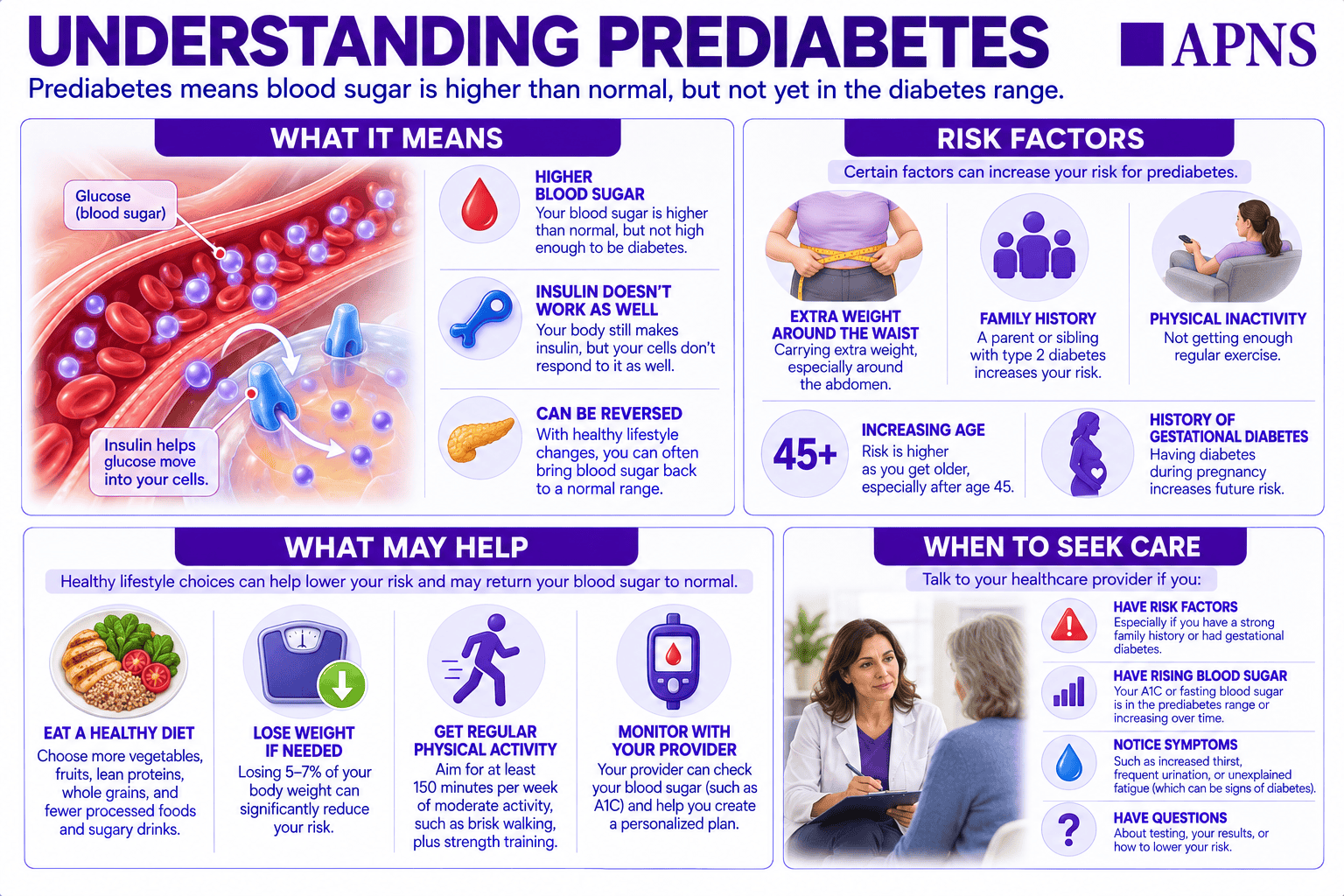
Prediabetes develops when your body becomes resistant to insulin.
This means insulin is present, but your cells do not respond to it effectively.
Prediabetes often develops from a combination of genetics and lifestyle factors.
Prediabetes may worsen if you:
You may reduce your risk of developing prediabetes by:
The following video content is provided to help you better understand this condition. These resources are intended for educational purposes and should not replace personalized medical advice from your healthcare provider.
Average blood sugar levels over approximately 2–3 months.
Helps identify prediabetes and monitor progression toward diabetes.
| A1C | Meaning |
| Below 5.7% | Normal |
| 5.7%–6.4% | Prediabetes |
| 6.5% or higher | Diabetes |
Typically every 6–12 months depending on your healthcare provider’s recommendations.
Learn More
https://www.cdc.gov/diabetes/managing/managing-blood-sugar/a1c.html
Blood sugar after fasting for at least 8 hours.
Elevated levels may indicate insulin resistance or prediabetes.
| Result | Meaning |
| Less than 100 mg/dL | Normal |
| 100–125 mg/dL | Prediabetes |
| 126 mg/dL or higher | Diabetes |
Often yearly or more frequently if risk factors increase.
Learn More
https://medlineplus.gov/lab-tests/glucose-test/
Prediabetes frequently occurs alongside abnormal cholesterol levels and increased cardiovascular risk.
Usually every 1–5 years depending on risk factors.
Learn More
https://www.heart.org/en/health-topics/cholesterol
High blood pressure.
High blood pressure commonly occurs alongside prediabetes and increases cardiovascular risk.
Weight relative to height.
Excess body weight is one of the strongest risk factors for developing Type 2 diabetes.
Sleep apnea and other sleep disorders.
Untreated sleep apnea may worsen insulin resistance and increase diabetes risk.
Learn More
https://www.nhlbi.nih.gov/health/sleep-apnea
Treatment focuses on preventing progression to Type 2 diabetes.
Treatment may include:
Lifestyle changes are the most effective treatment for prediabetes.
Losing just 5–7% of your body weight can significantly reduce your risk of developing Type 2 diabetes.
Aim for:
Focus on:
Limit:
Aim for 7–9 hours of quality sleep each night.
Learn More
https://www.cdc.gov/diabetes/prevention/index.html
Improves insulin sensitivity and reduces glucose production by the liver.
Often prescribed for individuals at particularly high risk of developing Type 2 diabetes.
Learn More
https://medlineplus.gov/druginfo/meds/a696005.html
Examples
Not all patients with prediabetes require medication.
Learn More
https://medlineplus.gov/druginfo/meds/a618008.html
There are no procedures specifically used to treat prediabetes.
May be considered for individuals with severe obesity and significant metabolic risk.
Recovery varies based on the procedure performed.
Learn More
https://www.niddk.nih.gov/health-information/weight-management/bariatric-surgery
Many people successfully reverse prediabetes through lifestyle changes.
Without intervention, prediabetes may progress to:
With early intervention, progression can often be delayed or prevented.
You can:
Even small changes can have a major impact on your health.
No. Many people prevent or delay Type 2 diabetes through lifestyle changes.
Yes. Focus on healthy carbohydrate sources such as fruits, vegetables, legumes, and whole grains.
Most people with prediabetes do not need routine home glucose monitoring unless recommended by their healthcare provider.
Usually not. Most people feel completely normal.
Yes. Even modest weight loss can significantly reduce diabetes risk.

You may be referred to:
Prediabetes can often be reversed.
Many people return their blood sugar levels to the normal range through:
Even if prediabetes does not completely resolve, these changes can significantly reduce the risk of developing Type 2 diabetes.
Prediabetes itself rarely causes emergencies.
Seek immediate medical attention if you experience:
Call 911 for life-threatening symptoms.
CALL 911
APNS does not provide emergency medical services. If you believe you are experiencing a medical emergency, including (but not limited to) chest pain, difficulty breathing, stroke symptoms, severe allergic reactions, anaphylaxis, uncontrolled bleeding, seizures, loss of consciousness, or any other potentially life-threatening condition, you are instructed to call 911 immediately or go immediately to the nearest emergency department.
This information is for educational purposes only and should not replace medical advice, diagnosis, or treatment from a licensed healthcare provider.
Always follow the recommendations of your healthcare provider. If you experience severe or worsening symptoms, seek immediate medical attention.
If you believe you are experiencing a medical emergency, call 911 or seek emergency medical care immediately.
At APNS, our providers take the time to understand your condition and your goals. We offer comprehensive telehealth visits at a fixed rate — no membership fees, no insurance required, and no unexpected charges. Whether you’re newly diagnosed or looking for a provider who actually listens, we’re here to help.