
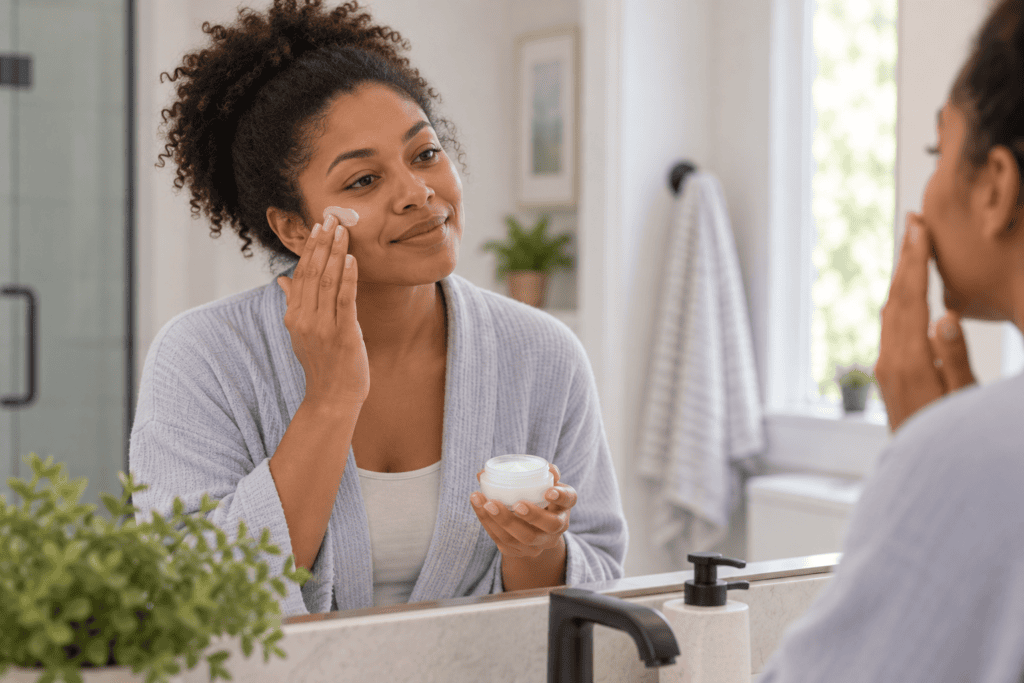
Skin care includes the daily habits and products used to keep your skin clean, moisturized, protected, and healthy. Your skin is your body’s largest organ. It helps protect you from germs, injuries, chemicals, and changes in temperature.
A basic skin-care routine does not need to be complicated. For most people, gentle cleansing, moisturizing, sun protection, and treatment of specific skin concerns are enough. Products should be selected based on your skin type, symptoms, allergies, and medical conditions.
Basic Skin Care – American Academy of Dermatology (AAD)
https://www.aad.org/public/everyday-care/skin-care-basics/care
Provides dermatologist-recommended information about washing, moisturizing, sun protection, and caring for different skin types.
Skin, Hair, and Nails – NIH MedlinePlus
https://medlineplus.gov/skinhairandnails.html
Provides patient information about common skin conditions, symptoms, treatments, and preventive care.
problems include dry skin, acne, rashes, itching, eczema, infections, discoloration, wounds, and sun damage.
Many minor skin problems improve with gentle care and avoiding irritants. However, persistent, painful, spreading, or unusual skin changes may require medical evaluation.
Skin Conditions – NIH MedlinePlus
https://medlineplus.gov/skinconditions.html
Provides information about acne, eczema, rashes, infections, skin cancer, and other common skin conditions.
Symptoms vary depending on your skin type and the underlying condition.
Common symptoms may include:
Skin symptoms may look different depending on a person’s natural skin tone. Redness may appear red, pink, purple, brown, gray, or darker than the surrounding skin.
Your healthcare provider will ask about your symptoms, products, medications, allergies, medical history, and how long the skin changes have been present. They will examine the affected skin and may also check your hair, nails, mouth, or other areas.
It can be helpful to bring a list or photographs of the products you use. Tell your provider about any new soaps, cosmetics, detergents, medications, supplements, workplace exposures, travel, or contact with someone who has a rash.
Skin Conditions – NIH MedlinePlus
https://medlineplus.gov/skinconditions.html
Provides information about common skin conditions and how they are evaluated.
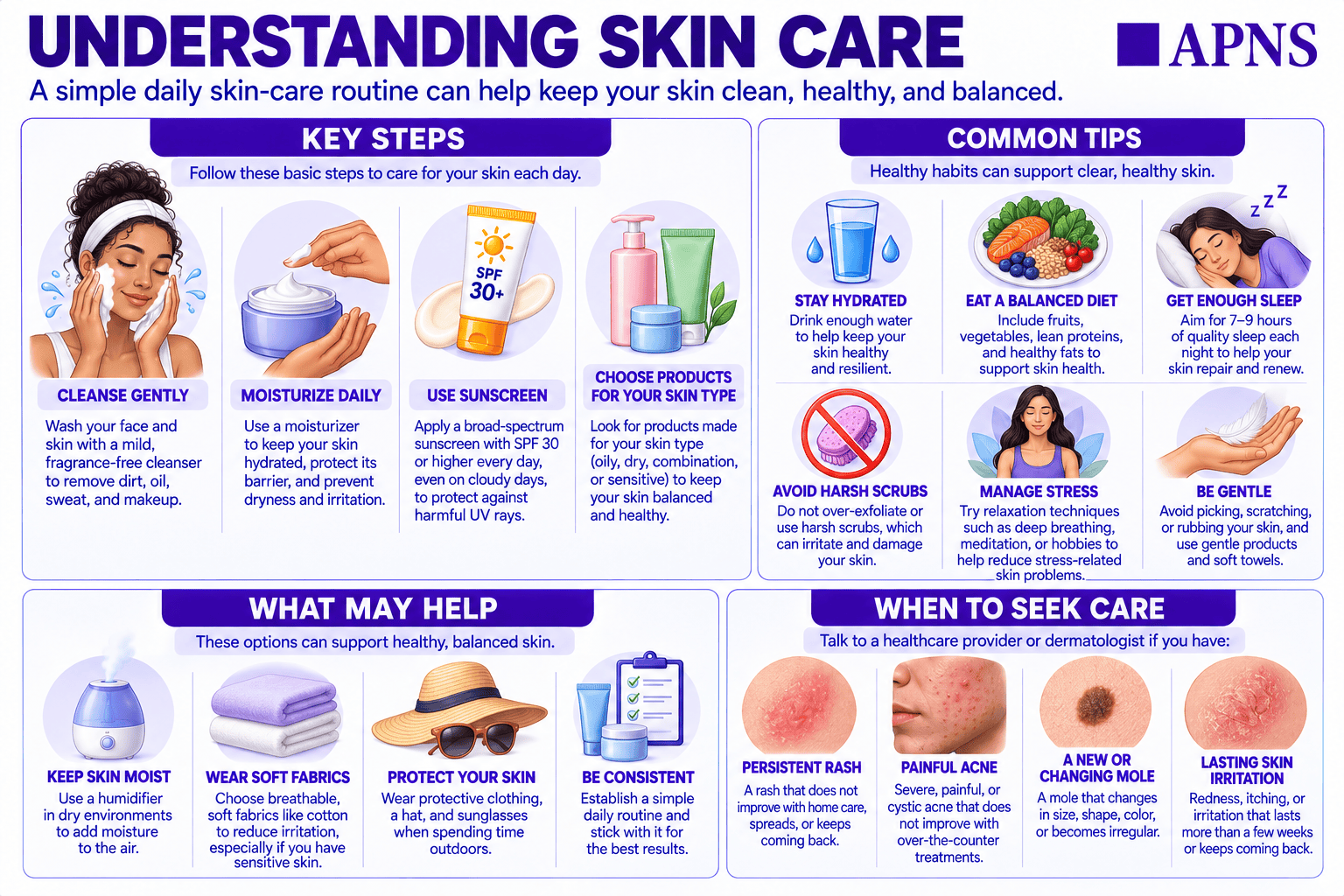
Skin problems can develop from irritation, allergies, infections, blocked pores, inflammation, sun exposure, medications, genetics, or medical conditions.
Common causes include:
Rashes – NIH MedlinePlus
https://medlineplus.gov/rashes.html
Explains common causes of irritated, swollen, itchy, or painful skin.
Skin Infections – NIH MedlinePlus
https://medlineplus.gov/skininfections.html
Provides information about bacterial, viral, fungal, and parasitic skin infections.
Several habits and exposures may irritate the skin or damage its protective barrier.
Common factors include:
Using too many active ingredients at the same time may cause dryness, peeling, burning, or irritation. Introduce new products one at a time so you can identify reactions.
Face Washing 101 – American Academy of Dermatology
https://www.aad.org/public/everyday-care/skin-care-basics/care/face-washing-101
Provides guidance on gently cleansing the face without damaging or irritating the skin.
Healthy skin habits can reduce irritation, infection, premature aging, and sun damage.
Helpful prevention tips include:
Reducing ultraviolet exposure and avoiding indoor tanning can lower the risk of skin damage and skin cancer.
Reducing the Risk of Skin Cancer – CDC
https://www.cdc.gov/skin-cancer/prevention/
Provides recommendations for reducing ultraviolet exposure and preventing skin cancer.
The following video content is provided to help you better understand this condition. These resources are intended for educational purposes and should not replace personalized medical advice from your healthcare provider.
Many skin concerns do not require laboratory testing.
When needed, laboratory tests may include:
Laboratory Tests – NIH MedlinePlus
https://medlineplus.gov/lab-tests/
Provides patient information about common medical laboratory tests.
Additional testing depends on the appearance and location of the skin concern.
Common diagnostic tests may include:
A skin biopsy may help diagnose eczema, psoriasis, infection, autoimmune disease, or a suspicious growth.
Skin Biopsy – NIH MedlinePlus
https://medlineplus.gov/lab-tests/skin-biopsy/
Explains why a skin biopsy is performed, how it is completed, and what the results may show.
Treatment depends on the type and cause of the skin concern.
Treatment options may include:
A simple routine is often better than using many products. Stop using a new product and contact a healthcare provider if it causes severe burning, swelling, blistering, or a spreading rash.
Skin Care Basics – American Academy of Dermatology
https://www.aad.org/public/everyday-care/skin-care-basics
Provides dermatologist-recommended guidance for caring for dry, oily, sensitive, and acne-prone skin.
Healthy daily habits can help protect the skin and reduce irritation.
Helpful lifestyle changes include:
The American Academy of Dermatology recommends broad-spectrum, water-resistant sunscreen with an SPF of 30 or higher for exposed skin, along with shade and protective clothing.
How to Apply Sunscreen – American Academy of Dermatology
https://www.aad.org/public/everyday-care/sun-protection/shade-clothing-sunscreen/how-to-apply-sunscreen
Provides guidance on selecting, applying, and reapplying sunscreen correctly.
Skin medications depend on the specific symptoms or diagnosis.
Common treatments may include:
Do not use prescription creams belonging to someone else. Strong steroid products can thin the skin or worsen certain infections when used incorrectly.
Cosmetics and Skin-Care Products – NIH MedlinePlus
https://medlineplus.gov/cosmetics.html
Explains the difference between cosmetic products and products containing active drug ingredients.
Most routine skin care does not require invasive procedures. Procedures may be recommended when a skin lesion, persistent rash, scar, infection, or cosmetic concern needs additional evaluation or treatment.
Common procedures may include:
Cosmetic procedures should be performed by qualified professionals who can review the benefits, risks, expected results, and aftercare.
Skin Biopsy – NIH MedlinePlus
https://medlineplus.gov/lab-tests/skin-biopsy/
Provides information about skin biopsy procedures and aftercare.
Healthy skin care is an ongoing process. Your routine may need to change with age, weather, pregnancy, medications, hormone changes, and health conditions.
Some skin problems resolve completely, while others—such as eczema, psoriasis, acne, rosacea, or very dry skin—may improve and then return. Regular care and early treatment can reduce symptoms and help prevent complications.
Sun damage builds over time. Daily sun protection can reduce sunburn, premature skin aging, and the risk of skin cancer.
A simple daily routine may include:
Morning
Evening
Additional tips include:
Applying Skin-Care Products in the Correct Order – American Academy of Dermatology
https://www.aad.org/public/everyday-care/skin-care-basics/care/apply-skin-care-certain-order
Provides dermatologist-recommended guidance on the order in which to apply skin-care products.
No. A gentle cleanser, moisturizer, and broad-spectrum sunscreen may be enough for many people. Expensive products are not automatically safer or more effective.
Many people can wash twice daily and after heavy sweating. Washing too often or scrubbing may irritate the skin.
Yes. Oily skin can still become irritated or dehydrated. Choose a lightweight product labeled noncomedogenic or “won’t clog pores.”
It means the product is designed to be less likely to clog pores, although no product can guarantee that it will not cause breakouts.
Yes. Ultraviolet radiation can reach the skin even when the weather is cool or cloudy.
Yes. Plant extracts, essential oils, fragrances, and other natural ingredients can cause irritation or allergic reactions.
Some moisturizers help quickly, while acne, discoloration, and anti-aging products may require several weeks or months. Follow the product instructions and your healthcare provider’s guidance.

Consider asking your healthcare provider:
Many minor skin concerns can be managed by a primary care provider. Persistent or complicated concerns may require specialty care.
You may be referred to:
Skin Conditions – NIH MedlinePlus
https://medlineplus.gov/skinconditions.html
Provides information about common skin concerns and available treatment resources.
Whether a skin problem is curable depends on its cause.
Temporary irritation, mild dryness, certain infections, and some allergic reactions may resolve completely. Chronic conditions such as eczema, psoriasis, rosacea, or recurring acne may not have a permanent cure but can often be successfully controlled.
A consistent routine, avoiding known triggers, using medication correctly, and keeping follow-up appointments can improve comfort and skin health.
Call 911 or seek emergency medical care immediately if you experience:
Seek prompt medical evaluation if you notice:
Skin Infections – NIH MedlinePlus
https://medlineplus.gov/skininfections.html
Explains warning signs of bacterial, viral, fungal, and parasitic skin infections.
CALL 911
APNS does not provide emergency medical services. If you believe you are experiencing a medical emergency, including (but not limited to) chest pain, difficulty breathing, stroke symptoms, severe allergic reactions, anaphylaxis, uncontrolled bleeding, seizures, loss of consciousness, or any other potentially life-threatening condition, you are instructed to call 911 immediately or go immediately to the nearest emergency department.
Basic Skin Care – American Academy of Dermatology
https://www.aad.org/public/everyday-care/skin-care-basics/care
Provides dermatologist-recommended information about cleansing, moisturizing, sun protection, and choosing products.
Skin, Hair, and Nails – NIH MedlinePlus
https://medlineplus.gov/skinhairandnails.html
Easy-to-understand information about common skin, hair, and nail concerns.
Skin Conditions – NIH MedlinePlus
https://medlineplus.gov/skinconditions.html
Provides information about acne, eczema, rashes, infections, skin cancer, and other skin conditions.
Sun Safety – Centers for Disease Control and Prevention
https://www.cdc.gov/skin-cancer/sun-safety/
Provides guidance for reducing sun exposure and protecting the skin from ultraviolet radiation.
Skin Cancer Prevention – Centers for Disease Control and Prevention
https://www.cdc.gov/skin-cancer/prevention/
Provides evidence-based recommendations for reducing the risk of skin cancer.
This guide is intended for educational purposes only and should not replace medical advice, diagnosis, or treatment from your healthcare provider or dermatologist. Skin products and medications may affect people differently and may cause irritation, allergies, or medication interactions. Follow the recommendations of your healthcare team and stop using a product if it causes significant burning, swelling, blistering, or a worsening rash. Seek immediate medical care for difficulty breathing, facial or throat swelling, extensive blistering or peeling, a rapidly spreading painful rash, severe burns, loss of consciousness, or another medical emergency.
At APNS, our providers take the time to understand your condition and your goals. We offer comprehensive telehealth visits at a fixed rate — no membership fees, no insurance required, and no unexpected charges. Whether you’re newly diagnosed or looking for a provider who actually listens, we’re here to help.