

A skin yeast infection, also called cutaneous candidiasis, is a fungal infection caused by an overgrowth of Candida, most commonly Candida albicans. Candida normally lives on the skin without causing problems, but warm, moist environments can allow the yeast to multiply and cause an infection. (medlineplus.gov)
Skin yeast infections most often develop in skin folds where heat and moisture become trapped, including under the breasts, in the groin, between the buttocks, under the abdomen, between fingers or toes, and in the armpits. Babies commonly develop a yeast-related diaper rash.
A skin yeast infection is usually treatable with antifungal medications. Most infections improve with proper treatment and by keeping the affected area clean and dry.
Fungal Infections – NIH MedlinePlus
https://medlineplus.gov/fungalinfections.html
Provides easy-to-understand information about fungal infections, symptoms, treatment, and prevention.
Candidiasis – Centers for Disease Control and Prevention (CDC)
https://www.cdc.gov/candidiasis/
Provides information about Candida infections affecting the skin, mouth, bloodstream, and other parts of the body.
Skin yeast infections are very common and can occur in people of all ages. They are more likely to develop in areas where skin rubs together or stays moist.
People with obesity, diabetes, weakened immune systems, or those taking antibiotics or corticosteroids may have a higher risk of developing cutaneous candidiasis. Infants commonly develop Candida diaper rash because of prolonged moisture and skin irritation.
Risk Factors for Candidiasis – CDC
https://www.cdc.gov/candidiasis/risk-factors/
Explains who is more likely to develop Candida infections and why.
Symptoms vary depending on the location and severity of the infection.
Common symptoms may include:
Common locations include:
A healthcare provider usually diagnoses a skin yeast infection by examining the rash and reviewing your symptoms and medical history.
They may ask about:
Additional testing may be recommended if the diagnosis is uncertain or the infection does not improve with treatment.
Fungal Infections – NIH MedlinePlus
https://medlineplus.gov/fungalinfections.html
Provides information about diagnosing fungal skin infections.
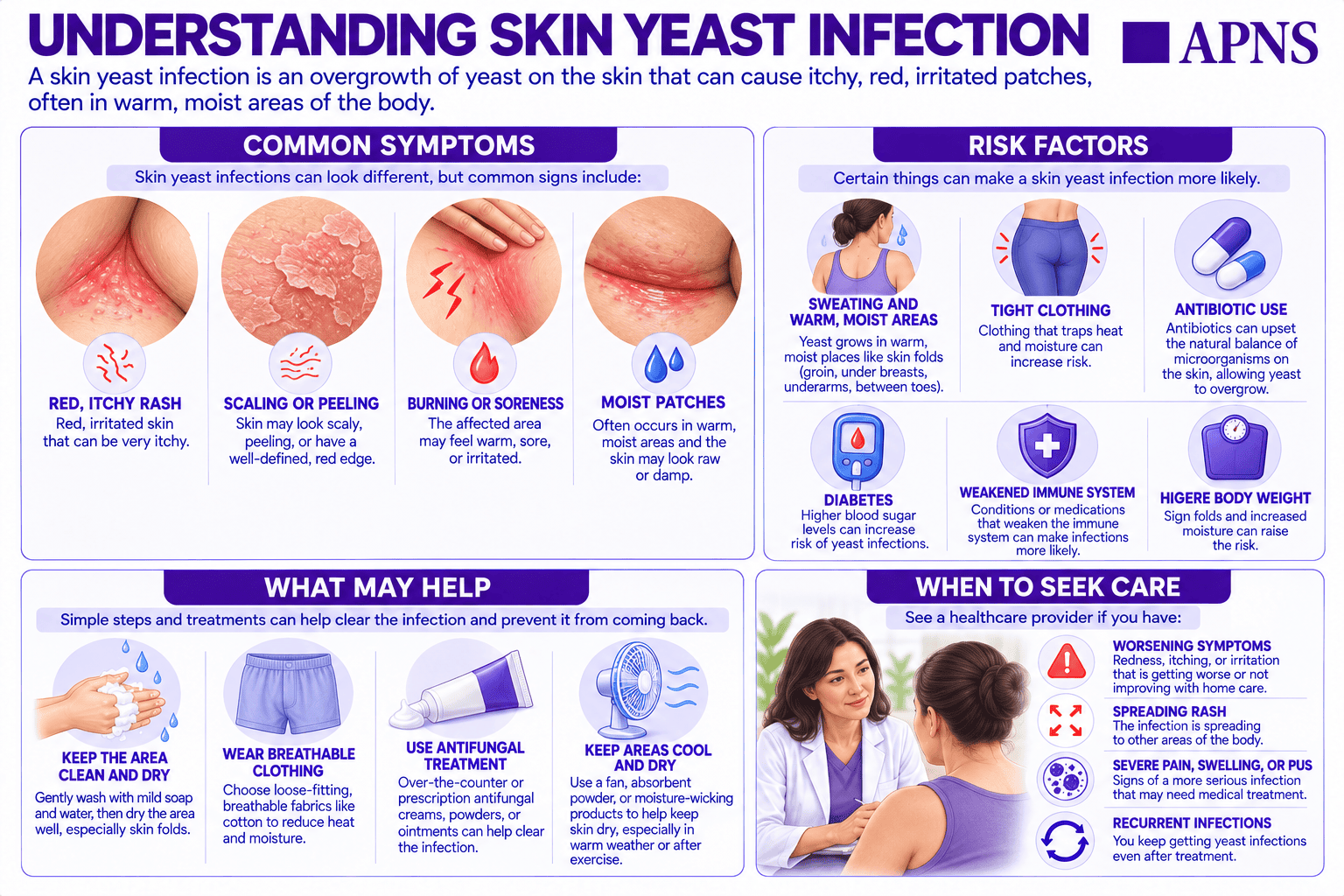
Skin yeast infections occur when Candida yeast grows excessively on the skin.
Common causes and contributing factors include:
Candida thrives in moist environments. When moisture remains trapped against the skin, the normal balance of microorganisms can be disrupted, allowing yeast to multiply.
Risk Factors for Candidiasis – CDC
https://www.cdc.gov/candidiasis/risk-factors/
Explains how moisture, medications, diabetes, and immune-system changes increase the risk of Candida infections.
Several factors can worsen symptoms or delay healing.
Common factors include:
Using corticosteroid creams without confirming the diagnosis may temporarily reduce redness while allowing the fungal infection to worsen.
Fungal Skin Infections – American Academy of Dermatology
https://www.aad.org/public/diseases/a-z/fungal-skin-infections-overview
Provides information about fungal skin infections and proper treatment.
Helpful prevention tips include:
Preventing Candidiasis – CDC
https://www.cdc.gov/candidiasis/prevention/
Provides recommendations for reducing the risk of Candida infections.
The following video content is provided to help you better understand this condition. These resources are intended for educational purposes and should not replace personalized medical advice from your healthcare provider.
Most uncomplicated skin yeast infections do not require blood tests.
Possible laboratory testing includes:
Laboratory Tests – NIH MedlinePlus
https://medlineplus.gov/lab-tests/
Provides information about laboratory tests used to evaluate medical conditions.
Most people do not require imaging.
Possible diagnostic evaluations include:
Skin Biopsy – NIH MedlinePlus
https://medlineplus.gov/lab-tests/skin-biopsy/
Provides information about skin biopsies and when they may be performed.
Treatment focuses on eliminating the yeast and reducing moisture.
Treatment options include:
Most mild infections improve within several weeks with proper treatment.
Treatment of Candidiasis – CDC
https://www.cdc.gov/candidiasis/treatment/
Provides information about antifungal treatment for Candida infections.
Helpful lifestyle changes include:
Preventing Candidiasis – CDC
https://www.cdc.gov/candidiasis/prevention/
Provides recommendations for preventing Candida infections.
Common medications include:
Use antifungal medication for the full prescribed duration, even if symptoms improve before treatment is completed.
Treatment of Candidiasis – CDC
https://www.cdc.gov/candidiasis/treatment/
Provides information about medications used to treat Candida infections.
Most skin yeast infections do not require procedures.
Occasionally, management may include:
Fungal Infections – NIH MedlinePlus
https://medlineplus.gov/fungalinfections.html
Provides information about fungal infections and treatment.
Most skin yeast infections improve completely with appropriate antifungal treatment.
However, infections may recur if contributing factors such as moisture, obesity, uncontrolled diabetes, or immune suppression remain present.
People with recurrent infections may need evaluation for diabetes or other medical conditions affecting the immune system.
Helpful home care includes:
Preventing Candidiasis – CDC
https://www.cdc.gov/candidiasis/prevention/
Provides practical recommendations for preventing recurrent Candida infections
Usually not. Candida normally lives on the skin, and most skin yeast infections are not considered highly contagious.
Poor hygiene alone does not cause Candida infections, but prolonged moisture and skin irritation may contribute.
Yes. High blood sugar increases the risk of Candida infections.
Avoid using steroid creams unless recommended by your healthcare provider, as they can worsen fungal infections.
Yes. Candida commonly causes diaper rash in infants.

Consider asking:
You may be referred to:
Candidiasis – CDC
https://www.cdc.gov/candidiasis/
Provides additional information about Candida infections and treatment.
Yes. Most skin yeast infections are completely treatable with antifungal medication and proper skin care.
Preventing recurrence often requires controlling moisture, treating underlying medical conditions, and completing the full course of treatment.
Skin yeast infections rarely cause emergencies.
Call 911 or seek emergency medical care immediately if you experience:
Seek prompt medical evaluation if you develop:
Candidiasis – CDC
https://www.cdc.gov/candidiasis/
Provides information about Candida infections and when medical care is needed.
CALL 911
APNS does not provide emergency medical services. If you believe you are experiencing a medical emergency, including (but not limited to) chest pain, difficulty breathing, stroke symptoms, severe allergic reactions, anaphylaxis, uncontrolled bleeding, seizures, loss of consciousness, or any other potentially life-threatening condition, you are instructed to call 911 immediately or go immediately to the nearest emergency department.
Fungal Infections – NIH MedlinePlus
https://medlineplus.gov/fungalinfections.html
Easy-to-understand information about fungal infections affecting the skin and body.
Candidiasis – CDC
https://www.cdc.gov/candidiasis/
Comprehensive information about Candida infections, risk factors, treatment, and prevention.
Treatment of Candidiasis – CDC
https://www.cdc.gov/candidiasis/treatment/
Provides guidance about antifungal medications and management.
American Academy of Dermatology – Fungal Skin Infections
https://www.aad.org/public/diseases/a-z/fungal-skin-infections-overview
Dermatologist-reviewed information about fungal skin infections, diagnosis, and treatment.
This guide is intended for educational purposes only and should not replace medical advice, diagnosis, or treatment from your healthcare provider. Skin yeast infections can resemble bacterial infections, eczema, psoriasis, ringworm, contact dermatitis, and other skin conditions that require different treatments. Always use antifungal medications as directed and avoid using topical steroid creams unless recommended by your healthcare provider, as they may worsen fungal infections. Contact your healthcare provider if symptoms worsen, spread, recur frequently, or do not improve after treatment. Call 911 immediately if you experience difficulty breathing, swelling of the face or throat, loss of consciousness, or another medical emergency.
At APNS, our providers take the time to understand your condition and your goals. We offer comprehensive telehealth visits at a fixed rate — no membership fees, no insurance required, and no unexpected charges. Whether you’re newly diagnosed or looking for a provider who actually listens, we’re here to help.